

What mini excavator compactors are
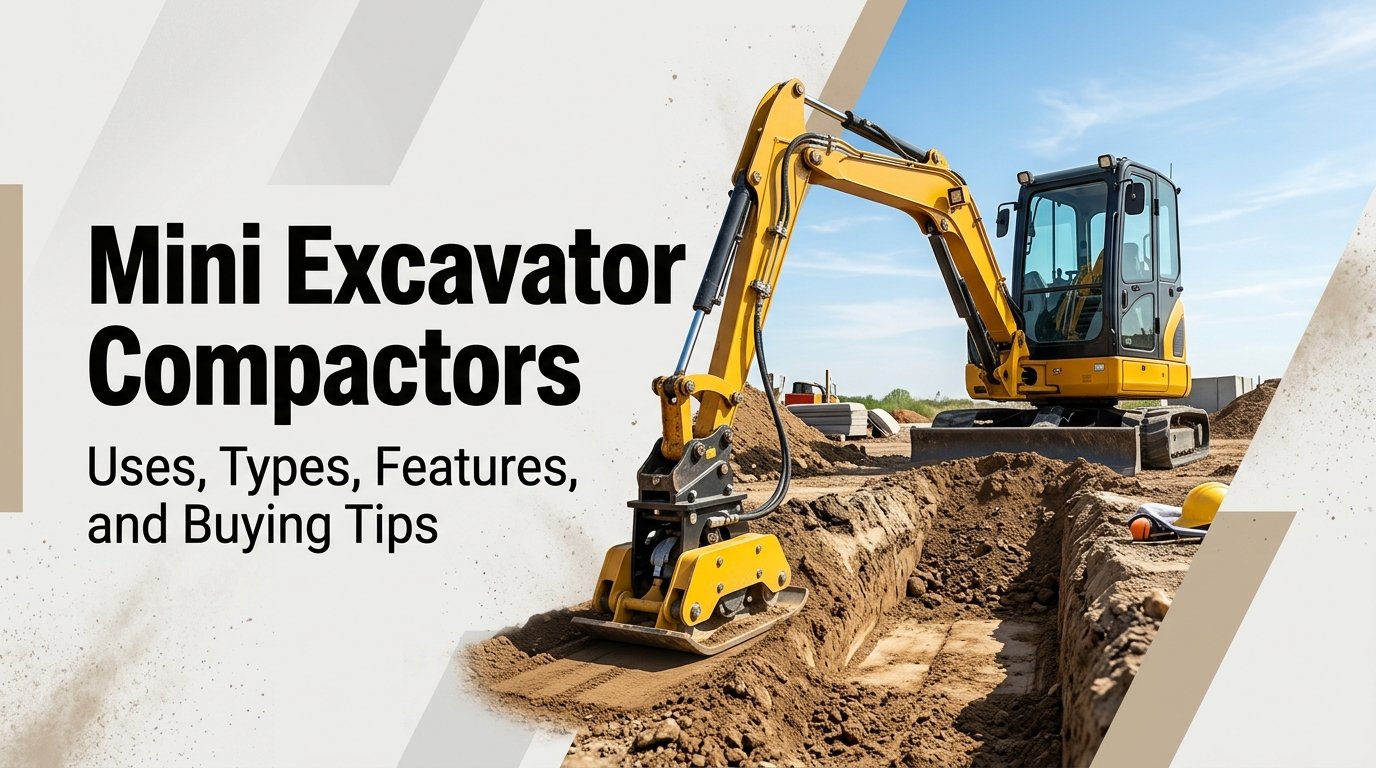
Mini excavator compactors are attachments mounted to the end of a mini excavator arm. Their job is simple: they press and vibrate soil, gravel, sand, or asphalt so the surface becomes firmer and more stable. Instead of putting a worker in a trench with a hand-operated compactor, the operator can often do the work from the cab. That is one reason these attachments are popular on utility, landscaping, and site prep jobs.
This matters because compaction is one of the steps that can affect the quality of the whole project. If soil is loose under a trench, footing, pipe run, or paved patch, the ground can settle later. A mini excavator compactor helps reduce that risk while also making a compact excavator more useful across different jobsite tasks. Typhon all position these tools as attachments for compaction work rather than general digging accessories.
Where mini excavator compactors are used
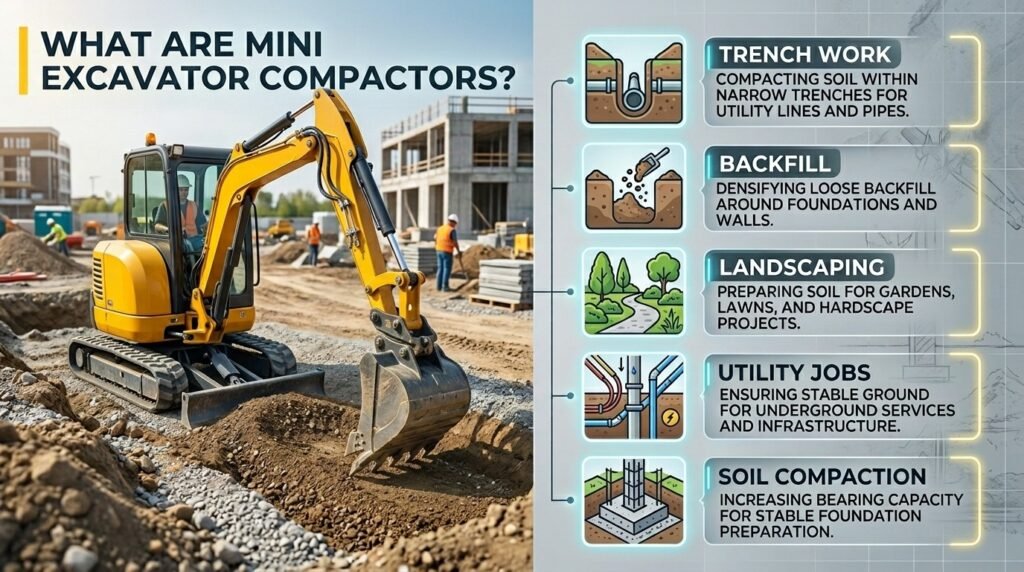
Mini excavator compactors are most useful in places where access is limited. Trenches are one of the most common examples. A plate compactor on a mini excavator can reach down into the trench bottom, compact material around utilities, and reduce the need for manual compaction. This is especially helpful on jobs where safety, speed, and tight working space all matter.
They are also used for footing preparation, slab areas, road maintenance, slope work, and asphalt patching. Some manufacturers specifically mention soil, sand, and gravel before concrete or asphalt work, while others highlight utilities and road maintenance as ideal applications. In simple terms, these attachments make sense when you need controlled compaction in a small area and do not want to bring in a larger roller just for that task.
For contractors, that means one mini excavator can handle more steps in the same project. Digging, trenching, backfilling support, and compaction can all happen with one base machine and the right attachment. That can improve workflow on residential construction, landscaping, utility installation, and light commercial work.
Main types of mini excavator compactors
When people search for mini excavator compactors, the most common type they mean is the vibratory plate compactor. This is the attachment style most often marketed for compact and mini excavators. It uses vibration and downward force to compact material in a controlled area. Cat describes this category as offering strong compaction force in a compact size, while Bobcat presents it as a way to get more compaction force than a hand-operated unit.
Another term you may see is hydraulic compactor or hydraulic plate compactor. This usually refers to the same general idea from a buying point of view: a hydraulically powered compaction attachment designed for excavators. CASE highlights features such as a direct-drive heavy-duty gear motor, rubber shock mounts, and flow control, which shows that these tools are built for repeated jobsite use rather than light occasional work.
There are also broader compactor categories in the market, such as compaction wheels and vibratory drum compactors. However, for a blog focused on mini excavator compactors, plate-style units are usually the most relevant and practical type to discuss because they fit the smaller-machine, tighter-space use case much better.
Key features to check before you buy
The first thing to check is attachment compatibility. Not every compactor will suit every mini excavator. The machine’s hydraulic flow, pressure, coupling setup, weight class, and arm capacity all matter. Even if the attachment looks physically small enough, it still needs to match the machine correctly to perform well and avoid unnecessary stress on the excavator. Manufacturer listings often separate compactor models by machine compatibility for exactly this reason.
The second thing to check is compaction force and working size. A smaller attachment may be easier to handle in narrow trenches, but it may cover less area in open ground. A larger unit may give stronger results and faster coverage, but only if your mini excavator can run it safely. The right choice depends on your normal job type, not just the biggest force number in the brochure.
The third feature is durability and vibration control. Heavy-duty base plates, shock mounts, good motor design, and stable construction matter because these tools work under constant vibration. CASE specifically points to rubber shock mounts and box-section base plate construction, which shows buyers should look beyond price and pay attention to build quality.
Finally, think about ease of use on the job. A good mini excavator compactor should help the operator work faster, reduce manual labor, and reach difficult areas more safely. That practical value is often more important than just reading technical specs.
How to match a compactor to your mini excavator
Start with your machine size. A 1-ton mini excavator and a heavier compact excavator will not use the same attachment range in the same way. Then look at your usual work. If most of your projects involve narrow utility trenches, you should focus on a compactor that is compact, easy to control, and suited to tight access. If you do more general site prep and slab work, a wider or stronger unit may make more sense.
Next, check hydraulic requirements carefully. This is where many buyers go wrong. If the flow or pressure is outside the correct range, the attachment may not perform as expected. Some manufacturers even mention flow control as a feature to protect the attachment from overspeeding, which shows how important proper hydraulic matching is.
It is also smart to think about your attachment strategy as a whole. If your mini excavator already runs buckets, thumbs, augers, or breakers, adding a compactor can make the machine much more versatile. For many small contractors, that is the real value. One machine can do more jobs without bringing extra equipment to every site.
Common mistakes to avoid
One common mistake is choosing a mini excavator compactor only by price. A cheap attachment that does not match your machine well can cost more in lost time, weak compaction, or early wear. Another mistake is ignoring the type of material you compact most often. Soil, gravel, trench backfill, and asphalt patching may all need slightly different priorities in size, force, and working method.
Another mistake is using the attachment as if it replaces good jobsite practice. A compactor helps create density and stability, but the operator still needs the right material, the right lift thickness, and the right working process. The attachment improves the job, but it does not fix poor preparation. This is one reason serious buyers should think about the full application, not only the tool itself.
Finally, many buyers search for “mini excavator compactors” without realizing the best product pages may be listed under plate compactors, hydraulic compactors, or mini excavator attachments . Knowing these terms makes shopping easier and helps you compare the right products faster.
Are mini excavator compactors worth it
For many contractors, the answer is yes. If you regularly do trenching, utility work, foundation prep, landscaping, or patch repair, a compactor attachment can save labor, improve safety, and help your mini excavator handle more of the project. That kind of versatility is exactly why compact excavator attachment systems are so popular.
The key is buying the right attachment for the machine and the work. A mini excavator compactor is not just an extra tool to keep in the yard. When chosen well, it becomes a practical part of daily operation and can help a small machine deliver bigger value on the job.
FAQ
What are mini excavator compactors?
Mini excavator compactors are compactor attachments made to work with mini excavators. They are usually used to compact soil, sand, gravel, and sometimes asphalt in small or hard-to-reach areas.
What are mini excavator compactors used for?
They are mainly used for trench compaction, footing preparation, utility work, landscaping, backfilling, and small road or repair jobs where a larger compaction machine would not be practical.
Are mini excavator compactors the same as plate compactors?
In many cases, yes. When people search for mini excavator compactors, they often mean hydraulic plate compactor attachments designed for mini excavators. The exact name can vary by brand or supplier.
How do I choose the right mini excavator compactor?
You should check your mini excavator’s size, hydraulic flow, operating weight, and attachment compatibility. It is also important to think about the type of jobs you do most often, such as trench work, slope work, or general site preparation.
Can a mini excavator compactor be used in narrow trenches?
Yes, that is one of its biggest advantages. A mini excavator compactor can reach into narrow trenches and compact material more safely and efficiently than many hand-operated tools.
Are mini excavator compactors worth buying?
They can be worth buying if you often do trenching, backfilling, utility work, or landscaping. A good compactor attachment can save time, reduce manual labor, and make your mini excavator more useful on different jobs.
What materials can mini excavator compactors handle?
They are commonly used on soil, sand, gravel, and similar base materials. Some models can also be used for asphalt patch work, depending on the attachment type and job requirements.
Do all mini excavators support compactor attachments?
No, not all of them support every compactor attachment. The attachment must match the mini excavator’s hydraulic system, weight class, and mounting setup to work properly and safely.
Conclusion
Mini excavator compactors are best understood as compactor attachments for mini excavators, especially vibratory plate compactors and hydraulic compactors. They are useful for trench work, footing areas, slope work, slab preparation, and other jobs where controlled compaction matters. If you choose one based on machine compatibility, hydraulic requirements, work area, and build quality, it can become one of the most useful attachments in your fleet.


