

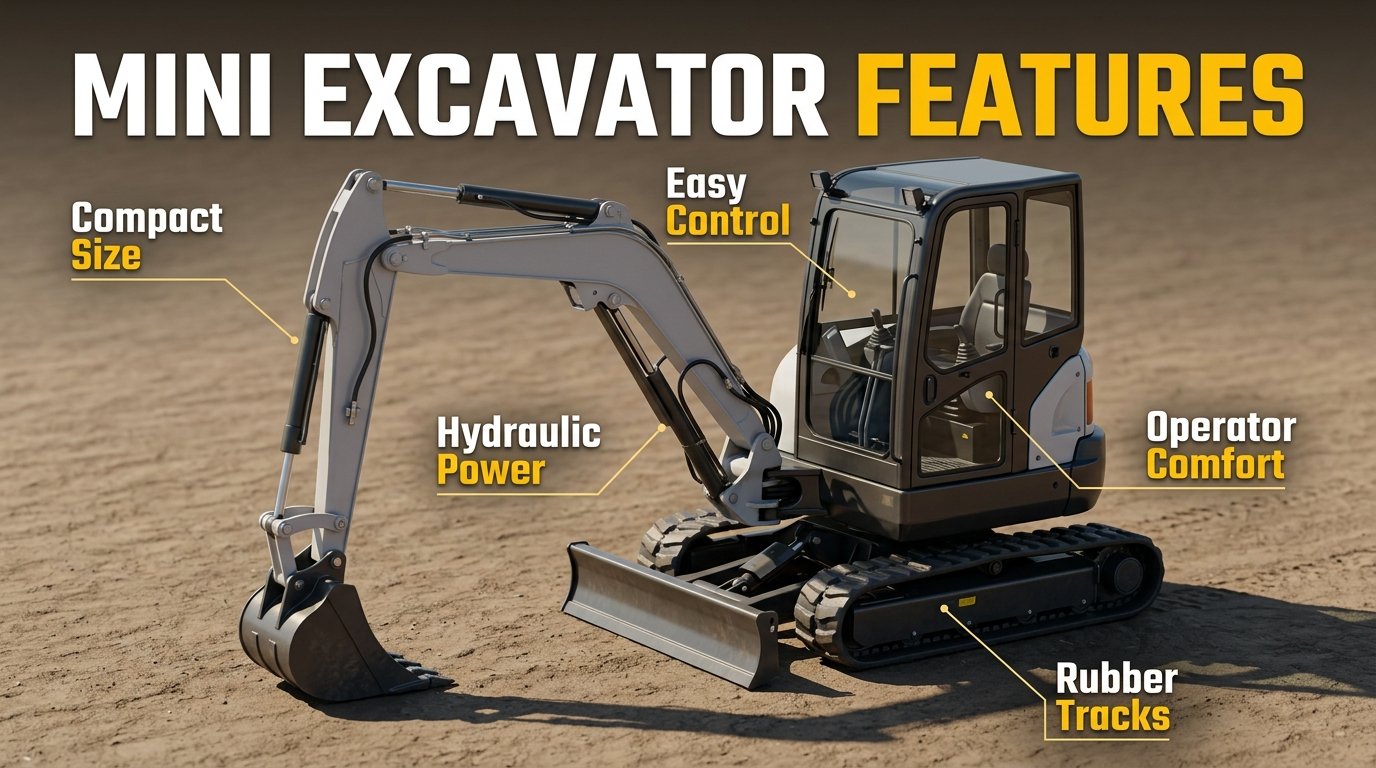
Mini Excavator Features: What Really Matters?
Mini excavators are popular because they can handle real work without needing the space of a full-size excavator. They are used in construction, landscaping, farm work, utility jobs, and property maintenance. But when people compare models, they often look only at price, engine power, or machine weight.
That is not enough.
The right mini excavator features can make a big difference in daily use. Some features help you dig better. Some make the machine easier to control. Others improve safety, reduce operator fatigue, or help the machine fit into tighter spaces. If you are new to this type of equipment, knowing which features matter can help you avoid buying the wrong machine.
What makes mini excavators different from larger excavators?
A mini excavator is built for smaller spaces, lighter transport, and more flexible work. That is the main reason many contractors and business owners choose one. You can use it in backyards, narrow access areas, sidewalks, indoor demolition sites, and urban projects where a larger machine would be too heavy or too wide.
Because of that, mini excavator features are often designed around compact size and control. A mini excavator usually has a tighter tail swing, smaller working footprint, lighter operating weight, and simpler transport needs. Many models can be moved with a trailer and pickup, depending on size.
This makes mini excavators useful for smaller crews, owner-operators, and businesses that need one machine for many types of jobs.
The core mini excavator features found on most machines
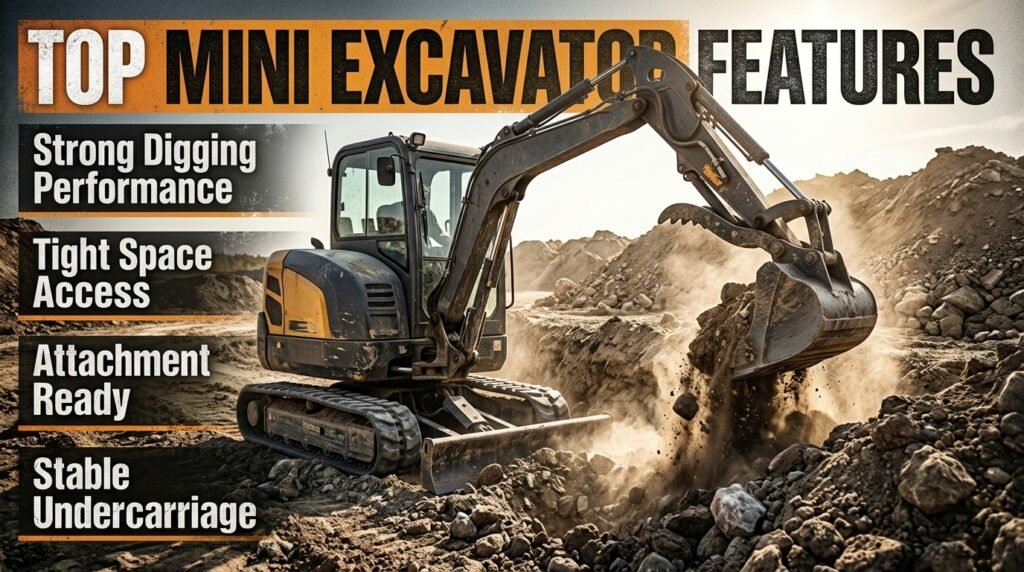
Most mini excavators share a basic set of features, even if the brand and model are different.
One of the main parts is the boom, arm, and bucket. These are the working parts that do the digging. Different machine sizes offer different reach and digging depth, but this setup is standard.
Another core feature is the dozer blade at the front or rear, depending on the machine layout. This helps with grading, backfilling, and machine stability during digging. On many jobs, the blade is used almost as often as the bucket.
You will also find rubber tracks on most mini excavators. These help reduce surface damage on finished ground, pavement, and residential property. Some machines also offer steel tracks or rubber track pads when tougher ground conditions are expected.
The operator station is another basic feature. Depending on the model, this may be an open canopy or a closed cab. A cab usually gives more protection from weather, dust, and noise, while an open station can cost less and feel simpler for light-duty work.
Most machines also come with auxiliary hydraulic lines. These allow the excavator to run attachments such as hydraulic breakers, augers, compactors, or grapples. For many buyers, this is one of the most useful features because it makes the machine more versatile.
Features that improve digging performance and control
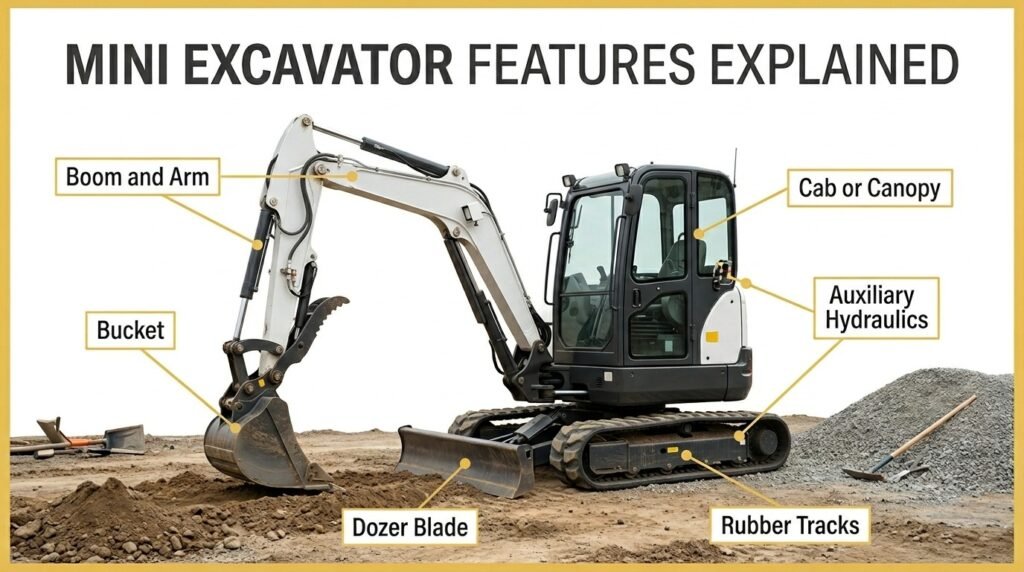
Not all mini excavator features affect performance in the same way. Some have a direct impact on how well the machine works on the job.
One important feature is digging depth and reach. A compact machine may look similar to another from the outside, but the working range can be very different. If you plan to dig trenches, footings, or utility lines, this matters more than appearance.
Another key feature is hydraulic performance. Good hydraulic flow helps the machine feel smoother and stronger during operation. It affects boom movement, bucket response, swing speed, and attachment performance. A machine with weak or poorly tuned hydraulics can feel slow, jerky, or frustrating to use.
Swing system design also matters. A smooth swing function gives better control when loading trucks, trenching, or working close to structures. Fast movement is useful, but smooth and predictable movement is often more important for beginners.
Some machines also include two-speed travel. This allows the operator to move faster across the site and switch back to slower, stronger travel when needed. It saves time on jobs where the machine has to move often.
Bucket breakout force is another performance-related point. Buyers do not always check it, but it helps show how much digging power the machine has when working in compact soil or rough conditions.
Features that help in tight jobsites
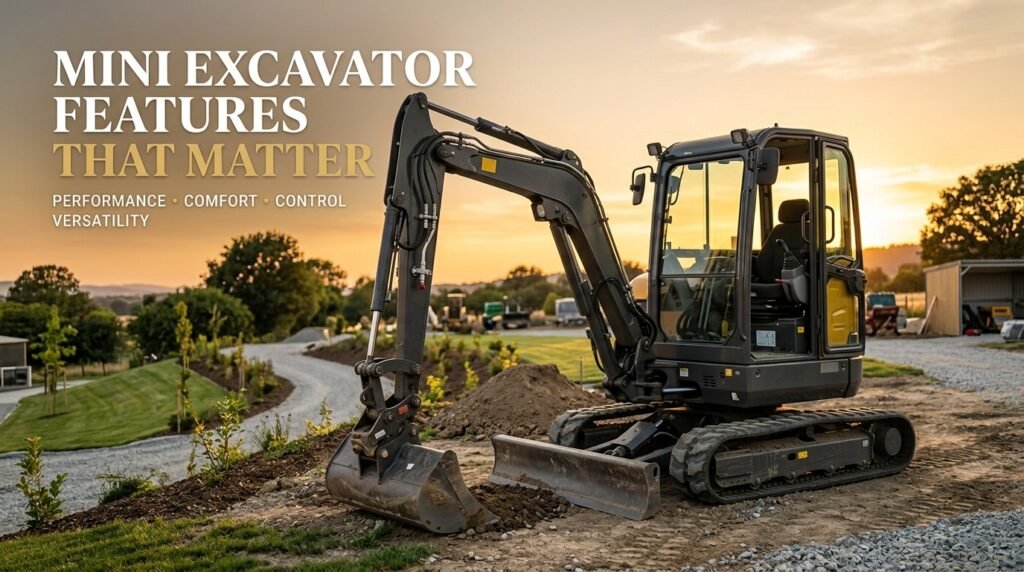
One reason people buy mini excavators is because they need to work where space is limited. That is where certain design features become very important.
A major one is zero tail swing or reduced tail swing. This means the rear of the machine stays within the track width or swings only slightly beyond it. That makes the machine safer and easier to use near walls, fences, houses, and parked vehicles. For residential work, this is often a top priority.
Another useful feature is expandable tracks on some smaller mini excavators. These tracks can narrow to fit through gates or tight entries, then widen again for better stability during work. For landscaping and backyard access, this can be a very practical feature.
Machine width itself also matters. A narrower machine can reach more places, but buyers still need to think about balance and lifting ability. Going too small just for access can sometimes limit performance.
Visibility is also important in tight areas. Good sightlines from the operator seat help when trenching near foundations, working next to curbs, or moving around obstacles. A machine that gives clear front and side visibility is easier to place accurately.
Comfort and safety features worth paying attention to
Comfort may sound less important than digging power, but it affects how well the machine is used over a full day. A tired operator makes more mistakes, works slower, and notices problems later.
Simple comfort features include an adjustable seat, clear controls, enough legroom, and easy entry and exit. These may not sound exciting, but they matter in daily work. A cramped operator station becomes annoying very quickly.
If the machine has a cab, features such as air conditioning, heating, and better sealing against dust can make a real difference. In hot or wet conditions, these features are not just about comfort. They help the operator stay focused.
For safety, buyers should look at ROPS and TOPS protection, good lighting, travel alarms if required for the jobsite, grab handles, and stable step design. A clear display panel can also help by showing fuel level, service reminders, warning lights, and machine status.
Some newer machines include auto-idle, security systems, rearview cameras, or better monitor functions. These are helpful, but they should not distract from the basics. Strong visibility, stable design, easy controls, and proper protective structure still matter most.
Which mini excavator features matter most when buying?
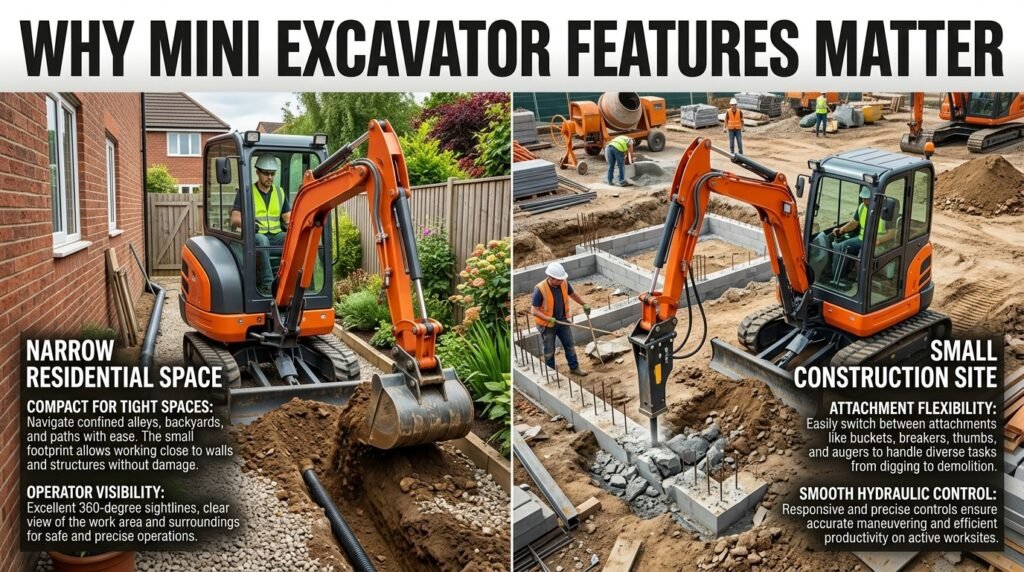
The best mini excavator features depend on the kind of work you plan to do.
If you mainly work in tight residential areas, compact width, reduced tail swing, and easy transport may matter most. If you handle utility or trenching jobs, digging depth, hydraulic performance, and attachment support become more important. If you run a rental fleet or manage multiple operators, simple controls, durability, and easy maintenance may be higher on the list.
For many buyers, these are the features worth checking first:
- machine size and operating weight
- tail swing design
- digging depth and reach
- auxiliary hydraulics for attachments
- cab or canopy setup
- blade design and stability
- track type and undercarriage layout
- service access and maintenance points
- operator comfort and visibility
It is also smart to think beyond the spec sheet. A feature only matters if it helps the machine do your actual jobs better. A buyer who does small landscape work does not need to choose the same setup as a contractor doing daily trenching or demolition support.
The safest approach is to match the machine’s features to your work, not just its price or appearance.
Mini excavator features are not just a list on a brochure. They shape how the machine performs, how easy it is to operate, and how much value it gives over time. If you understand the basics, it becomes much easier to compare models and choose one that fits your work without overpaying for features you do not need.


