

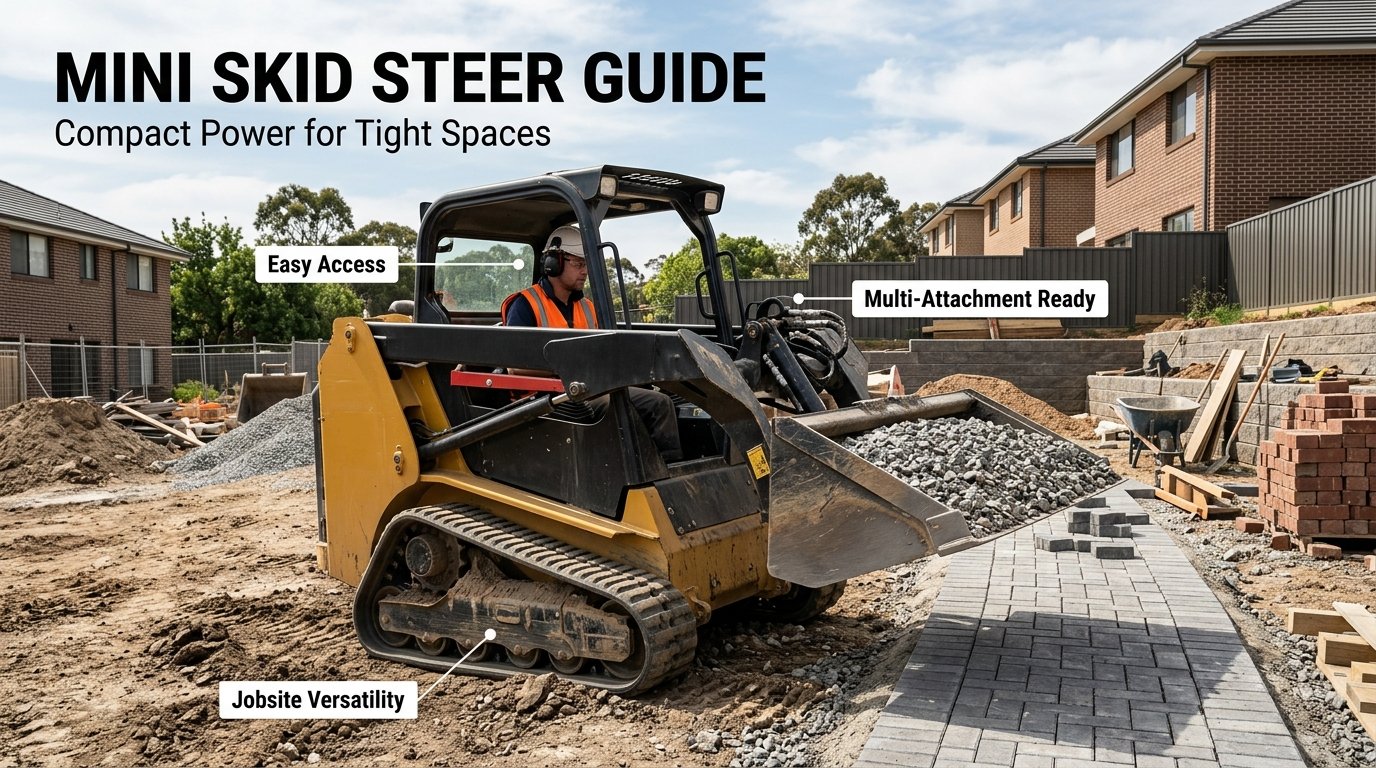
If you need a compact machine that can work in narrow spaces and still handle real jobsite tasks, a mini skid steer is one of the most useful options to consider. It is small, easy to move, and flexible enough for landscaping, construction, utility work, and property maintenance. Many manufacturers also use related names such as mini track loader, mini loader, or compact utility loader, but the idea is the same: a small machine built to lift, carry, dig, grade, and run attachments where bigger equipment cannot fit.
A lot of buyers like mini skid steers because they can replace a large amount of hand labor. Instead of moving dirt, gravel, mulch, brush, or debris with wheelbarrows and shovels, one compact machine can do the work faster and with less physical effort. That is a big reason this keyword has strong buying intent. People want to know what the machine can do, which features matter, and whether it is the right fit for their jobs.
What Is a Mini Skid Steer?
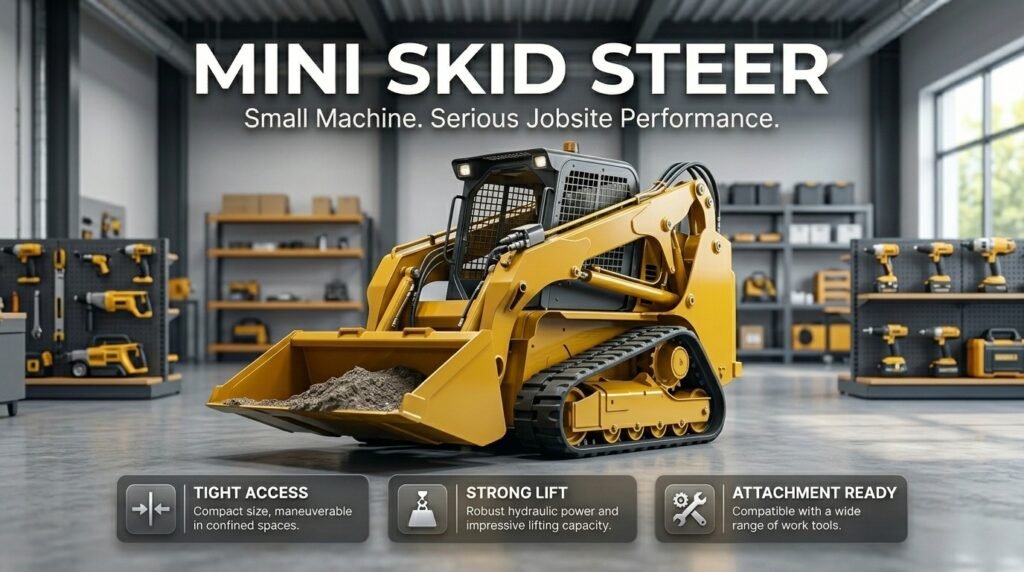
A mini skid steer is a compact loader designed for work in small or hard-to-reach areas. Many models are stand-on machines, and many are built with tracks rather than wheels. That setup helps the machine stay compact while giving it better traction and maneuverability on soft ground, uneven terrain, and narrow access paths. Manufacturers highlight these machines for tight spaces, small crews, and jobs where larger loaders are too big or too heavy.
This machine is popular because it gives you more than one function in one small package. With the right attachment, a mini skid steer can move material, grade soil, clear brush, dig holes, trench for utilities, carry pallets, and help with cleanup. That kind of versatility is one of the main reasons mini loaders are used across landscaping, grounds maintenance, light construction, tree care, and farm work.
Why a Mini Skid Steer Works So Well in Tight Spaces
The biggest strength of a mini skid steer is access. These machines are built to work where a full-size skid steer may struggle. Manufacturers often promote them for jobs involving gates, doorways, alleys, backyard access, and other narrow spaces. That makes them especially useful for residential landscaping, backyard construction, and urban work where space is limited.
A smaller footprint also helps reduce disruption on the site. In many cases, a mini skid steer is easier to transport, easier to position, and easier to use around fences, walls, garden beds, sidewalks, and finished areas. Tracked versions can also help lower ground disturbance compared with heavier machines, which matters when you are trying to protect turf, soil, or delicate surfaces.
For small contractors, this can improve productivity in a real way. One operator can do more work in less time, especially on jobs where manual labor would normally slow the team down. On smaller sites, that efficiency can make the machine pay for itself faster than a larger loader that is harder to move and harder to justify for light-duty work. This is an informed inference based on the ways manufacturers position mini loaders for replacing hand labor and improving output in confined spaces.
Common Jobs for a Mini Skid Steer
A mini skid steer is a smart fit for material handling. You can use it to move soil, mulch, gravel, sand, debris, branches, and palletized loads when equipped with the right tool. That alone makes it useful for landscapers, hardscape crews, nurseries, and general contractors.
It also works well for digging and ground preparation. A mini skid steer can help with trenching, grading, leveling, site cleanup, soil preparation, and post-hole work. On light construction or utility jobs, that kind of flexibility is valuable because one machine can handle multiple steps of the project instead of sitting idle between tasks.
Another strong use case is tree care and brush work. With tools like a grapple, rotary cutter, stump grinder, or bucket, a mini skid steer can help clear land, manage debris, and support cleanup after trimming or removal work. Because the machine is small, it can often get closer to the work area without needing the same access as larger equipment.
Mini skid steers are also useful for farms and property maintenance. They can help with feed handling, fence work, light earthmoving, manure cleanup, and moving supplies around barns, sheds, or narrow service areas. For owners who want one compact machine for many everyday tasks, that flexibility is a major advantage.
Best Attachments for a Mini Skid Steer
Attachments are a big part of what makes a mini skid steer worth buying. The machine itself is only part of the value. The real productivity comes from being able to switch tools and use the same carrier for different jobs. Many equipment makers promote mini loaders around their attachment systems because that is what turns a small machine into a multi-purpose work tool.
A bucket is the basic starting point. It is useful for loading, moving loose material, backfilling, and general cleanup. For many owners, this is the first attachment they use every day because it covers the most common work.
Pallet forks are another strong choice. They help with moving bagged material, pavers, pallets, tools, and supplies around the site. If your work involves deliveries, stock handling, or organized materials, forks can make the machine much more practical.
A grapple is a great fit for brush, roots, limbs, logs, and loose debris. This matters for landscaping, lot clearing, and tree work, where irregular material is difficult to handle with a standard bucket alone. Bobcat and Vermeer both highlight grapple-type tools among useful mini loader attachments for this kind of work.
For ground work, an auger, trencher, or rake can be very useful. These help with fence posts, utility lines, irrigation, and site preparation. If your jobs often involve digging narrow paths or preparing soil, these attachments can make a mini skid steer far more valuable than a simple carrier with a bucket only.
The best approach is to buy the machine based on the work you actually do most often. Do not choose a mini skid steer only by engine size or appearance. Choose it based on the attachment jobs that bring you revenue.
How to Choose the Right Mini Skid Steer
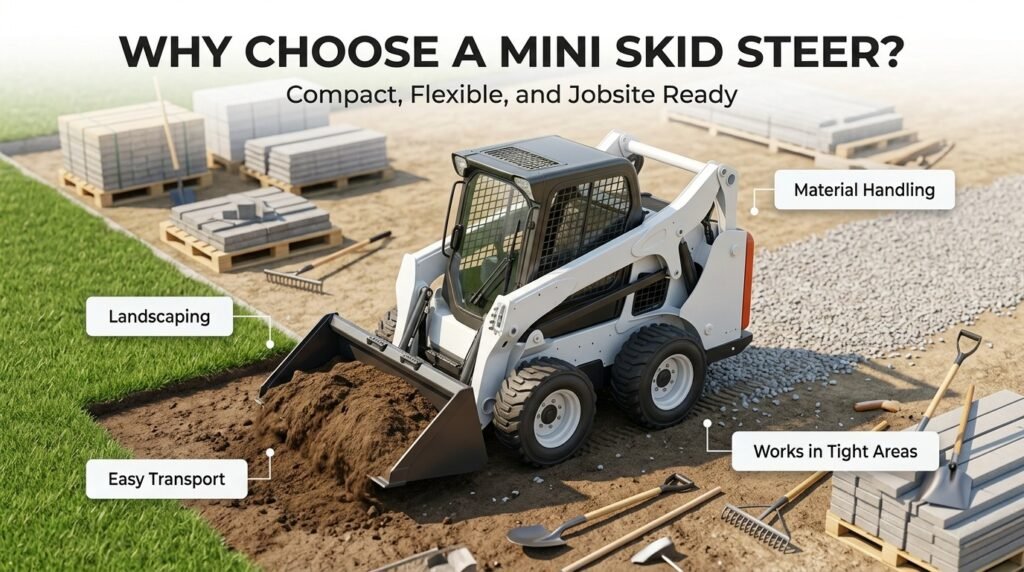
The first thing to check is the type of work you handle most. Some buyers mainly need a mini skid steer for light landscaping and material movement. Others need stronger lifting performance, better reach, or more hydraulic capability for powered attachments. Your daily work should decide the machine, not marketing alone.
Next, look at access width. A big reason for buying a mini skid steer is getting into spaces larger machines cannot reach. If you often work through backyard gates, side yards, narrow paths, or tight urban sites, machine width matters a lot. Manufacturers specifically promote mini track loaders for gates, doorways, and other narrow spaces, so this is not a small detail.
After that, focus on rated operating capacity, lift height, and hydraulic capability. These are key when you plan to lift heavier loads, dump into trailers, or run powered tools. Even within the mini skid steer category, capacity can vary a lot from one model to another. That is why buyers should compare job needs first instead of assuming all mini loaders perform the same way.
Operator comfort also matters more than many first-time buyers expect. Stand-on platforms, controls, visibility, and machine balance can affect fatigue over a full day of work. Some newer mini loader designs now emphasize operator comfort and control more heavily, which shows how important this has become in the market.
Finally, think about ownership beyond the machine itself. Ask whether attachments are easy to find, whether parts and service are available in your region, and whether the machine matches your trailer, crew size, and type of jobs. The right mini skid steer is not just the most powerful one. It is the one that fits your work, your budget, and your operating conditions.
Mini Skid Steer vs Standard Skid Steer
A mini skid steer is usually the better choice when access is limited, jobs are smaller, and speed of movement around tight spaces matters more than maximum lifting power. It shines in landscaping, narrow jobsite work, backyard access, and light-to-medium material handling. It is also a practical option for small crews that want one compact machine to replace hand labor on repetitive tasks.
A standard skid steer is often better when you need higher capacity, larger buckets, more breakout force, and better performance on bigger construction or loading jobs. Full-size skid steers are stronger, but they also take more space, can be harder to transport on smaller jobs, and may be less practical when access is narrow. Deere’s standard skid steer lineup, for example, sits far above the compact mini-loader class in size and power, which shows the two machine categories serve different job demands.
For many buyers, the real question is not which machine is better overall. The real question is which machine is better for your work. If most of your jobs are in homes, gardens, sidewalks, narrow access routes, or small commercial spaces, a mini skid steer can be the smarter and more profitable tool.
Conclusion
A mini skid steer is a compact machine with serious value when your jobs require flexibility, tight-space access, and attachment-driven productivity. It is a strong choice for landscaping, light construction, utility work, cleanup, and property maintenance. The best machine is the one that matches your typical job size, access needs, load requirements, and attachment plans. If you choose based on real work instead of just headline specs, a mini skid steer can become one of the most useful machines in your fleet.


