

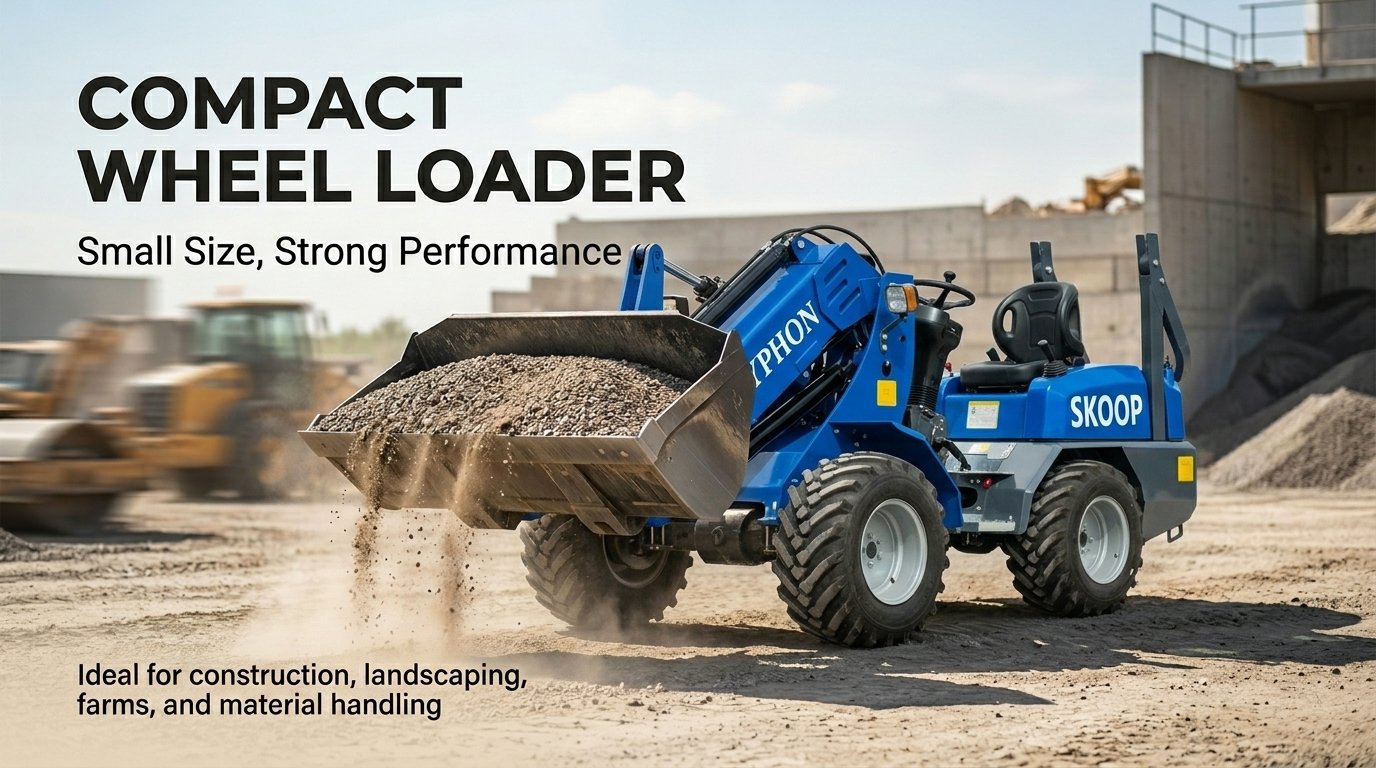
A compact wheel loader is a useful machine for jobs that need speed, easy handling, and strong loading performance in a smaller size. It is often used in construction, landscaping, agriculture, rental fleets, and material yards where space is limited but productivity still matters.
Many buyers look at this machine because it can do more than simple loading. A compact wheel loader can move soil, gravel, sand, mulch, feed, pallets, and other materials while staying easier to transport and operate than a larger loader. For many businesses, it is a smart middle option between a skid steer and a full-size wheel loader.
This guide explains what a compact wheel loader is, where it works best, what features matter most, and how to choose the right model for your work.
What Is a Compact Wheel Loader?
A compact wheel loader is a smaller version of a standard wheel loader. It uses wheels instead of tracks and is designed for loading, carrying, lifting, and moving materials across short distances. It usually has an articulated frame, which means the machine bends in the middle when turning. This helps it move smoothly in tighter areas.
Compared with larger loaders, a compact wheel loader is easier to handle around buildings, yards, narrow access roads, and crowded jobsites. It also tends to offer better visibility and faster travel speed than some other compact machines.
The main reason people choose a compact wheel loader is balance. It gives more lift height, better travel comfort, and easier material movement than some smaller machines, while taking up less space than a large loader.
Where a Compact Wheel Loader Works Best
A compact wheel loader is best in jobs where space, movement, and frequent loading all matter. It is common on sites that need a machine to keep moving throughout the day without feeling too large or too slow.
Construction crews use it for loading aggregate, clearing debris, moving soil, and supporting site preparation work. Landscapers use it to handle mulch, stone, pavers, and bulk materials. Farms and livestock operations often use it for feed, manure, hay, and general property work. It is also a practical choice for municipal work, warehouses with outdoor yards, and equipment rental businesses.
One of the biggest advantages of a compact wheel loader is that it works well on mixed surfaces. It can move across paved areas, gravel, dirt, and yard spaces more comfortably than machines that are mainly designed for rough ground only. That makes it useful for businesses that need one machine for many small to medium tasks.
Main Benefits of a Compact Wheel Loader
A compact wheel loader gives strong everyday value because it combines loading ability with mobility. For many operators, that is the main reason it becomes a daily-use machine.
The first major benefit is easy movement. Since it travels on wheels, it can usually move faster around a site than tracked equipment. This helps when the machine must carry material from one area to another again and again.
The second benefit is better operator comfort. Compact wheel loaders are often chosen for long workdays because they can feel smoother during travel and loading cycles. The cab position and machine layout also help with forward visibility, especially when working with buckets or forks.
The third benefit is less jobsite disruption. Wheels are often a better fit than tracks when working on paved surfaces, finished driveways, concrete areas, or improved yards. This can reduce surface damage and cleanup.
Another benefit is versatility. A compact wheel loader can work with different buckets and attachments, so it is not limited to one task. That makes it attractive for buyers who want a machine that can earn value in different seasons or across different projects.
Common Buckets and Attachments for a Compact Wheel Loader
A compact wheel loader becomes much more useful when the right attachment is matched to the job. The machine itself is important, but the work tool often decides how productive it will be on site.
A general-purpose bucket is the most common option. It works well for moving soil, sand, gravel, compost, and other loose materials. For lighter materials such as mulch, snow, or grain, a high-capacity bucket may be a better fit because it allows the operator to move more volume in each pass.
Pallet forks are another popular choice. They let a compact wheel loader handle pallets, bagged materials, blocks, and jobsite supplies. This is one reason many businesses choose this machine over equipment that is mainly focused on digging or grading.
Other possible attachments include grapples, snow pushers, brooms, and specialty buckets. The right setup depends on the kind of material being moved and how often the machine will switch between tasks.
Before buying, it is worth checking how easily attachments can be changed and whether the hydraulic system supports the tools you plan to use. A machine that fits your attachment needs will usually bring better long-term value than one chosen only by price.
What to Check Before Buying a Compact Wheel Loader
Not every compact wheel loader is the right fit for every job. A smart buying decision comes from matching the machine to your actual work, not just choosing the cheapest or biggest option.
Start with operating size and lift needs. Think about the weight and volume of the material you move most often. A machine may look good on paper, but if the bucket is too small or the lift performance is not enough, daily productivity will suffer.
Next, check bucket capacity and tipping performance. These affect how much material you can move safely and efficiently. If your work includes dense materials like wet soil, stone, or crushed aggregate, this matters even more.
You should also look at turning ability and site access. A compact wheel loader is often bought for tighter work areas, so machine dimensions, turning radius, and articulation performance are important.
Another key point is operator visibility and comfort. If the operator spends many hours in the machine, cab layout, controls, seat comfort, and visibility will affect both safety and productivity.
Do not ignore service access and maintenance needs. Easy access to daily check points can save time and help reduce skipped maintenance. Over time, this matters just as much as purchase price.
Finally, think about parts support and dealer backup. Even a good machine can become a problem if service, filters, tires, and replacement parts are hard to get when you need them.
Compact Wheel Loader vs Other Machines
A compact wheel loader is not always the only option. Buyers often compare it with a skid steer loader or a larger wheel loader before making a decision.
A compact wheel loader vs skid steer loader comparison usually comes down to travel comfort, surface conditions, and loading style. A skid steer can be very useful in tight spaces and attachment-heavy jobs, but a compact wheel loader often offers smoother travel, easier material carrying, and better visibility for repeated loading work. If your work involves frequent hauling across yards or around a site, the compact wheel loader may feel more efficient.
A compact wheel loader vs large wheel loader comparison is more about scale. A larger wheel loader makes sense for heavy production work, large stockpiles, and bigger loading targets. But for smaller jobsites, property work, municipal use, and mixed daily tasks, a compact wheel loader is often the more practical and cost-conscious choice.
The right answer depends on job type. If you need a machine that loads fast, moves around easily, and works in tighter spaces without feeling too limited, a compact wheel loader is often a strong option.
How to Choose the Right Compact Wheel Loader for Your Work
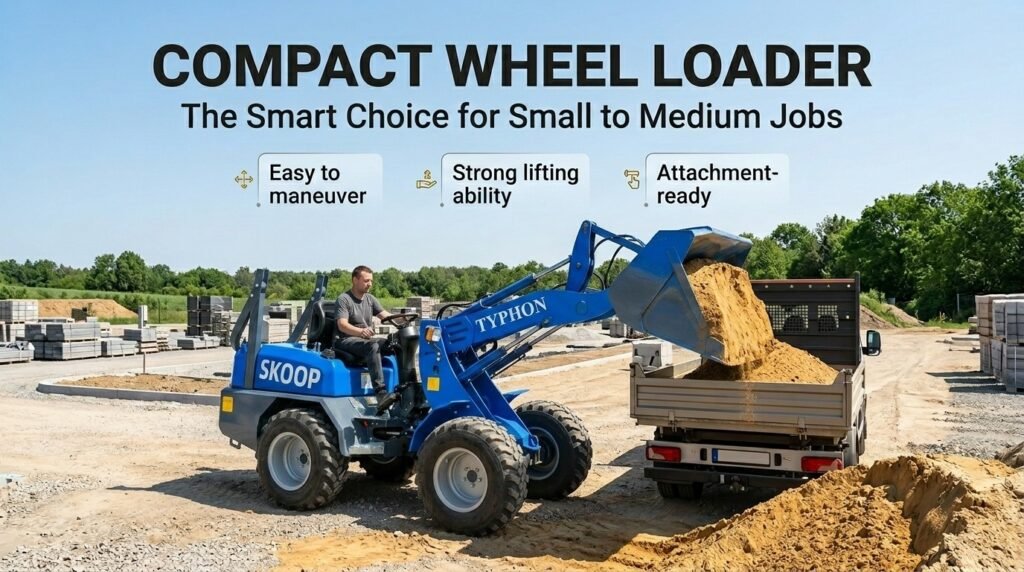
The best way to choose a compact wheel loader is to look at your most common jobs first. Do not buy only for the biggest task you might do once in a while. Buy for the work the machine will actually perform every week.
If your jobs are mostly landscaping, light construction, or yard material handling, focus on machine size, visibility, bucket match, and ease of transport. If you work in agriculture, you may care more about attachment flexibility, movement across farm surfaces, and daily loader cycles. If you run a rental or mixed-use fleet, simple controls and broad jobsite usefulness may matter most.
It also helps to think about the future. A compact wheel loader that handles your current needs but also supports forks, grapples, or specialty buckets may stay useful for a longer time. That kind of flexibility can improve return on investment.
In simple terms, the right machine should match your material type, working area, loading height, attachment needs, and service support. When those points line up well, a compact wheel loader can become one of the most useful machines in a fleet.
FAQ
Is a compact wheel loader good for small jobsites?
Yes. A compact wheel loader is designed for smaller or more crowded work areas where a full-size loader may feel too large. It still offers strong loading performance while staying easier to move and control.
What is the main advantage of a compact wheel loader?
Its main advantage is balance. It gives good loading ability, faster travel, and useful attachment options in a machine that is easier to manage than a large loader.
Can a compact wheel loader use pallet forks?
Yes. Many compact wheel loaders can use pallet forks, which makes them useful for moving pallets, blocks, bagged materials, and yard supplies.
Is a compact wheel loader better than a skid steer?
It depends on the job. A skid steer may be better for some tight-access or attachment-focused tasks, while a compact wheel loader is often better for smoother travel, repeated loading, and carrying material across a site.
Conclusion
A compact wheel loader is a practical machine for businesses that need loading power, easy movement, and good versatility in a smaller package. It works well in construction, landscaping, agriculture, and general material handling where a full-size loader may be too much and a smaller machine may not be enough.
For machinery.org, this keyword has good potential because it can attract both users who are learning about the machine and buyers who are getting closer to a decision. The key is to keep the content useful, clear, and focused on real buying questions instead of forcing the keyword too many times.


