

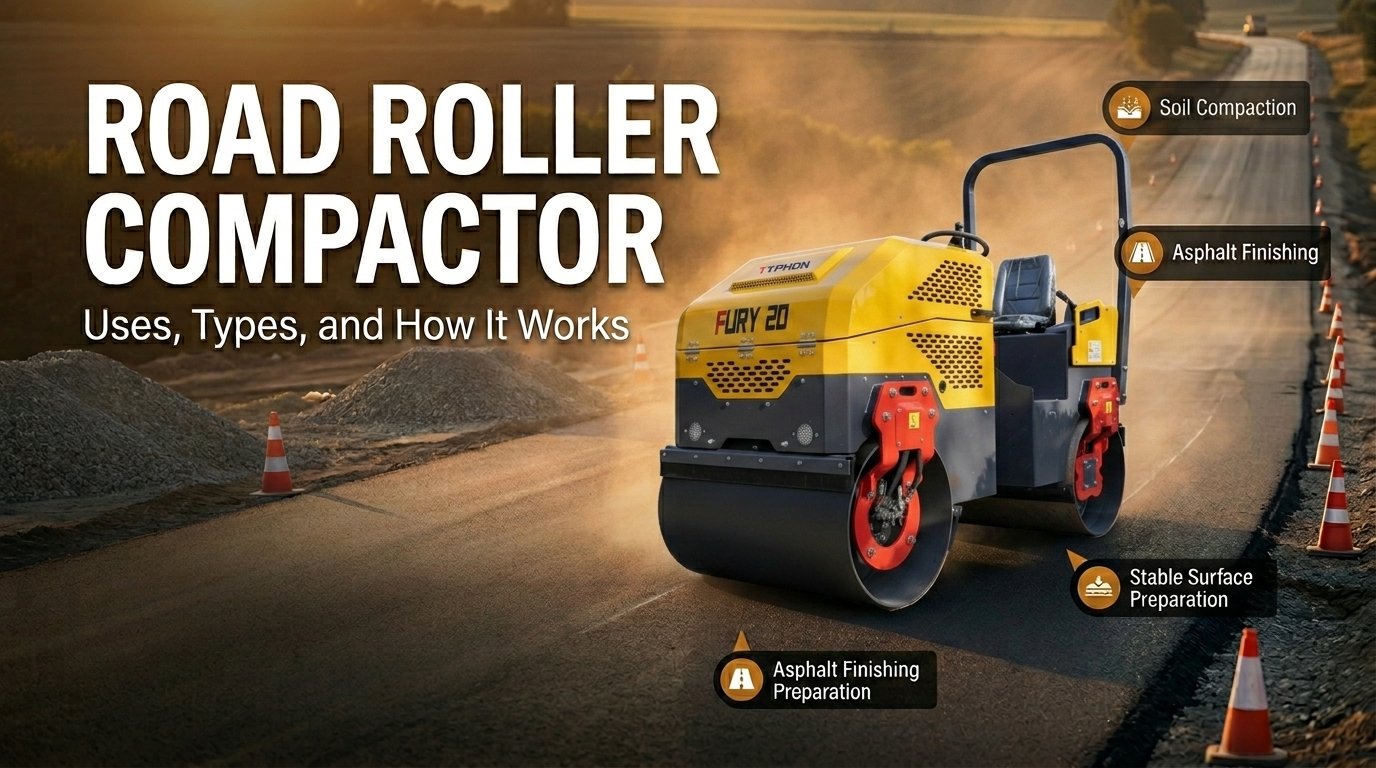
A road roller compactor is one of the most important machines in roadwork and site preparation. It helps compress soil, gravel, asphalt, and other materials so the surface becomes more stable, more even, and better able to carry loads.
If the ground is not compacted properly, roads, parking areas, and work sites can settle too soon, crack, or wear out faster. That is why the right road roller compactor matters. The machine type, drum style, and compaction method all affect the final result. Manufacturers commonly separate these machines into asphalt rollers, single-drum soil compactors, and pneumatic tire rollers because each works best in different materials and job conditions.
What is a road roller compactor?
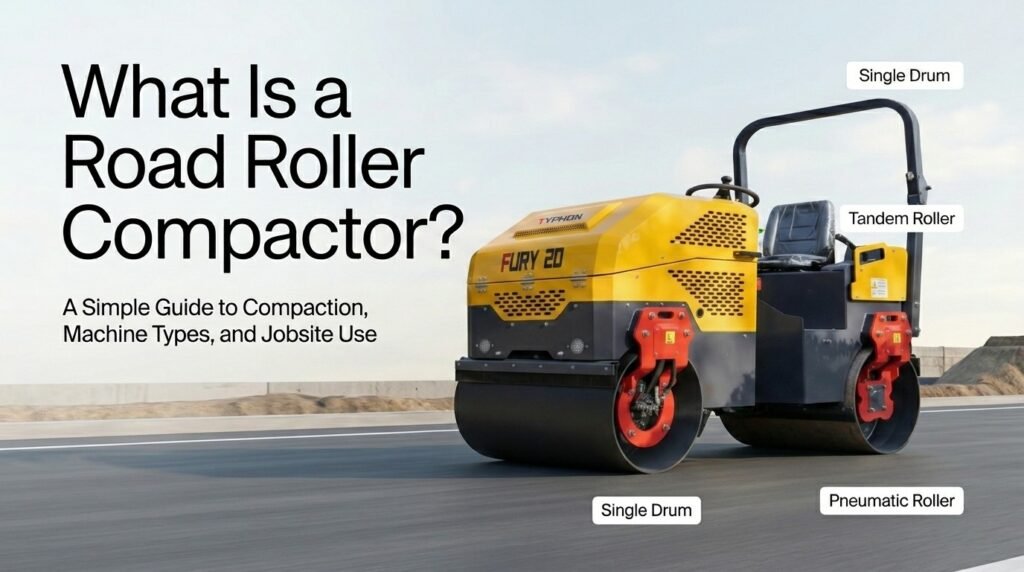
A road roller compactor is a heavy machine that uses weight, vibration, or tire pressure to reduce air gaps inside material layers. In simple words, it presses loose material into a tighter, stronger layer.
These machines are used in road construction, asphalt paving, foundations, industrial yards, parking lots, pathways, and other jobs where the surface must stay firm over time. Some models are designed mainly for asphalt finishing, while others are built for soil and sub-base compaction in earthwork applications.
A good road roller compactor does more than make the surface look flat. It helps create the density needed for strength, stability, and longer service life.
How a road roller compactor works
Compaction is not only about machine weight. Vibration plays a big role, especially in soil and asphalt work. In vibratory rollers, an eccentric weight inside the drum creates vibration, sending energy into the material below. That repeated force helps move aggregate particles into a tighter position and reduces air voids. Volvo explains that this densification begins lower in the layer and continues upward, which is one reason vibratory compaction is so effective.
For soil applications, the drum style matters too. Typhon notes that a smooth drum is usually used for non-cohesive or granular soil, while a padfoot drum is better for semi-cohesive or cohesive soil. That is why one road roller compactor may perform very well on gravel but not be the best choice for clay-heavy ground.
In asphalt work, compaction must also happen at the right stage of paving. A roller is not just pressing the top layer. It is helping the material reach the right density and finish while the asphalt is still workable. That is one reason asphalt rollers are designed differently from some soil compactors.
Main types of road roller compactor machines
Not every road roller compactor is the same. The main types are built for different materials and site conditions.
Single drum rollers
Single drum rollers are common in earthworks and sub-base preparation. They usually have one steel drum in front and tires at the rear. These machines are widely used for soil compaction on roads, building pads, embankments, parking lots, and utility work. Many models are available with smooth drum or padfoot drum options.
Tandem rollers
Tandem rollers have steel drums at both the front and rear. BOMAG states that tandem rollers compact paving material with both drums and are commonly used on asphalt surface, binder, and base courses. This makes them a strong choice for road finishing, resurfacing, and paved area work.
Pneumatic tire rollers
A pneumatic tire road roller compactor uses multiple rubber tires instead of a smooth steel drum. Volvo describes this type as using kneading action, which is useful for roadway construction, resurfacing, and sub-base compaction. Pneumatic rollers are especially valued where layer bonding and surface sealing matter.
Small and hand-guided rollers
For narrow spaces, patching jobs, paths, and smaller projects, compact rollers and hand-guided units can be more practical than large ride-on machines. These are often used where access is limited or where large rollers would be too bulky.
Common uses of a road roller compactor
A road roller compactor is used across many types of work, not only highways.
One of the most common uses is road construction. Soil compactors prepare the base and sub-base, while asphalt rollers help finish the paved layers. This creates a stronger structure from the ground up.
Another common use is parking lots and industrial yards. These surfaces need good compaction to handle repeated vehicle movement and load pressure. Machines in this category are also used on streets, pathways, repair work, pipe trench backfill, and building site preparation. Dynapac and Cat both describe soil compactors as suitable for jobs such as road building, parking lots, roadways, trench work, and site preparation.
A road roller compactor can also be useful in landscaping and estate road work, especially when contractors need a neat, stable finish on smaller access areas.
How to choose the right road roller compactor
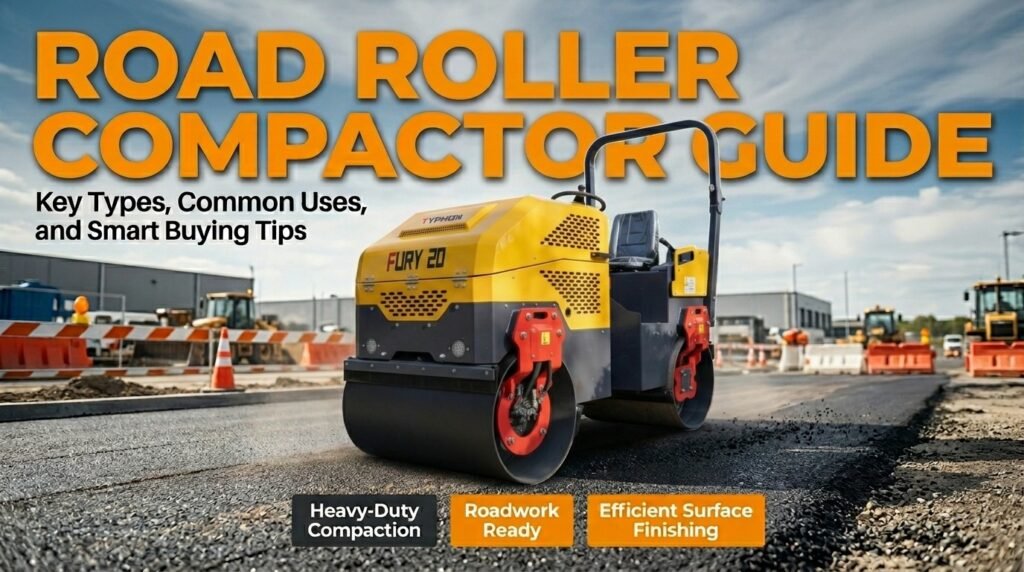
Choosing the right road roller compactor starts with the material you need to compact.
If you are working mostly on soil, fill, or sub-base, a single drum soil compactor is often the better fit. If your main work is asphalt paving or resurfacing, a tandem roller usually makes more sense. If you need kneading action for asphalt layer bonding or chip seal work, a pneumatic tire roller may be the better option.
You should also look at:
Project size. Small jobs and narrow areas may need a compact roller. Larger road jobs may need a heavier machine with more coverage.
Material type. Granular material and cohesive soil do not respond the same way, so drum choice matters. Smooth drums and padfoot drums serve different purposes.
Required finish quality. For final asphalt smoothness, a tandem roller is often preferred. For deep soil compaction, a single drum compactor may be more effective.
Working space. Tight job sites need better maneuverability and sometimes narrower machines. Dynapac notes that smaller soil compactors are useful in confined spaces and trench-related work.
Features and operator support. Some modern machines include compaction measurement or operator-assist systems that help improve consistency and reduce unnecessary passes.
Tips for operating a road roller compactor efficiently
A road roller compactor gives the best results when the operator works with the material, not against it.
Start with the correct machine for the surface. Using the wrong drum or roller type can slow the job and still give poor density.
Keep passes consistent and avoid random overlapping. Modern compaction practice focuses on reaching target density without wasting time, fuel, or extra passes. Assistance systems and compaction tracking are becoming more common for this reason.
For asphalt work, timing matters. The material must still be in the right condition for compaction. For soil work, moisture condition and lift thickness can affect how well the compactor performs. Volvo’s compaction guidance emphasizes that compaction is a scientific process involving force, frequency, and material behavior, not simply rolling until the surface looks finished.
Good visibility, controlled speed, and proper pass planning also help reduce weak spots and rework.
Road roller compactor maintenance basics
Like any heavy machine, a road roller compactor performs better when it is maintained properly.
Daily checks should include the drum area, tires if fitted, fluid levels, visible leaks, and any signs of wear or damage. Keeping the machine clean is also important, especially in asphalt work where buildup can affect performance.
It is also smart to watch for changes in vibration performance, steering feel, braking response, and surface finish quality. If the machine starts needing more passes than usual, that can be a sign something is not working as it should.
Routine maintenance does not only protect the roller. It also protects compaction quality, fuel efficiency, and project timelines.
Conclusion
A road roller compactor is a key machine for building stable, long-lasting surfaces. The right machine helps improve density, smoothness, and overall job quality.
The best choice depends on what you are compacting, how large the project is, and what kind of finish you need. Single drum rollers are often better for soil and base work. Tandem rollers are commonly used for asphalt finishing. Pneumatic tire rollers bring extra flexibility where kneading action is needed.
If you choose the right road roller compactor and use it correctly, you get better results, fewer problems later, and a stronger surface from the start.


