
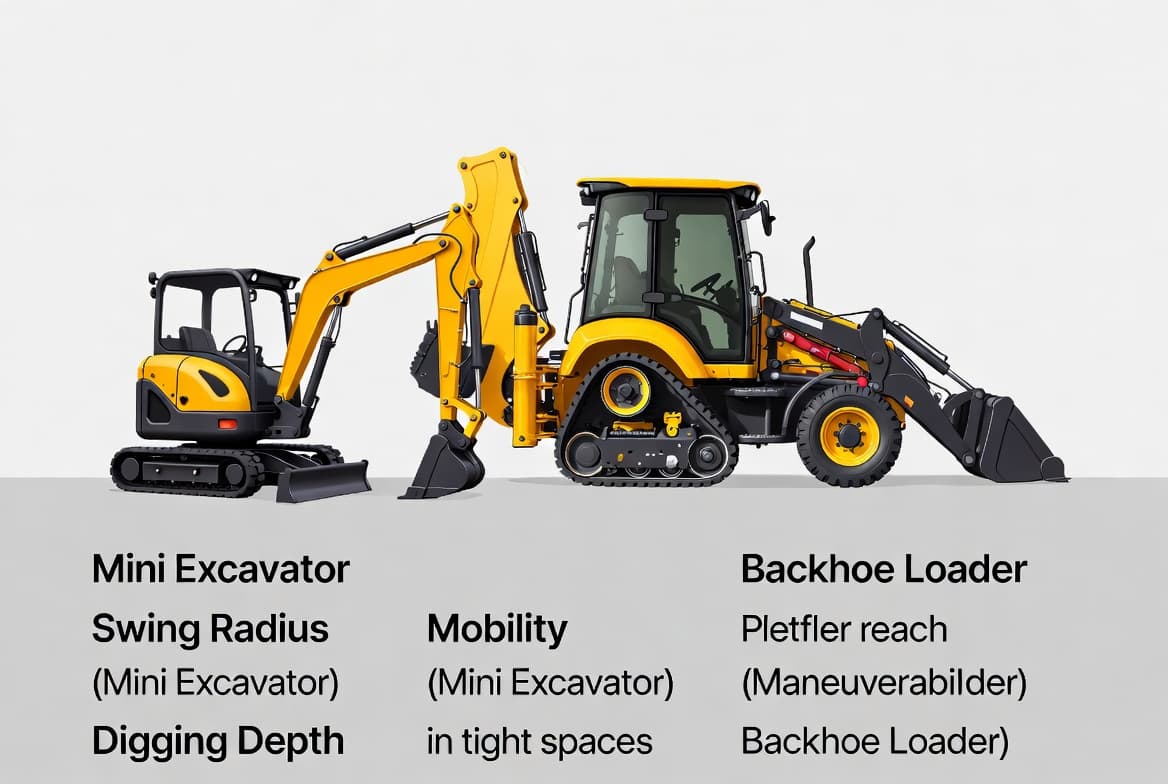
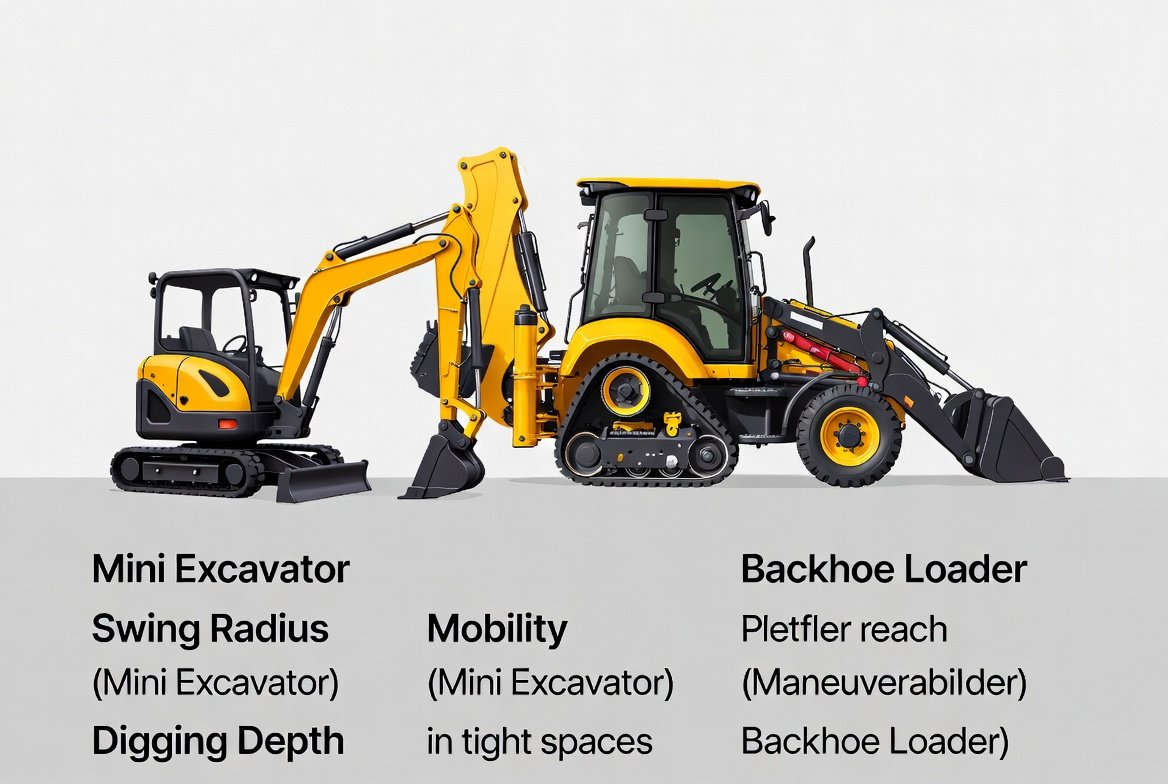
Mini excavators and backhoe loaders are two of the most widely used compact machines in construction, landscaping and utility work. A mini excavator is a tracked or wheeled machine optimised for digging, with a full 360-degree rotating upper structure. Typical operating weights range from approximately 1 to 10 tonnes, engine power from 14 to 55 hp, and digging depths from 1.5 to 5.5 m depending on size class. Ground pressure is low, especially on rubber tracks, making the machine suitable for finished surfaces and soft ground. The machine must normally be transported on a trailer between sites. A backhoe loader combines a front-end loader with a rear digging arm on a wheeled tractor chassis. Operating weights typically fall between 7 and 11 tonnes for compact-to-mid-size models, with engine power commonly 50–90 hp. Digging depth is often 4.0–6.8 m. The wheeled design allows road travel at speeds up to 30–40 km/h in many markets, eliminating the need for a trailer on short moves. The front loader provides material-handling capacity that a pure excavator lacks, while the rear backhoe supplies digging capability. Swing of the backhoe is limited (typically around 180–200 degrees). Key decision factors include site constraints, the balance between digging and loading, transport logistics, and total cost of ownership. Mini excavators excel in confined urban sites, precision trenching and low ground-disturbance work. Backhoe loaders excel when one machine must dig, load, backfill and travel between nearby locations. Purchase and operating costs for mini excavators are generally lower; backhoe loaders command higher capital and fuel costs but can replace two separate machines on many jobs.
When comparing specific models, always consult the current manufacturer specification sheets and load charts for the exact configuration under consideration. Published typical ranges above are drawn from industry sources current as of 2025–2026 and are intended for orientation; individual model performance can vary with options, undercarriage, and attachment configuration. A structured decision matrix that weights the factors most important to the intended application—terrain, duty cycle, transport, residual value, and operator preference—produces the most reliable selection.
Total cost of ownership remains the ultimate measure. Capital cost, fuel or energy, maintenance, transport, residual value and downtime must all be quantified over the planned ownership period. Side-by-side demonstration on the actual job site, when possible, remains the most conclusive validation of which machine will deliver the higher productivity and lower risk for a given contractor or fleet.
Get More Expert Guides & Updates
Subscribe for Machinery.org guide updates and product learning content.