How Operator Inputs Are Converted into Machine Movement
Introduction
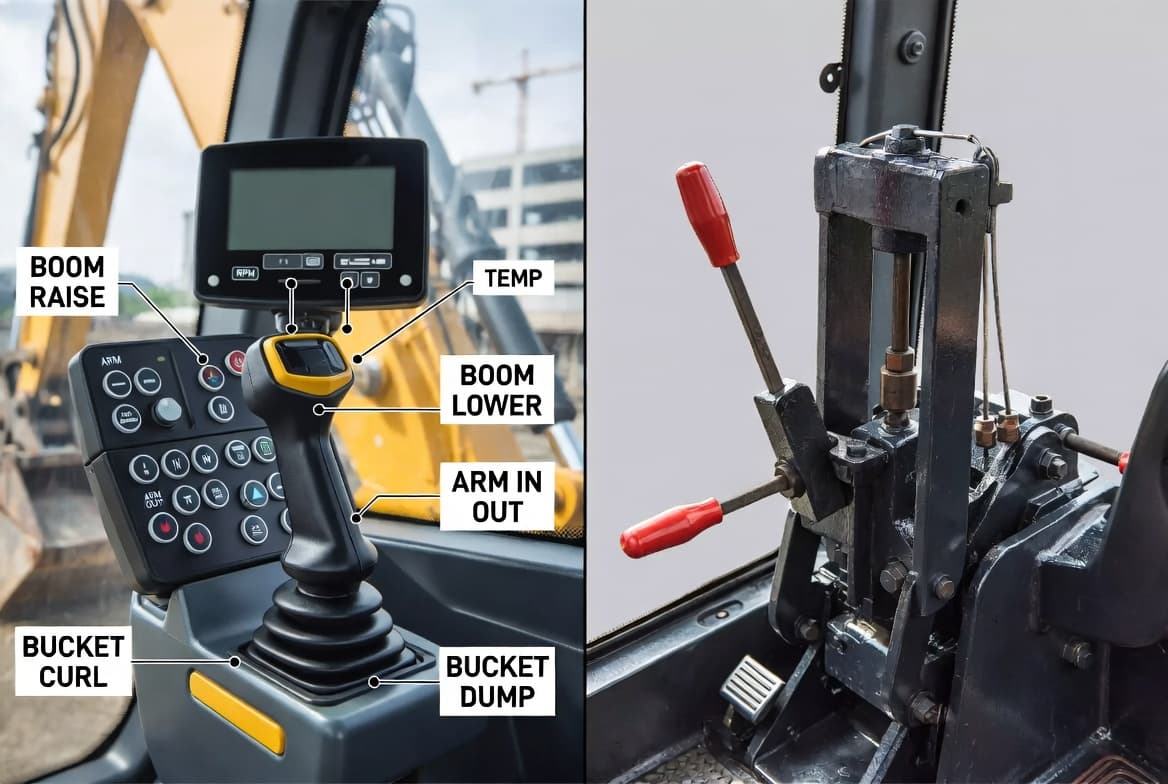
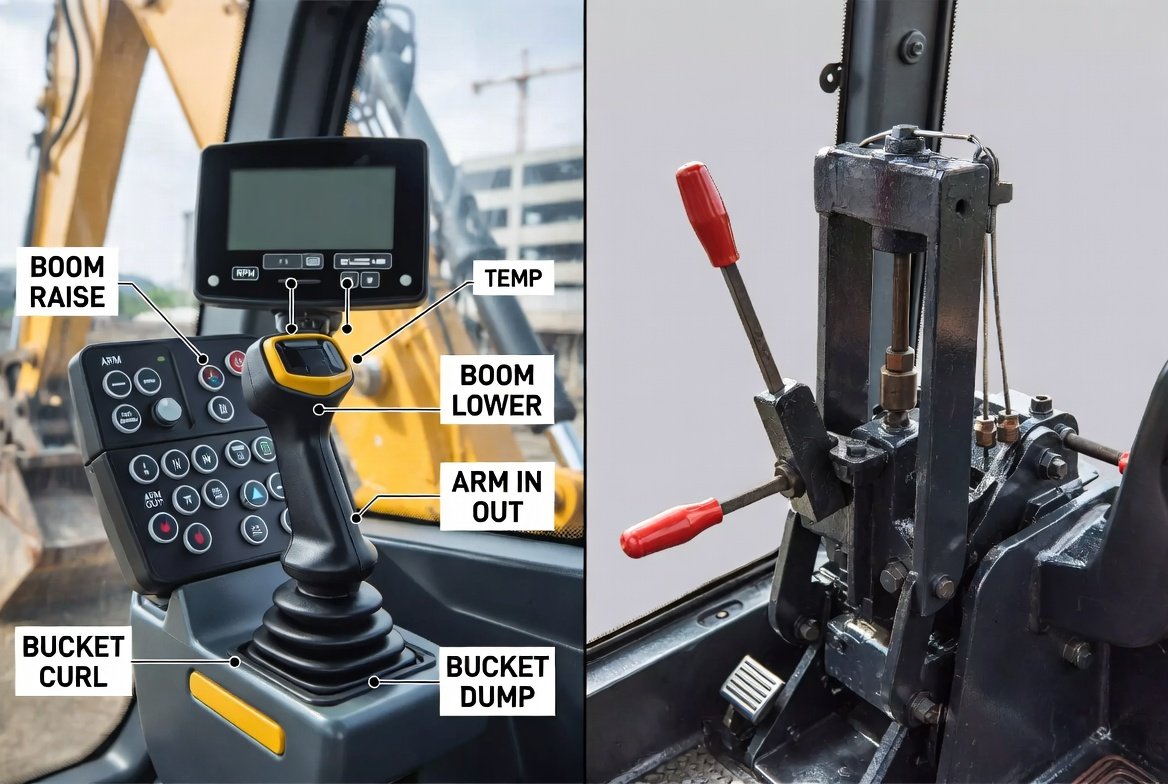
The way an operator commands the hydraulic functions of a machine has evolved significantly. Older machines used direct mechanical linkages or cable controls. Almost all modern construction equipment uses hydraulic pilot controls (often called “pilot controls” or “joystick controls”). Understanding the difference helps operators adapt between machines and helps buyers appreciate why modern controls feel smoother and less fatiguing.
Mechanical Controls
On older equipment, the operator’s levers were mechanically linked (through rods, cables, or direct valve spools) to the main hydraulic control valves. Moving a lever required enough force to shift the valve spool against spring pressure and hydraulic forces. The effort could be high, especially on larger machines, and fine control demanded physical strength and skill.
Characteristics of Mechanical Controls
- Direct feel – the operator senses resistance and feedback through the levers
- Higher physical effort required
- Simpler hydraulic system – fewer pilot lines and smaller components
- Still found on some very small or older machines
Pilot Controls (Hydraulic Pilot / Joystick)
Pilot control systems use a low-pressure hydraulic circuit (or electronic signals on the newest machines) to operate the main control valves. The operator moves light joysticks or mini-levers that only need to shift small pilot valves. These pilot valves then send hydraulic pressure to the ends of the main valve spools, moving them with very little operator effort.
Characteristics of Pilot Controls
- Very low operating effort – dramatically reduced operator fatigue
- Excellent fine control and modulation
- Allows ergonomic joystick layouts and armrest mounting
- Enables advanced features such as pattern changers, auxiliary flow control, and electronic control systems
- Standard on virtually all modern excavators, loaders, and skid steers
Why the Industry Moved to Pilot Controls
Pilot controls solved several long-standing problems. Operators could work longer shifts with less fatigue. Fine grading and precise placement became easier. Manufacturers could offer standardized control patterns (ISO or SAE) that operators could switch between. The reduced effort also made it practical to add more functions (blade, swing, auxiliary hydraulics) without overwhelming the operator with heavy levers.
Operator Considerations
Operators moving from mechanical to pilot controls often need a short adjustment period. Pilot systems feel lighter and more responsive; over-controlling is common at first. Conversely, operators who grew up on pilot controls may find older mechanical machines tiring and less precise. Many modern machines also allow the operator to select different control patterns and to adjust joystick sensitivity.
Key Takeaways
Mechanical controls provide direct feedback but require significant physical effort and are largely obsolete on new equipment. Pilot controls use low-effort joysticks to command the main hydraulic valves, delivering better precision, lower fatigue, and greater flexibility for advanced features. Understanding the difference helps operators adapt between machines and helps buyers appreciate the productivity and comfort benefits of modern control systems.
This article is part of the Heavy Machinery Learning Center – Machinery Basics series.
Get More Expert Guides & Updates
Subscribe for Machinery.org guide updates and product learning content.