

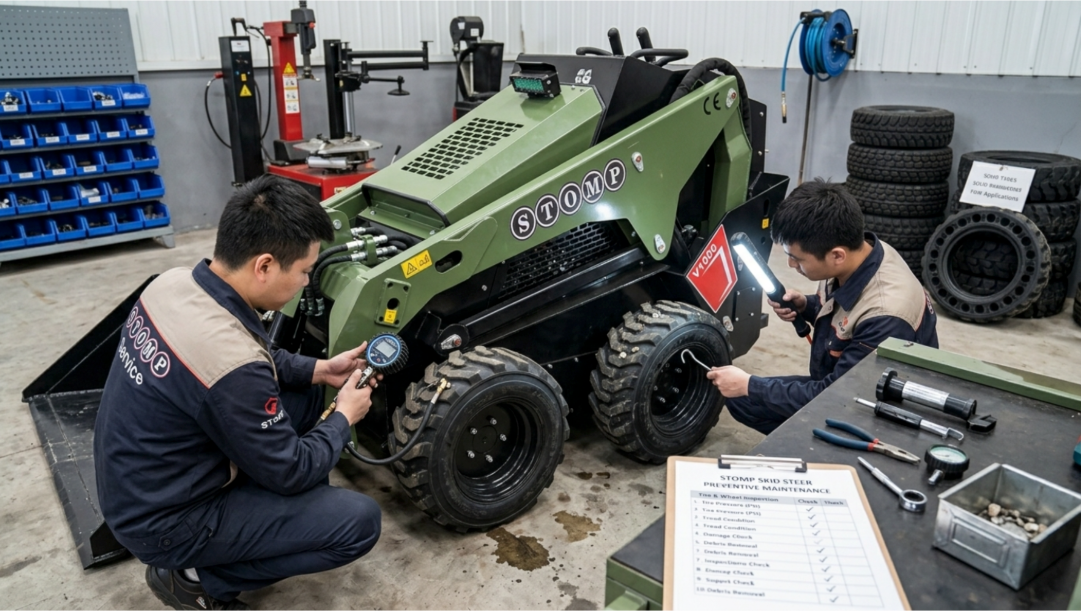
Your skid steer is only as productive as the tires that carry it. When a tire fails mid-job, work stops, deadlines slip, and repair bills climb. Yet many operators wait too long to act, or replace tires that still had plenty of service life left. Knowing the difference between a fixable problem and a full replacement saves you real money and keeps your machine working when you need it most.
This guide walks you through everything you need to make smart tire decisions. You'll learn the main tire types, how to spot damage early, when a repair makes sense, and when replacement is the only safe choice. We'll also cover how your worksite affects tire wear, break down the true cost of repair versus replacement, and share maintenance habits that stretch every dollar you invest in tires.
Understanding Skid Steer Tire Types
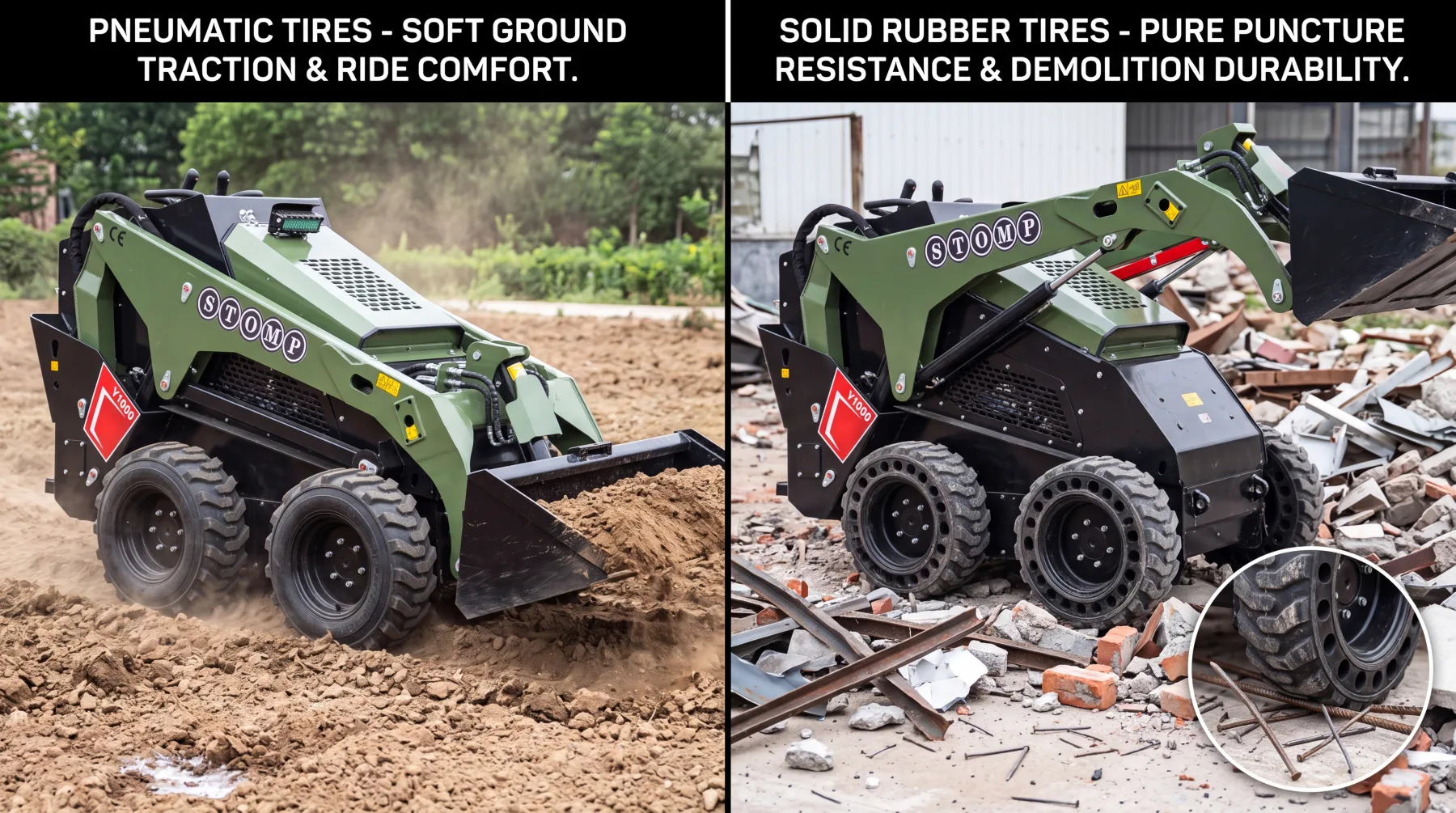
Before you can judge whether a tire needs repair or replacement, you need to know what kind of tire you're working with. The type you run changes how it wears, how it fails, and whether a fix is even possible. If you are trying to decide which style fits an upcoming job site, reviewing a comprehensive breakdown of solid vs pneumatic skid steer tires can help clarify your baseline needs. Most machines roll on one of these two main styles, and each behaves very differently in the field.
Pneumatic Tires
Pneumatic tires are air-filled, much like the tires on a truck or car. They cushion the ride, reduce operator fatigue, and perform well on softer ground where flotation matters. Because they flex, they spread the machine's weight across a wider footprint, which helps on grass, sand, or soft soil where you don't want to tear up the surface.
The Trade-Off
The downside is vulnerability. Air-filled tires can puncture, go flat, or blow out when they meet nails, rebar, glass, or sharp rock. On a debris-heavy demolition site, that risk multiplies fast. The upside is that minor punctures in a pneumatic tire are often repairable, which gives you more options when damage shows up.
Solid Tires
Solid tires, sometimes called flat-proof or solid rubber tires, contain no air at all. They're built from dense rubber the whole way through, so a nail or shard of metal simply can't deflate them. For operators working in scrap yards, recycling centers, or demolition zones, that puncture resistance is a game changer for uptime.
The Trade-Off
The downside is a stiffer ride and a higher upfront cost. Solid tires also transfer more vibration to the machine and operator, which can wear other components over time. When a solid tire reaches the end of its life, repair usually isn't an option the way it is with pneumatics. Instead, you replace it once the tread is gone or the rubber starts to crack and separate.
When Replacement Is the Only Option
Some damage simply can't be fixed safely, and trying to repair it puts your crew and your machine at risk. Recognizing these situations protects you from wasting money on a fix that won't hold and, more importantly, from a dangerous failure on the job.
Sidewall and Structural Damage
Sidewall damage is the clearest example. The sidewall flexes constantly as the machine moves, so a patch in that area rarely holds and can fail without warning. Any cut, bulge, or crack in the sidewall means the tire has reached the end of its road.
The same goes for large punctures, multiple punctures close together, or any damage that exposes or severs the internal cords. Once the structural integrity is compromised, no repair can restore it.
Worn Tread and Aging Rubber
Worn-out tread is another point of no return. When the tread is bald or below the manufacturer's minimum depth, the tire can no longer grip or shed material properly, and a patch does nothing to bring back lost rubber. For solid tires, replacement is the standard outcome once the tread wears down or the rubber begins to crack and chunk apart.
Age also plays a role, since rubber hardens and develops dry rot over the years even on lightly used machines. A tire that's been cracking from age should be replaced regardless of how much tread remains, because the rubber has lost the flexibility it needs to perform safely.
How Operating Conditions Affect Tire Lifespan
Where and how you run your skid steer has a massive impact on how long your tires last. Two identical machines can see wildly different tire life depending on the surfaces they cross and the way they're operated. Understanding these factors helps you set realistic replacement expectations and adjust your habits to get more hours out of every tire.
Surface Type
Surface type is the biggest variable. Smooth concrete and packed dirt are relatively gentle, while abrasive surfaces like crushed rock, asphalt, and demolition debris grind down tread quickly. Scrap yards and recycling sites are especially hard on tires because of all the sharp metal and glass underfoot. If your machine spends its days on rough, cutting surfaces, expect to inspect and replace tires more often than an operator working on softer ground.
Operator Habits and Climate
Operator behavior matters just as much. Aggressive turning, spinning the wheels, and carrying overloaded buckets all accelerate wear and heat buildup, which shortens tire life. The skid steer's signature zero-radius turn is tough on tires by design, so smooth, deliberate steering pays off over time.
Climate plays a role too, since extreme heat softens rubber and speeds wear while cold and UV exposure can dry it out and cause cracking. Finally, proper inflation on pneumatic tires is critical, because running underinflated builds heat and damages the internal structure, while overinflation reduces the contact patch and causes uneven wear.
Cost Comparison: Repair vs. Replace
Money drives most maintenance decisions, and tires are no exception. Putting real numbers behind your choice helps you avoid both overspending on premature replacements and the false economy of repairing a tire that's near the end of its life. The right call depends on the cost of the fix, the remaining life of the tire, and the hidden price of downtime.
When Repair Wins on Cost
A professional puncture repair on a pneumatic tire is almost always cheaper than buying a new one, often by a wide margin. If the tire has significant tread left and the damage is within safe repair limits, the repair is the obvious choice.
The math changes when the tire is already worn. Paying to patch a tire that's two-thirds of the way through its tread simply delays an inevitable purchase, and you may end up paying for labor twice in a short window.
The Hidden Cost of Downtime
Don't forget the cost of downtime, which is the figure operators most often overlook. Every hour your skid steer sits idle is an hour you're not billing, not finishing the job, or not freeing up the machine for the next task.
Sometimes replacing a marginal tire outright is the smarter financial move, because it buys you reliability and removes the risk of a repeat failure that pulls the machine off the job again. Weigh the cost of the fix against the value of dependable uptime, and the right answer usually becomes clear.
Reading the Total Value, Not Just the Sticker Price
Solid tires illustrate this principle well. Their higher purchase price can scare off buyers who focus only on the upfront number, but in puncture-prone environments they often deliver a lower cost per hour because they eliminate flat-related downtime entirely.
When you compare options, look at the full picture: purchase price, expected service hours, repair potential, and the cost of lost production. A tire that costs more today can easily be the cheaper choice over its working life.
Maintenance Tips to Extend Tire Life
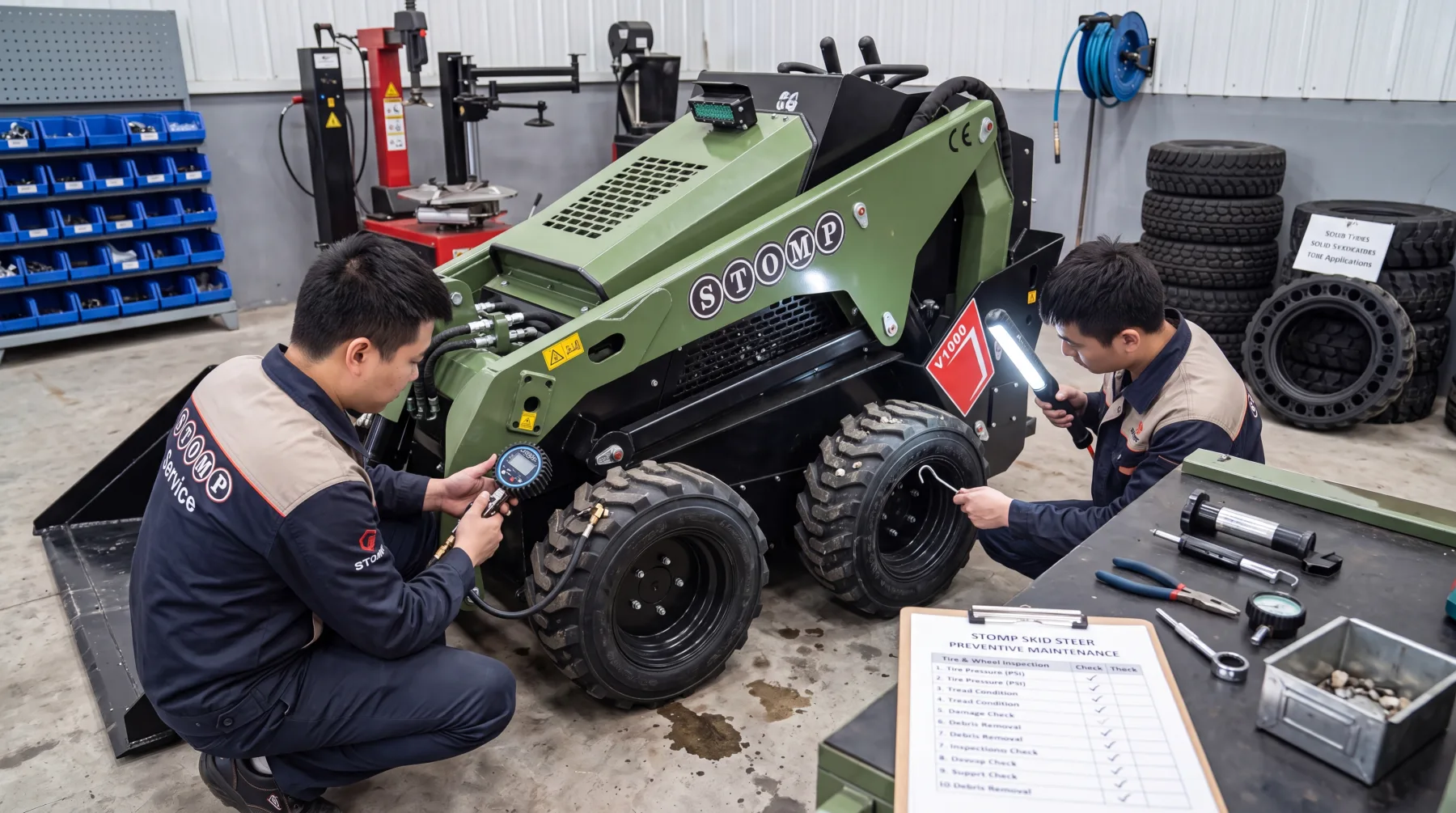
The best tire is one you rarely have to think about, and consistent maintenance is what keeps it that way. A few simple habits dramatically extend tire life, cut down on surprise failures, and protect the rest of your machine in the process. None of this takes much time, and the payoff in reliability and savings is well worth the effort.
Inspections and Pressure
Start with regular inspections, ideally before every shift. A quick visual check for cuts, embedded debris, low pressure, and uneven wear catches small issues before they grow.
On pneumatic tires, keep inflation at the manufacturer's recommended level and check it often, since correct pressure is the foundation of even wear and long life. Rotating tires periodically also helps balance wear across all four positions, which is especially valuable given how differently the front and rear can wear on a skid steer.
Smart Habits and Storage
Beyond inspections and pressure, smart operating habits and proper storage make a real difference. Train operators to steer smoothly, avoid unnecessary wheel spin, and resist overloading the bucket, all of which reduce strain and heat.
Keep your worksite as clear of sharp debris as conditions allow, and when a machine sits unused for long stretches, store it out of direct sunlight to slow UV damage and cracking. Keep a simple log of inspections and replacements too, because a written record helps you spot wear patterns, plan purchases ahead of time, and support the machine's resale value down the road.
Conclusion
Tire care comes down to a few clear principles. Know your tire type, inspect often, and act on damage before it forces your hand. Small, clean punctures in pneumatic tread are usually worth repairing, while sidewall damage, worn tread, structural failure, and age-related cracking all point firmly toward replacement. Your operating conditions set the pace of wear, and weighing repair cost against the price of downtime keeps your decisions grounded in real value rather than guesswork.
Treat your tires as the critical investment they are, and they'll reward you with steady uptime and lower long-term costs. Build a simple inspection routine into your daily startup, keep your pressures in check, and replace tires the moment safety calls for it. Do that consistently, and your skid steer will stay productive, dependable, and ready for whatever the next job throws at it.


