

A road roller is one of the most common machines used for compaction work. You will see it on road projects, parking lots, driveways, construction sites, and ground preparation jobs.
Its job looks simple: roll over the surface and press material down. But choosing and using the right roller matters. The wrong machine can leave soft spots, uneven surfaces, or weak pavement layers.
This guide explains what a road roller does, the main types, where it is used, and what buyers should check before choosing one.
What Is a Road Roller?
A road roller is a compaction machine used to press soil, gravel, asphalt, or other surface materials into a firm and even layer. It uses the weight of the machine, the drum, and sometimes vibration to reduce air gaps inside the material.
Compaction is important because loose ground does not support weight well. If the base layer under a road or driveway is not compacted properly, the surface can sink, crack, or become uneven over time.
Road rollers come in different sizes. Some are small walk-behind rollers for narrow spaces. Others are large ride-on rollers used for road construction, highways, and commercial paving work.
The right roller depends on the material, job size, work area, and required compaction depth.
How a Road Roller Works
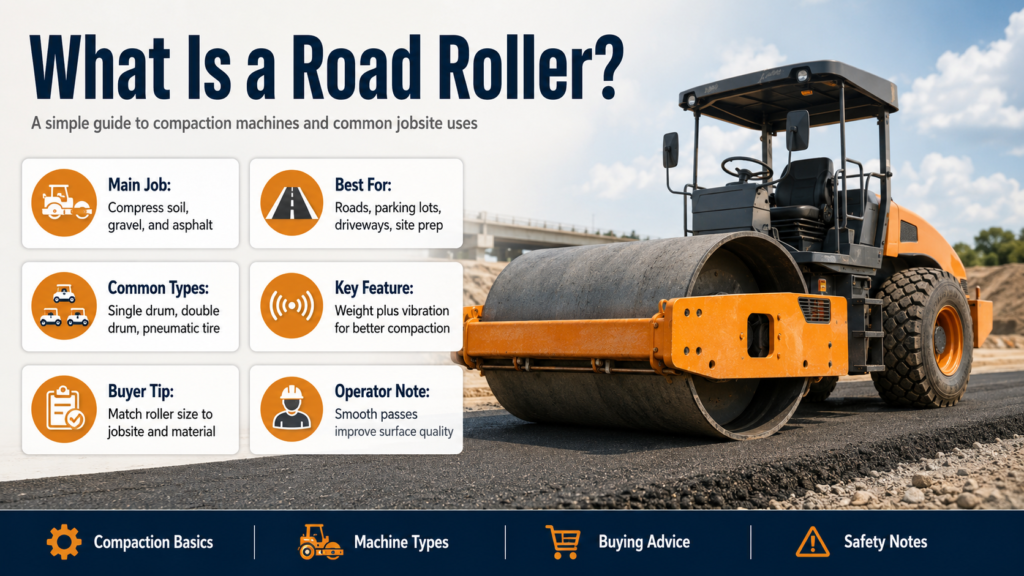
A road roller works by applying pressure to the ground through one or more drums or tires. As the machine moves forward and backward, it presses the surface material together.
Some rollers use static pressure only. This means the machine relies on its own weight to compact the surface. Static rollers are useful for certain finishing jobs and materials that do not need deep vibration.
Vibratory rollers use a vibrating drum. The vibration helps move particles closer together, which can improve compaction depth and speed. This is common for soil, gravel, and asphalt work.
Operators usually make several passes over the same area. A pass means one complete movement across the surface. Too few passes may leave the material loose. Too many passes can waste time and may damage some materials, especially hot asphalt.
Good compaction is not only about machine size. Moisture, material type, layer thickness, speed, and operator control all affect the final result.
Common Road Roller Uses
Road rollers are used in many jobs where the surface must be firm, smooth, and stable.
One of the most common uses is road construction. Rollers compact the base layer before paving and then compact the asphalt after it is laid. This helps create a stronger road surface that can handle traffic.
They are also used for parking lots, driveways, sidewalks, warehouse yards, and industrial sites. Any area that needs a stable base can benefit from proper compaction.
For landscaping and property work, smaller rollers can compact paths, gravel areas, and prepared soil. On farms or large private properties, rollers may be used for access roads and yard surfaces.
In construction, rollers help prepare building pads, trench backfill, and site roads. A stable surface makes it easier and safer for trucks, loaders, excavators, and other equipment to move around.
Main Types of Road Rollers
There is no single road roller that fits every job. Each type is built for a different surface, material, and compaction need.
Single Drum Roller
A single drum roller has one large steel drum at the front and tires at the rear. It is often used for soil, gravel, and base material compaction.
This type is common on road base work, site preparation, and large earthwork projects. The drum provides strong compaction, while the rear tires help with traction and movement.
Single drum rollers are a good choice when the job involves compacting loose soil or aggregate before paving.
Double Drum Roller
A double drum roller has steel drums at both the front and rear. It is often used for asphalt and smooth surface compaction.
Because both drums contact the ground, this type can leave a clean and even finish. It is common on road paving, parking lots, and driveway projects.
Double drum rollers are not the best choice for loose soil because they do not have rubber tires for strong traction. But for asphalt finishing, they are very useful.
Pneumatic Tire Roller
A pneumatic tire roller uses several rubber tires instead of steel drums. The tires knead the surface and help seal asphalt or compact certain base materials.
This type is often used in road paving because it can create a dense, smooth surface. The tire pressure can usually be adjusted based on the job.
Pneumatic rollers are useful when the surface needs a more flexible compaction pattern instead of a hard steel drum finish.
Walk-Behind Roller
A walk-behind roller is smaller and controlled by an operator walking behind the machine. It is useful for tight areas where a larger ride-on roller cannot fit.
Common uses include sidewalks, small driveways, patch repairs, trenches, and landscaping jobs.
Walk-behind rollers do not offer the same output as large machines, but they are practical for small spaces and lighter compaction work.
What to Check Before Buying a Road Roller
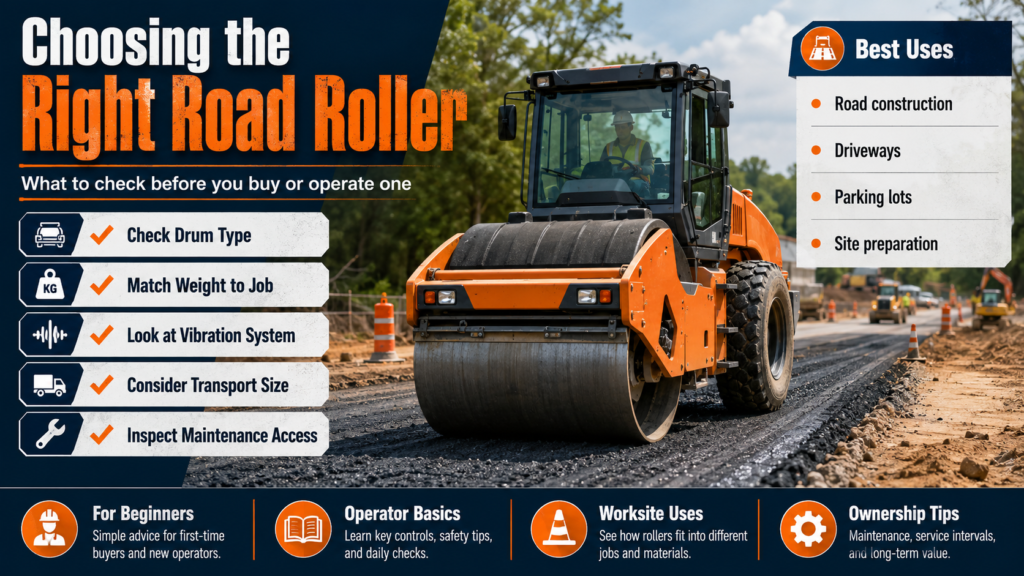
Before buying a road roller, start with the type of work you need to handle most often. A roller for asphalt paving is not always the right choice for soil compaction.
Check the machine size and drum width. A wider drum covers more area faster, but it may be harder to use in narrow spaces. A smaller roller is easier to move and transport, but it may take longer on large jobs.
Look at operating weight. Heavier machines usually provide stronger compaction, but they may not be suitable for soft ground, small sites, or light-duty work.
For vibratory rollers, check vibration force and frequency. These affect how well the roller compacts different materials. Soil, gravel, and asphalt do not always need the same vibration setting.
Also think about transport. A large road roller may need a trailer, truck, loading ramps, or extra planning. For small contractors, transport cost can affect the real cost of owning the machine.
Comfort and visibility also matter. The operator should be able to see the drum edges, work area, and nearby workers clearly. Simple controls are helpful, especially for new operators.
If buying used, inspect the drum surface, hydraulic system, engine, vibration system, tires, leaks, service records, and overall frame condition. A cheap used roller can become expensive if it needs major repairs right away.
Road Roller Operation and Safety Basics
A road roller should be operated slowly and steadily. Fast driving can reduce compaction quality and make the surface uneven.
The operator should follow a clear rolling pattern. Random passes can create missed areas or uneven density. On asphalt, the rolling pattern matters even more because timing and temperature affect the final finish.
Always check the work area before starting. Look for soft edges, slopes, trenches, workers nearby, overhead hazards, and uneven ground. Rollers are heavy machines, and poor ground conditions can increase the risk of tipping or slipping.
Operators should avoid sudden turns, sharp braking, and fast direction changes. These actions can damage the surface and make the machine harder to control.
Good communication is important on busy jobsites. Spotters, pavers, truck drivers, and ground workers should know where the roller is moving. People should never stand close to the machine while it is operating.
For new operators, training is worth the time. A road roller may look easy to drive, but proper compaction takes judgment, patience, and awareness.
Simple Maintenance Tips for Better Performance
Basic maintenance helps a road roller work better and last longer. It also reduces downtime on active jobs.
Before each use, check engine oil, coolant, hydraulic fluid, fuel level, and visible leaks. Look at hoses, fittings, belts, tires, and the drum surface.
The drum should be clean. Dirt buildup, asphalt sticking, or uneven material on the drum can affect the finish. For asphalt work, the water spray system should also be checked so the drum does not pick up hot asphalt.
Hydraulic systems need attention because rollers depend on hydraulics for steering, drive, vibration, and other functions. Small leaks should not be ignored.
For vibratory rollers, listen for unusual noise from the vibration system. Weak vibration, strange shaking, or loud mechanical sounds can point to a problem.
Keep service intervals on schedule. Filters, fluids, grease points, and wear parts should be maintained based on the machine manual. Skipping simple service can shorten the life of the machine.
Conclusion
A road roller is a practical machine for creating strong, level, and stable surfaces. It is used for roads, asphalt, gravel, soil, driveways, parking lots, and many construction jobs.
The best choice depends on your material, job size, work area, and compaction needs. For buyers, the main goal is not just finding a roller that looks powerful. It is finding one that matches the work you actually do.
A well-chosen and well-maintained roller can improve surface quality, reduce rework, and make compaction jobs easier to manage.