
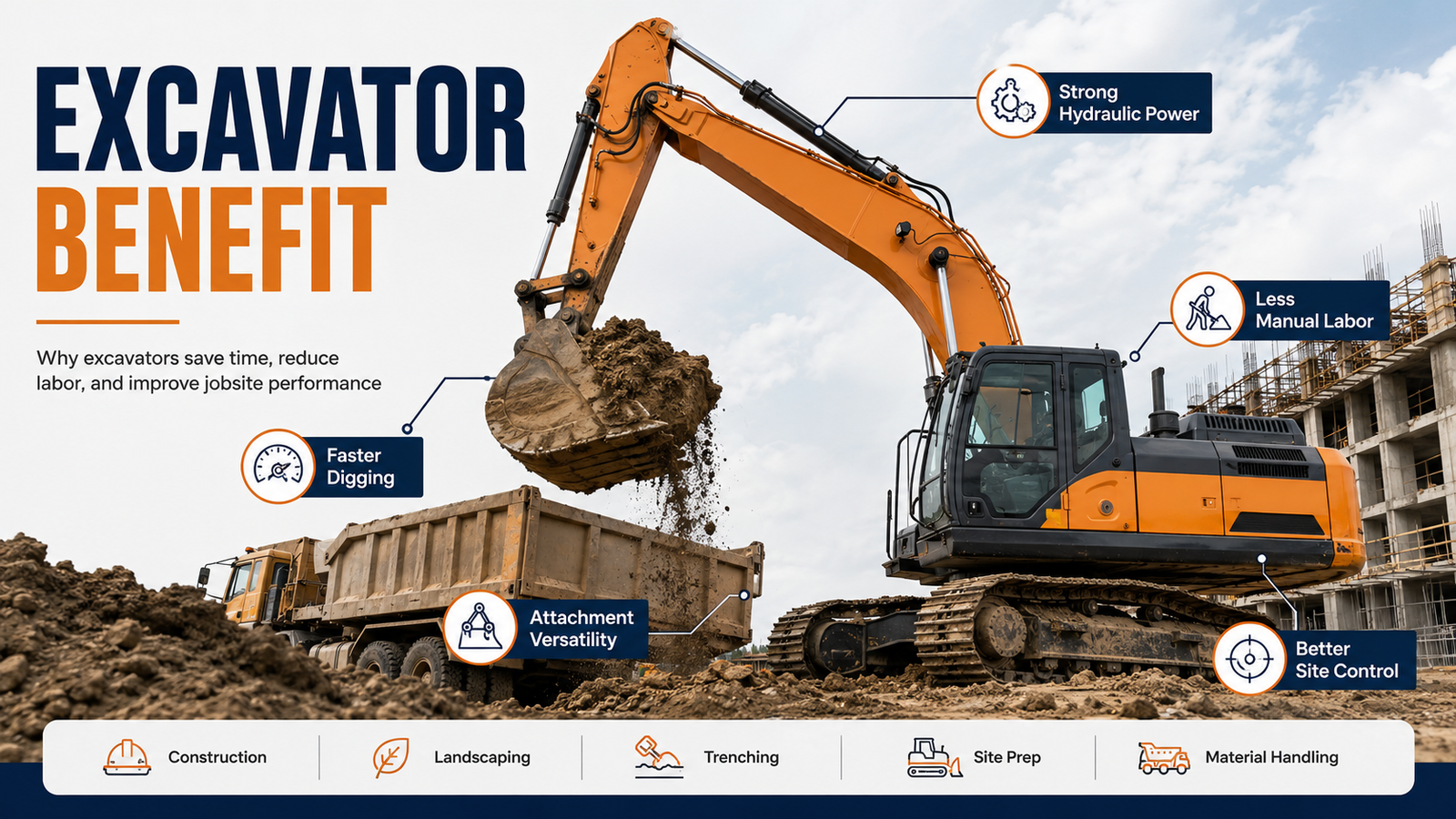
An excavator is one of the most useful machines on a jobsite because it can dig, lift, trench, grade, clear, and handle attachments. The main excavator benefit is simple: it helps crews finish heavy work faster and with better control than doing the same work by hand or with smaller tools.
For buyers, operators, and business owners, understanding the real benefits of an excavator makes it easier to choose the right machine for the job. It also helps avoid buying equipment that is too small, too large, or not practical for daily work.
What Is the Main Excavator Benefit?
The biggest excavator benefit is its ability to do tough earthmoving work with power, reach, and control. An excavator can remove soil, dig trenches, lift materials, break concrete, clean land, and shape rough ground.
Unlike simple digging tools, an excavator gives the operator strong hydraulic power from the cab. This means the machine can work through packed soil, gravel, clay, roots, and jobsite debris with less physical effort.
For many jobs, this makes a major difference. A task that may take several workers a full day by hand can often be done much faster with the right excavator and attachment.
Excavators Save Time on Digging and Site Prep
One of the clearest benefits of an excavator is speed. Digging is slow and tiring when done manually, especially when the ground is hard or the trench needs to be deep and even.
Excavators are commonly used for:
- Digging foundations
- Cutting utility trenches
- Removing stumps
- Leveling rough ground
- Loading soil into trucks
- Clearing rocks and debris
- Preparing land before construction
The machine’s boom, arm, bucket, and hydraulic system allow the operator to move a lot of material in a controlled way. This helps crews stay on schedule, especially when weather, delivery timing, or other trades depend on site prep being finished.
For small jobs, a mini excavator can be enough. For larger construction work, a bigger excavator may be needed for deeper digging, heavier lifting, and longer reach.
Excavators Handle More Than One Type of Work
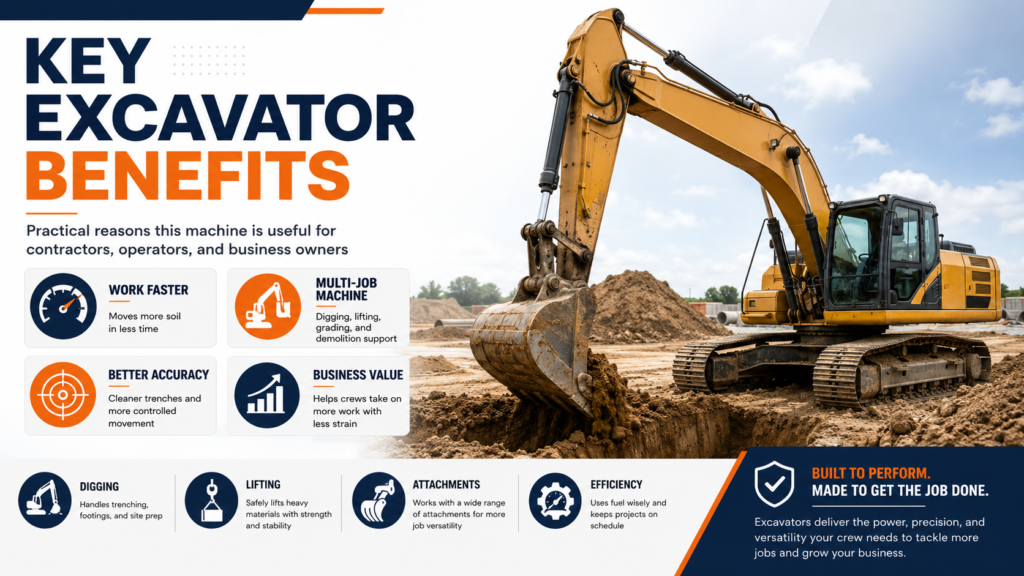
Another strong excavator benefit is versatility. An excavator is not limited to one job. With the right attachment, it can support many types of work.
Common excavator attachments include:
- Buckets for digging and loading
- Hydraulic breakers for concrete and rock
- Augers for drilling holes
- Grapples for handling logs, brush, and debris
- Rippers for breaking hard ground
- Thumbs for grabbing and placing materials
- Grading buckets for shaping and finishing soil
This makes excavators useful for contractors, landscapers, farmers, demolition crews, utility workers, and property owners. A business can often use one excavator for many different tasks instead of relying on several separate machines.
For buyers, attachment compatibility is important. Before choosing a machine, check the hydraulic flow, coupler type, machine weight, lift capacity, and attachment size.
Excavators Help Improve Jobsite Accuracy
Excavators are not only about power. They also help with control. A skilled operator can dig clean trenches, shape slopes, place materials, and work around tight areas with good accuracy.
This is useful when working near:
- Buildings
- Fences
- Pipes
- Drainage lines
- Roads
- Landscaping areas
- Other machines or workers
Mini excavators are especially helpful in tight spaces because they can work in areas where larger machines may not fit. Some models have compact tailswing, retractable tracks, or boom swing, which helps when working beside walls, gates, or narrow paths.
Better accuracy can also reduce rework. If a trench is cleaner, a slope is shaped properly, or material is placed correctly the first time, the crew spends less time fixing mistakes.
Excavators Can Reduce Heavy Manual Labor
Excavator work still needs skill, planning, and safe operation, but it reduces the amount of heavy manual labor needed on many jobs. Workers do not need to dig as much by hand, carry as much material, or break hard ground with basic tools.
This can help crews work more efficiently and reduce physical strain. It also allows workers to focus on layout, checking measurements, guiding the machine, preparing materials, and finishing details.
For small business owners, this matters. A compact excavator can allow a small crew to take on jobs that would be difficult with hand tools alone. Landscaping, drainage work, trenching, small demolition, and property cleanup can become more manageable with the right machine.
Excavators Support Different Business Needs
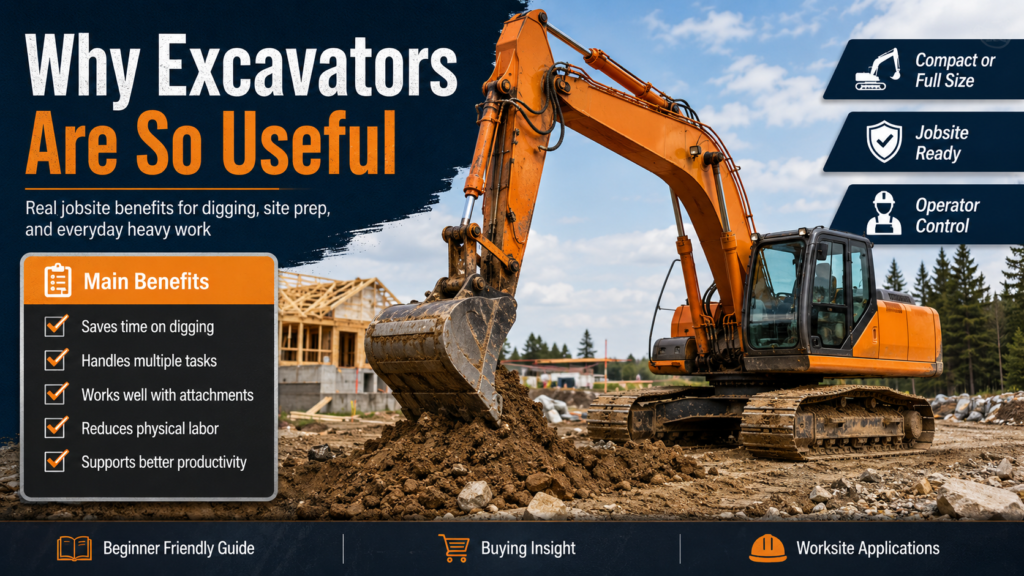
Excavators are useful across many industries because they solve common jobsite problems. The same machine can support digging, loading, clearing, lifting, and attachment work.
For contractors, an excavator can help with foundations, trenching, and site prep.
For landscapers, it can help with grading, pond digging, stump removal, and drainage work.
For farmers and landowners, it can help with ditch cleaning, fence line work, tree removal, and field maintenance.
For demolition crews, it can help break concrete, remove debris, and sort materials with attachments.
For rental businesses, excavators are also popular because many customers need them for short-term digging and property projects.
The right excavator can become a regular part of daily work instead of a machine that only gets used once in a while.
What to Check Before Choosing an Excavator
Not every excavator is right for every job. The benefit depends on choosing a machine that matches the work.
Before buying or renting, check:
- Machine size and operating weight
- Digging depth
- Bucket size
- Engine power
- Hydraulic performance
- Lift capacity
- Width and transport needs
- Ground condition
- Attachment compatibility
- Ease of service and maintenance
A small machine is easier to transport and better for tight areas, but it may not have enough reach or power for heavy work. A larger excavator can move more material, but it needs more space, a bigger trailer, and stronger site access.
For most buyers, the best choice is not always the biggest machine. It is the machine that fits the job, the budget, the worksite, and the operator’s skill level.
Conclusion
The main excavator benefit is that it brings power, control, and flexibility to jobs that would be slow or difficult by hand. Excavators help with digging, lifting, clearing, grading, demolition, and attachment work.
For beginners and business owners, the key is choosing the right size and setup. A good excavator should match the work you do most often, not just look strong on paper.