
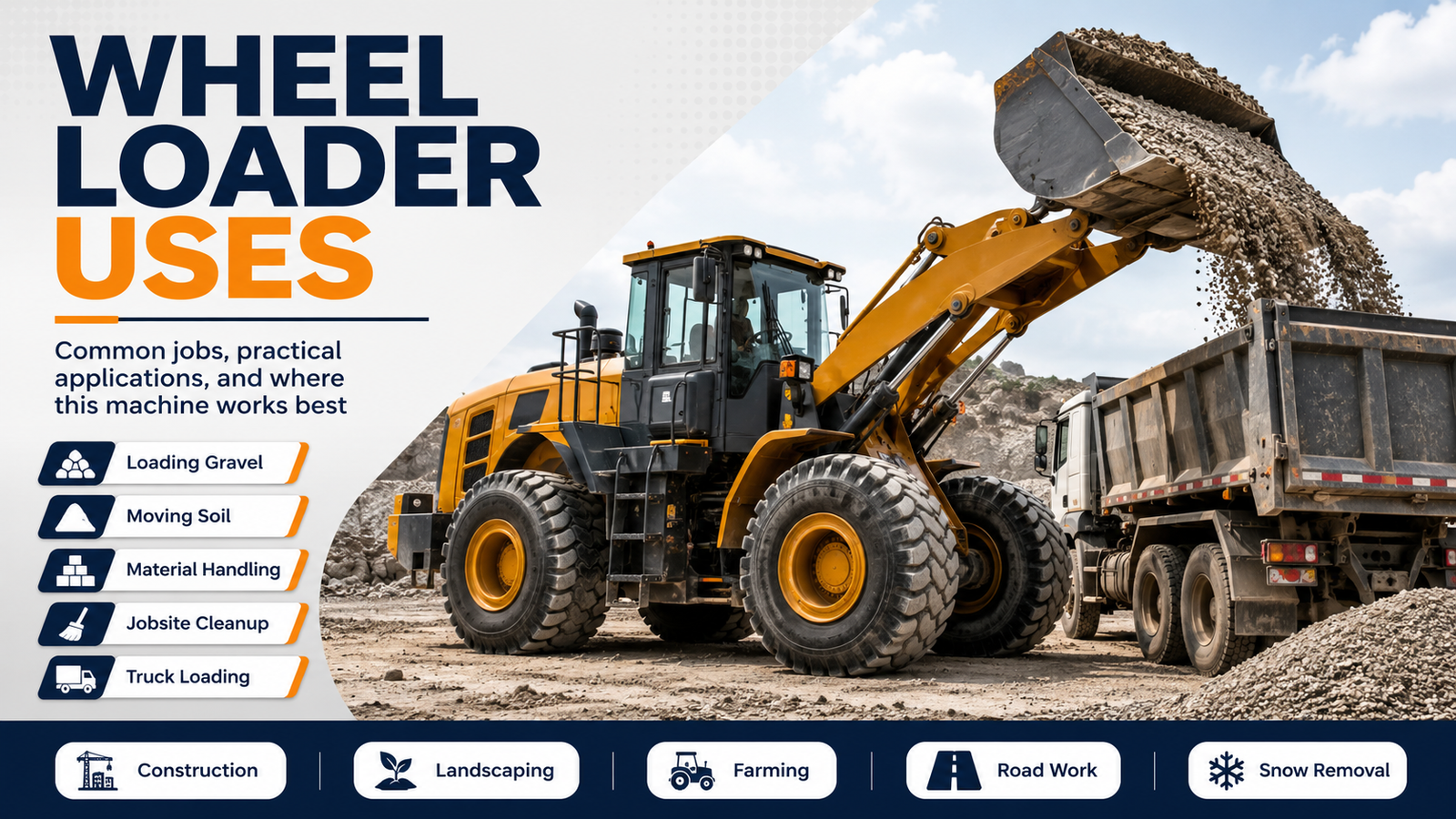
A wheel loader is mainly used to move, lift, load, and carry loose materials. On many jobsites, it handles dirt, gravel, sand, mulch, feed, snow, debris, and other bulk materials that would take too much time to move by hand.
The main reason people search for wheel loader uses is simple. They want to know if this machine fits their job before they buy, rent, or operate one. A wheel loader is not only for large construction companies. Compact and small wheel loaders are also useful for farms, landscaping work, warehouses, nurseries, road crews, and property maintenance.
What Is a Wheel Loader Used For?
A wheel loader is used for loading and moving material with a front bucket. The bucket sits on lift arms, which allow the operator to scoop material from the ground, lift it, carry it, and dump it into a truck, trailer, pile, hopper, or storage area.
The most common job is loading loose material. This includes soil, gravel, sand, stone, compost, mulch, wood chips, demolition debris, animal feed, and similar materials. A wheel loader is built to carry more material than a small hand tool or compact utility machine, while still being easier to drive around a site than some tracked machines.
Wheel loaders are also useful because they work on tires. This makes them faster on hard ground, yards, roads, and open areas. They are often used when the job needs repeated travel between a pile, a truck, a work area, or a storage zone.
Common Wheel Loader Uses in Construction
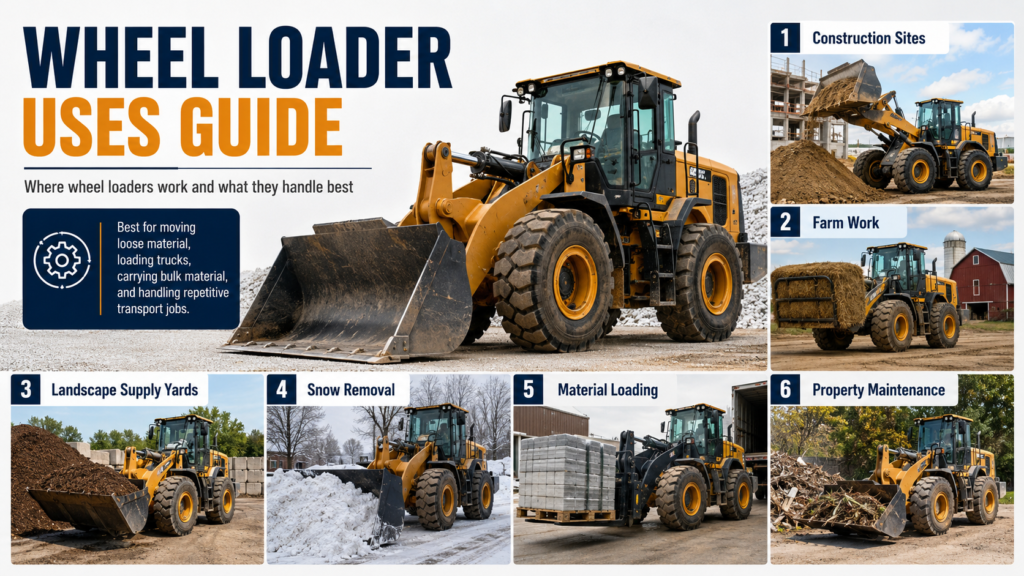
Construction is one of the main places where wheel loaders are used. On a building site, a loader can move piles of dirt, gravel, crushed stone, sand, and construction waste. It can also load dump trucks, feed material into equipment, and help keep the jobsite cleaner.
For site preparation, a wheel loader can move topsoil, spread base material, carry fill, and support grading work. It is not the same as a bulldozer or grader, but it can help level loose material and prepare areas for other machines.
On larger jobs, wheel loaders often work beside excavators, dump trucks, road rollers, and skid steer loaders. The excavator may dig the material, while the wheel loader moves or loads it. This helps the site run faster because each machine handles the work it is best suited for.
A wheel loader is also useful when trucks need to be loaded many times during the day. The higher lift height and larger bucket capacity make it a strong choice for moving bulk material quickly.
Wheel Loader Uses in Farming and Land Work
Wheel loaders are common on farms because they can handle many daily jobs. Farmers use them to move feed, hay, soil, manure, compost, gravel, and farm supplies. A loader can also clean barns, load trailers, move pallets, and handle bulk material around storage areas.
For livestock operations, a wheel loader can help with feed handling and bedding cleanup. With the right bucket or fork attachment, it can move large amounts of material faster than smaller farm equipment.
Compact wheel loaders are especially useful on farms where space is limited but lifting power is still needed. They can work around barns, sheds, feed areas, and narrow yard spaces better than larger loaders.
For landowners, a wheel loader can help maintain roads, move stone, clear brush piles, handle firewood, and clean up storm debris. It is not always the first machine people think of for land work, but it can save a lot of labor when material needs to be moved often.
Using a Wheel Loader for Landscaping and Property Work
Landscaping is another practical area for wheel loader use. Landscapers often deal with mulch, topsoil, sand, gravel, decorative stone, and plant material. A wheel loader helps move these materials around yards, supply lots, and project sites.
In a nursery or landscape supply yard, a wheel loader can load customer trucks and trailers. It can also move pallets, organize material piles, and keep storage areas clean. For this type of work, a compact wheel loader is often easier to use than a full-size machine because it can move in tighter spaces.
For property maintenance, a wheel loader can help with driveway repair, drainage work, yard cleanup, and material transport. It is useful when a site has enough space for tire movement and repeated loading tasks.
A wheel loader also gives better visibility and comfort than many smaller machines, depending on the model. That can matter when operators spend long hours moving material around the same property or worksite.
Road Work, Snow Removal, and Site Cleanup
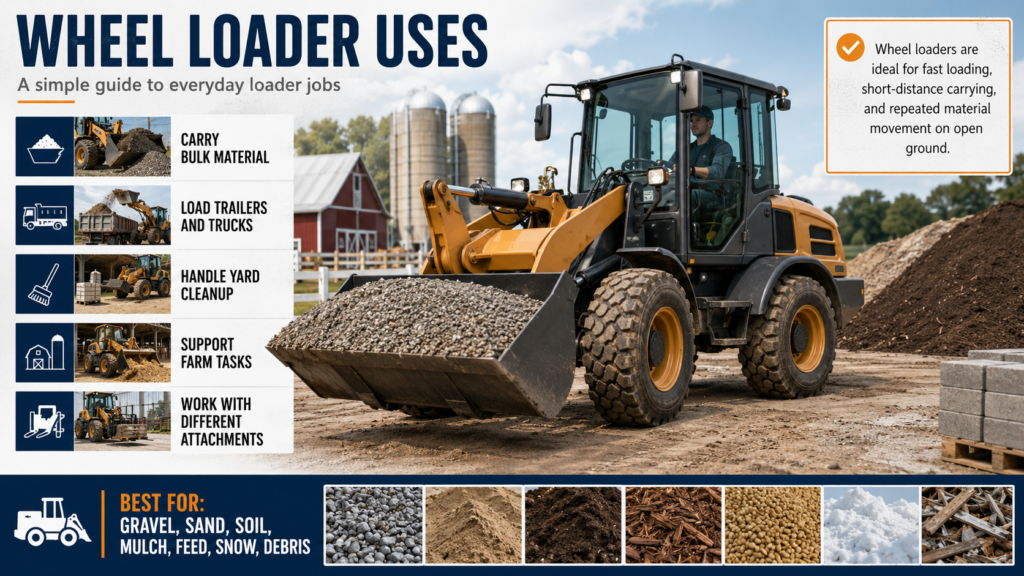
Wheel loaders are also used in road work and municipal jobs. They can move gravel, road base, asphalt millings, and other materials used in road repair. They are often seen around road construction zones, maintenance yards, and public works sites.
For snow removal, a wheel loader can push, lift, and load snow. With a snow bucket, snow pusher, or blade attachment, it can clear parking lots, roads, yards, and industrial spaces. Larger wheel loaders are especially useful when snow needs to be stacked high or loaded into trucks.
Site cleanup is another common use. A wheel loader can gather loose debris, move scrap material, clean around stockpiles, and help prepare a site for the next stage of work. This is useful in construction, demolition, recycling yards, warehouses, and material storage areas.
In recycling and waste handling, wheel loaders can move scrap, wood waste, metal, rubble, and other bulk material. The machine’s strength and bucket capacity make it useful where material volume is high.
Attachments That Expand Wheel Loader Uses
A bucket is the most common wheel loader attachment, but it is not the only option. Different attachments can make the machine useful for more than basic loading.
Pallet forks let the loader move palletized material, crates, blocks, pipe, and supplies. A grapple bucket can help handle branches, demolition debris, logs, and irregular material. A snow blade or snow pusher can turn the loader into a strong winter maintenance machine. A light material bucket can move mulch, feed, snow, or wood chips more efficiently because those materials are bulky but not always heavy.
The right attachment depends on the work. A landscaping business may care more about mulch buckets and pallet forks. A farm may need feed handling tools and forks. A road crew may need a snow blade, standard bucket, or material handling bucket.
Before buying attachments, it is important to check loader size, hydraulic capacity, coupler type, lift rating, and the weight of the attachment. A loader can do more with attachments, but only when the attachment properly matches the machine.
How to Know If a Wheel Loader Fits Your Work
A wheel loader is a good fit when the main job is moving bulk material many times. If your work involves loading trucks, feeding material piles, clearing yards, handling pallets, or moving heavy loose material, a wheel loader may be the right machine.
It is also a good choice when the site has firm ground, open movement space, and repeated travel paths. Since wheel loaders use tires, they are fast and smooth on hard surfaces. They are not always the best choice for soft mud, steep slopes, or very tight spaces. In those cases, a skid steer loader, compact track loader, or excavator may be better.
Size matters too. A compact wheel loader is easier to use in small yards, farms, and landscaping jobs. A larger wheel loader is better for quarries, road work, large construction sites, and heavy material loading.
Before choosing a wheel loader, think about what material you move, how heavy it is, how high you need to lift it, how much space you have, and how often the machine will work each day. Those details matter more than just buying the biggest loader available.
Conclusion
Wheel loader uses cover many real jobs, from construction and farming to landscaping, road work, snow removal, and material handling. The machine is best when you need to move loose material quickly and repeatedly.
For buyers, the main question is not only what a wheel loader can do. The better question is whether its size, bucket capacity, lift height, attachments, and ground performance match your daily work.