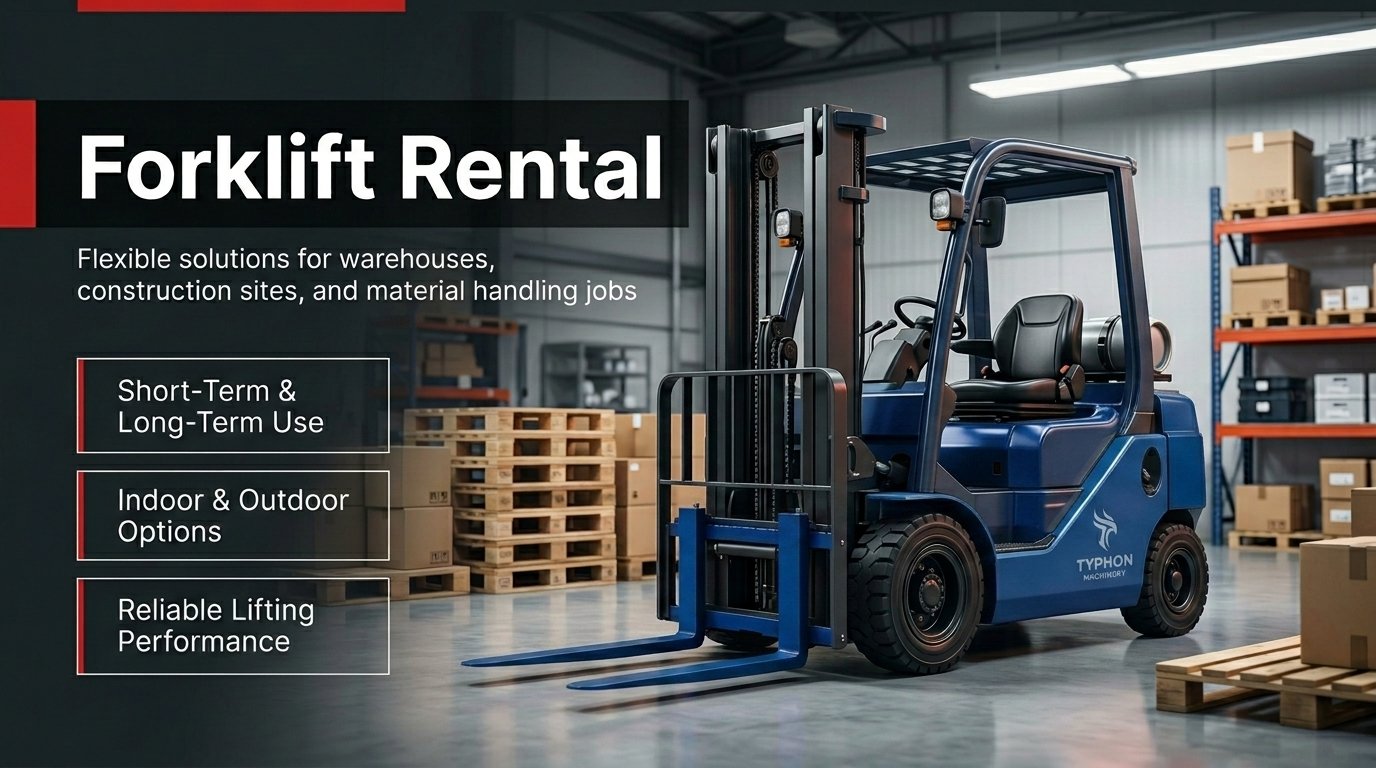
Forklift rental can be a smart option for businesses that need lifting equipment without the cost of buying a machine. It gives companies more flexibility, especially for short-term work, seasonal demand, warehouse changes, construction projects, and sudden equipment breakdowns.
For many businesses, forklift rental is not only about saving money. It is also about getting the right machine at the right time. A rental can help you handle extra inventory, complete a project faster, or keep operations moving when your own forklift is unavailable.
In this guide, we will explain when forklift rental makes sense, what types of forklifts are commonly rented, what affects rental cost, and how to choose the right forklift for your work.
Why forklift rental is a practical option
Forklift rental is popular because not every business needs a forklift all year round. Some companies only need one during busy periods. Others may need a specific forklift for a short project, a new warehouse setup, or a temporary jobsite.
Renting gives you flexibility. Instead of committing to one machine, you can choose a forklift based on your current job. That is useful when lifting needs change from one project to another.
A forklift rental can also reduce the pressure of ownership. Buying a forklift means thinking about upfront cost, long-term maintenance, storage, service schedules, and machine downtime. Renting can be a simpler choice when you want quick access to equipment and less long-term responsibility.
It can also help when your business is growing. If you are not yet sure what size or type of forklift you need in the long run, renting first can help you learn what works before making a larger investment.
When forklift rental makes more sense than buying
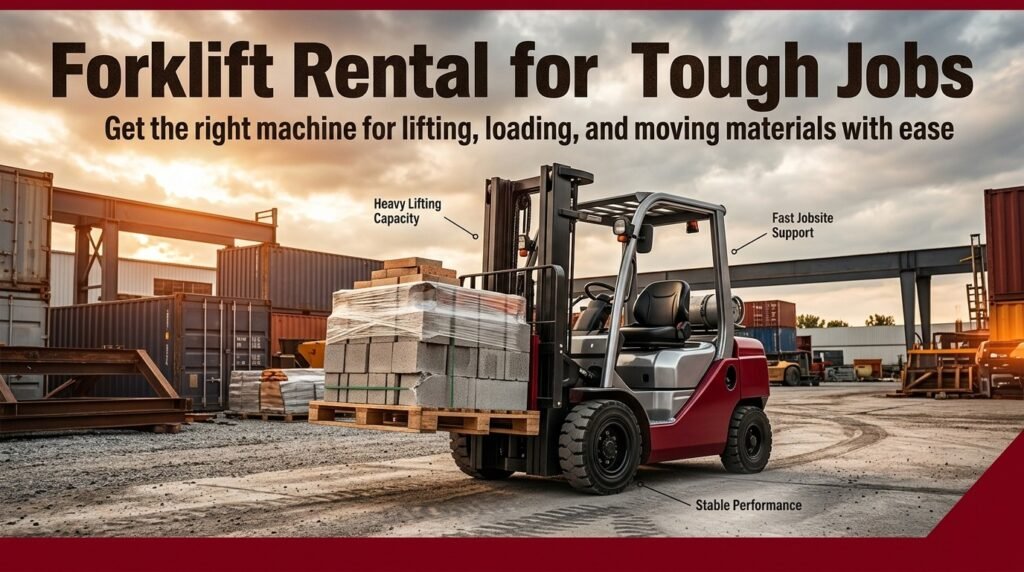
There are many situations where forklift rental makes more sense than owning a machine.
One common reason is short-term demand. A warehouse may suddenly receive more stock during peak season. A construction team may need lifting support for a limited project. In both cases, buying a forklift may not be the best use of money if the machine will sit unused later.
Forklift rental also makes sense when your main forklift is down for repair. Instead of stopping work, a rental can keep materials moving and avoid delays.
Another good reason is job-specific needs. For example, one task may require a compact electric forklift for indoor warehouse use, while another may need a rough terrain model for outdoor surfaces. Renting gives you the freedom to match the equipment to the work instead of trying to force one machine to do everything.
Businesses also use forklift rental when testing operations in a new location. If you are opening a new warehouse, changing your layout, or expanding into a different kind of work, renting can help you adjust without making a permanent equipment decision too early.
Buying may still be better for companies that use forklifts heavily every day for many years. But for temporary, seasonal, uncertain, or specialized needs, forklift rental is often the more practical path.
Common forklift rental types and where they work best
Not all forklift rental options are the same. The right type depends on where you will use the machine, what materials you need to lift, and how much space you have to work with.
Electric forklifts
Electric forklifts are often used indoors. They are a strong choice for warehouses, distribution centers, and places where low noise and zero exhaust emissions matter. They are commonly used on smooth floors and in tighter spaces.
Diesel or LPG forklifts
These forklifts are often chosen for heavier work or outdoor use. They can be useful in yards, loading areas, and industrial sites where stronger lifting performance and longer run time are needed. However, they are usually less suitable for enclosed indoor areas because of emissions.
Rough terrain forklifts
Rough terrain forklifts are built for uneven ground. They are often used on construction sites, farms, lumber yards, and outdoor projects where a standard warehouse forklift would struggle.
Reach trucks and narrow aisle forklifts
These are designed for warehouse storage systems with taller racks and tighter aisles. If your work involves pallet handling in a high-density warehouse, these rental options may be a better fit than a standard forklift.
Pallet stackers and smaller lifting equipment
In some cases, a full forklift rental may not even be necessary. For lighter warehouse tasks, a pallet stacker or other compact material handling machine may be enough.
The key point is simple: forklift rental should match the actual job, not just the fact that materials need to be lifted.
How to choose the right forklift rental for your job
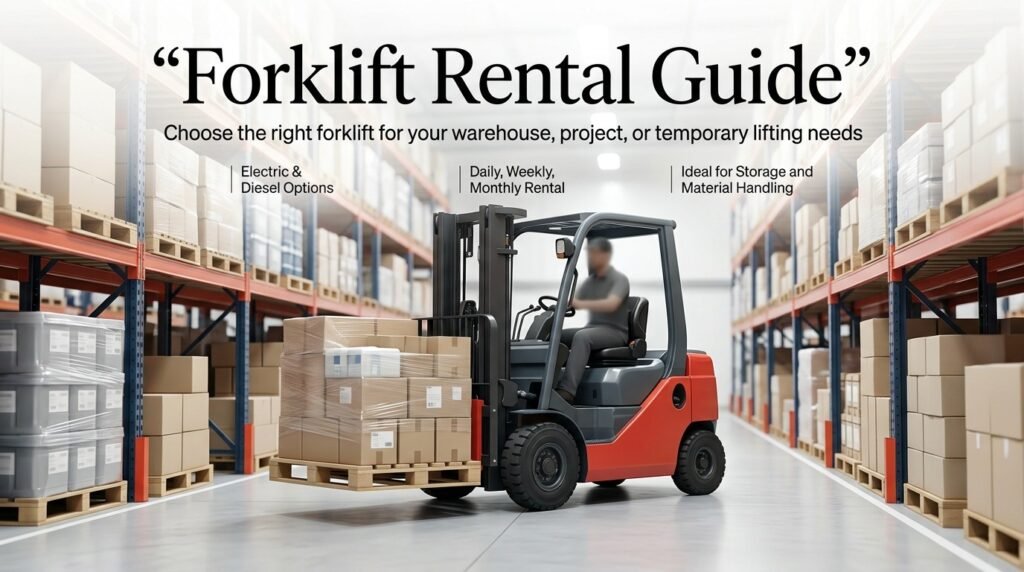
Choosing the right forklift rental starts with understanding the work clearly. Many businesses make mistakes because they choose based only on price or machine size(), instead of actual job requirements.
Start with lifting capacity. You need to know the weight of the loads you plan to move. A forklift that is too small can become unsafe and inefficient. A machine that is too large may cost more than necessary and be harder to use in tight spaces.
Next, think about lift height. If you are loading trucks, stacking pallets, or reaching warehouse racks, the required height matters just as much as load weight.
Then consider the work environment. Indoor work usually points toward electric forklift rental. Outdoor work on rough or uneven surfaces may require a more rugged machine.
Turning space is another important factor. In narrow aisles or busy warehouses, forklift size and maneuverability make a big difference. A compact model may be far more useful than a larger machine.
You should also think about tires, attachments, and operating hours. Some jobs may need side shift functions, fork positioners, or other features. Others may require cushion tires for indoor floors or pneumatic tires for outdoor ground.
A good forklift rental choice comes from looking at the full job: load size, height, ground condition, space limits, and daily usage.
What affects forklift rental cost
Forklift rental cost can vary a lot, and the cheapest option is not always the best one. Several factors usually affect the final price.
The first is the type of forklift. Larger machines, rough terrain models, and specialized warehouse equipment usually cost more than standard forklifts.
The second is rental length. Daily, weekly, and monthly rental terms often have different pricing structures. A longer forklift rental period may reduce the cost per day, but the total amount will still depend on the machine and job conditions.
Capacity and lift height also affect price. A higher-capacity forklift or one that needs to reach greater heights will usually cost more than a basic model.
The work environment matters too. Some jobs may require special tires, attachments, or delivery arrangements. These extras can increase rental cost.
Another factor is support and service. Some forklift rental agreements may include maintenance support, while others may charge separately for damage, service calls, or delivery and pickup.
That is why businesses should look beyond the base rate. The real question is whether the forklift rental gives enough value for the work you need done.
Forklift rental safety and jobsite checks
A forklift rental should never be treated as just another machine arriving on site. Safety checks still matter, even if the equipment is only being used for a short period.
Before using the forklift, inspect the machine carefully. Check forks, mast movement, tires, controls, lights, brakes, warning devices, and fluid levels if required. Make sure the forklift matches the ordered capacity and specification.
Operators should also be properly trained for the type of forklift being rented. A different model or fuel type can change how the machine feels and performs.
The work area should be checked as well. Look at floor condition, ramps, slope, aisle width, pedestrian traffic, loading zones, and overhead clearance. Even a good forklift rental can become unsafe in a poor working environment.
Load handling rules must also be followed. Operators should never exceed rated capacity, lift unstable loads carelessly, or move at unsafe speed. On busy worksites, visibility and traffic control matter a lot.
Rental equipment can help productivity, but only when the machine, the operator, and the site are all ready for safe use.
Tips for getting better value from a forklift rental
Getting better value from a forklift rental is not just about finding a lower price. It is about choosing the right machine and avoiding mistakes that waste time or money.
One good step is to define the job clearly before renting. Know the load weight, lift height, work area, and rental period. This helps avoid over-renting or choosing the wrong type of machine.
Another smart move is to think about utilization. If the forklift will only be used for light warehouse tasks, a smaller model may be enough. If the work is heavy and constant, a stronger machine may save more time and reduce handling delays.
Plan around the rental period as well. Try to align equipment delivery with the actual project schedule. Keeping a forklift sitting idle during a slow week adds cost without adding value.
It is also helpful to inspect the machine when it arrives and document its condition. This can reduce disputes later and make the rental process smoother.
Most importantly, choose a forklift rental based on job fit, not guesswork. The right forklift helps productivity, safety, and operating flow. The wrong one can slow everything down.
Conclusion
Forklift rental is a practical solution for many businesses that need flexibility, lower upfront cost, and the ability to match equipment to the job. It can work well for short-term projects, seasonal demand, temporary warehouse needs, and specialized lifting tasks.
The best forklift rental choice depends on more than just price. You need to think about capacity, lift height, indoor or outdoor use, ground condition, maneuvering space, and operator safety.
When businesses choose the right machine for the actual work, forklift rental becomes more than a temporary fix. It becomes a smart way to keep operations moving without unnecessary long-term commitment.
FAQ
Is forklift rental better than buying?
Forklift rental is often better for short-term work, seasonal demand, temporary projects, or when you are unsure what machine you need long term. Buying is usually better for heavy daily use over many years.
What type of forklift rental is best for indoor work?
Electric forklift rental is often the best choice for indoor warehouse use because it is quieter and produces no exhaust emissions during operation.
Can I use a forklift rental outdoors?
Yes, but it depends on the machine. Standard warehouse forklifts work best on smooth surfaces, while rough terrain forklifts are more suitable for uneven outdoor ground.
What should I check before accepting a forklift rental?
Check capacity, lift height, tires, forks, controls, brakes, warning devices, and overall machine condition. Also confirm that it matches the job requirements.
Does forklift rental include maintenance?
That depends on the rental agreement. Some rentals include service support, while others may charge separately for damage, service calls, transport, or repairs.
How do I choose the right forklift rental size?
Start with the weight of the loads, the height you need to reach, the width of your work area, and whether the forklift will be used indoors or outdoors.


