

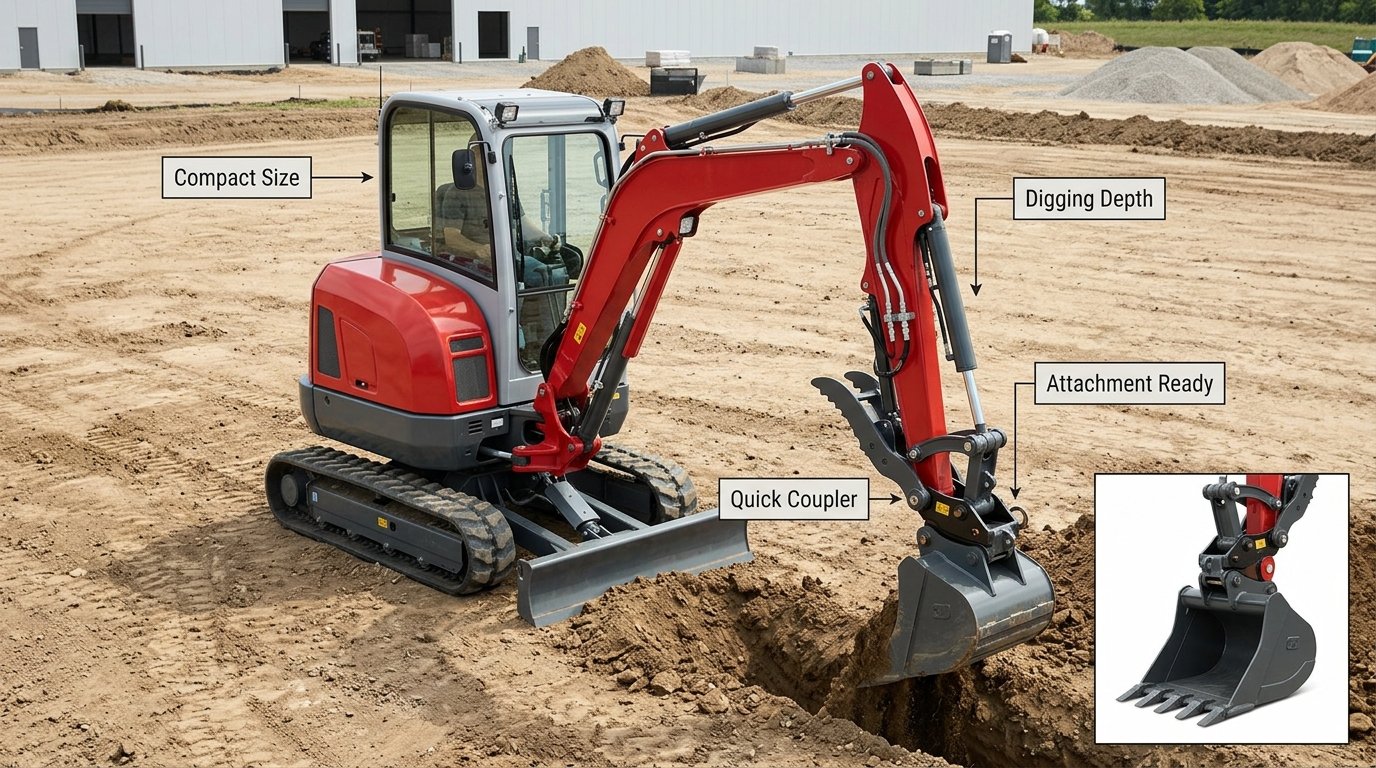
When buyers search for heavy equipment for sale, they usually see a long list of machines, prices, and listings. The problem is that a broad search does not always lead to the right machine. If your work involves trenching, landscaping, utility jobs, site preparation, or light demolition, a mini excavator is often one of the smartest machines to compare first.
That is why the better approach is not to look at price alone. You need to match the machine to the work, then compare size, features, condition, and long-term cost. That gives you a much better chance of buying equipment that will actually perform well on the job.
Why Heavy Equipment for Sale Searches Often Lead to Mini Excavators
A lot of buyers start with a broad search for heavy equipment for sale, but end up focusing on mini excavators for a simple reason: they fit many common jobs. They are compact, practical, and useful in places where larger machines are harder to move or operate.
Mini excavators are popular for trenching, grading, digging, landscaping, and general site work. They are especially useful on jobs where access is limited and a full-size machine would be too large. For many contractors and property owners, they offer the right balance between size, versatility, and day-to-day productivity.
They also become more useful when paired with the right attachments. That makes them a strong choice for buyers who want one machine that can handle more than one type of task.
Start With the Job Before Comparing Heavy Equipment for Sale
One of the biggest mistakes buyers make is starting with the brand or listing before defining the actual job. That usually leads to a confusing comparison process and wasted time.
Before you compare heavy equipment for sale, ask yourself a few basic questions:
- What type of work will the machine do most often?
- Will it be used in tight residential spaces or larger open sites?
- Do you need extra digging depth, better lift capacity, or attachment support?
- Will the machine need to move often between jobs?
These questions matter more than the logo on the side of the machine. A listing may look attractive online, but if the excavator does not fit your work, it is still the wrong buy.
Starting with the job gives the article a clear buying angle and gives the reader a better path to a real decision.
How to Choose the Right Mini Excavator Size
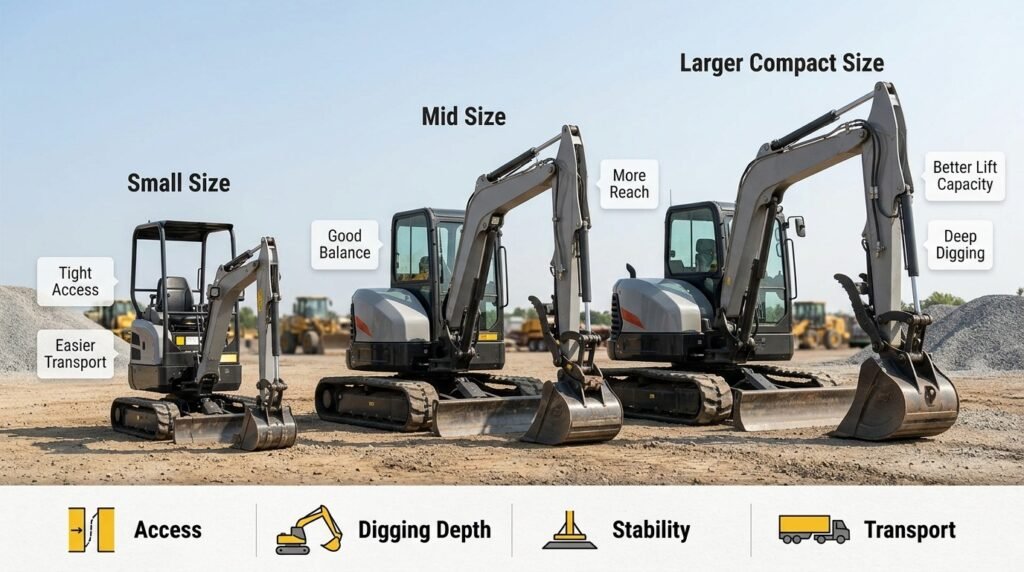
Size is one of the most important parts of the buying process. Not all mini excavators are the same, even when they look similar in photos. Differences in operating weight, digging depth, reach, lift capacity, and stability can change how useful the machine is on the job.
A smaller mini excavator is often better for narrow access, backyard work, and finished landscapes. A larger compact model may be the better choice if the work requires more digging depth, more lifting power, or better stability.
When comparing machines, focus on the details that affect real work:
- operating weight
- digging depth
- site access
- transport needs
- lift requirements
- attachment compatibility
Buying too small can slow the job down. Buying too large can make transport harder and limit where the machine can work. The right size is the one that fits your most common jobs without creating extra cost or access problems.
Heavy Equipment for Sale: Which Features Matter Most
Many listings make every feature sound important, but not every feature adds real value. When reviewing heavy equipment for sale, focus on the features that improve daily use, maintenance, and versatility.
The most useful features usually include:
- hydraulic support for attachments
- quick coupler compatibility
- strong visibility from the cab
- simple controls
- easy service access
- durable undercarriage design
- a comfortable operator area for longer jobs
These are the features that matter in real ownership, not just in marketing copy. A machine that is easier to maintain and easier to operate often delivers better value than one that only looks impressive in a listing.
If you plan to switch buckets or use other work tools, attachment support becomes even more important. That can make the machine more flexible and more useful over time.
What to Check Before Buying a Used Mini Excavator
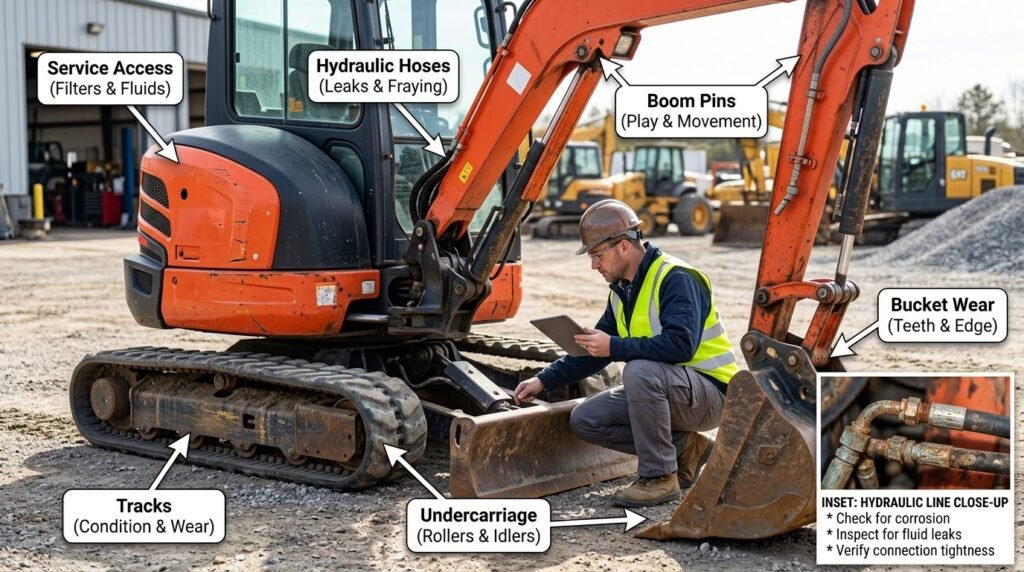
A large share of the heavy equipment for sale market is used equipment, so inspection matters just as much as price. A low price means very little if the machine needs major repair soon after purchase.
Start with the visible condition. Check the tracks, undercarriage, boom, arm, bucket, hydraulic lines, pins, engine area, and cab. Look for leaks, cracks, loose parts, signs of poor repair, or uneven wear.
Then check the machine history. Ask for:
- service records
- total hours
- repair history
- parts replaced
- ownership history
If possible, see the machine run before buying. Watch how it starts, how it tracks, how the hydraulics respond, and whether there are unusual sounds or smoke. A machine with honest wear and clear records is often a better buy than a cheaper machine with missing history.
Heavy Equipment for Sale: Look Beyond the Asking Price
A lot of buyers focus too much on the number in the listing. That is a mistake. When comparing heavy equipment for sale, the real question is not just “What does it cost today?” It is also “What will it cost to own?”
Total ownership cost includes:
- transport
- maintenance
- repair risk
- fuel use
- attachment needs
- downtime
That is why a higher-priced mini excavator can still be the better value. If it has a stronger service history, cleaner wear points, and less immediate repair risk, it may save money over time. A cheaper machine with hidden issues can quickly become the more expensive option.
The goal is not to buy the cheapest mini excavator on the page. The goal is to buy one that stays productive and fits the work without becoming a repair problem too soon.
Final Buying Tips for Heavy Equipment for Sale
If you want to make a smarter buying decision, keep the process simple.
- Start with the job.
- Choose the right size.
- Check the features that affect daily use.
- Inspect used machines carefully.
- Then compare long-term value, not just the asking price.
That is how a broad search for heavy equipment for sale becomes a focused and practical buying decision.
For many buyers, mini excavators stand out because they are compact, versatile, and useful across a wide range of jobs. But the best result does not come from rushing into the first listing that looks affordable. It comes from choosing the machine that actually fits the work, the site, and the budget.


