

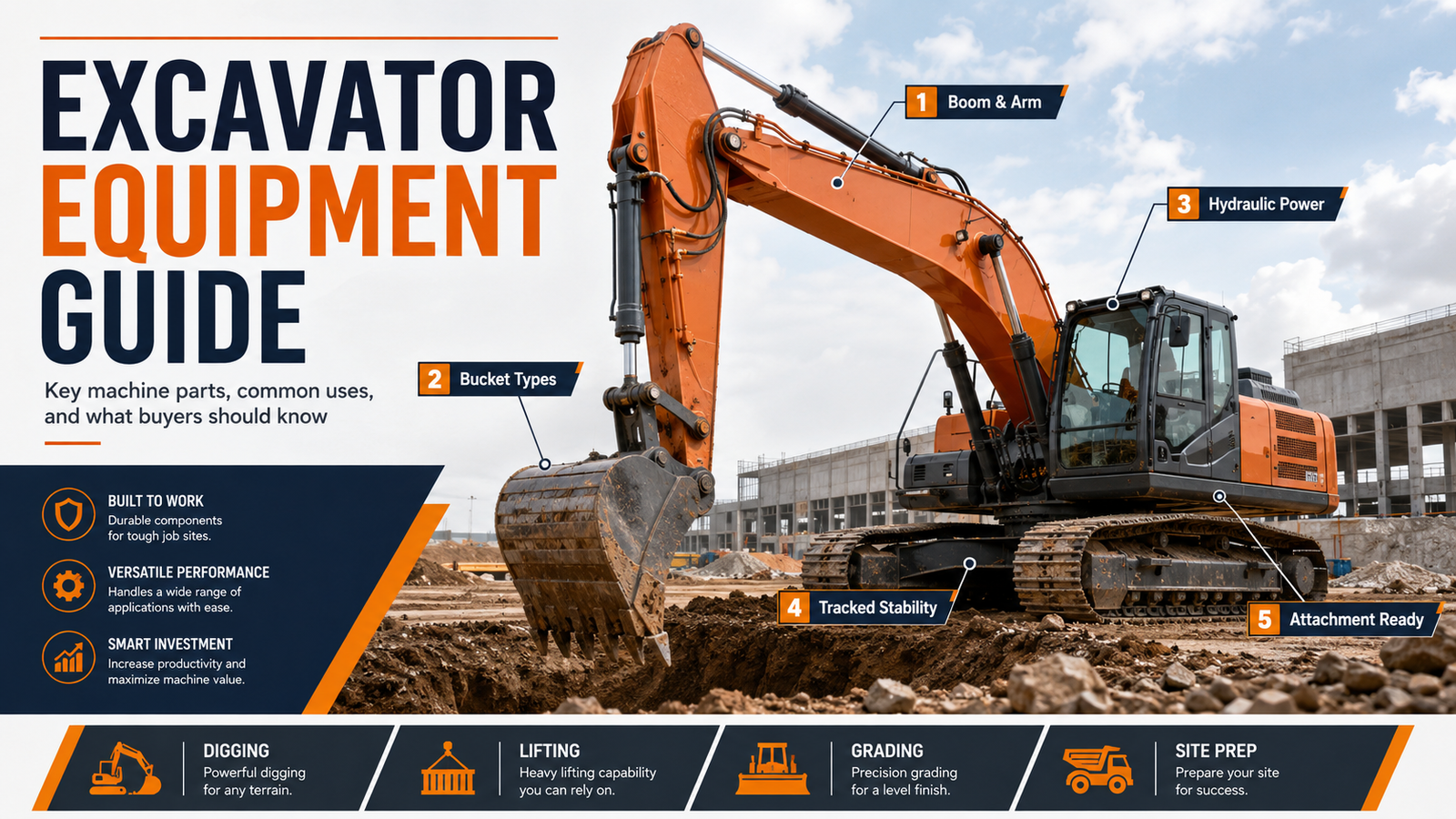
Excavator equipment is used for digging, lifting, grading, trenching, demolition, and many other jobs. It is one of the most useful machines on construction sites, farms, landscaping projects, road work, and property development jobs.
For a beginner buyer or business owner, the main challenge is not only choosing an excavator. It is choosing the right size, power, attachment setup, and support for the work you actually need to do. A machine that is too small can slow the job down. A machine that is too large can cost more to move, fuel, and operate.
This guide explains the basics in simple terms so you can understand what excavator equipment does, what to look for, and how to avoid common buying mistakes.
What Is Excavator Equipment?
Excavator equipment is a type of heavy machine built around a boom, arm, bucket, cab, and undercarriage. The operator uses hydraulic power to move the arm and bucket with strength and control.
Most excavators are used for digging soil, moving material, breaking ground, loading trucks, or preparing land. Some machines are small enough for residential work, while others are large enough for mining, road construction, and major earthmoving jobs.
The basic parts include:
- Cab where the operator sits
- Boom and arm for reaching and digging
- Bucket for scooping soil, gravel, sand, or debris
- Tracks or wheels for movement
- Hydraulic system for machine power
- Counterweight to help balance the machine
The right excavator depends on the job, ground condition, working space, transport limits, and attachment needs.
Common Jobs Excavator Equipment Is Used For
Excavators are popular because they can handle many types of work. With the right setup, one machine can do more than just dig.
Common uses include:
- Digging trenches for pipes, drainage, and utilities
- Preparing foundations for buildings
- Clearing land and removing roots or brush
- Loading soil, rock, gravel, and debris into trucks
- Grading and shaping jobsite surfaces
- Breaking concrete with a hydraulic breaker
- Cleaning ditches, ponds, and drainage areas
- Demolition work on small structures
- Farm, orchard, and property maintenance work
For small contractors, landscapers, and property owners, compact excavators are often useful because they fit into tighter spaces and are easier to transport. Larger machines are better for heavy digging, deep trenching, and high-production job sites.
Main Types of Excavators to Know
Not all excavator equipment is built for the same kind of work. Before buying or renting, it helps to understand the main types.
Mini Excavators
Mini excavators are compact machines used for landscaping, small construction, trenching, drainage, and residential jobs. They are easier to move than larger machines and can work in narrow spaces.
They are a good choice for buyers who need a practical machine for smaller jobs without the cost and transport needs of a full-size excavator.
Standard Crawler Excavators
Crawler excavators use tracks instead of wheels. They are common on construction sites because they offer good stability and digging power. They are used for foundations, road work, earthmoving, demolition, and general construction.
Tracks also help the machine work on soft, uneven, or muddy ground.
Wheeled Excavators
Wheeled excavators move on tires instead of tracks. They are useful for road work, urban projects, and jobs where the machine needs to move between work areas without damaging paved surfaces.
They are faster on hard ground but usually less stable than tracked machines in rough or soft soil.
Long Reach Excavators
Long reach excavators have extended booms and arms. They are used for jobs that need extra reach, such as ditch cleaning, pond work, riverbank work, and some demolition tasks.
They are not always the best choice for heavy digging near the machine, but they are useful when distance matters.
Key Parts and Features That Matter
When comparing excavator equipment, do not look at size only. A machine can look strong but still be wrong for your work if the features do not match the job.
Important features to check include:
Operating weight
This tells you the machine size class. It affects stability, digging force, transport, and where the machine can work.
Digging depth
This matters for trenching, foundations, drainage, and utility work. Always check if the machine can reach the depth your jobs need.
Bucket capacity
A larger bucket moves more material, but it also needs enough machine power and stability. Bigger is not always better.
Engine power
More horsepower can help with tough ground, attachments, and longer work hours. But smaller machines can still be very useful when matched to the right jobs.
Hydraulic flow
This is important if you plan to use attachments like breakers, augers, thumbs, or compactors. Weak hydraulic flow can limit attachment performance.
Tail swing
Zero-tail or reduced-tail machines are better for tight spaces because the back of the machine stays closer to the tracks when rotating.
Cab comfort and visibility
A clear view, good seat, simple controls, and safe entry points matter more than many new buyers expect. Operator comfort affects control and job speed.
Attachments That Make Excavators More Useful
Attachments can turn one excavator into a more flexible machine. For many buyers, attachment compatibility is just as important as machine size.
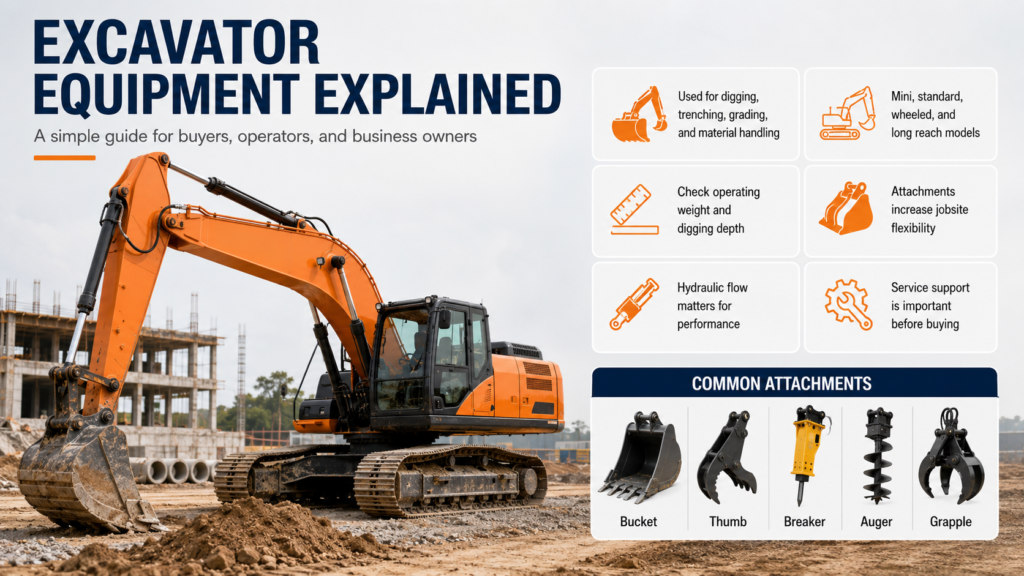
Common excavator attachments include:
- Digging bucket for general soil work
- Trenching bucket for narrow trenches
- Grading bucket for smoothing and shaping ground
- Hydraulic thumb for grabbing logs, rocks, debris, and scrap
- Breaker hammer for concrete and rock breaking
- Auger for drilling holes for posts, trees, or foundations
- Ripper tooth for hard soil, roots, and compacted ground
- Compactor plate for trench and soil compaction
- Grapple for handling brush, waste, and demolition material
Before buying attachments, check the machine’s weight class, hydraulic flow, coupler type, pin size, and pressure requirements. A good attachment will not perform well if the machine cannot power or carry it properly.
What to Check Before Buying Excavator Equipment
Buying excavator equipment is not only about the lowest price. A cheap machine can become expensive if it is hard to service, underpowered, or wrong for your work.
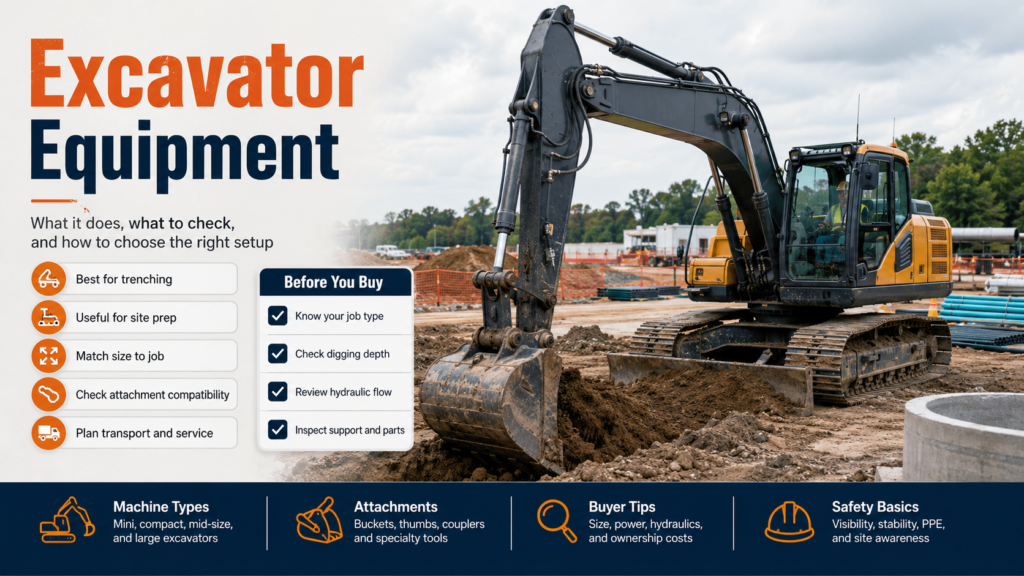
Before buying, check these points:
Job type
List the jobs you need the machine to do most often. Trenching, grading, demolition, landscaping, and land clearing may require different sizes and attachments.
Working space
For tight yards, sidewalks, small farms, or indoor-style access points, a mini excavator or reduced-tail model may be better.
Ground condition
Soft soil, slopes, mud, and uneven land need good stability and track support.
Transport needs
Make sure you know the total machine weight with attachments. Also check trailer capacity, towing limits, and local transport rules.
Parts and service support
A machine is only useful if you can maintain it. Check filter access, hydraulic parts, replacement tracks, wear parts, and service availability.
Used machine condition
For used excavators, inspect the engine, hydraulics, boom pins, undercarriage, leaks, track wear, bucket condition, and service history. If possible, test the machine under load.
Total cost
Think beyond the purchase price. Fuel, maintenance, attachments, delivery, storage, insurance, and repairs all affect the real cost of ownership.
Basic Safety and Maintenance Tips
Excavator equipment is powerful, so even smaller machines need careful operation. Many accidents happen from poor visibility, unstable ground, underground utilities, or working too close to people.
Basic safety tips include:
- Inspect the machine before use
- Check for leaks, loose parts, track damage, and worn bucket teeth
- Keep people away from the swing area
- Call before digging where underground utilities may exist
- Do not overload the bucket or lift beyond the machine’s limit
- Keep the machine level when possible
- Use the right attachment for the job
- Wear seat belts and basic safety gear
- Park on stable ground and lower the attachment before shutting down
Maintenance should be simple but consistent. Check engine oil, hydraulic fluid, coolant, air filters, grease points, track tension, and attachment pins. Small issues are easier to fix early than after they damage major parts.
Conclusion
Excavator equipment can handle digging, lifting, grading, demolition, and many other jobs, but the best machine depends on the work. Before buying, focus on size, digging depth, hydraulic power, attachments, transport, and service support.
A good excavator should fit your jobsite, your budget, and your long-term work needs. Choose carefully, maintain it well, and it can become one of the most useful machines in your equipment lineup.


