
SEO Title
Best Skid Steer Attachments for Farming
URL Slug
/best-skid-steer-attachments-for-farming/
Meta Description
Choose productive skid steer attachments for bale handling, feed, fencing, brush clearing, trenching, material movement, and seasonal farm work.
A skid steer becomes especially valuable on a farm when it is treated as an attachment platform rather than a machine with only a bucket. One loader can move bales, clean pens, handle pallets, drill post holes, clear brush, dig drainage lines, spread material, and support seasonal work. The right attachments reduce manual labor and allow the machine to remain productive throughout the year.
However, the best farm attachment is not automatically the largest or most aggressive option. It must match the skid steer’s rated operating capacity, lift path, hydraulic flow, mounting system, tire or track setup, and the material being handled. Farm work also introduces specific hazards such as uneven ground, animals, bystanders, overhead structures, soft soil, and shifting organic materials. Compatibility and safe operating practice are therefore as important as productivity.
This article explains the attachments that provide the broadest farm value, how to match them to seasonal jobs, and what owners should inspect before purchasing. The final selection should always be confirmed with the skid steer and attachment manufacturers.
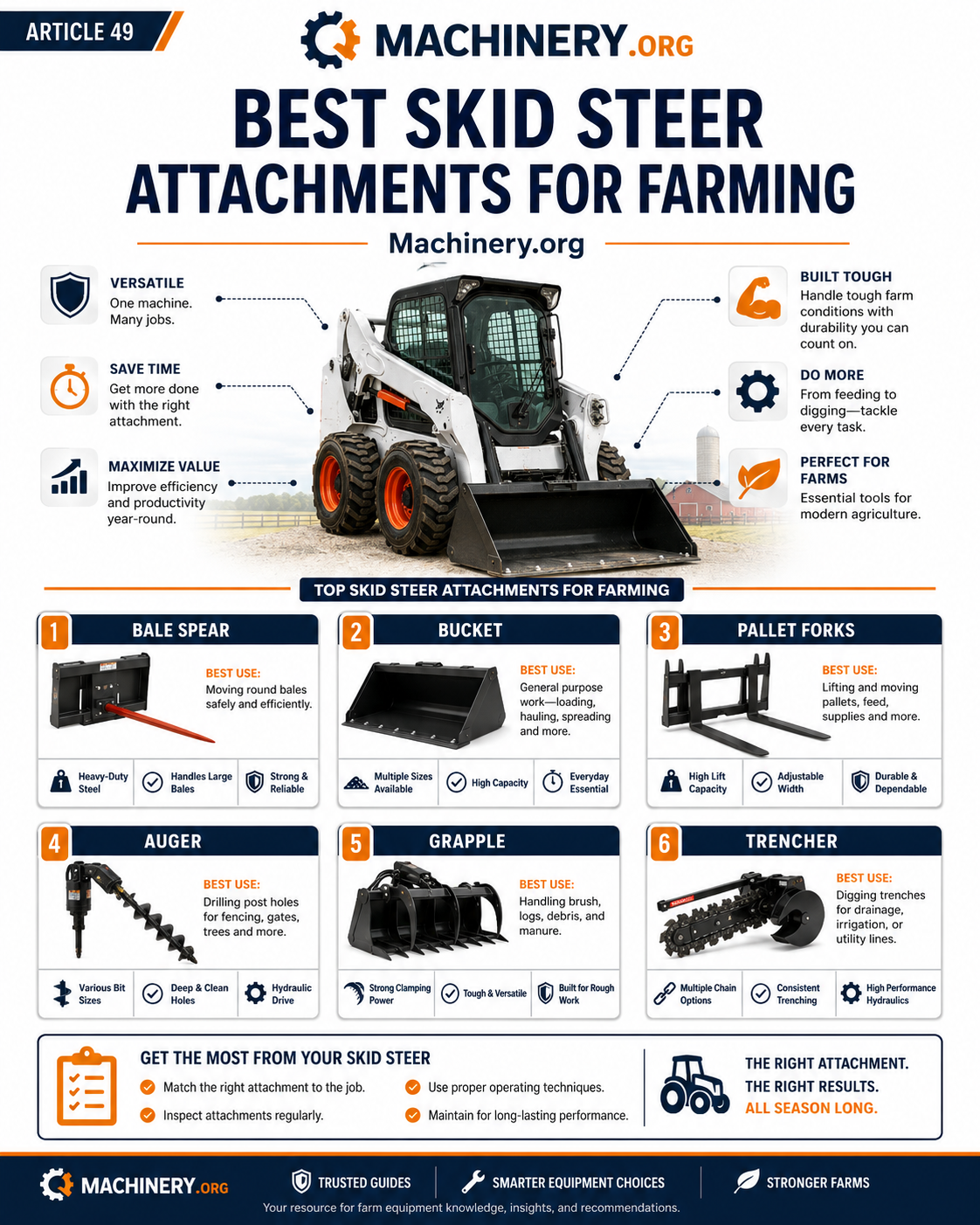
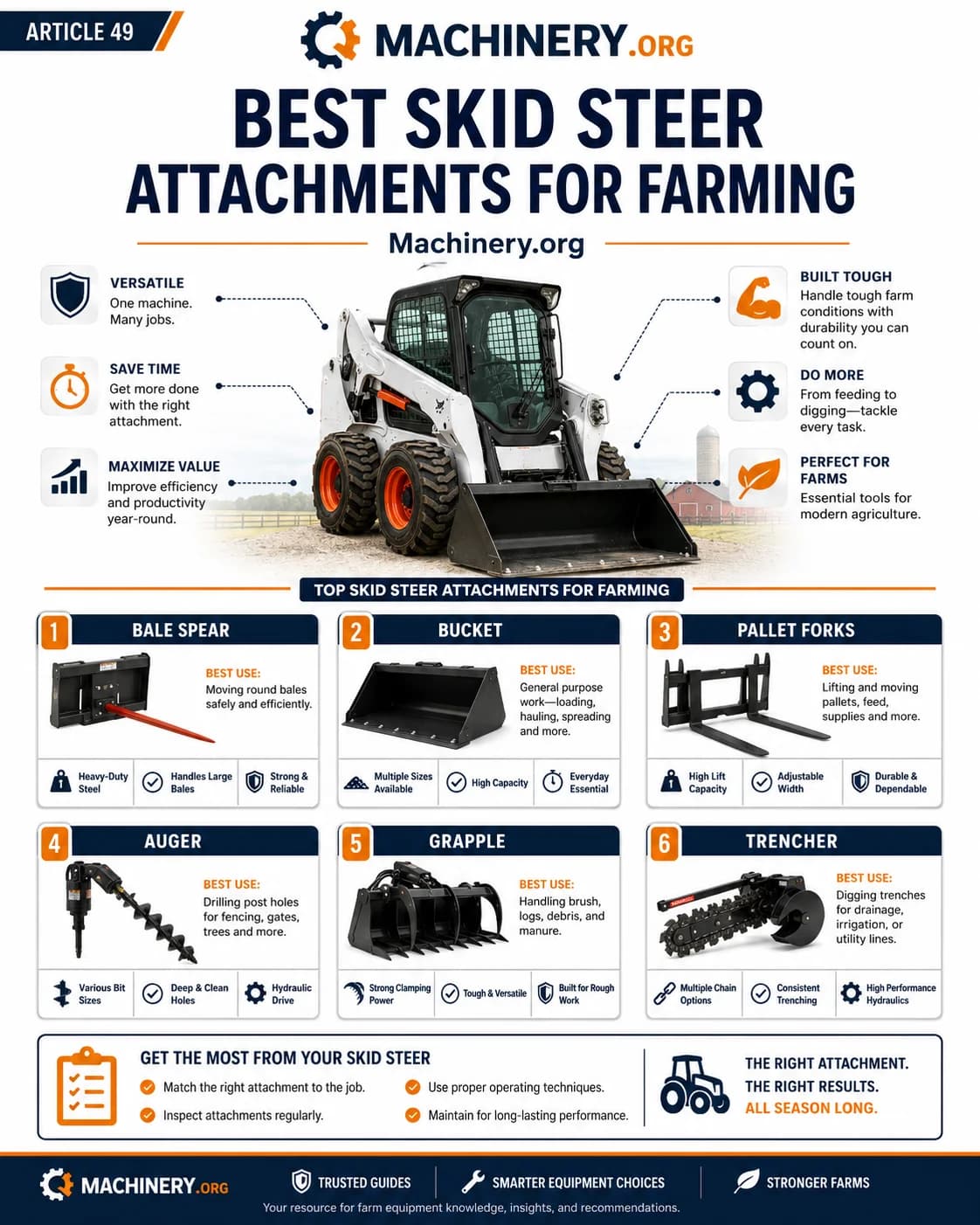
Figure 49.1. Machinery.org overview of high-value skid steer attachments for farming, including bale spears, buckets, forks, augers, grapples, and trenchers.
Bale spears and bale-handling tools
Bale spears are essential where round or square bales must be moved, stacked, loaded, or positioned for feeding. The attachment should be rated for the bale weight and designed to control the load securely. The machine must also have enough capacity at the required lift height and reach. A bale that is wet, frozen, or unusually dense may weigh significantly more than expected.
Operators should carry bales low, avoid lifting over people or animals, and use approved backstops or secondary spears where required. Uneven yards and soft ground reduce stability, particularly when the load is raised. For frequent bale handling, vertical-lift machines may provide useful reach, but the exact choice depends on stacking height and site layout.
General-purpose and material buckets
A general-purpose bucket is the most flexible farm attachment. It handles soil, gravel, bedding, feed, compost, manure, snow, and cleanup material. Bucket width and volume should match the machine and the density of the material. A large bucket filled with light bedding may be acceptable, while the same bucket filled with wet soil can exceed safe capacity.
Specialized high-capacity, light-material, manure, and snow buckets can improve productivity when the material is predictable. Cutting edges, spill guards, and bucket profile should suit the work. Owners should inspect the bucket floor, welds, mounting plate, cutting edge, and side plates regularly because farm environments can be highly abrasive and corrosive.
Pallet forks and farm supply handling
Pallet forks help move bagged feed, seed, fertilizer, tools, building materials, and equipment. Fork length, carriage rating, fork position, and load center must be appropriate. Loads should be stable, centered, and kept low during travel. Damaged pallets, uneven stacks, or unsecured containers can shift even when the machine is within capacity.
Visibility is a major consideration. The operator should understand blind spots around the fork tips and use a spotter when positioning loads in tight sheds or near people. Never allow anyone to ride on the forks or stand beneath a raised load.
Augers for fencing and planting
An auger can dramatically reduce labor when installing fence posts, gates, signs, or planting holes. Bit diameter, length, tooth type, hydraulic flow, and soil condition determine performance. Rocky soil may require a different bit and slower approach than soft ground. Before drilling, underground utilities and irrigation lines must be located according to local procedures.
The operator should keep the auger vertical, avoid excessive down pressure, and stop if the bit catches an obstruction. Loose clothing and people must remain away from the rotating tool. Never clear wrapped material while the attachment is powered.
Grapples for brush, logs, and irregular material
A grapple adds control when moving brush, branches, logs, rocks, scrap, and bulky farm debris. Root grapples allow soil to fall through, while bucket grapples retain smaller material. The attachment should be selected for the type and density of the load. Long logs or uneven bundles create leverage that can reduce stability even when their total weight seems manageable.
Hydraulic hoses should be routed and protected correctly, and the grapple frame should be inspected for cracks and pin wear. Operators should close the grapple firmly enough to control the load without crushing material unnecessarily or creating sudden shifts.
Trenchers and drainage work
Trencher attachments are useful for water lines, drainage, irrigation, electrical conduit, and other narrow excavations. Chain type, boom depth, cutting teeth, soil, and hydraulic flow affect productivity. Utilities must be located before digging, and spoil discharge must be managed so it does not endanger workers, animals, structures, or traffic areas.
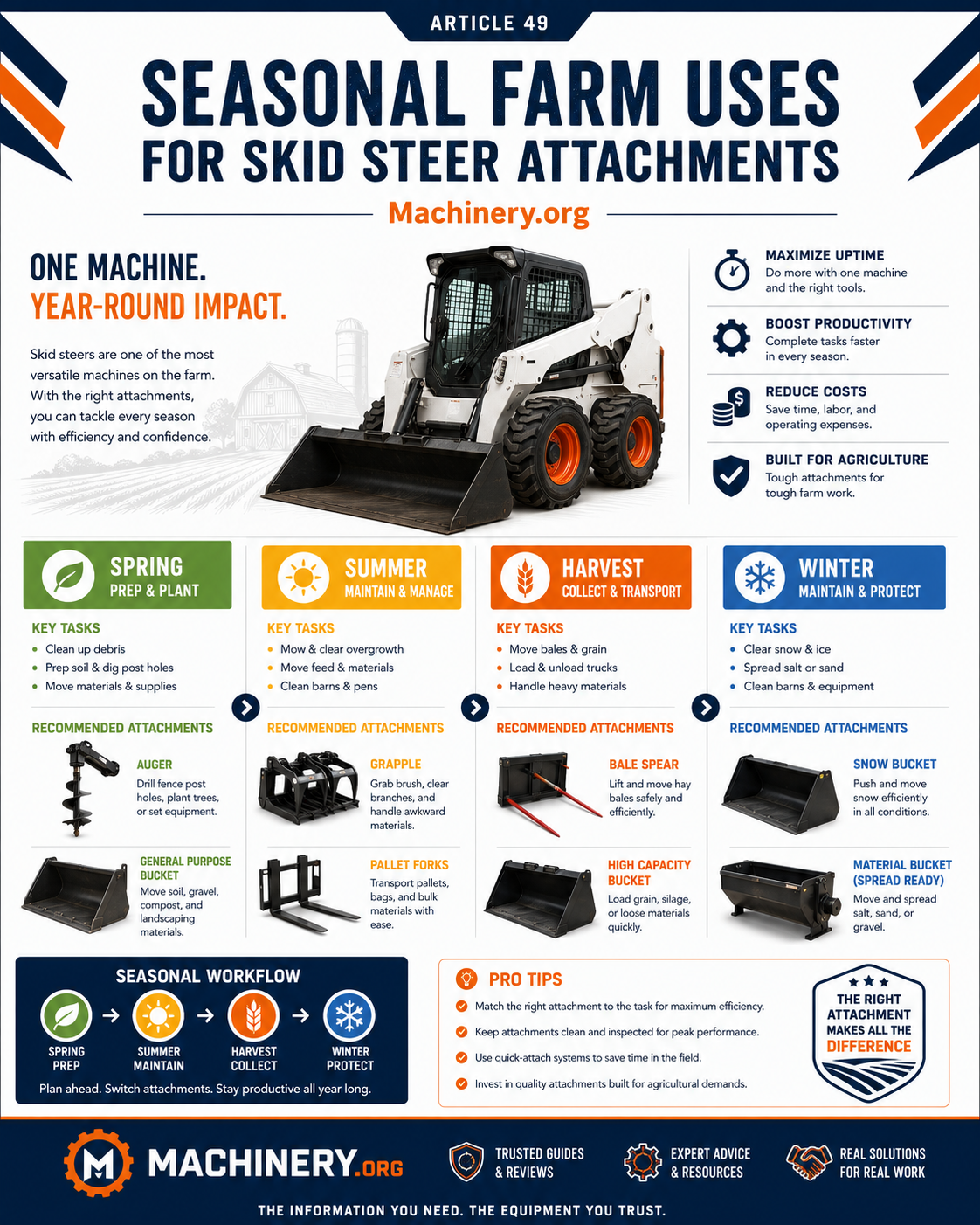
Figure 49.2. Seasonal farm uses for skid steer attachments in spring, summer, harvest, and winter.
Plan attachments around the farming calendar
Attachment value improves when it serves more than one seasonal task. An auger may support spring fencing and planting. A grapple may clear summer brush and move storm debris. Bale spears and high-capacity buckets become especially important during harvest. A bucket, broom, or snow attachment may support winter access and livestock areas. Mapping tasks by season helps owners prioritize purchases and identify attachments that can be rented when only needed briefly.
Farm task
Common attachment
Selection priority
Bale handling
Bale spear or bale grapple
Bale weight, lift height, backstop, stability
Feed and bedding
Bucket or grapple bucket
Material density, bucket volume, contamination control
Fencing
Auger and pallet forks
Soil, bit type, utility clearance, material handling
Brush cleanup
Root grapple or brush cutter
Hydraulic flow, guarding, debris type
Drainage and irrigation
Trencher or narrow bucket
Depth, soil, utility location, spoil management
Winter maintenance
Snow bucket, pusher, broom, spreader
Surface, snow depth, traction, visibility
Attachment compatibility checklist
Confirm mounting plate and locking engagement.
Compare attachment weight with machine capacity and expected material load.
Match hydraulic flow, pressure, couplers, case drain, and electrical controls.
Check visibility, overall width, transport dimensions, and storage needs.
Use the correct tire, track, counterweight, and guarding configuration.
Review operator-manual instructions and train every operator on attachment-specific hazards.
Inspect pins, hoses, blades, teeth, forks, welds, and safety devices before use.
Ownership strategy: buy, rent, or share
Frequently used attachments such as buckets, forks, bale spears, and grapples are often sensible purchases. Specialized tools used for a short season may be better rented, especially when storage, maintenance, and transport are considered. Farms that share equipment should establish clear inspection, maintenance, and responsibility procedures so attachments return in safe condition.
Farm safety: Keep bystanders and animals outside the work area. Carry loads low, avoid side slopes, locate underground utilities, and never exceed the machine or attachment rating. Agricultural material can shift, compress, or weigh more than expected.
Frequently Asked Questions
Which attachment should a farm buy first?
For many farms, a correctly sized general-purpose bucket and pallet forks provide the broadest value. Bale operations may prioritize a rated bale spear or grapple.
Can a universal quick-attach plate guarantee compatibility?
No. Physical mounting is only one part of compatibility. Weight, hydraulics, electrical connections, dimensions, capacity, and guarding must also match.
Should I use the largest bucket the skid steer can mount?
Not necessarily. Match bucket volume to material density and machine capacity. Oversized buckets can overload the loader and slow cycles.
Are farm attachments safe to use on slopes?
Slope work increases risk. Follow the machine and attachment manuals, keep loads low, avoid side slopes, and do not operate where stability is uncertain.
Key Takeaway
Machinery.org takeaway: The best farm attachments are the ones that match the machine, material, season, and real workload. Prioritize frequently used tools, verify full compatibility, and operate with special care around slopes, animals, utilities, and shifting loads.
Get More Expert Guides & Updates
Subscribe for Machinery.org guide updates and product learning content.