
Crushing & Screening Guides & Checklists
Comprehensive technical guides, operating manuals, and maintenance tutorials for Crushing & Screening.
200
ArticlesPublished Guides & Manuals
24
TopicsEquipment & Maintenance Categories
100%
VerifiedCurated Technical Standards
Published guides
Crushing & Screening guides
Showing page 1 of 2 (11 guides in Crushing & Screening).
 GUIDE
GUIDECrushing & Screening
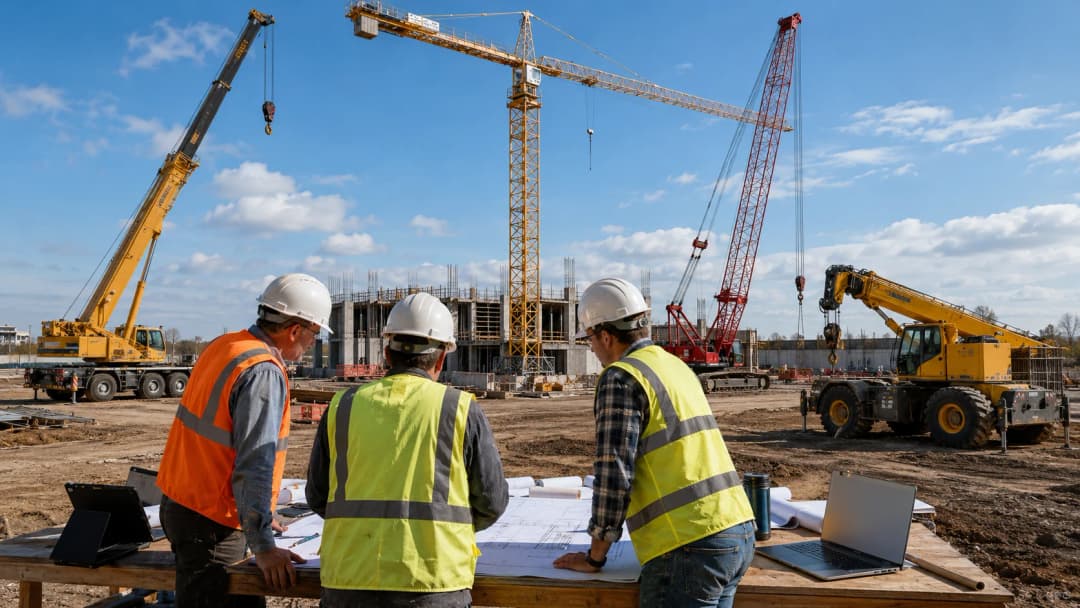
Roadbuilding, Paving, Grading & Crushing10 Detailed Guide Collection
Practical educational content for website guides and operator reference. Always use the exact machine manual and project requirements for model-specific settings and safety procedures.
 GUIDE
GUIDECrushing & Screening
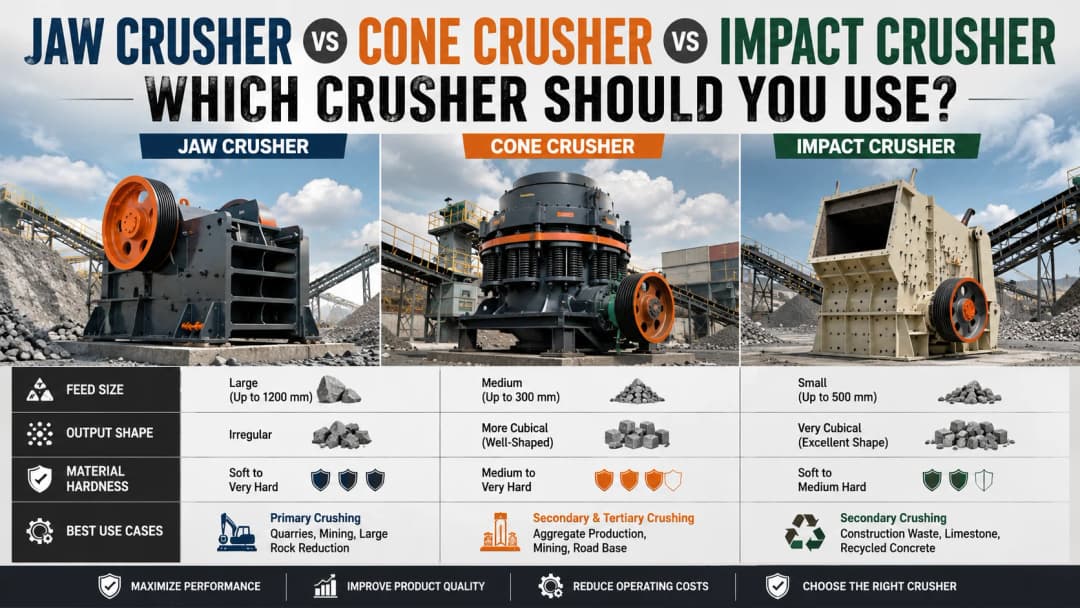
Jaw Crusher vs Cone Crusher vs Impact Crusher: Which Crusher Should You Use?
Jaw, cone, and impact crushers all reduce rock and recycled materials, but they use different crushing mechanisms and therefore excel in different stages and feed conditions.
 GUIDE
GUIDECrushing & Screening
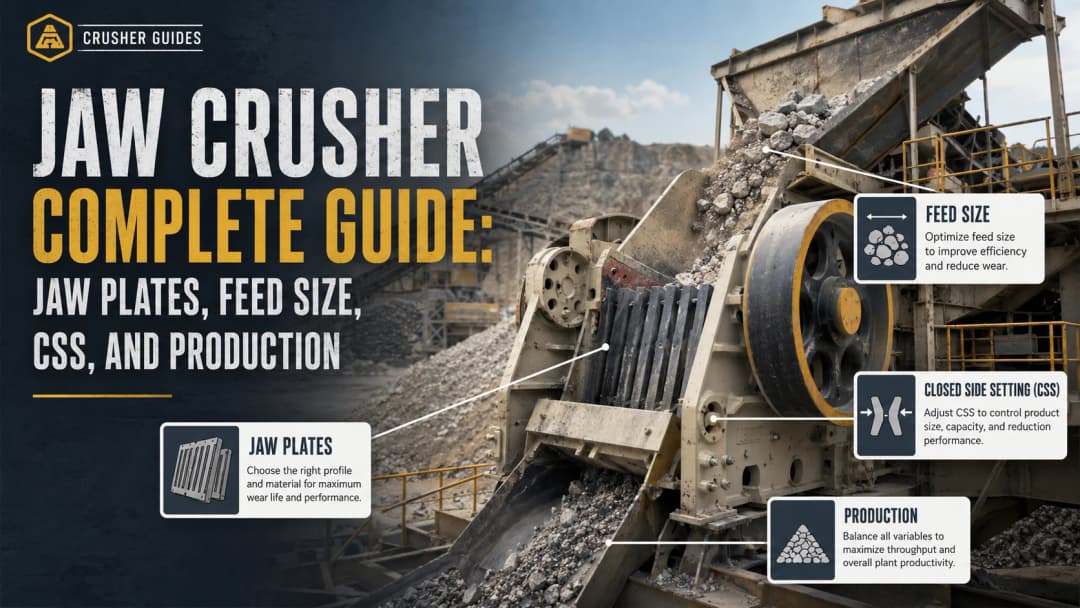
Jaw Crusher Complete Guide: Jaw Plates, Feed Size, CSS, and Production
A jaw crusher is a primary compression crusher designed to accept large rock, concrete, and similar material and reduce it to a size that downstream equipment can handle.
 GUIDE
GUIDECrushing & Screening
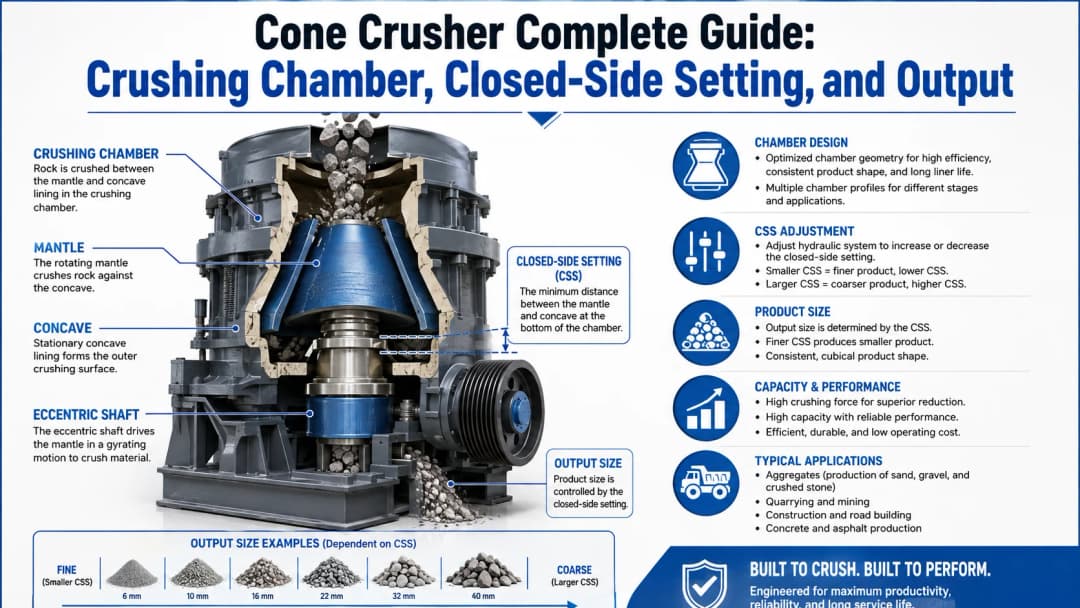
Cone Crusher Complete Guide: Crushing Chamber, Closed-Side Setting, and Output
A cone crusher is a compression machine used mainly in secondary and tertiary crushing. Its production is controlled by the relationship between the mantle, concave liners, crushing chamber profile, eccentric movement, feed condition, power draw, and closed-side setting. Operators often focus on the CSS because it is easy to measure and adjust, but product size and throughput are also influenced by liner wear, feed gradation, chamber fill, screening efficiency, and recirculating load. This guid.
 GUIDE
GUIDECrushing & Screening
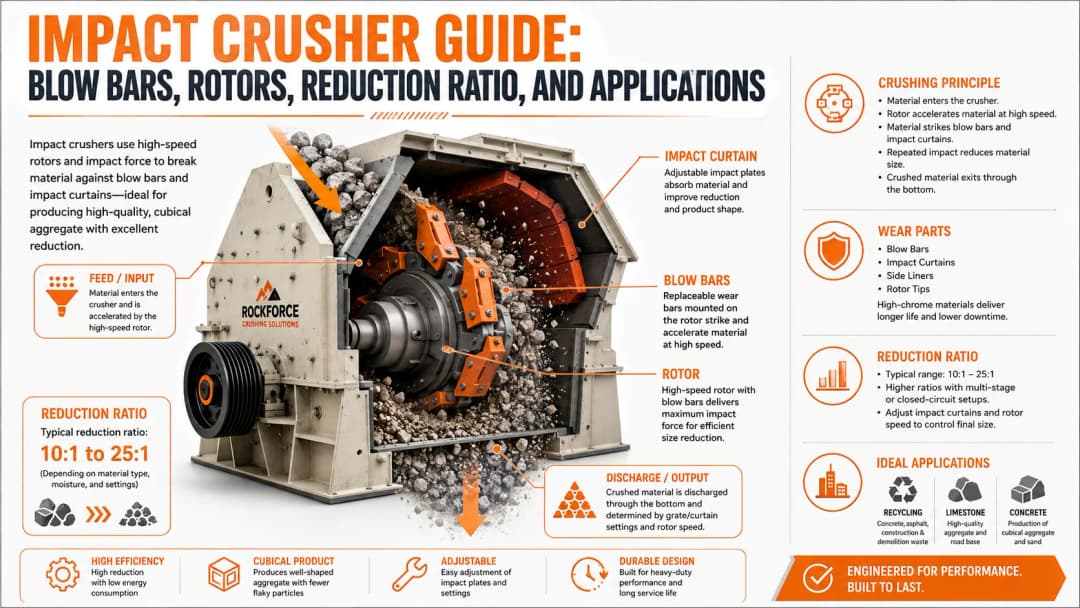
Impact Crusher Guide: Blow Bars, Rotors, Reduction Ratio, and Applications
Impact crushers break rock and recyclable material by accelerating it with a high-speed rotor and striking it against blow bars, impact curtains, aprons, and other particles. The method can achieve strong reduction and excellent cubical shape, which makes impact crushing valuable in limestone, recycled concrete, asphalt recycling, and selected aggregate applications. The same high-energy mechanism can also create high wear when the feed is abrasive or contaminated. Understanding rotor condition.
 GUIDE
GUIDECrushing & Screening
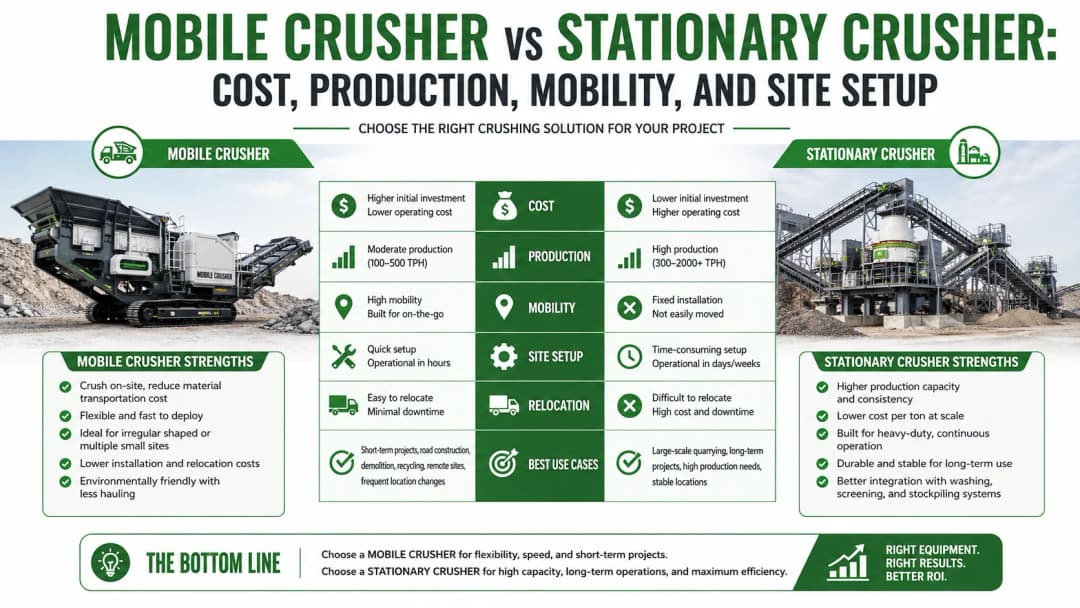
Mobile Crusher vs Stationary Crusher: Cost, Production, Mobility, and Site Setup
Choosing between a mobile crusher and a stationary crushing plant requires more than comparing crusher size or purchase price. The economic answer depends on project duration, annual tonnage, material haul distance, relocation frequency, product range, site infrastructure, energy source, labor, and the value of flexibility. Mobile crushers can move closer to the material source and often reduce civil work, while stationary plants can be optimized for high continuous production and complex multi.