
Drilling & Piling Guides Guides & Checklists
Comprehensive technical guides, operating manuals, and maintenance tutorials for Drilling & Piling Guides.
200
ArticlesPublished Guides & Manuals
24
TopicsEquipment & Maintenance Categories
100%
VerifiedCurated Technical Standards
Published guides
Drilling & Piling Guides guides
Showing page 1 of 2 (7 guides in Drilling & Piling Guides).
 GUIDE
GUIDEDrilling & Piling Guides
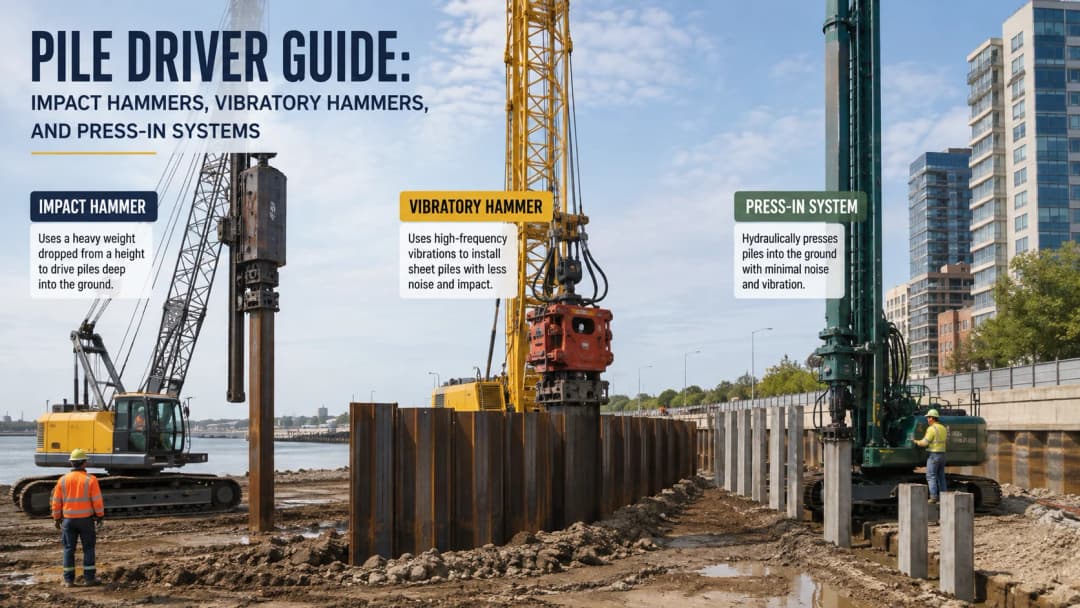
Pile Driver Guide: Impact Hammers, Vibratory Hammers, and Press-In Systems
Pile driving is one of the most important foundation operations in heavy construction because the equipment must transfer structural loads through weak surface soils into stronger material below, or develop sufficient skin friction along the pile. The choice of installation system affects production rate, noise, vibration, pile integrity, crane requirements, access, and the risk transferred to nearby structures. Impact hammers, vibratory hammers, and hydraulic press-in systems all place piles,..
 GUIDE
GUIDEDrilling & Piling Guides
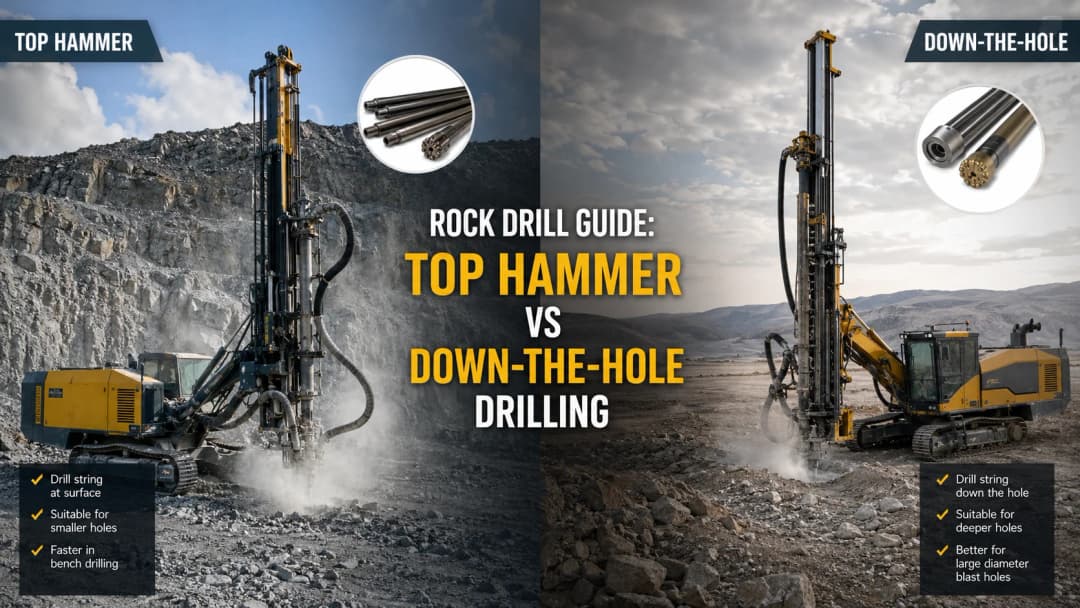
Rock Drill Guide: Top Hammer vs Down-the-Hole Drilling
Rock drilling converts machine power into controlled fracture at the bottom of a borehole. The two most common percussive methods in surface construction, quarrying, and mining are top-hammer drilling and down-the-hole, or DTH, drilling. Both use repeated impacts plus rotation to crush rock, but they deliver impact energy in different places. Top-hammer systems strike the drill string from the rig end, while DTH systems place the hammer directly behind the bit at the bottom of the hole. That si.
 GUIDE
GUIDEDrilling & Piling Guides
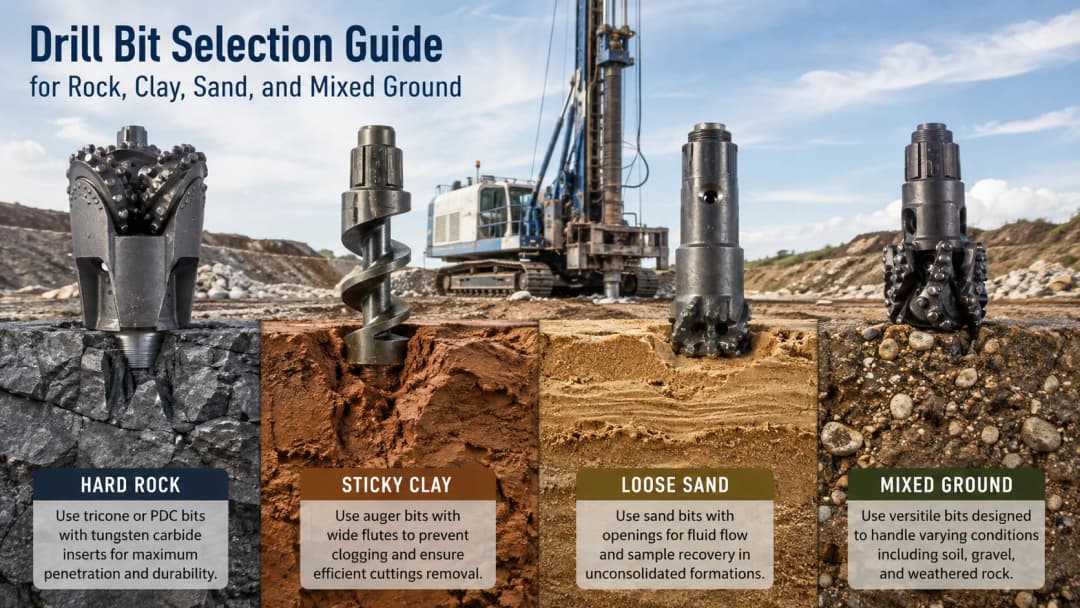
Drill Bit Selection Guide for Rock, Clay, Sand, and Mixed Ground
Drill-bit selection is one of the most underestimated decisions in drilling. A powerful rig cannot compensate for a bit that is poorly matched to the ground, because the bit controls how machine energy is converted into cutting, crushing, scraping, or mixing at the face. Rock, clay, sand, gravel, fill, and mixed ground behave differently under load. Some formations need hard carbide buttons that crush rock; others need open auger flights that carry sticky cuttings; still others need aggressive..
 GUIDE
GUIDEDrilling & Piling Guides
Horizontal Directional Drilling Guide: Pilot Bore, Reaming, and Pullback Explained
Horizontal directional drilling, usually called HDD, installs pipe or conduit along a planned underground path without excavating a continuous open trench. The method is widely used to cross roads, railways, rivers, landscaped areas, and developed corridors where surface disruption must be limited. A typical installation has three major stages: drilling a steerable pilot bore, enlarging the bore with one or more reaming passes, and pulling the product pipe back through the prepared hole. Each s.
 GUIDE
GUIDEDrilling & Piling Guides
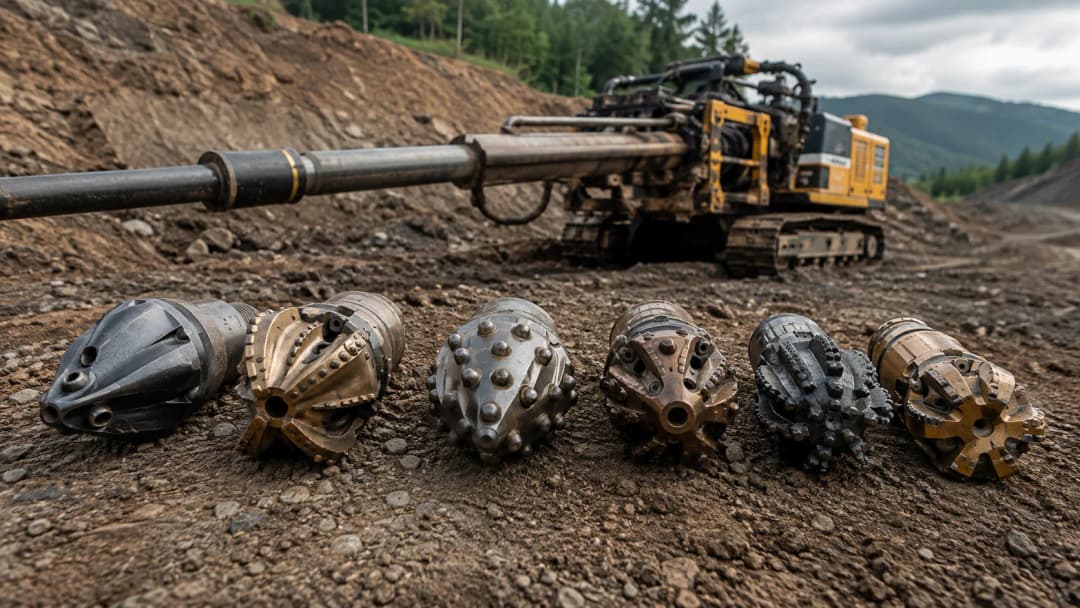
HDD Drill Head and Reamer Selection Guide for Different Ground Conditions
The drill head and reamer are the components that physically interact with the formation during horizontal directional drilling. Their geometry determines how efficiently the rig converts thrust and torque into cutting, steering, soil displacement, and hole enlargement. There is no universal tool that performs best in every formation. Soft clay, loose sand, stiff soil, gravel, cobbles, weathered rock, and competent rock create different requirements for cutting structure, fluid ports, face shap.
 GUIDE
GUIDEDrilling & Piling Guides
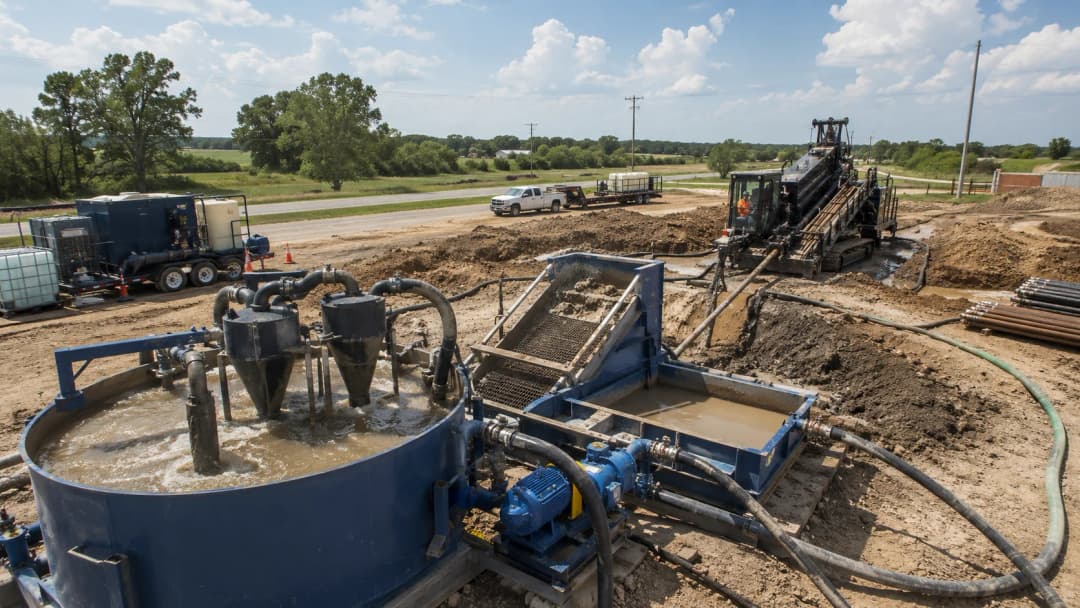
Horizontal Directional Drill Fluid and Mud System Guide
Drilling fluid is one of the most important working systems in horizontal directional drilling. It is not simply water used to wash soil away. A properly designed fluid supports the bore, transports cuttings, lubricates drill rods and product pipe, cools the cutting tool, reduces friction, and helps control pressure around the hole. The mud system that mixes, pumps, circulates, cleans, stores, and recycles this fluid must be sized to the bore diameter, formation, drilling rate, and reaming prog.