
Concrete & Foundation Guides & Checklists
Comprehensive technical guides, operating manuals, and maintenance tutorials for Concrete & Foundation.
200
ArticlesPublished Guides & Manuals
24
TopicsEquipment & Maintenance Categories
100%
VerifiedCurated Technical Standards
Published guides
Concrete & Foundation guides
Showing page 1 of 2 (8 guides in Concrete & Foundation).
 GUIDE
GUIDEConcrete & Foundation
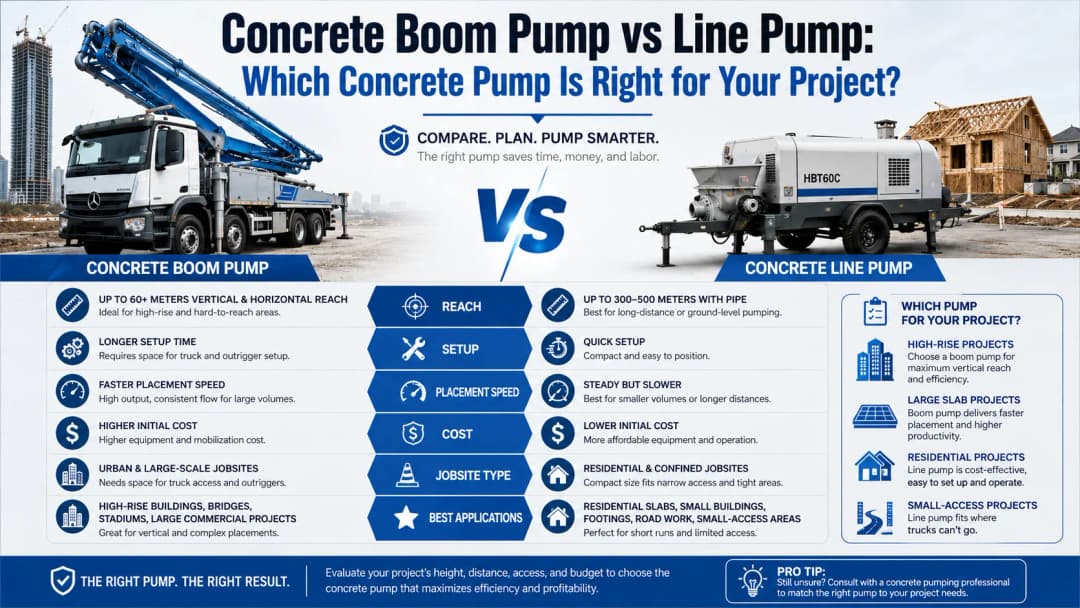
Concrete Boom Pump vs Line Pump: Which Concrete Pump Is Right for Your Project?
Concrete boom pumps and line pumps move fresh concrete from the mixer truck to the placement point, but they solve different access and productivity problems. A boom pump uses an articulated placing boom to reach rapidly over obstacles and across large areas. A line pump sends concrete through hose or steel pipeline routed along the ground, through buildings, around corners, or into areas a large truck cannot reach. The right choice depends on placement distance, height, volume, site space, con.
 GUIDE
GUIDEConcrete & Foundation
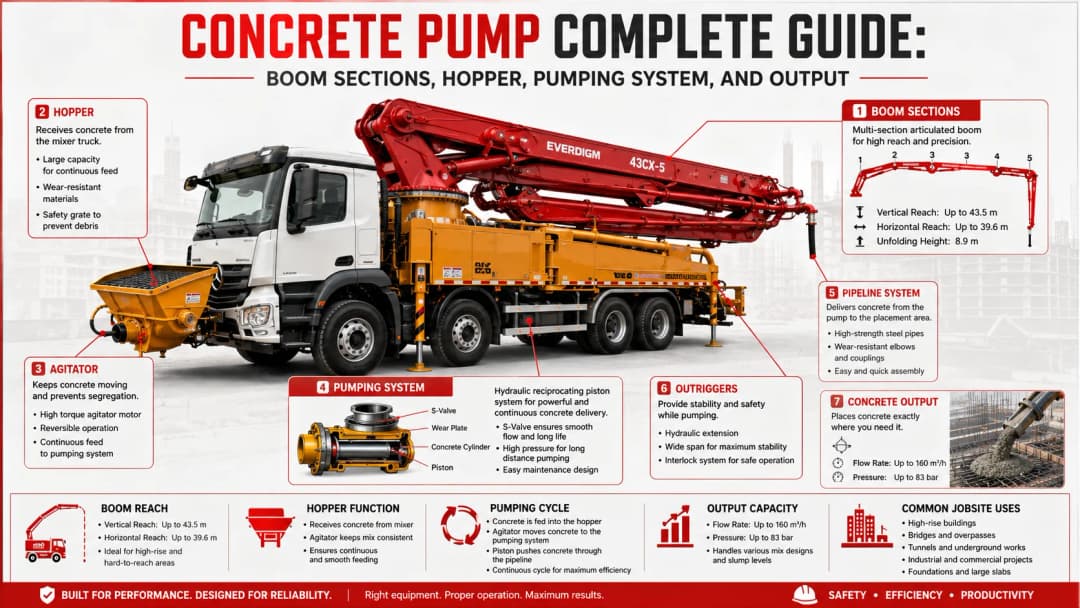
Concrete Pump Complete Guide: Boom Sections, Hopper, Pumping System, and Output
A concrete boom pump is a coordinated hydraulic, structural, and material-delivery system. Fresh concrete enters a hopper, an agitator keeps it moving, twin pumping cylinders alternately draw and discharge material through a transfer valve, and the resulting flow travels through steel pipeline carried by an articulated boom. Outriggers stabilize the machine while the operator positions the end hose at the pour. Real output depends on much more than the pump rating: concrete pumpability, line re.
 GUIDE
GUIDEConcrete & Foundation
Concrete Pump Blockage Guide: Causes, Prevention, and Jobsite Planning
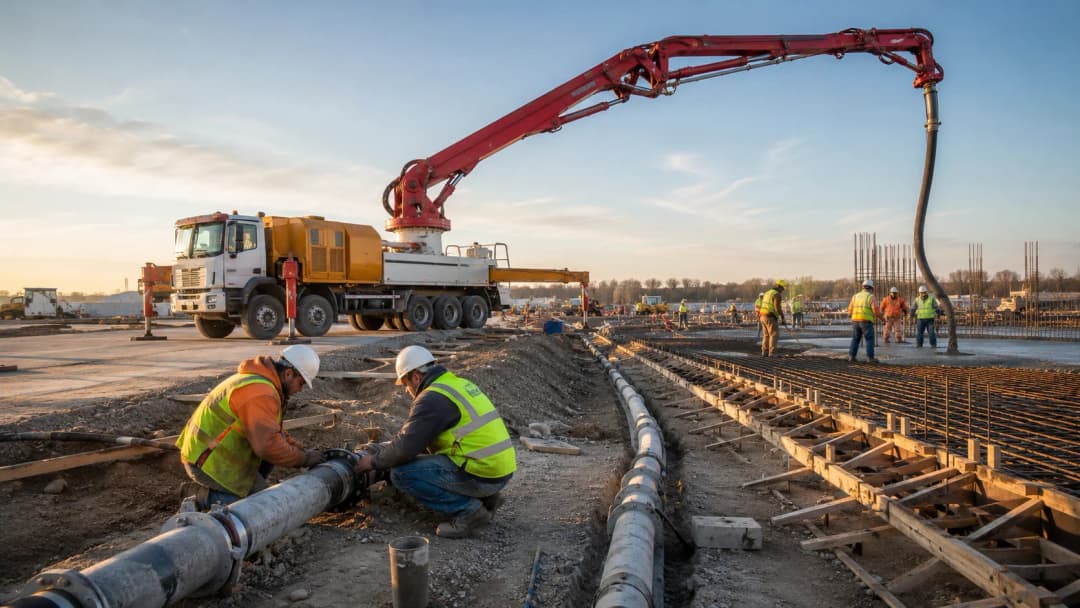
Concrete pumping can move large volumes quickly and place material where mixer trucks cannot reach, but the system depends on a continuous, pumpable flow through the hopper, cylinders, elbows, reducers, steel line, rubber hose, and end hose. A blockage turns that efficient process into a production interruption and can create serious hazards if pressure is handled incorrectly. This guide explains how blockages develop, how to reduce the probability of a plug before pumping begins, and how jobsi.
 GUIDE
GUIDEConcrete & Foundation
Concrete Mixer Types Explained: Drum, Volumetric, Transit, and Portable Mixers
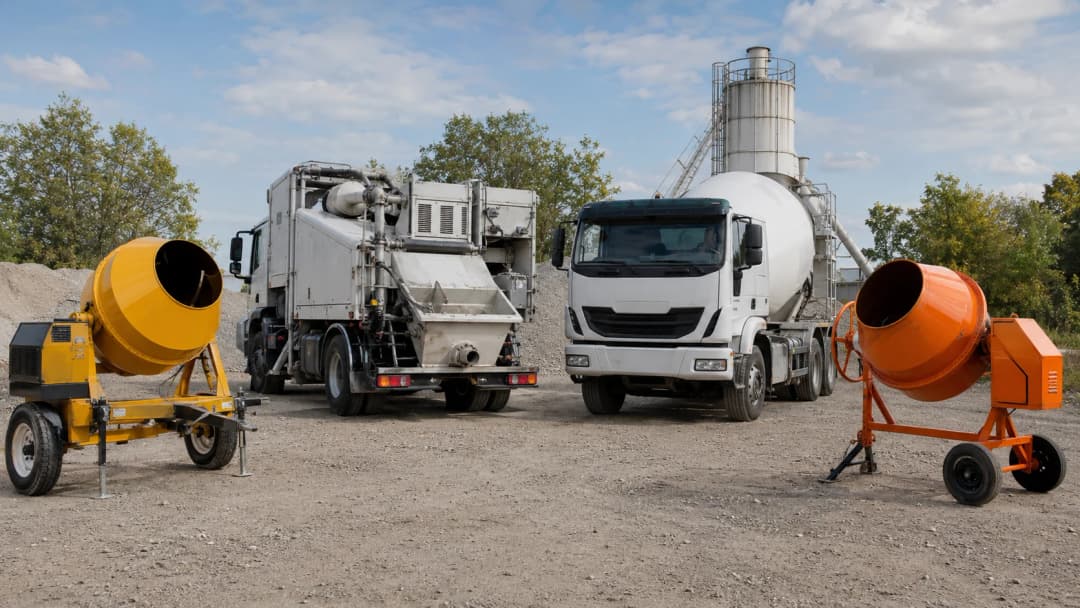
Concrete mixers range from small portable drums used for repair work to truck-mounted systems that carry or manufacture concrete for major projects. Choosing a mixer is not only a question of capacity. The right machine depends on where batching occurs, how far material must travel, how accurately proportions must be controlled, how many mix designs are required during the shift, how quickly concrete must be discharged, and how much mobility the job demands. This guide compares drum, volumetric.
 GUIDE
GUIDEConcrete & Foundation
Concrete Batching Plant Complete Guide: Aggregate, Cement, Water, and Mixing Systems
A concrete batching plant is the control center of concrete production. Its job is to receive raw materials, store them without contamination, measure each ingredient accurately, introduce the materials in a controlled sequence, mix them when the plant design requires central mixing, and discharge concrete at a rate that supports truck loading and jobsite demand. The major systems—aggregate storage and weighing, cementitious storage and feeding, water and admixture measurement, mixing equipment.
 GUIDE
GUIDEConcrete & Foundation
Concrete Power Trowel Guide: Walk-Behind vs Ride-On Machines
Power trowels are finishing machines used after concrete has been placed, struck off, and allowed to stiffen enough to support finishing equipment. Their rotating blades or pans help close, flatten, and densify the surface as the slab progresses through the finishing window. Walk-behind and ride-on trowels perform the same general task, but they differ greatly in coverage rate, maneuverability, operator position, edge access, transport needs, and suitability for large floor areas. This guide ex.