
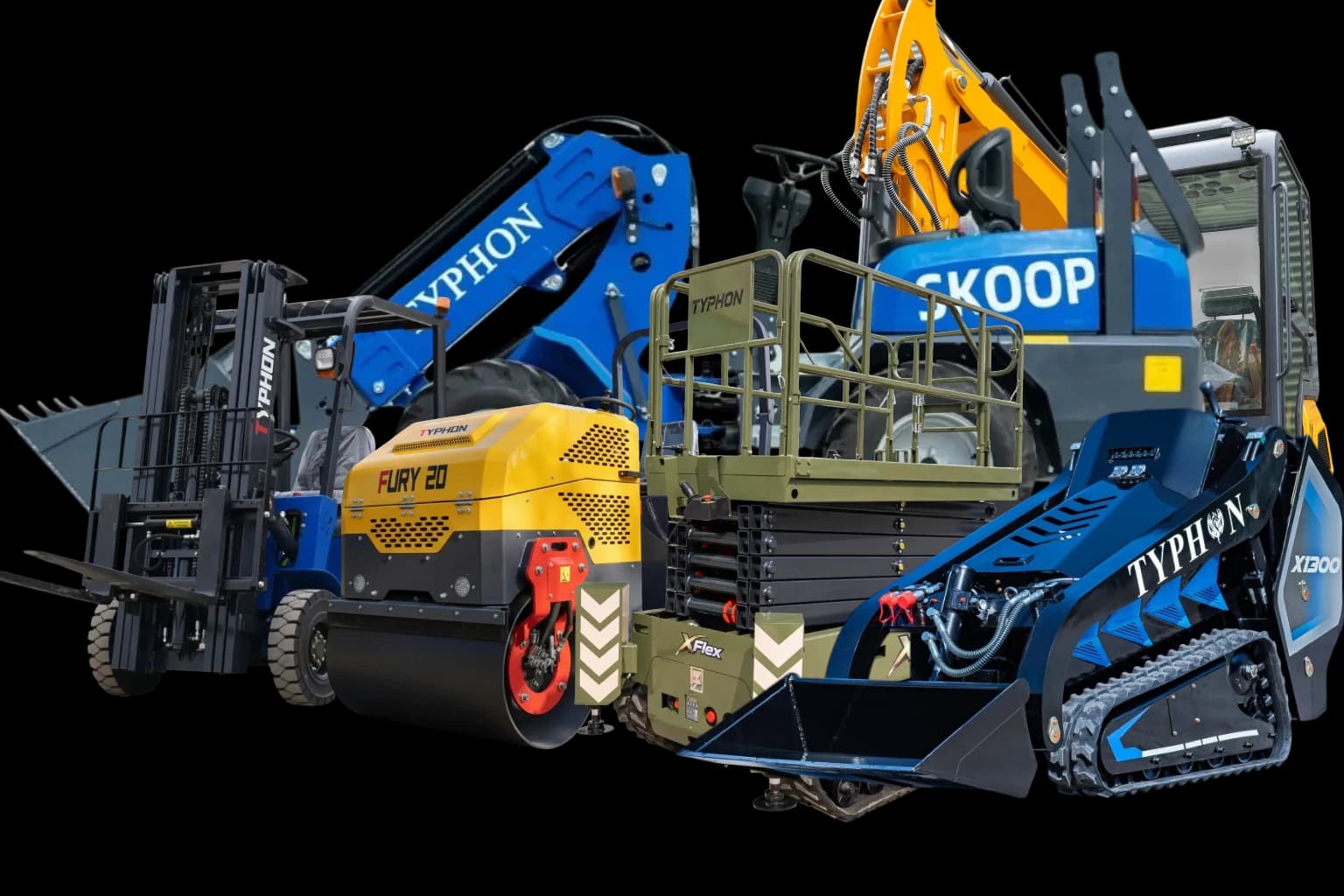
The versatility of a skid steer or compact track loader is defined almost entirely by the attachments it can operate. A well-chosen set of attachments multiplies the machine’s utility across seasons and job types; a poorly matched attachment wastes hydraulic power, reduces productivity, and can damage both the tool and the carrier. Systematic selection begins with a clear understanding of the work to be performed, the machine’s hydraulic and lift capacity, and the mechanical interface.
The universal skid-steer quick-attach plate (often called a “Bob-Tach” style or ISO-style plate) allows rapid interchange of attachments without tools. Most modern machines use a compatible plate, but dimensional variations exist. Always confirm that the attachment’s coupler matches the machine’s plate and that the locking mechanism engages fully. Hydraulic and electrical connections must also align with the machine’s auxiliary ports and wiring harness.
Common Attachment Categories
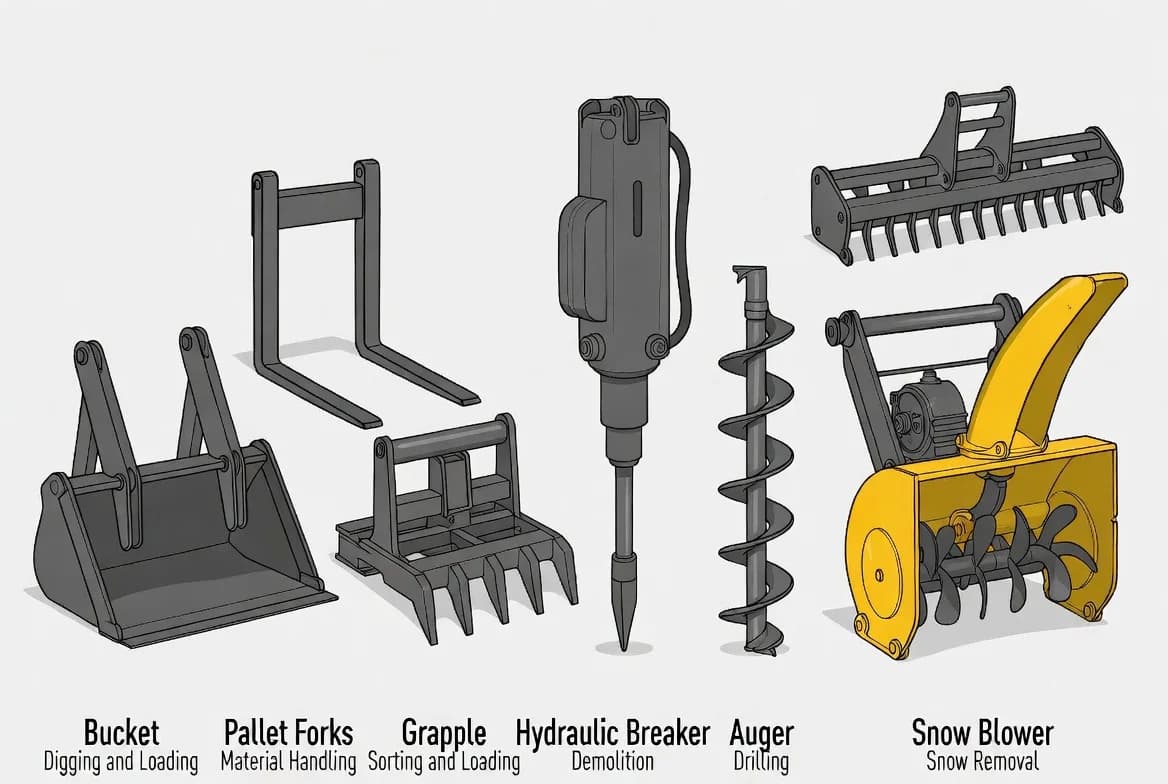
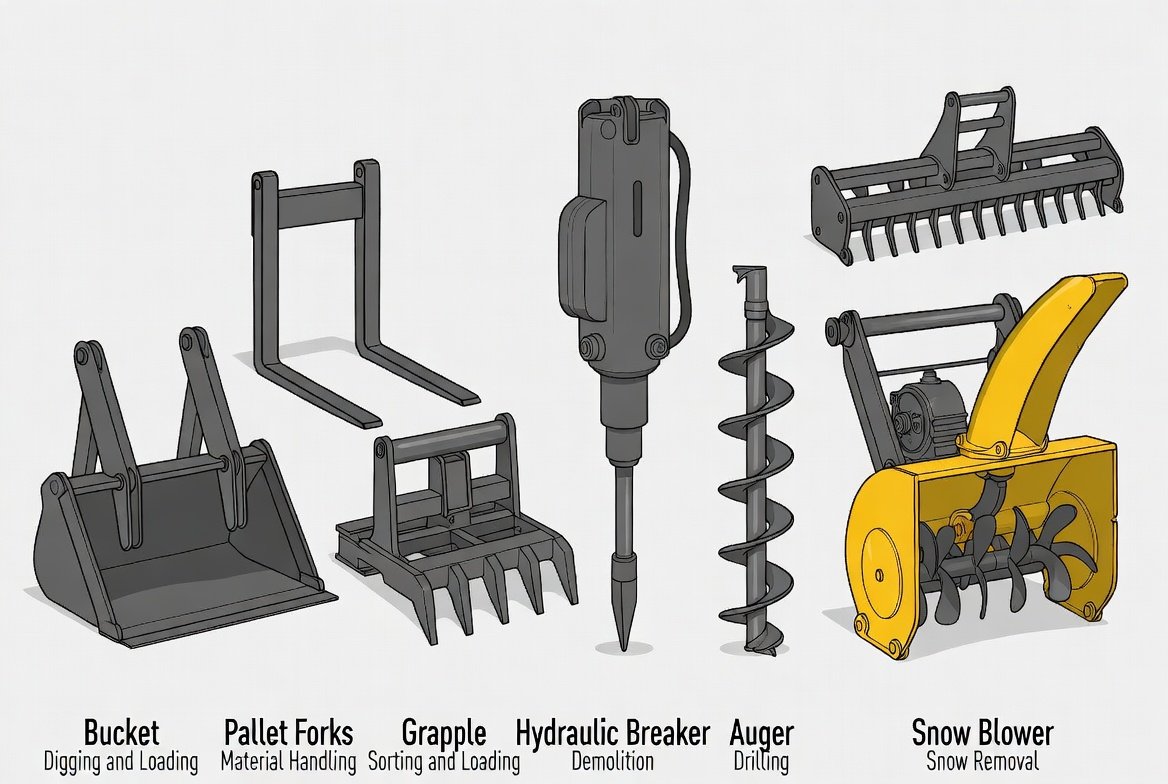
Buckets remain the most frequently used attachment. General-purpose digging buckets, light-material buckets, multi-purpose (4-in-1) buckets, and tooth or toothless configurations each serve different materials and finish requirements. Capacity must be matched to the machine’s rated operating capacity and to the density of the material.
Material-handling attachments include pallet forks, grapples (root, rock, brush, or industrial), and bale spears. Forks require careful attention to load center and ROC; grapples add the ability to secure irregular loads and are among the most popular hydraulic attachments.
Ground-engaging and construction tools include hydraulic breakers, cold planers, trenchers, and vibratory rollers. These tools typically demand higher auxiliary flow and generate significant vibration or side loads that must be within the machine’s structural limits.
Landscaping and agricultural attachments encompass landscape rakes, tillers, rotary cutters, seeders, and snow blowers or snow pushers. Seasonal attachments such as snow equipment can significantly improve machine utilization in cold climates.
Matching Capacity and Hydraulics
Every attachment has a recommended carrier weight range and required hydraulic flow and pressure. Operating an attachment on a machine that is too light risks instability and structural overload; operating it on a machine that is too heavy may be inefficient but is usually safer. Hydraulic mismatch is more critical: insufficient flow produces slow or incomplete function; excessive flow or pressure can destroy seals, motors, or cylinders.
When evaluating an attachment, request the manufacturer’s carrier-compatibility chart and hydraulic-requirement sheet. Compare these figures with the skid steer’s published ROC, auxiliary flow, and pressure. Allow margin for real-world conditions.
Durability, Serviceability, and Total Cost
Attachments that see heavy daily use should be constructed with high-strength steel, replaceable wear parts, and accessible grease points. Quick-change tooth systems, bolt-on cutting edges, and modular designs reduce downtime. The availability of local parts and service support is often as important as the initial purchase price.
In summary, successful attachment selection requires matching mechanical interface, hydraulic demand, lift capacity, and durability to the machine and the intended work. A disciplined evaluation process yields a versatile, productive, and reliable tool package that maximizes the return on the carrier investment.
Get More Expert Guides & Updates
Subscribe for Machinery.org guide updates and product learning content.