
Chapter objective: Bucket choice affects digging force, cycle time, fuel use, machine stability, trench accuracy and wear. The widest or largest bucket is not automatically the most productive. A bucket that is too large may not penetrate compact material, may overload the carrier when filled and may slow every cycle. A bucket that is too small may require unnecessary passes and increase travel or swing time. Selection should begin with the task, material, required finish and carrier...
Start with the job, not the bucket width
Bucket choice affects digging force, cycle time, fuel use, machine stability, trench accuracy and wear. The widest or largest bucket is not automatically the most productive. A bucket that is too large may not penetrate compact material, may overload the carrier when filled and may slow every cycle. A bucket that is too small may require unnecessary passes and increase travel or swing time. Selection should begin with the task, material, required finish and carrier limits.
Define whether the work is bulk excavation, narrow trenching, grading, ditch cleaning, rock removal, sorting, loading or a combination. Record the required trench width and depth, material density, abrasiveness, moisture, contamination and presence of large rock or roots. Then select the bucket family, width, capacity, tooth system and protection package that support that work.
Common bucket types
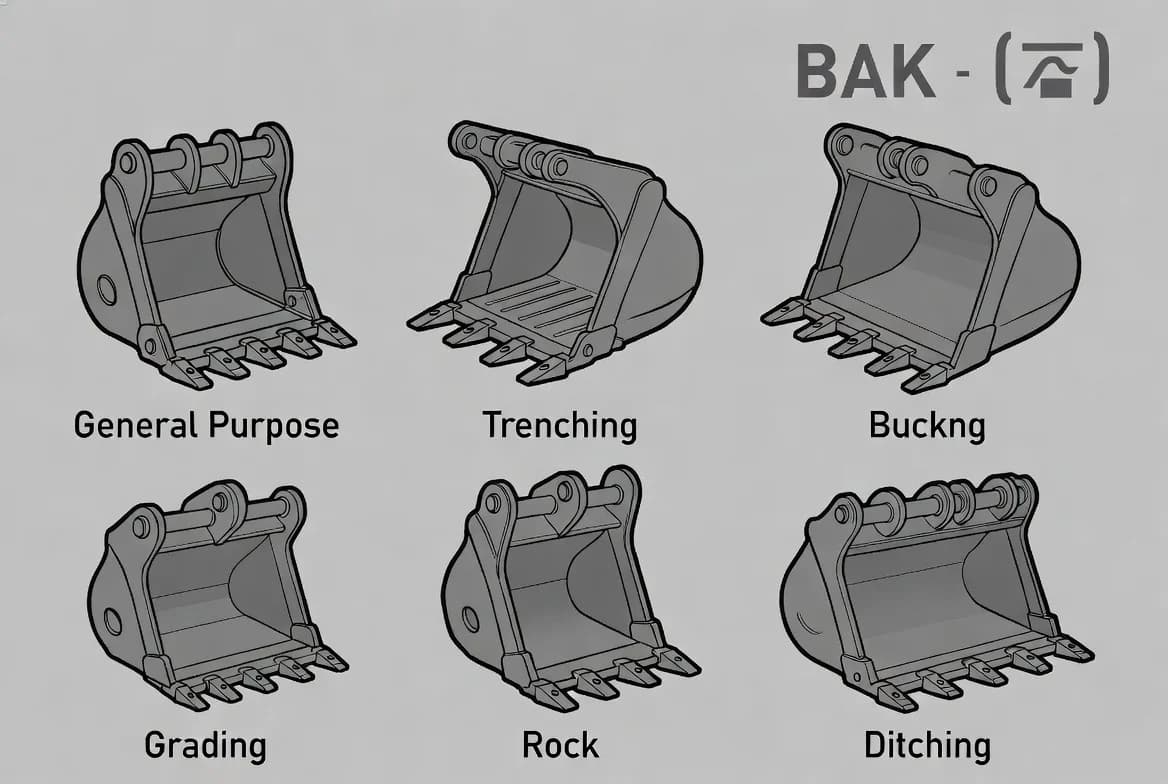
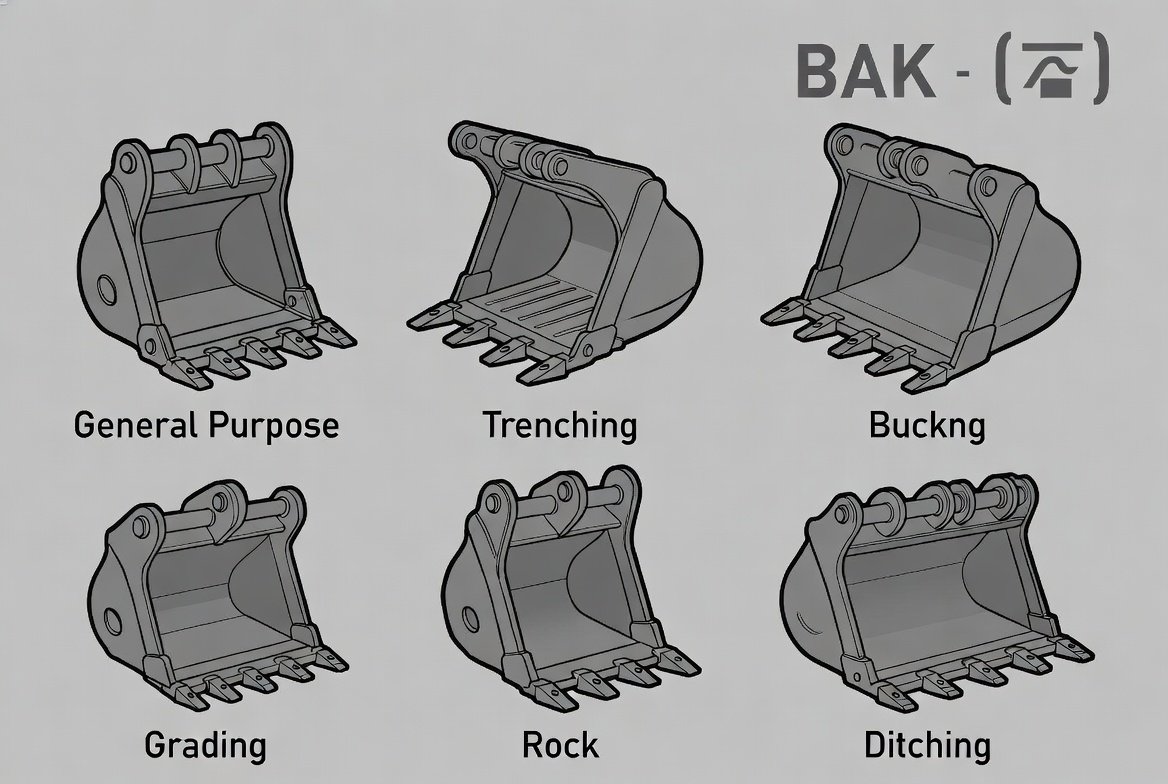
General-purpose digging buckets balance penetration, capacity and durability for mixed soil. Trenching buckets are narrower and reduce unnecessary excavation. Grading or ditch-cleaning buckets are wide and shallow to create smooth surfaces, but their width and low penetration make them unsuitable for hard digging. Heavy-duty and rock buckets use reinforced structures and wear protection for abrasive or high-impact material. Skeleton or sieve buckets separate finer material through openings. V-buckets, trapezoidal buckets and special drainage profiles create shaped trenches.
A tilt bucket improves grading flexibility, while a tiltrotator can expand positioning options but adds weight and changes geometry. High-capacity buckets can be effective in light material but may exceed capacity in wet soil or dense aggregate. Choose the type based on the majority of the work rather than a rare task, and change buckets when the conditions change significantly.
Capacity, density and carrier limits
Bucket capacity is commonly stated as struck or heaped volume, but the actual load depends on fill factor and material density. A nominally small bucket filled with wet clay or rock can weigh more than a larger bucket of dry topsoil. Estimate payload using realistic density and fill assumptions, then add the bucket, coupler and any adapter weight. Compare the total with the carrier's lifting, stability and structural limits at the intended working radius.
For loaders and skid steers, consider rated operating capacity, tipping load and the forward centre of gravity. For excavators, consider lifting charts, digging forces and stability over the front or side. A bucket that the machine can curl at ground level may still be unsafe when extended or raised. If the machine becomes light at the rear, struggles to lift, travels poorly or requires repeated relief operation, the bucket or fill level may be excessive.
Width and excavation accuracy
The correct width minimises over-excavation while providing enough clearance for compaction, pipes, shoring or personnel where required. A trench bucket should allow the planned installation and safe work method, not merely match the nominal utility diameter. Ground conditions may require additional width to prevent wall collapse or accommodate protective systems.
Very wide buckets create greater side loads when one corner strikes hard material. Operators should avoid prying or twisting. For finish grading, a wide cutting edge can improve smoothness on soft material, but it also magnifies errors and requires sufficient machine stability. Check transport width and site access before choosing an oversized grading bucket.
Teeth, cutting edges and penetration
Tooth shape controls how the bucket enters material. Sharp, narrow teeth concentrate force and improve penetration in compact ground. Wider or abrasion-resistant teeth may last longer in mixed material. Rock teeth, tiger teeth, flare teeth and chisel profiles serve different conditions. Tooth spacing influences material flow and the size of objects that enter the bucket.
A smooth cutting edge is useful for grading and clean-up. Bolt-on edges simplify replacement. Side cutters improve penetration and protect the bucket sides but increase width. Keep teeth and edges within wear limits; rounded teeth reduce productivity and increase fuel use. Replace missing retainers immediately. A tooth lost into processed material can damage crushers or other equipment.
Bucket geometry and machine performance
Profile, floor length, back angle and heel design influence filling and release. A well-matched bucket curls through the material efficiently and sheds the load without excessive shaking. Deep buckets may hold more but can trap sticky soil. Short, aggressive profiles improve penetration. The relationship between bucket geometry and linkage affects breakout force and dump clearance.
Do not assume that any bucket fitting the coupler preserves the original performance. An adapter or different pin geometry can change the tip radius and reduce effective force. Check for boom, arm, tyre or cab interference through the full range. Confirm that the bucket can dump cleanly into the intended truck or hopper.
Wear protection and durability
Abrasive material wears the cutting edge, teeth, side plates, heel and bottom. Heavy-duty buckets may use thicker material, wear strips, shrouds, corner guards and replaceable liners. More protection extends life but adds weight and can reduce payload. Select a protection package based on material and annual utilisation rather than choosing the heaviest bucket by default.
Inspect cracks around ears, corners, side plates and weld transitions. Monitor floor thickness and heel wear. Repair early before the base structure is damaged. Use approved welding procedures and wear materials. Uneven wear may indicate side loading, poor technique or a bent linkage.
Operator technique
Correct technique can matter as much as bucket design. Position the machine to use the intended digging arc. Take controlled bites rather than forcing an oversized cut. Keep the bucket aligned with the arm and avoid using the side as a lever. Fill by drawing material smoothly into the bucket, then close and lift without dragging unnecessarily. For loading, maintain a consistent cycle and avoid spilling material over the machine.
Do not use a bucket as a lifting point unless it has an approved lifting eye and the operation follows the carrier lifting instructions. Do not strike structures, compact with the bucket teeth or carry people. When grading, use low speed and maintain visibility of the edge and surrounding workers.
A practical selection method
List the carrier model, coupler, maximum recommended attachment mass and intended material. Define the task, required width and finish. Estimate material density and likely fill factor. Select the bucket type and calculate loaded weight. Check lifting and stability at the worst working position. Choose teeth, edge and protection. Confirm transport and clearance. Review manufacturer approval and connect for a controlled test.
After the first shift, inspect fill performance, wear pattern, machine stability, cycle time and fuel use. The best bucket is the one that achieves the required production without overloading the carrier or creating excessive wear. Keep records so future selections are based on measured results rather than preference alone.
Key takeaways
Bucket selection balances task, material, width, capacity, density, penetration, release, durability and carrier limits. Match the bucket to the dominant work and change it when conditions change. Account for the complete loaded weight, coupler and adapter. Maintain teeth and edges, avoid side loading and use approved lifting points only. Manufacturer recommendations and machine capacity information remain the final authority.
Digging buckets versus loading buckets
Excavator digging buckets are designed around penetration, curl path and breakout force, while loader buckets emphasise fill, carry and dump. A loader general-purpose bucket should match material density and the machine's tipping limits. Light-material buckets provide greater volume but are unsafe when filled with dense aggregate. Four-in-one and multipurpose buckets add clamping and dozing functions but increase weight and complexity. Do not transfer selection rules from one carrier family to another simply because both tools are called buckets.
Material change during the project
Material conditions often change with depth, weather and location. Dry soil can become saturated and much heavier after rain. A trench may move from topsoil into dense clay or rock. Reassess fill level, bucket type and technique whenever the machine begins to struggle, stability changes or wear accelerates. Operators should not feel required to fill every bucket completely. Partial fills may be the correct method in heavy material and can produce faster, safer cycles than repeatedly stalling with an oversized load.
Transport, access and surrounding assets
Bucket width and profile affect more than excavation. Confirm that the machine can pass through gates, load onto transport and work beside walls, utilities or traffic. Wide grading buckets can strike structures during swing. Long teeth can damage pavement or trailer decks. Secure the attachment for transport using approved points and protect sharp edges. When changing buckets on site, provide a stable storage position that prevents rolling and keeps the mounting interface clean.
Life-cycle cost and productivity review
Purchase price is only one part of bucket cost. Consider wear-part consumption, repair labour, downtime, fuel use and production per hour. A heavily reinforced bucket may last longer but reduce payload on a small carrier. A cheaper bucket may require frequent structural repair in rock. Track hours, material, tonnes or cubic metres moved, tooth life and major repairs. Use these records to refine future specifications and choose wear packages that fit actual work rather than marketing labels.
Field performance indicators
A well-matched bucket enters the material without repeated impact, fills through a smooth curl, carries without instability and releases without excessive shaking. Poor matching appears as low fill, constant relief operation, rear lifting, slow cycle time, frequent tooth loss, side-plate cracking or material sticking. Observe several complete cycles and compare operator technique before blaming the bucket. Small changes in position, bite depth or tooth condition can produce large productivity improvements.
Manufacturer authority: Use the current carrier and attachment manuals, approved fitment charts and service limits as the final source for ratings, settings, inspection criteria and operating procedures.
Get More Expert Guides & Updates
Subscribe for Machinery.org guide updates and product learning content.