
Selecting the correct forklift is a foundational decision that affects productivity, safety, operating cost, and facility compatibility for years. A mismatched machine leads to inefficient material handling, higher accident risk, excessive wear, and unnecessary capital or rental expense. The process begins with a clear analysis of the work environment, the loads to be handled, the required lift heights, the available power infrastructure, and the skill level of the operators.
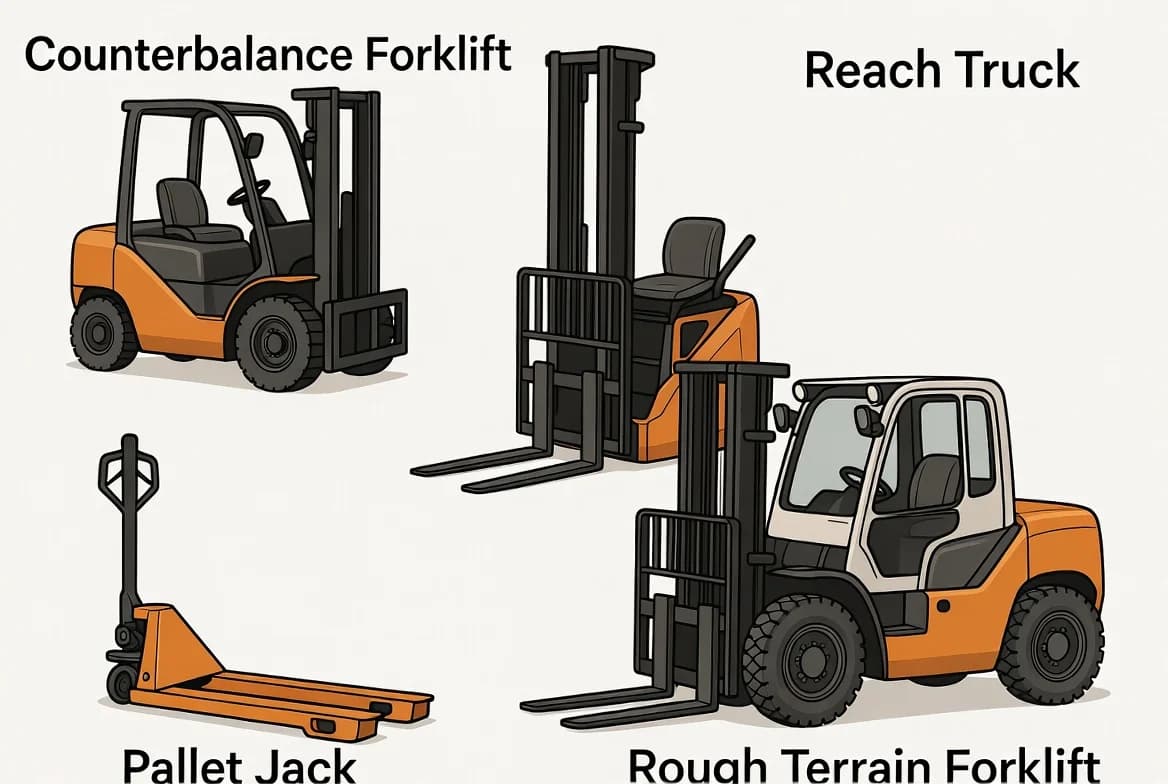
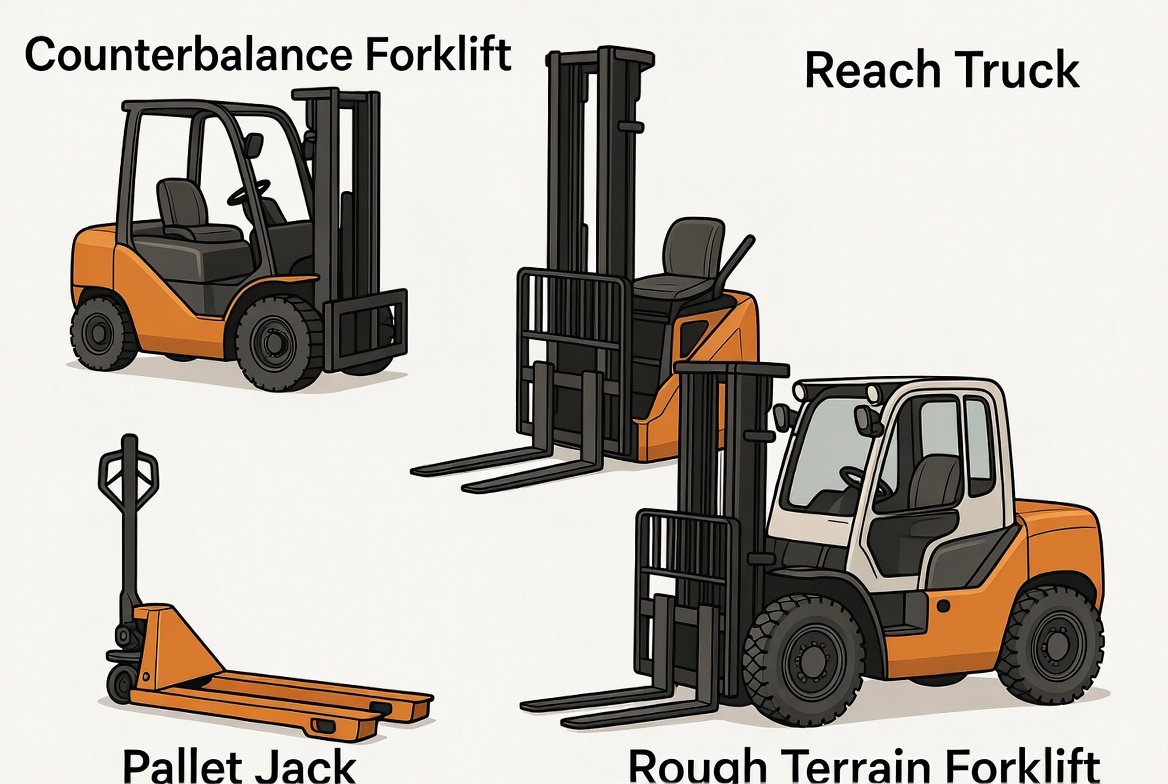
Counterbalance forklifts are the most common general-purpose machines. They carry the load in front of the front axle and use the weight of the truck (and often additional counterweight) to balance it. They are available in electric, diesel, LPG, and dual-fuel versions and suit a wide range of indoor and outdoor applications. Sit-down counterbalance trucks are preferred for longer travel distances and heavier loads; stand-up versions excel in narrow aisles and high-frequency order picking.
Reach trucks are designed for narrow-aisle warehouse work. The mast and forks can extend forward, allowing the truck to place or retrieve loads from racking while the body remains in the aisle. They offer excellent lift heights and are almost exclusively electric. Reach trucks require firm, level floors and are not suitable for outdoor or rough-terrain use.
Pallet jacks (manual or powered) handle horizontal movement of palletized loads at ground level. They are inexpensive, highly maneuverable, and ideal for loading docks, trailers, and short-distance transport. Powered pallet jacks reduce operator fatigue on high-volume docks.
Rough-terrain and telehandler-style forklifts are built for outdoor construction, agriculture, and uneven ground. Large pneumatic tires, high ground clearance, and four-wheel drive provide the necessary mobility. These machines typically use diesel engines and offer higher capacities and greater lift heights than indoor trucks, but they are larger, heavier, and more expensive to operate indoors.
Other specialized types include order pickers (operator elevates with the load), turret trucks (for very narrow aisles), side-loaders (for long loads), and explosion-proof or cold-store versions for hazardous or extreme environments. Matching the truck type to the primary application is the first and most important filter.
Key Selection Criteria
Load weight and dimensions determine the required capacity and fork length. Always select a truck whose rated capacity at the actual load center exceeds the heaviest regular load by a safe margin. Lift height must reach the highest storage location plus clearance for the load and any attachments. Aisle width and turning radius dictate whether a counterbalance, reach, or very-narrow-aisle truck is feasible. Floor condition and indoor/outdoor mix influence tire type and power source. Duty cycle (hours per day, shifts per week) affects battery or fuel system sizing and cooling requirements.
Operator comfort and visibility influence productivity and safety over long shifts. Ergonomic controls, adjustable seats, clear mast visibility, and low noise levels reduce fatigue. Service support, parts availability, and residual value should also be considered, especially for fleets that standardize on one manufacturer.
In summary, choosing the correct forklift requires a systematic evaluation of application, capacity, environment, and total cost of ownership. A well-matched machine delivers higher throughput, lower operating cost, and fewer safety incidents than a generic or oversized alternative.
Get More Expert Guides & Updates
Subscribe for Machinery.org guide updates and product learning content.