
Mini excavators are built to work hard in difficult environments, but they are still machines made of systems, seals, bearings, hoses, filters, electronics, and wear parts. That means problems are not unusual. What separates a well-managed machine from a costly problem machine is not whether issues ever appear. It is how quickly they are noticed, understood, and corrected. Owners who know the common failure patterns often save significant money because they catch early symptoms before the machine suffers secondary damage.
Many excavator problems begin as small changes in behavior. The machine may crank slower in the morning, feel weak when curling the bucket, run hotter than normal, leak a little oil after shutdown, or show an attachment that no longer works as strongly as before. Those changes are not random. They are clues. A weak battery, blocked radiator, loose track tension, worn hose, or hydraulic restriction may show itself gradually at first. If the operator pays attention, the repair is often simpler than it would be after a complete failure.
A guide to common mini excavator problems should therefore be diagnostic, not just descriptive. It should help you connect symptoms to likely causes, sort minor issues from serious ones, and decide when the machine can keep working and when it must be stopped for service. That is the goal of this article.
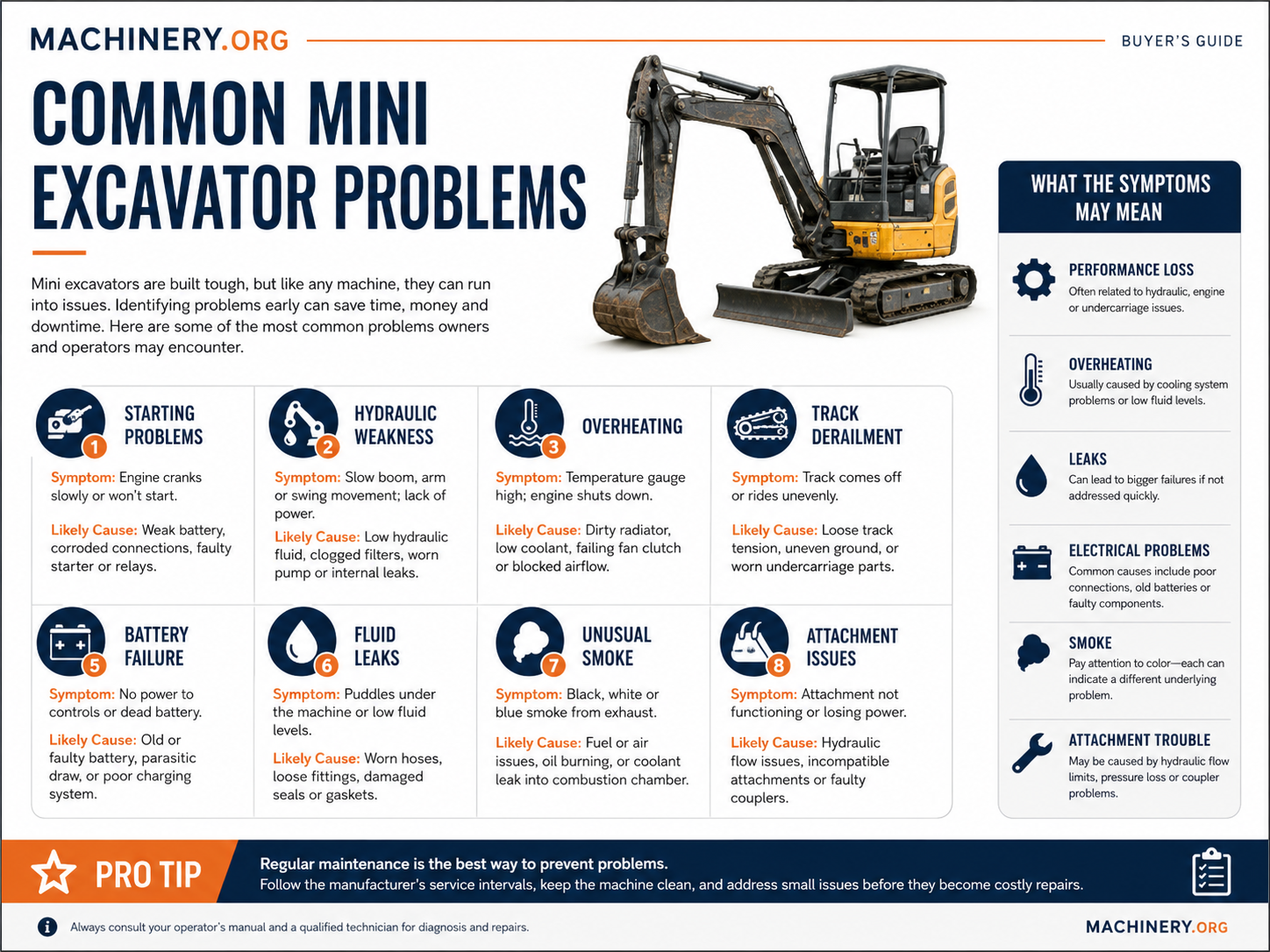
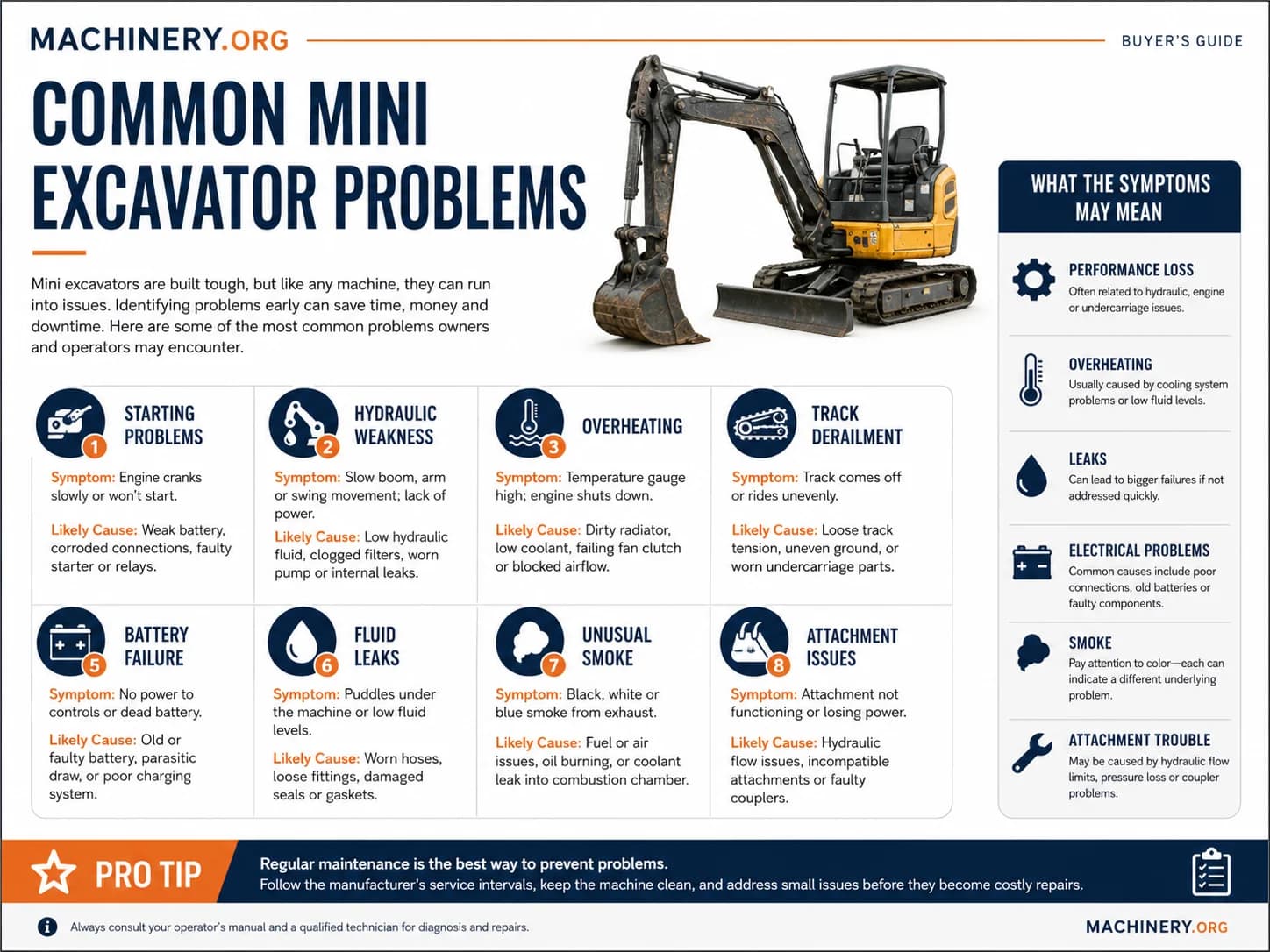
Figure 27.1. Machinery.org buyer guide to the most common mini excavator problems and their likely causes.
Starting and electrical problems
Starting problems are among the most common complaints, especially on older or lightly used machines. A slow crank, clicking sound, or no-start condition can come from a weak battery, corroded terminals, a charging issue, or a failing starter circuit. Modern machines also rely on electrical safety interlocks and relays, so poor connections can create misleading symptoms. Owners should inspect battery age, cable cleanliness, grounding points, and whether the charging system is maintaining voltage during operation.
Hydraulic weakness and slow functions
Slow boom movement, weak bucket curl, or poor attachment performance usually point toward the hydraulic system. Low oil, clogged filters, pump wear, or internal leakage are common causes. The first step is always to check fluid level and visible leaks. After that, think about whether the machine has lost strength, speed, or both. Strength and speed together often suggest pressure or flow issues. If the controls are jerky or noisy, air ingestion or contamination may be part of the problem as well.
Overheating and cooling concerns
Overheating is a serious issue because it can damage both the engine and hydraulic system. Common causes include blocked radiator fins, dirty coolers, low coolant, slipping fan components, or a machine that is being overloaded in hot, dusty conditions. Operators should not dismiss temperature alarms as temporary nuisances. Heat is a multiplier of wear. It degrades oil, hardens seals, and can quickly lead to shutdowns. If temperature stays high after basic cleaning and fluid checks, stop the machine and investigate further.
Track and undercarriage problems
Tracks are a defining part of a mini excavator and also a major wear area. Loose tension, misalignment, worn sprockets, seized rollers, and working on rough terrain can all contribute to track derailment or accelerated wear. If a track comes off once, do not simply reinstall it and move on without checking the undercarriage. The real cause may be worn components or repeated misuse. Undercarriage condition affects not only travel reliability but also stability and cost of ownership.
Fluid leaks, smoke, and unusual symptoms
Fluid leaks are never desirable, but they do not all mean the same thing. A damp hose fitting may be a minor fix. Oil on a cylinder rod or a burst hose is more urgent. Smoke color also matters. Black smoke can suggest fuel or air imbalance. White smoke may indicate coolant-related issues. Blue smoke often points to oil burning. Operators should also notice unusual smells, alarms, or changes in exhaust behavior. Those clues often narrow the troubleshooting path quickly.
Attachment and coupler trouble
Attachments add versatility, but they also add another failure point. If an attachment becomes weak or inconsistent, the problem may be hydraulic flow, coupler engagement, electrical control, or simply an attachment mismatch. A breaker that suddenly loses power may reveal flow loss in the carrier. A grapple that will not open correctly may point to coupler or hose issues. Never assume the attachment alone is at fault until the host machine and hydraulic supply are checked.
When to stop operating immediately
Hydraulic hoses burst or major leaks appear.
Temperature alarms remain high or coolant loss is obvious.
The machine loses braking or travel control.
Structural cracks or severe undercarriage damage are visible.
Warning lights indicate oil pressure, charging failure, or other critical faults.
A practical owner mindset
The best way to manage common problems is to build a habit of observation. Machines usually talk before they fail. They talk through noises, heat, smoke, vibration, fluid stains, and changes in responsiveness. Operators who record those changes and act early usually avoid larger bills. Mechanics also diagnose faster when owners can describe the symptom clearly: when it started, under what conditions it happens, and whether it is getting worse. That simple level of attention creates a huge maintenance advantage over run-it-until-it-stops thinking.
Another smart practice is to separate symptoms from assumptions. Instead of saying the pump is bad or the engine is weak, document exactly what the machine is doing. For example, does it lose power only when hot, only under travel load, or only while using an attachment? Does the smoke appear at startup or under full throttle? Does the track come off during turning or on side slopes? Careful observation prevents wasted parts replacement and helps technicians diagnose the real issue much faster.
In short, common mini excavator problems are manageable when symptoms are understood. They become expensive mainly when they are ignored.

Figure 27.2. Machinery.org troubleshooting checklist showing a structured path for diagnosing recurring mini excavator faults.
Frequently Asked Questions
What is the most common mini excavator problem?
There is no single universal answer, but hydraulic weakness, leaks, battery problems, and overheating are among the most common across many machines.
Should I keep working if a hydraulic hose is leaking?
No. Even a small leak can become dangerous or lead to contamination and pressure loss. It should be repaired promptly.
Are track problems always caused by bad tracks?
Not always. Track derailment and uneven wear often relate to tension, sprocket wear, rollers, alignment, and terrain conditions.
Key Takeaway
Mini excavator problems are easiest to manage when you connect symptoms to systems early. Pay attention to performance changes, investigate quickly, and stop operating when safety or major damage is at stake.
Get More Expert Guides & Updates
Subscribe for Machinery.org guide updates and product learning content.