
Wheeled skid steers and compact track loaders share similar loader arms, cabs, controls, and attachment systems, but the undercarriage changes how they perform. Wheels provide speed, agility, lower maintenance cost, and excellent results on hard surfaces. Tracks spread machine weight across a larger area, improving flotation, traction, and stability in mud, sand, snow, and uneven terrain. Choosing the wrong undercarriage can increase operating cost, damage surfaces, slow production, or leave the machine stuck when conditions deteriorate.
There is no universal winner. A paving contractor, demolition company, snow-removal business, landscaper, farm, and forestry crew may all choose differently. The correct decision depends on the surfaces encountered most often, the need for travel speed, transport limitations, attachment demand, operator experience, purchase budget, and the cost of undercarriage maintenance.
This guide compares the two machine types in practical terms. It also explains why rubber tracks are not automatically gentler in every situation and why wheeled machines can become more capable with specialized tires or over-the-tire tracks. The goal is to match the machine to the majority of the work, not to a rare worst-case condition.
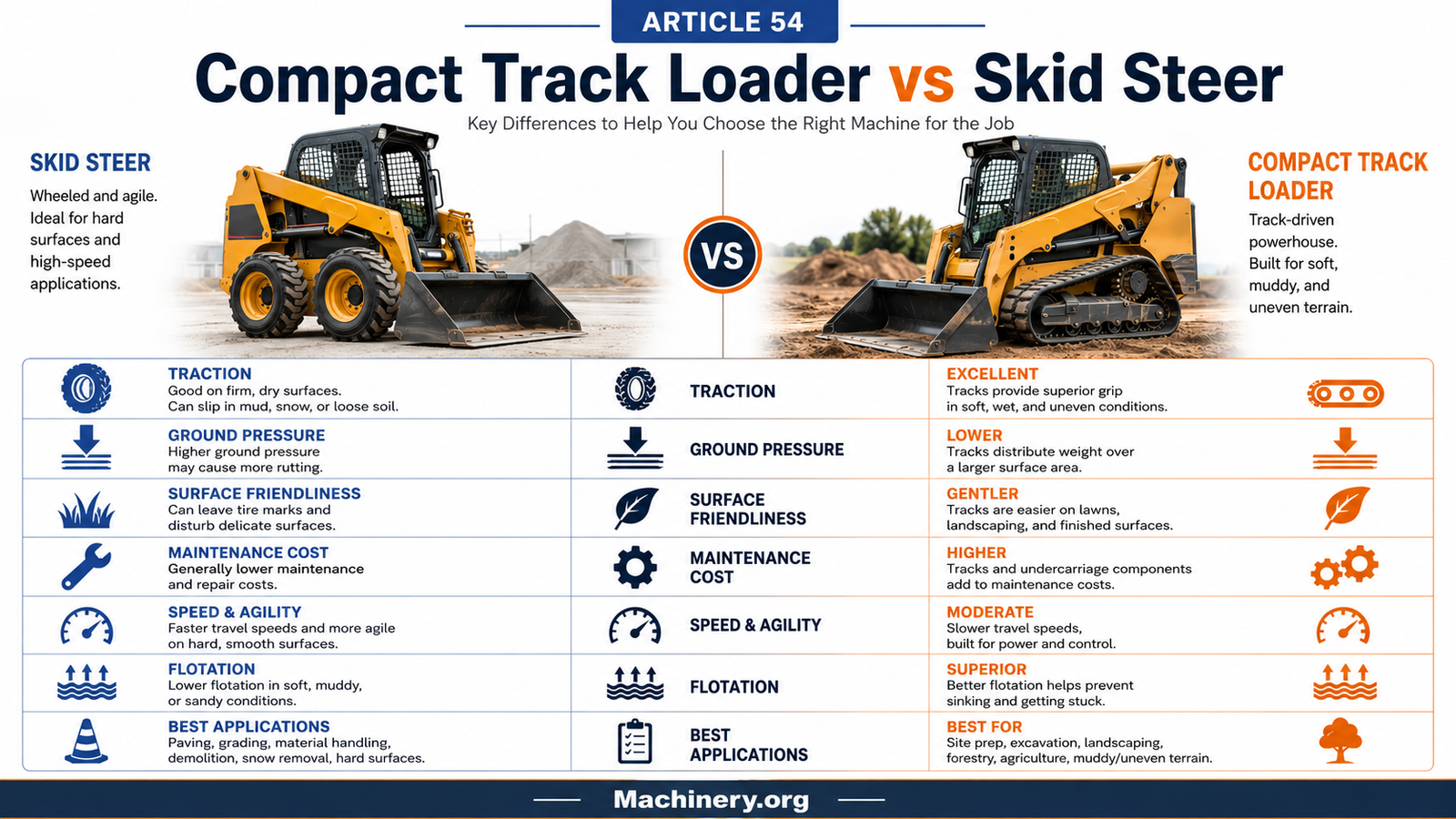
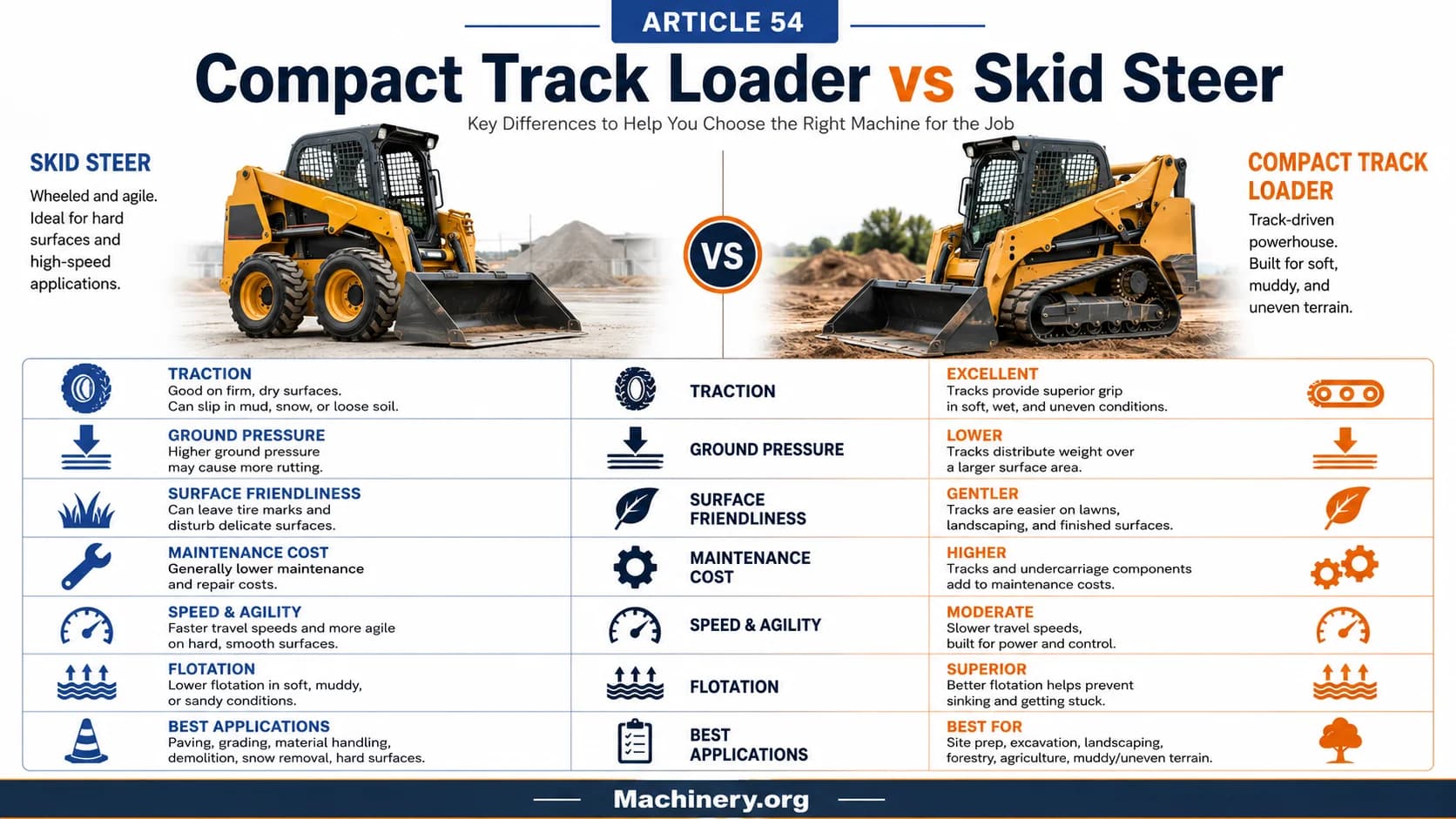
Figure 54.1. Compact track loader versus wheeled skid steer comparison for traction, ground pressure, speed, maintenance, and best applications.
Traction and flotation
Compact track loaders generally provide superior traction on soft, wet, loose, or uneven ground. The long track contact area spreads weight and allows the machine to push without sinking as quickly. This flotation is valuable for grading, site preparation, agriculture, forestry, and landscape work. Tracks also provide a stable working platform for attachments that create strong forward forces.
Wheeled skid steers perform best on pavement, concrete, compacted gravel, and firm dry soil. Tires have a smaller contact area and higher ground pressure, so they can rut soft ground and lose traction in mud. However, proper tread patterns, foam-filled or solid tires, and over-the-tire track systems can expand capability. These options may be useful for owners who need occasional soft-ground performance without buying a dedicated track loader.
Speed and maneuverability
Wheeled skid steers are normally faster on hard surfaces and feel more agile during short loading cycles. They are often efficient in material yards, warehouses, demolition sites, road work, municipal maintenance, and snow removal on prepared surfaces. Tracks create more rolling resistance and usually reduce travel speed, although two-speed track loaders can still move efficiently between work areas.
Both machines turn by skidding one side against the other. On high-friction surfaces, this turning action causes tire wear or track wear. Operators can reduce damage by using wider turns and avoiding repeated stationary counter-rotation. Good technique matters especially with tracks because replacement cost is higher.
Surface impact
Track loaders can reduce ground pressure and may create less rutting on soft surfaces. They are often preferred for lawns, finished grading, and sensitive ground. However, rubber tracks can still tear turf during sharp turns. Wheeled machines may leave tire marks but can be very surface-friendly when operated smoothly with appropriate tires. The undercarriage should therefore be matched with the turning technique and the surface, not judged only by a general label.
Maintenance and ownership cost
Wheeled skid steers generally have lower undercarriage cost. Tires are easier and less expensive to replace than complete rubber tracks, rollers, idlers, and sprockets. Compact track loader undercarriages require regular cleaning, correct tension, and inspection of multiple components. Working in abrasive rock, demolition debris, or sharp material can shorten track life quickly.
The higher cost of tracks can be justified when the machine earns more revenue through better access, longer working seasons, reduced ground damage, and stronger production in soft conditions. Ownership cost should be compared with work output, not purchase price alone.
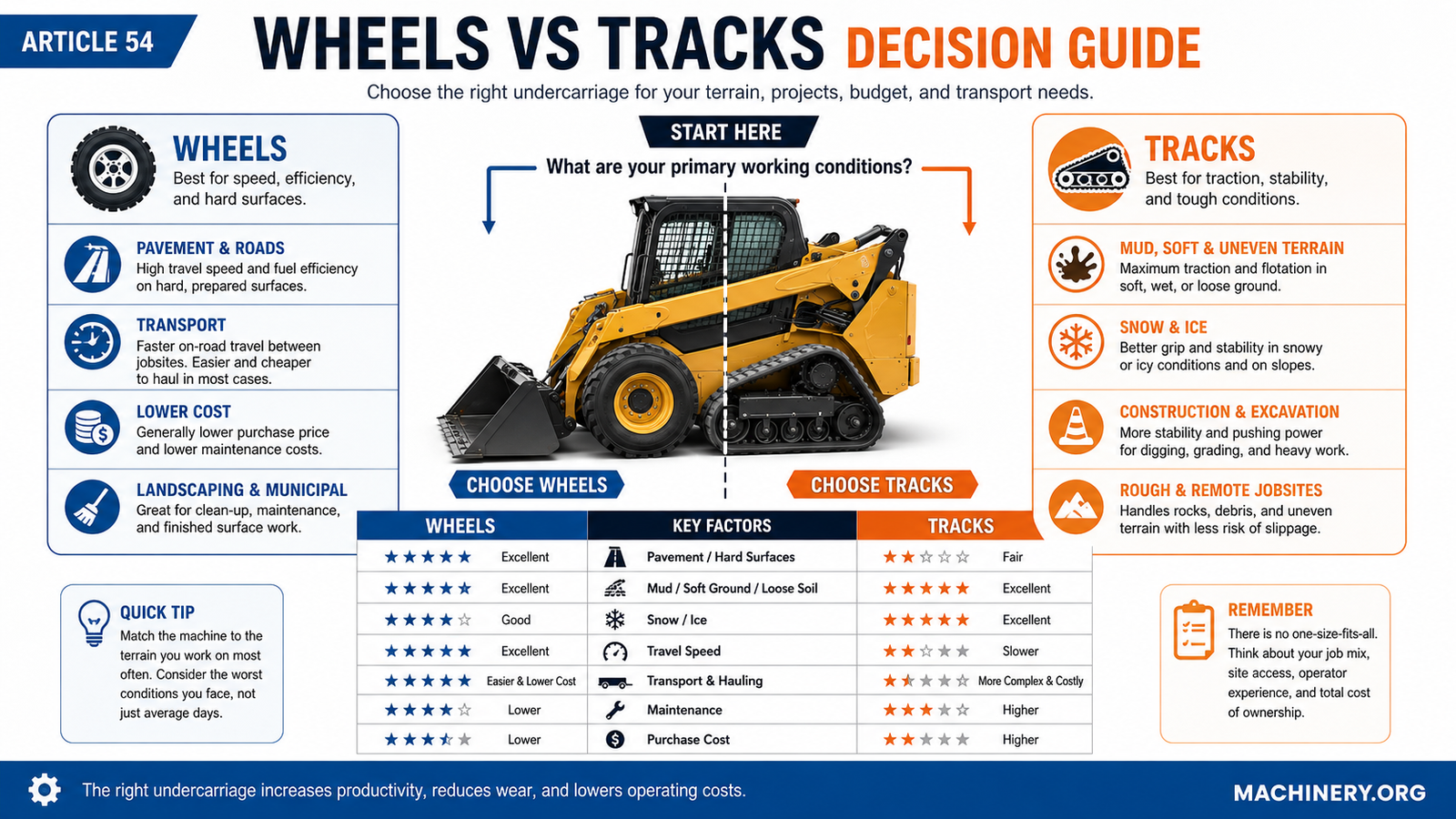
Figure 54.2. Wheels-versus-tracks decision guide based on terrain, project type, transport, and ownership cost.
Transport and site access
Compact track loaders are often heavier than comparable wheeled machines. That additional weight affects trailer capacity, tow-vehicle requirements, legal payload, fuel use during transport, and ground pressure on bridges or floors. Wheeled machines may be easier to haul and can move more quickly across large hard-surface sites. Buyers should calculate the complete transport package before choosing a larger track machine.
Applications that favor wheels
Pavement, concrete, compacted gravel, and other firm surfaces.
Demolition and recycling sites where tire durability options are available.
Loading, material handling, road work, and municipal maintenance.
Frequent transport where lower machine weight simplifies hauling.
Operations that prioritize lower maintenance cost and higher travel speed.
Applications that favor tracks
Mud, soft soil, sand, snow, and uneven construction sites.
Landscape grading and work where reduced ground pressure matters.
Forestry, agriculture, excavation, and heavy pushing applications.
Work with demanding attachments where stability and traction improve productivity.
Seasonal conditions that would stop a wheeled machine from working.
Questions to answer before choosing
Consider where the machine will work during an average year. How many days involve pavement versus soft soil? How expensive is ground damage? Will the machine need to work immediately after rain? What attachments will be used? Can the trailer handle the heavier machine? Is there local support for undercarriage parts? How much downtime can the business tolerate? These questions lead to a more accurate decision than simply choosing the machine that appears more powerful.
A mixed-fleet or conversion strategy
Some businesses own both types because each machine earns money in different conditions. Others use a wheeled skid steer with over-the-tire tracks during limited muddy seasons. Over-the-tire systems can improve traction and flotation, but they add weight, change clearance, and require correct installation. They are a useful compromise, not a complete replacement for a purpose-built compact track loader in constant severe conditions.
Frequently Asked Questions
Are compact track loaders always better in snow?
Tracks usually provide strong flotation and traction, but tread design, ice conditions, surface slope, and snow depth still matter. Tires with chains may be better on some icy hard surfaces.
Which machine costs less to maintain?
Wheeled skid steers usually have lower undercarriage maintenance and replacement cost.
Do tracks always protect finished surfaces?
No. Tracks reduce ground pressure but sharp turns can still tear turf or mark surfaces. Operator technique remains important.
Can I install tracks over skid steer tires?
Many machines can use approved over-the-tire track systems. Confirm clearance, tire condition, machine capacity, and manufacturer guidance before installation.
Key Takeaway
Choose wheels for hard surfaces, speed, easier transport, and lower undercarriage cost. Choose tracks for flotation, traction, stability, and production in soft or uneven conditions. Base the decision on the work performed most often and the full cost per productive hour.
Get More Expert Guides & Updates
Subscribe for Machinery.org guide updates and product learning content.