

A skid steer loader is one of the most recognizable and versatile machines on a modern jobsite. Its compact size, strong lift arms, tight turning ability, and broad attachment selection allow one machine to load, grade, lift, sweep, drill, trench, cut, and clear. That versatility is the reason skid steers are common in construction, landscaping, farming, property maintenance, snow removal, and rental fleets. It is also the reason a beginner needs more than a quick explanation of the controls. A skid steer becomes productive only when the operator understands capacity, stability, attachment matching, and safe movement.
The basic idea is simple. A skid steer uses independent drive on the left and right sides to turn by varying wheel or track speed. The loader arms raise and lower the attachment, while the quick-attach system allows tools to be changed quickly. Modern machines may use hand controls, foot controls, joystick systems, or selectable patterns. The exact layout varies, but the operating principles remain consistent: keep movements smooth, maintain visibility, manage the load, and respect the machine’s rated limits.

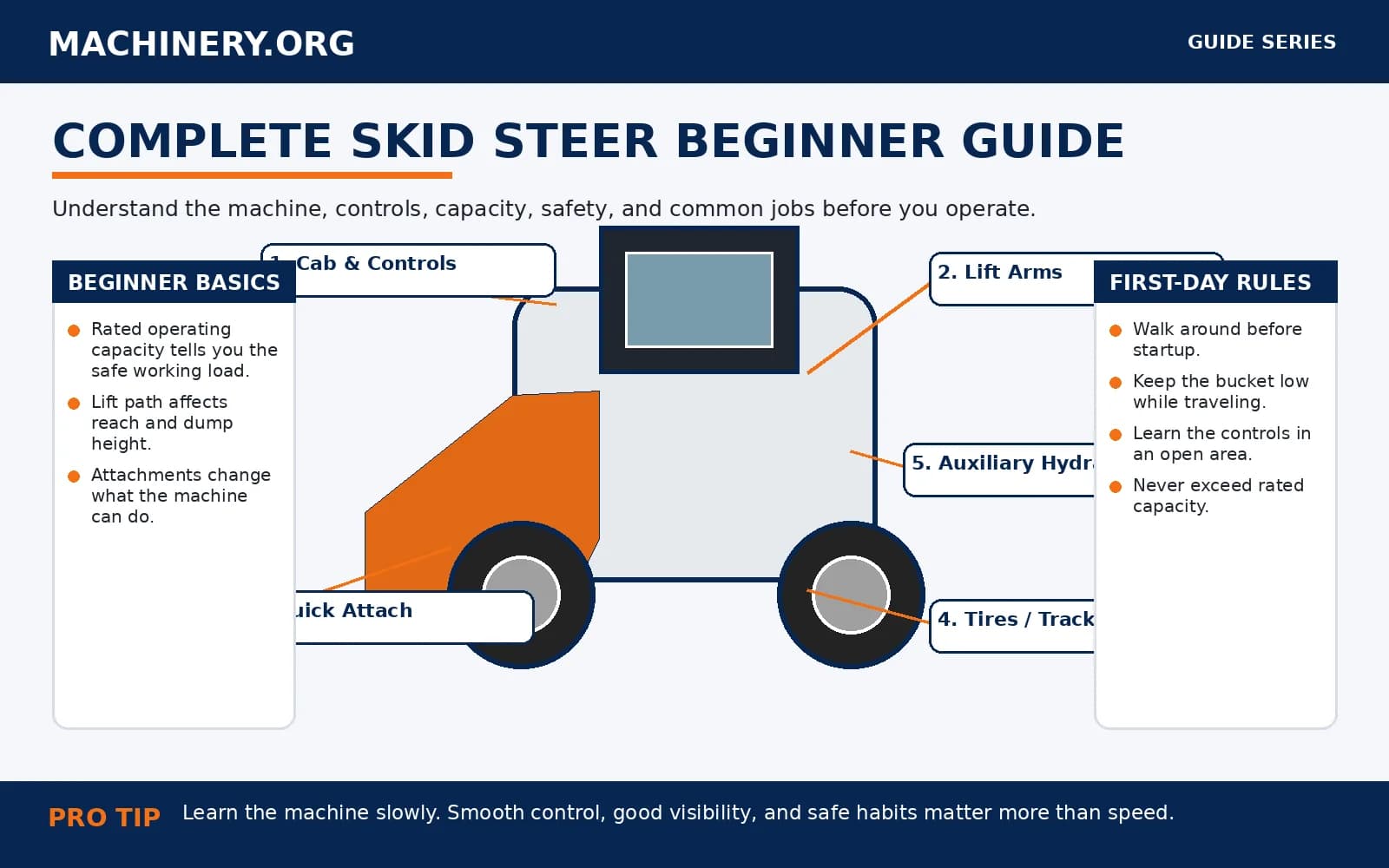
Figure 31.1. Skid steer anatomy and first-day operating concepts for beginners.
For a first-time buyer or operator, the best learning approach is to understand the machine as a complete system. The cab, lift arms, coupler, tires or tracks, hydraulic system, and attachment all affect how the skid steer behaves. A heavy attachment changes balance. A raised load changes stability. Soft ground changes traction. High-flow tools change hydraulic demand. This guide explains those relationships in practical terms.
Major skid steer components
The operator station contains the controls, seat belt, safety interlocks, gauges, and visibility zones. The loader arms provide lift and reach. The quick-attach plate connects buckets, forks, grapples, and other tools. Tires or tracks create traction and influence ground pressure. Auxiliary hydraulic couplers power attachments that use cylinders or hydraulic motors. Each component should be inspected before operation because one loose pin, damaged hose, or worn tire can affect the entire machine.
Understanding controls and movement
Skid steers can turn inside a very small area because the left and right drive systems are controlled independently. This creates excellent maneuverability but can also damage delicate surfaces if the operator turns aggressively. Beginners should practice forward travel, reverse travel, gradual turns, loader-arm movement, bucket curl, and attachment control in a clear open area. Smoothness is more important than speed. Jerky control wastes material, reduces traction, and makes the machine harder to stabilize.
Rated operating capacity and stability
Rated operating capacity is one of the most important specifications to understand. It represents a normal working limit under defined test conditions, not a target to exceed. The attachment weight and material load both count against capacity. Stability also changes as the load moves forward or upward. A bucket of dense soil may feel stable near the ground but create a tipping risk when raised. The safest habit is to travel with the load low, avoid sudden turns, and work on firm, level ground whenever possible.
Attachments and hydraulic matching
A general-purpose bucket may be the first attachment most owners use, but the skid steer platform can support pallet forks, augers, trenchers, brush cutters, grapples, brooms, snow tools, cold planers, and many other tools. Powered attachments must match the machine’s hydraulic flow and pressure. High-flow attachments will not perform correctly on a standard-flow machine unless they are designed for that range. Attachment weight, width, controls, and coupler compatibility also matter.
Daily inspection and safe startup
A beginner should build a repeatable walk-around routine. Check for leaks, tire or track damage, loose hardware, cracked attachments, secure pins, clean steps, and functioning safety devices. Inside the cab, fasten the seat belt, confirm the safety bar or interlock position, and review warning lights. Start the machine only after the work area is clear. Before working, test travel, brakes, lift, tilt, horn, and attachment functions at low speed.

Figure 31.2. Common skid steer jobs and the attachments typically used for each task.
Common beginner mistakes
Traveling with the bucket raised too high.
Turning sharply on finished pavement or turf.
Using an attachment without checking hydraulic requirements.
Lifting a load without including attachment weight.
Operating too quickly before learning machine response.
Building productive habits
Good skid steer operation is a rhythm of controlled movements. Approach the pile squarely, enter with the bucket positioned correctly, lift only as needed, and keep travel paths clear. Plan material placement so the machine does not make unnecessary turns. When using forks, keep the load balanced and secure. When grading, use small corrections rather than aggressive movements. Productivity grows from smooth repeatable cycles, not from maximum throttle and rushed control.
What beginners should learn first
The first goal is not to master every attachment. It is to learn safe travel, bucket control, machine balance, visibility, and shutdown. Once those fundamentals are reliable, the operator can add more complex tasks. A strong beginner foundation reduces wear, prevents accidents, and makes advanced attachment work much easier.
Training, communication, and site planning
A beginner learns faster when the work area is organized before the machine moves. Define travel lanes, material piles, dumping locations, and exclusion zones. A spotter should use agreed hand signals when visibility is limited, but the operator remains responsible for stopping whenever communication is unclear. Training should include not only how to move the controls, but also how to recognize unstable loads, damaged attachments, hydraulic leaks, and unsafe ground. Short structured practice sessions are more valuable than long periods of unsupervised trial and error.
Ownership planning also matters. Keep the operator manual in the machine, record daily inspections, and build a simple attachment list showing flow and capacity requirements. Greasing, tire pressure, track tension, and cooler cleaning should become routine rather than emergency work. A beginner who learns maintenance awareness from the first day is more likely to protect the machine and notice small problems before they affect safety or productivity.
Frequently Asked Questions
Is a skid steer difficult to learn?
The basic controls can be learned quickly, but safe and efficient operation requires practice, especially with loads and attachments.
Should a beginner start with a bucket?
Yes. A general-purpose bucket is a practical attachment for learning lift, tilt, loading, and grading control.
Can every skid steer use high-flow attachments?
No. The machine must have the correct hydraulic system and controls for the attachment.
Key Takeaway
A skid steer is easy to move but takes discipline to operate well. Learn the machine, respect rated capacity, keep loads low, and match every attachment carefully..
Get More Expert Guides & Updates
Subscribe for Machinery.org guide updates and product learning content.