
The Power Source of Almost Every Piece of Heavy Construction Equipment
Introduction
Diesel engines power the overwhelming majority of heavy construction equipment. From the smallest mini excavator to the largest mining truck, the diesel engine provides the high torque, durability, and fuel efficiency required for continuous heavy work. Understanding the basic principles of how a diesel engine works, what makes it different from a gasoline engine, and how it is maintained is essential knowledge for operators, mechanics, and equipment managers.
This guide covers the fundamental operating principles, key components, performance characteristics, and practical maintenance considerations that apply across virtually all diesel-powered construction machines.
How a Diesel Engine Works
A diesel engine is an internal combustion engine that uses compression ignition. Unlike a gasoline engine, which mixes fuel and air and then ignites the mixture with a spark plug, a diesel engine compresses only air to a very high pressure and temperature. When diesel fuel is injected into this hot, compressed air, it ignites spontaneously.
The four-stroke diesel cycle consists of:
- Intake – The intake valve opens and pure air is drawn into the cylinder as the piston moves down.
- Compression – Both valves close and the piston moves up, compressing the air to a high ratio (typically 15:1 to 22:1). The air becomes extremely hot.
- Power (Combustion) – Near the top of the compression stroke, fuel is injected under high pressure. It ignites and the expanding gases force the piston down, producing power.
- Exhaust – The exhaust valve opens and the piston pushes the burned gases out of the cylinder.
Key Components
Fuel System
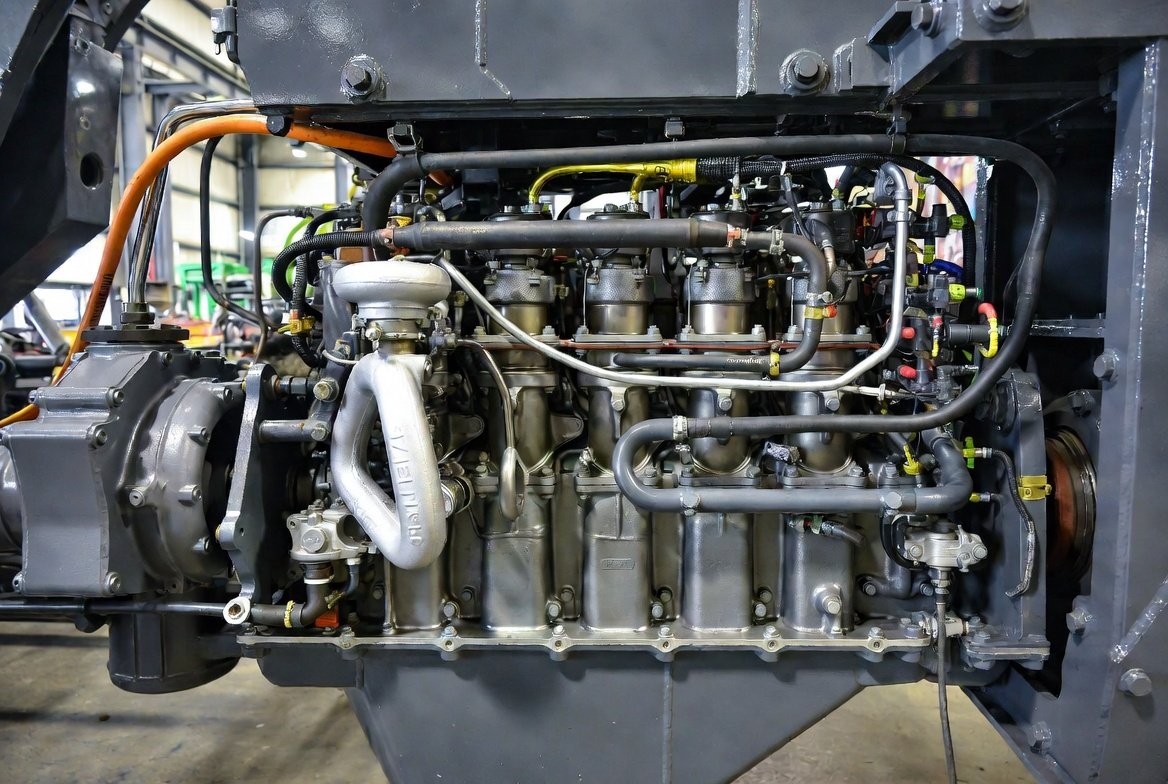
Modern construction equipment almost universally uses high-pressure common-rail fuel injection. A high-pressure pump supplies fuel to a common rail that feeds electronically controlled injectors. Precise timing and multiple injection events per cycle improve efficiency, reduce emissions, and lower noise. Clean fuel is critical; water and particulate contamination are leading causes of injector and pump failure.
Turbocharging and Aftercooling
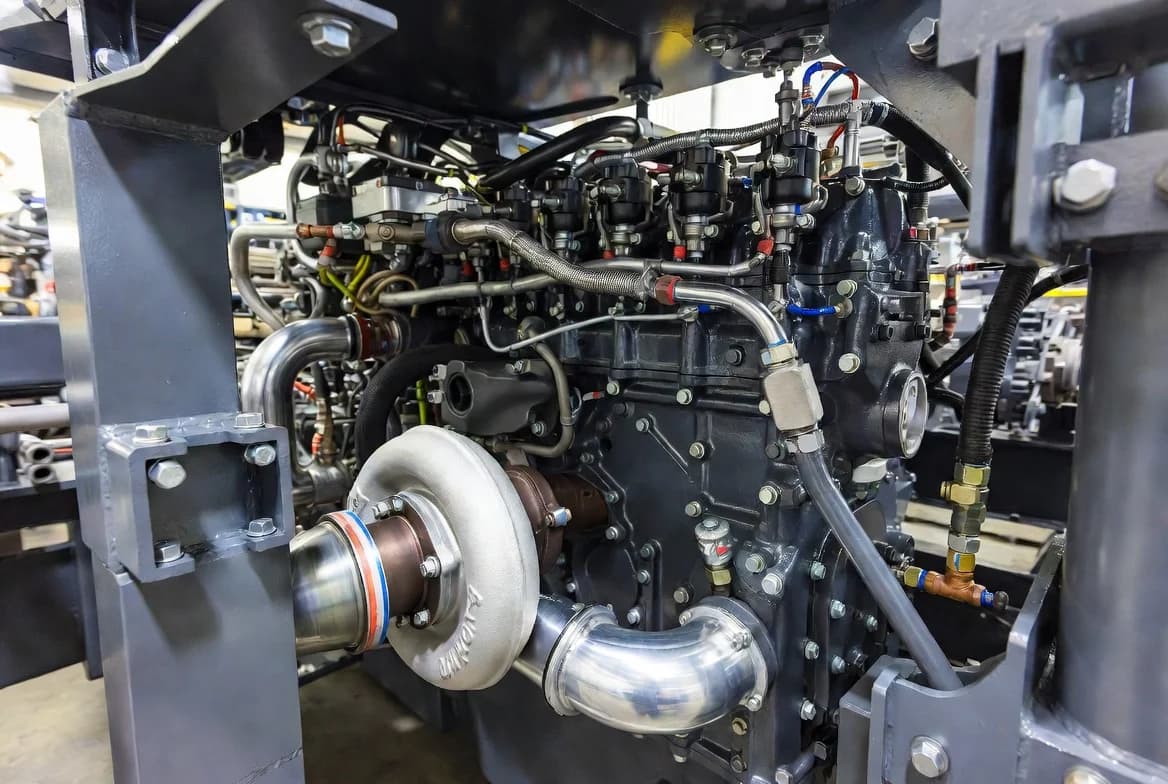
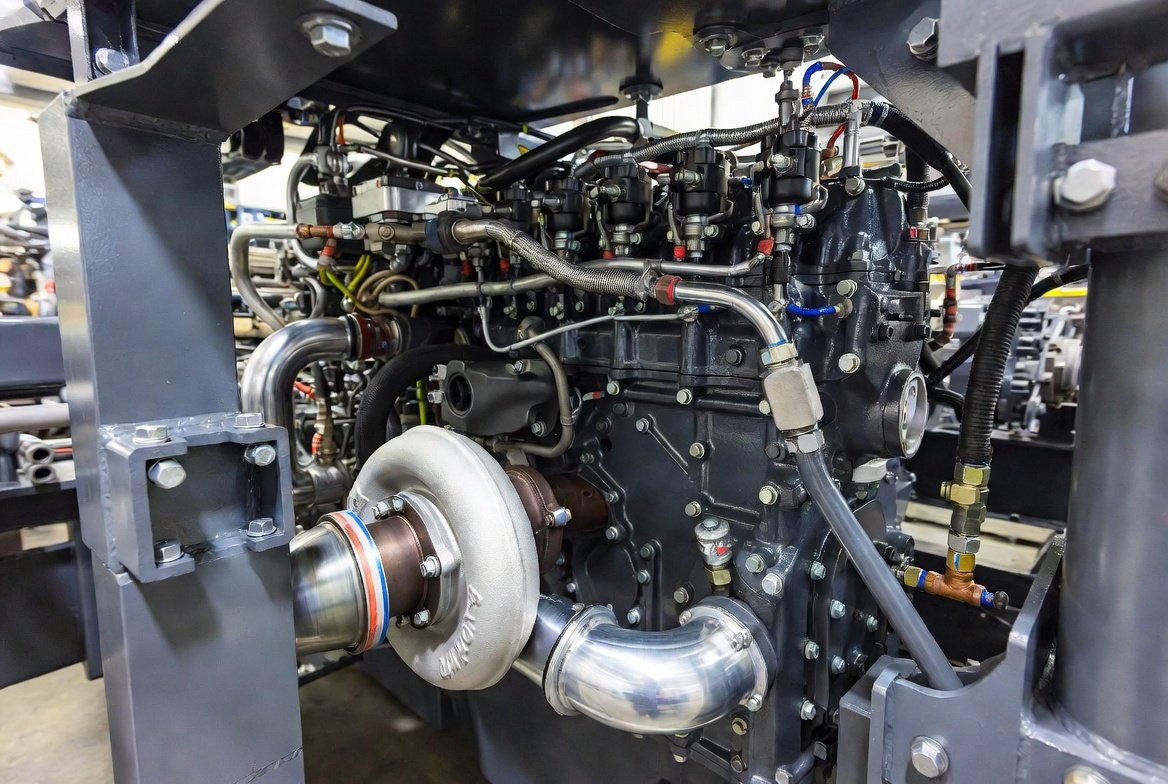
Virtually all modern diesel engines in construction equipment are turbocharged. The turbocharger uses exhaust energy to drive a compressor that forces more air into the cylinders, allowing more fuel to be burned and producing more power from a smaller engine. An aftercooler (intercooler) cools the compressed air before it enters the engine, increasing air density and further improving power and efficiency.
Cooling and Lubrication Systems
Diesel engines generate significant heat. A robust liquid cooling system with radiator, water pump, thermostat, and often an oil cooler keeps temperatures within safe limits. The lubrication system supplies oil under pressure to bearings, camshaft, turbocharger, and other moving parts. Oil also helps cool the engine and carries away contaminants.
Why Diesel Engines Dominate Heavy Equipment
Diesel engines offer several advantages that make them ideal for construction machinery:
- High torque at low RPM – Essential for digging, pushing, and lifting heavy loads without high engine speeds.
- Fuel efficiency under load – Diesel engines convert a higher percentage of fuel energy into useful work, especially under continuous heavy load.
- Durability – Robust construction and lower operating speeds allow many engines to run tens of thousands of hours with proper maintenance.
- Safety – Diesel fuel is less volatile than gasoline, reducing fire risk on job sites.
Emissions and Modern Controls
Modern diesel engines must meet strict emissions standards (Tier 4 Final in many markets). This has led to the widespread use of exhaust after-treatment systems including Diesel Particulate Filters (DPF), Selective Catalytic Reduction (SCR) with diesel exhaust fluid (DEF/AdBlue), and Exhaust Gas Recirculation (EGR). Operators and technicians must understand regeneration cycles, DEF quality, and the importance of not interrupting forced regenerations.
Basic Maintenance Priorities
The most important daily and scheduled maintenance items for diesel engines include:
- Checking and maintaining correct oil level and changing oil and filters at the recommended intervals
- Keeping the fuel system clean – regular filter changes and water separator draining
- Maintaining the cooling system – coolant level, condition, and radiator cleanliness
- Monitoring for unusual smoke, noise, or temperature
- Ensuring air filters are clean and unrestricted
Key Takeaways
The diesel engine is the reliable workhorse that makes modern heavy machinery possible. Its ability to produce high torque at low speeds, combined with excellent durability and fuel efficiency, explains its near-universal use in construction equipment. Understanding the basic four-stroke cycle, the role of turbocharging and high-pressure fuel injection, and the critical importance of clean fuel, clean oil, and proper cooling will help operators and technicians keep machines productive and avoid costly downtime.
This article is part of the Heavy Machinery Learning Center – Machinery Basics series.
Get More Expert Guides & Updates
Subscribe for Machinery.org guide updates and product learning content.