
The choice between electric and internal-combustion (primarily diesel or LPG) forklifts is driven by the operating environment, duty cycle, infrastructure, emissions requirements, and total cost of ownership. Each power source has clear strengths and limitations.
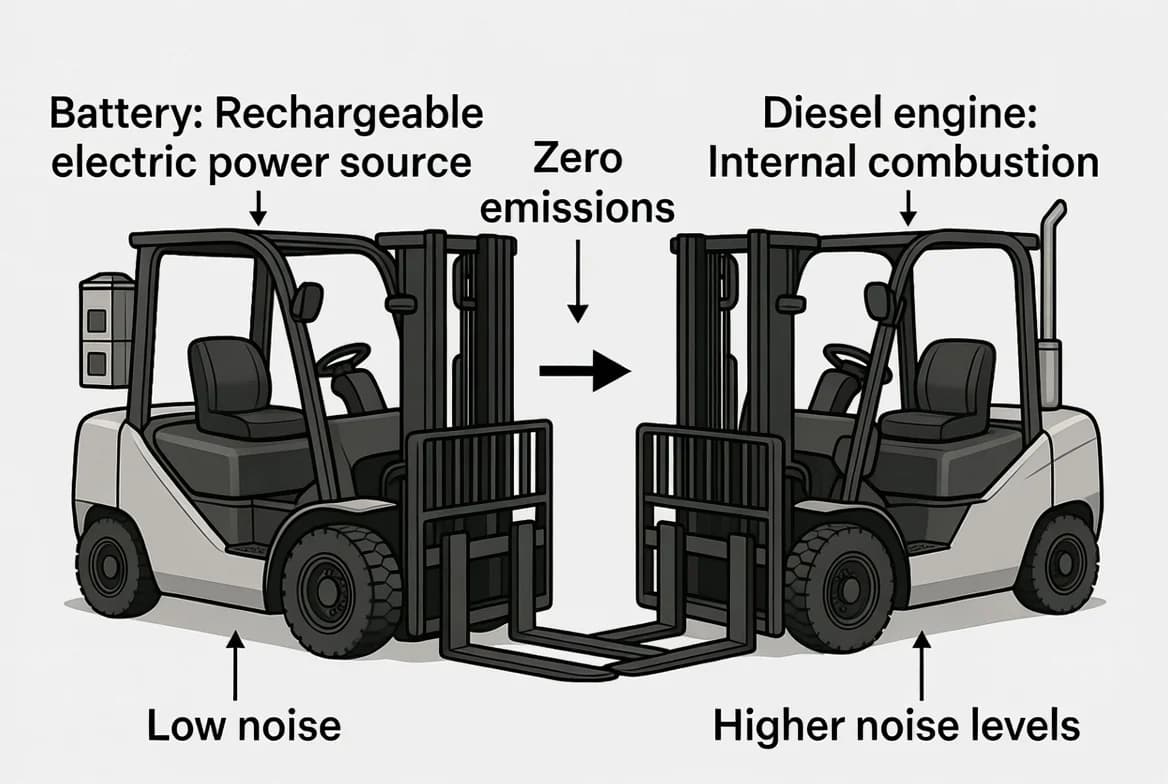
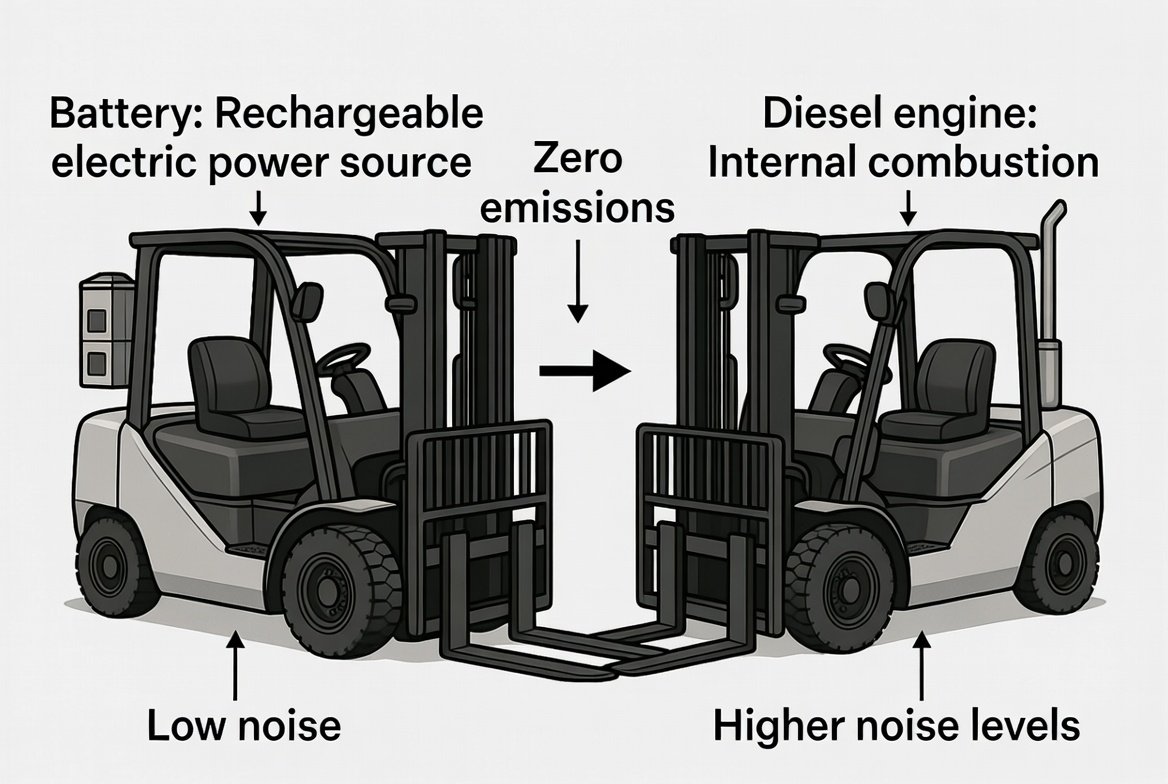
Electric forklifts are powered by large lead-acid or lithium-ion batteries. They produce zero exhaust emissions at the point of use, operate quietly, and generate less heat than combustion engines. These characteristics make them the default choice for indoor warehouses, food-processing facilities, pharmaceutical plants, and any environment where air quality or noise is a concern. Modern AC-drive electric trucks offer performance that rivals or exceeds combustion trucks in acceleration, gradeability, and travel speed.
Battery management is the central operational consideration. Lead-acid batteries require regular watering, equalization charging, and careful opportunity or conventional charging schedules. Lithium-ion batteries eliminate watering, support opportunity charging, and offer longer cycle life, but they carry a higher capital cost. Charging infrastructure—chargers, battery rooms or charging stations, and ventilation—must be planned and maintained. Battery weight also contributes to the truck’s counterbalance and must be considered when specifying capacity.
Diesel forklifts deliver high power, long continuous run times, and rapid refueling. They excel outdoors, on rough terrain, and in applications where the truck must work multiple shifts without interruption for battery changes. Diesel engines are robust and familiar to many maintenance technicians. However, they produce exhaust emissions, noise, and heat, which restrict their use in enclosed spaces unless extensive ventilation or after-treatment systems are installed. Fuel cost, engine maintenance, and emissions regulations are ongoing considerations.
LPG (propane) trucks offer a middle ground: cleaner than diesel, refuelable in minutes, and usable both indoors (with adequate ventilation) and outdoors. They are popular in mixed-use facilities. Dual-fuel trucks that can switch between gasoline and LPG provide additional flexibility.
Total cost of ownership analysis should include energy cost (electricity versus fuel), maintenance (battery replacement versus engine overhauls), tire or solid-tire wear, and residual value. In many indoor applications the lower energy and maintenance costs of electric trucks offset their higher initial price over a five-to-seven-year life cycle. Outdoor or multi-shift heavy-duty applications often favor diesel or LPG for operational simplicity and uptime.
The decision ultimately rests on a clear definition of the primary work environment and duty cycle. When emissions, noise, and indoor air quality are priorities, electric is the superior choice. When continuous outdoor power and rapid refueling are essential, diesel or LPG remains the practical solution.
Get More Expert Guides & Updates
Subscribe for Machinery.org guide updates and product learning content.