

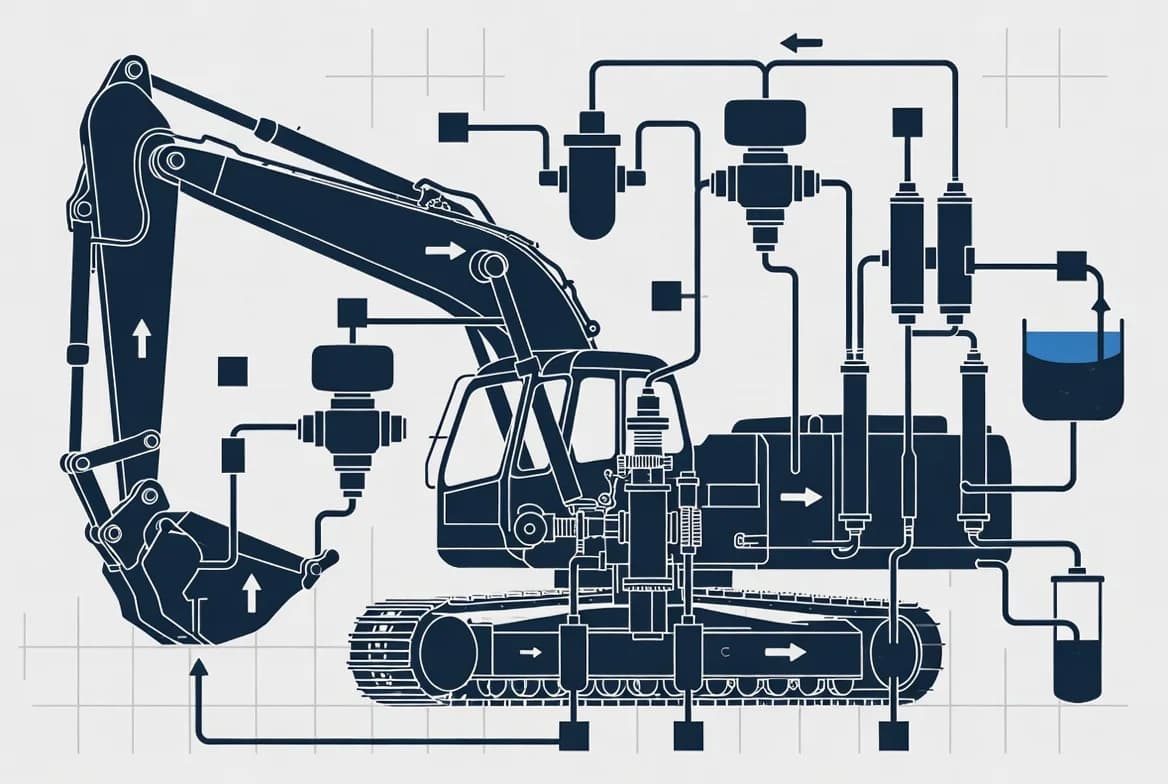

The hydraulic system is the heart of every modern excavator. It converts the mechanical power of the engine into the controlled linear and rotary motion that digs, lifts, swings, and powers attachments. A solid understanding of how the system is organised, how the major components interact, and how to recognise and prevent common problems is essential for both operators and maintenance personnel.
Basic Architecture
Virtually all excavators use an open-centre or closed-centre hydraulic system driven by one or more pumps. The engine drives the main pump (or pumps), which draw oil from a reservoir and deliver it under pressure to a control-valve bank. From the valves, oil is directed to the boom, stick, bucket, swing, travel, and auxiliary circuits. Return oil passes through filters and coolers before re-entering the reservoir.
Modern machines increasingly use load-sensing, pressure-compensated systems in which the pump output automatically matches the demand of the active circuits. This improves efficiency, reduces heat generation, and allows finer control. Electronic control of the pumps and valves further enhances responsiveness and enables features such as adjustable control patterns, power modes, and attachment-specific flow settings.
Major Components
The hydraulic pump is typically a variable-displacement axial-piston unit capable of delivering high flow at high pressure. System pressures commonly range from 250 to 350 bar. Multiple pumps or a single pump with multiple sections allow simultaneous operation of several functions without severe pressure drop.
The main control valve (or valves) contains a series of spools that direct oil to the appropriate actuators. Pilot pressure or electronic solenoids move the spools in response to joystick commands. Relief valves protect each circuit from over-pressure.
Hydraulic cylinders convert fluid pressure into linear force for the boom, stick, and bucket. Swing motors (usually radial-piston or axial-piston units) provide the torque to rotate the upper structure. Travel motors, often combined with planetary gearboxes, drive the tracks.
The reservoir stores oil, allows air to separate, and provides a place for heat dissipation. Filters remove contaminants; coolers maintain oil temperature within the optimal range (typically 50–80 °C). A well-designed system also includes a case-drain circuit that returns internal leakage from pumps and motors to the reservoir.
Auxiliary Hydraulic Circuits
Almost every modern excavator is equipped with one or more auxiliary hydraulic circuits to power attachments. These circuits may be single-acting or double-acting, and they may offer high-flow or low-flow options. Quick-coupler systems and electronic attachment recognition allow the operator to select pre-programmed flow and pressure settings for specific tools. Proper matching of auxiliary flow and pressure to the attachment is critical for performance and for avoiding damage to either the tool or the machine.
Maintenance and Common Issues
Clean oil is the single most important factor in hydraulic-system longevity. Contaminants cause abrasive wear in pumps, valves, and cylinders. Regular filter changes, careful handling of oil during top-ups, and the use of proper breathers on the reservoir are essential practices. Oil analysis programs can detect wear metals and contamination long before catastrophic failure occurs.
Overheating is another common problem. It can result from excessive idle time with the system pressurised, clogged coolers, low oil level, or continuous high-load operation beyond the machine’s design capacity. Operators should monitor the temperature gauge and reduce workload or clean coolers when temperatures rise.
Cavitation (the formation and collapse of vapour bubbles) can destroy pumps. It is usually caused by restricted inlet flow—clogged suction strainers, collapsed hoses, or low oil level. Aeration (air mixed with the oil) produces similar damage and is often the result of leaks on the suction side or of overfilling the reservoir.
Hose and fitting failures are among the most frequent field problems. Abrasion, heat, and mechanical damage are the usual causes. Protective sleeving, proper routing, and regular visual inspection greatly reduce the incidence of sudden hose bursts.
Operator Influence on Hydraulic Health
The operator has a direct effect on hydraulic-system life. Smooth, progressive control inputs generate less pressure spikes and less heat than abrupt joystick movements. Using the correct power mode for the work reduces unnecessary pump load. Avoiding continuous operation at the pressure-relief setting (for example, by forcing a stalled cylinder) prevents heat build-up and component stress.
In summary, the excavator hydraulic system is a sophisticated, high-pressure network that converts engine power into precise digging and lifting force. Understanding its architecture, maintaining oil cleanliness and temperature, and operating the machine with awareness of hydraulic limits will maximise both performance and component life.
Get More Expert Guides & Updates
Subscribe for Machinery.org guide updates and product learning content.