
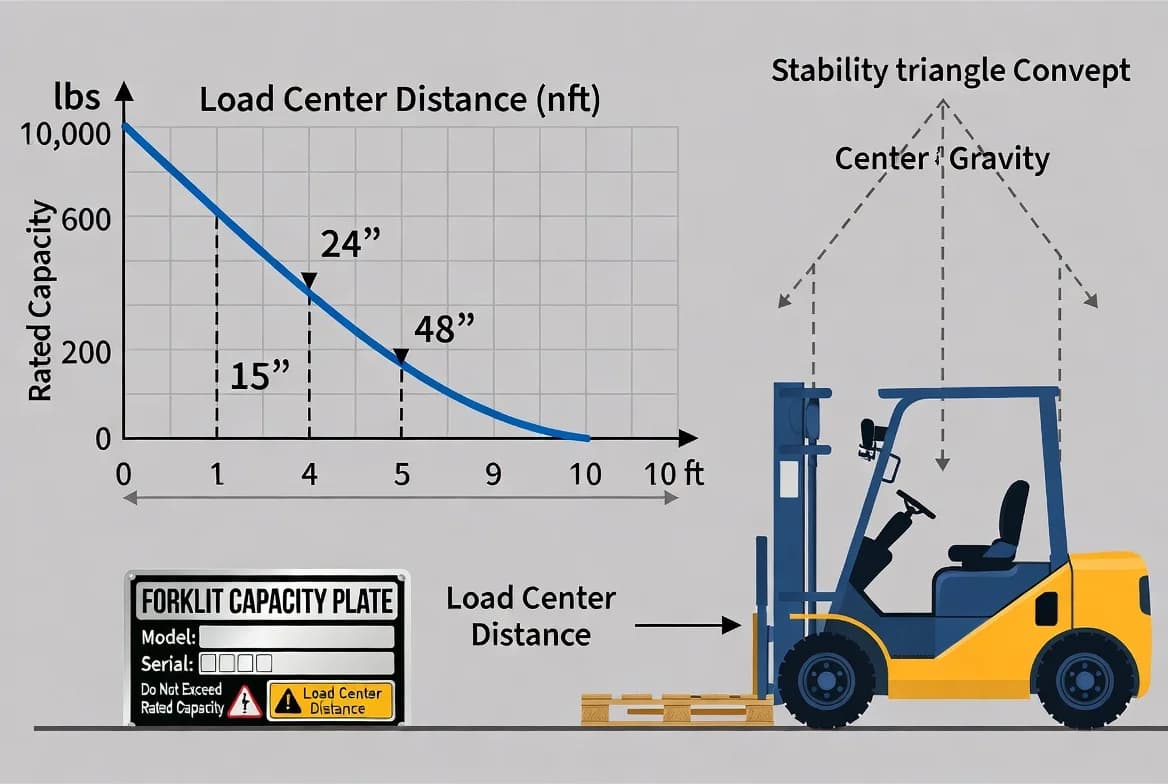
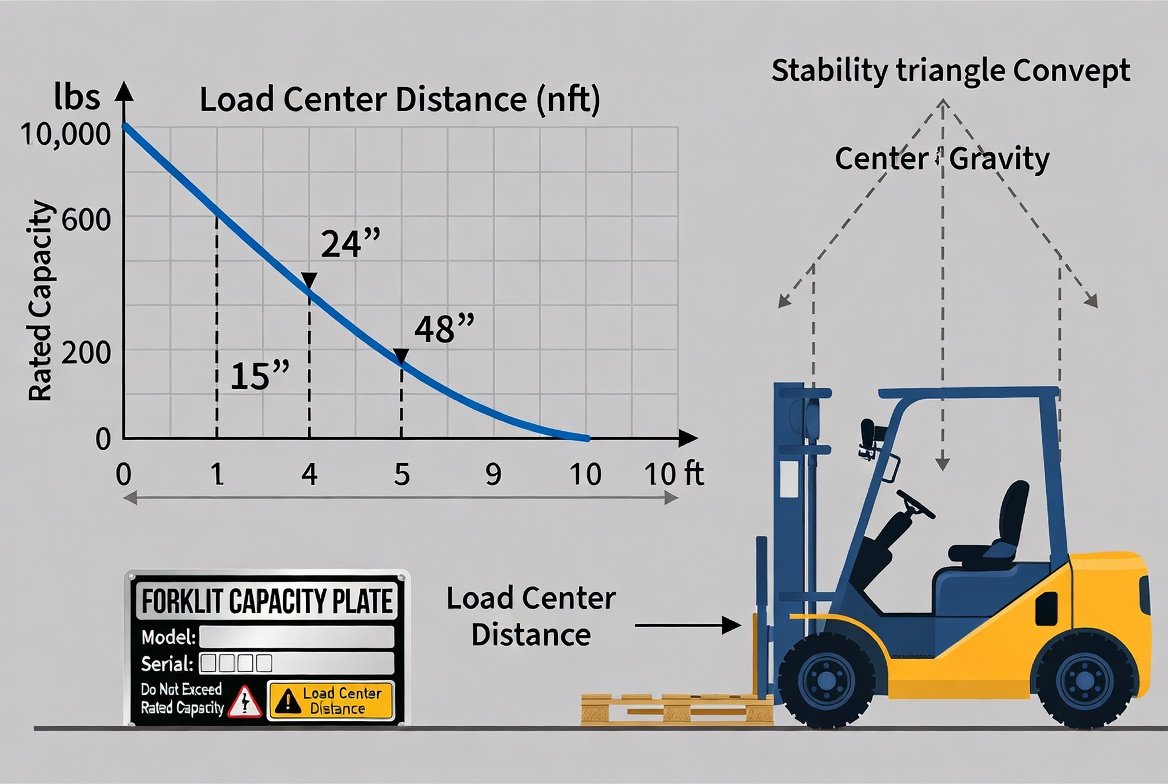
Forklift capacity is the maximum weight a truck can safely lift and transport under specified conditions. It is not a single fixed number; it varies with load center, lift height, attachment configuration, and sometimes with the presence of side-shift or other options. The capacity rating that appears on the data plate is the maximum load the truck can handle at a stated load center (usually 24 inches or 500 mm) and at a stated lift height, with the mast vertical and on firm level ground.
Capacity is determined by stability testing. The truck is loaded progressively until it reaches the point of tip-over under controlled conditions. A safety factor is then applied (commonly 1.33 or greater) so that the published rated capacity is well below the actual tipping load. This factor accounts for dynamic forces that occur during travel, braking, turning, and lifting.
As lift height increases, the center of gravity of the load rises and the truck becomes less stable, especially in the longitudinal direction. Consequently, capacity charts show reduced allowable loads at higher elevations. Attachments that add weight or shift the load center forward further reduce capacity. The data plate or a supplementary capacity plate must reflect the actual configuration; if an attachment is added after the original plate was fitted, a new capacity rating must be calculated and displayed.
Operators must never exceed the capacity shown for the current load center and lift height. Overloading is a leading cause of tip-overs, mast damage, and hydraulic system failure. When the load is irregular or the load center is uncertain, the safest practice is to treat the capacity as lower than the published figure and to proceed with extra caution.
Capacity is also affected by tire type and condition, battery weight (on electric trucks), and any ballast or counterweight changes. Regular inspection and maintenance of the mast chains, carriage, and tilt cylinders ensure that the structural and hydraulic systems can support the rated loads throughout the truck’s service life.
In practical terms, capacity management means matching the truck to the heaviest regular loads, training operators to read capacity charts, and enforcing a culture in which no one is pressured to lift beyond the rating. When loads regularly approach the limit, the correct solution is a higher-capacity truck or a change in load configuration, not an override of the safety rating.
Get More Expert Guides & Updates
Subscribe for Machinery.org guide updates and product learning content.