

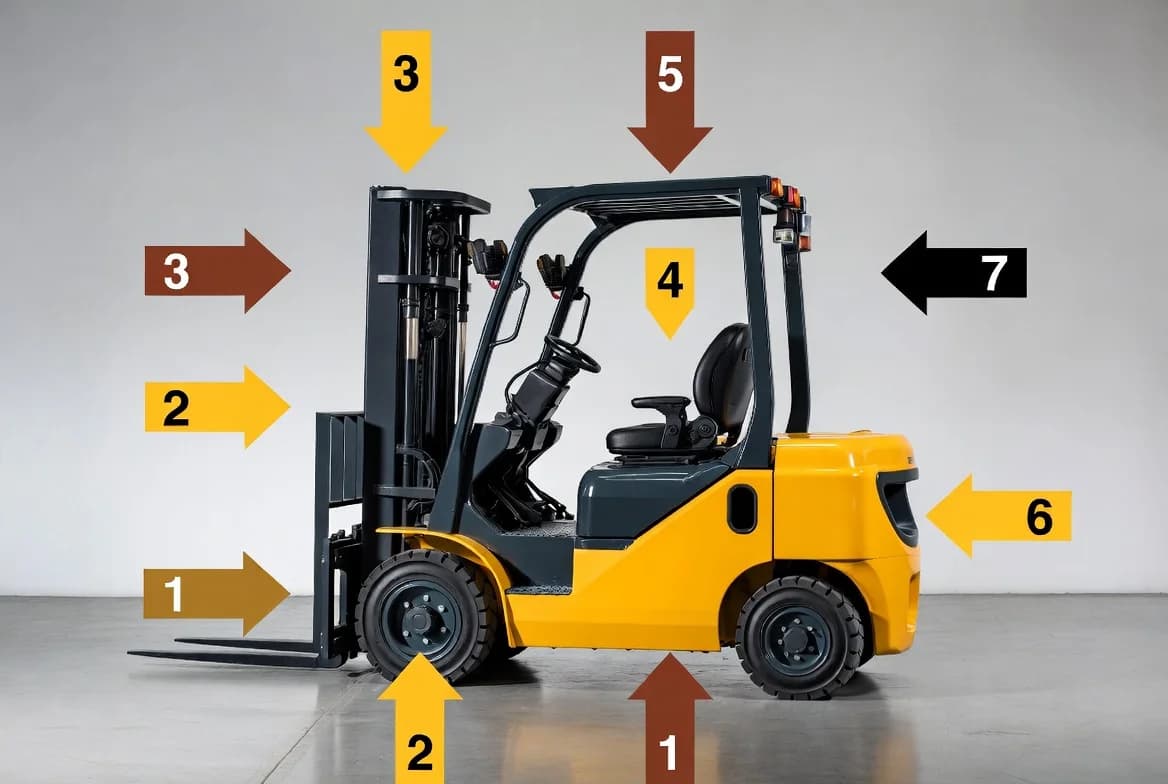

A pre-shift inspection is required by most safety regulations and is the most effective way to catch developing problems before they cause downtime or accidents. The inspection should be documented and any defects reported before the truck is placed in service.
Begin with a walk-around visual inspection. Check for fluid leaks under the truck, damage to the overhead guard, mast, carriage, and forks. Inspect tires or solid tires for cuts, embedded objects, and proper inflation or condition. Examine the forks for cracks, bends, and excessive wear. Verify that the load backrest is secure and that any attachments are properly locked.
Check fluid levels: hydraulic oil, engine oil (if combustion), coolant, and battery electrolyte (if accessible and required). Inspect the battery connectors for corrosion and tightness on electric trucks. Test the horn, lights, backup alarm, and any warning devices. Operate the mast through its full range—lift, lower, tilt forward and back—listening for unusual noises and watching for smooth, controlled movement.
In the operator compartment, check the seat belt or restraint, the condition of the seat, and the function of all controls. Verify that the parking brake holds the truck on a slight incline. Look at the instrument panel for warning lights or gauges outside normal range. On electric trucks, confirm battery charge level is adequate for the shift.
Any defect that affects safety—brake problems, steering issues, mast malfunction, significant leaks, damaged forks, or inoperative safety devices—requires the truck to be tagged out of service until repaired. Minor issues should be reported and scheduled for correction. Consistent daily inspections, combined with prompt corrective action, keep the fleet safe and reliable.
Get More Expert Guides & Updates
Subscribe for Machinery.org guide updates and product learning content.