
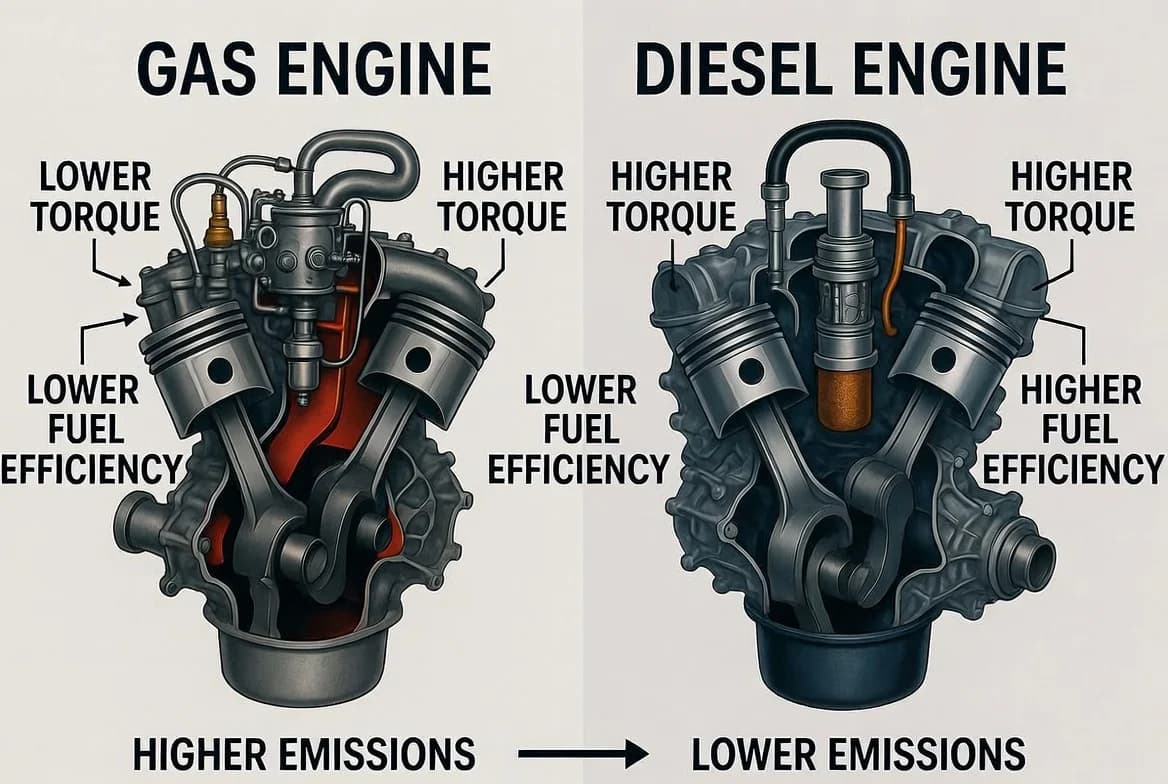
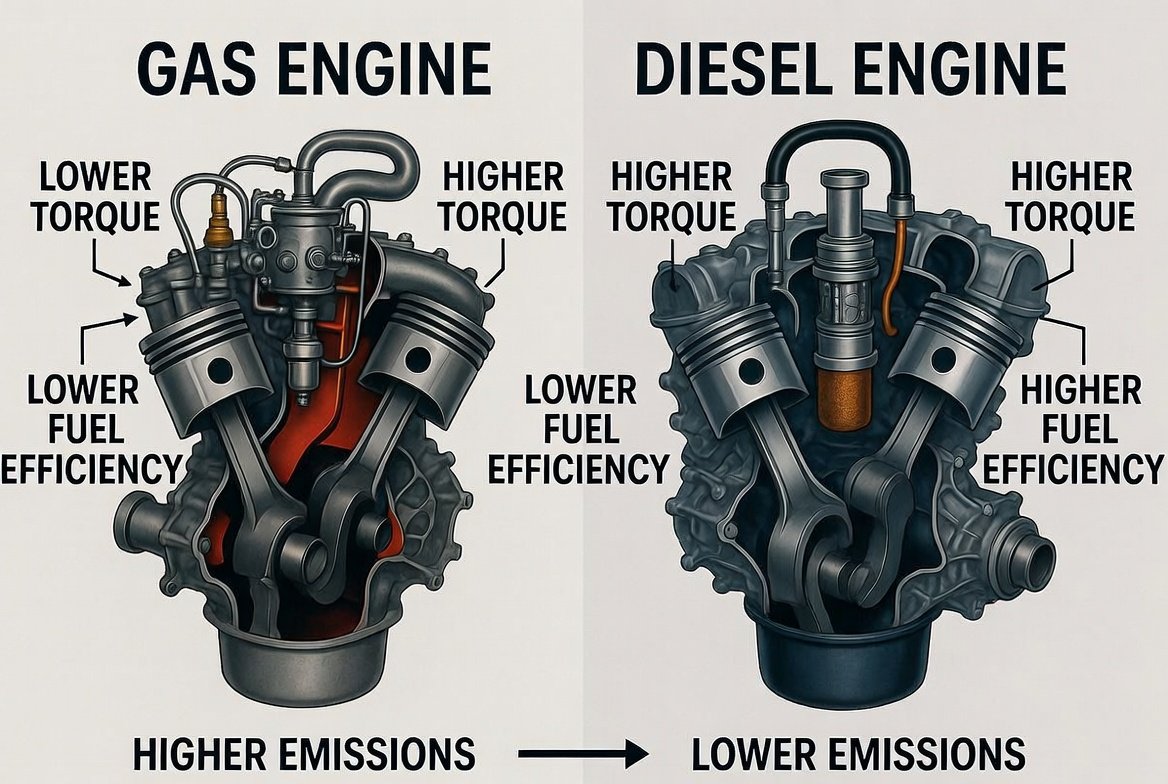
Gasoline (petrol) engines are lighter, quieter at idle, and less expensive to manufacture. They deliver power at higher rpm and are common on smaller machines and some utility equipment. Diesel engines produce higher torque at lower rpm, superior fuel efficiency under continuous load, and longer service life in heavy-duty applications. Modern diesels meet stringent emissions standards with after-treatment systems. For most construction and industrial machinery the diesel engine remains the dominant choice because of torque, durability and fuel economy; gasoline engines appear mainly on lighter or specialised equipment.
When comparing specific models, always consult the current manufacturer specification sheets and load charts for the exact configuration under consideration. Published typical ranges above are drawn from industry sources current as of 2025–2026 and are intended for orientation; individual model performance can vary with options, undercarriage, and attachment configuration. A structured decision matrix that weights the factors most important to the intended application—terrain, duty cycle, transport, residual value, and operator preference—produces the most reliable selection.
Total cost of ownership remains the ultimate measure. Capital cost, fuel or energy, maintenance, transport, residual value and downtime must all be quantified over the planned ownership period. Side-by-side demonstration on the actual job site, when possible, remains the most conclusive validation of which machine will deliver the higher productivity and lower risk for a given contractor or fleet.
Get More Expert Guides & Updates
Subscribe for Machinery.org guide updates and product learning content.