

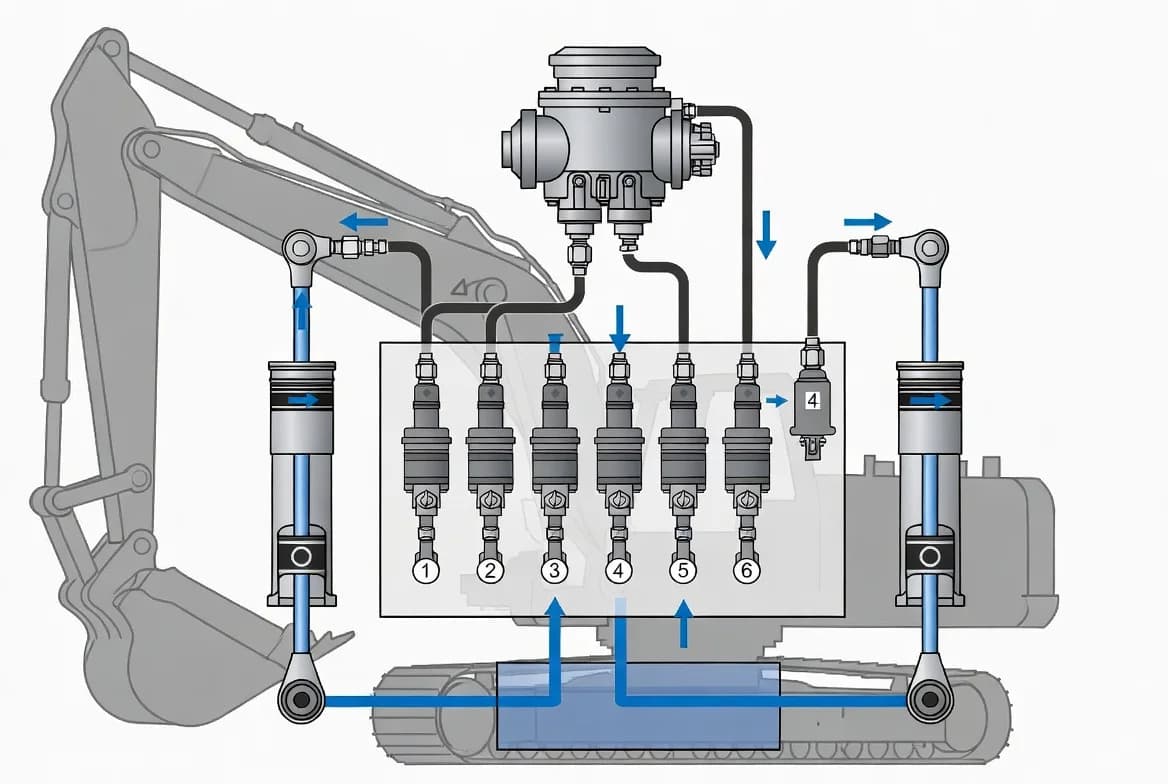
The Force Behind Modern Construction Equipment

Introduction
Virtually every modern piece of heavy construction equipment relies on hydraulics to generate the force needed to dig, lift, break, and move material. Without hydraulic systems, excavators could not dig deep trenches, loaders could not lift heavy buckets, and breakers could not shatter concrete. Understanding the basic principles of hydraulics is essential for operators, technicians, and anyone who selects or maintains equipment.
This guide explains how hydraulic systems work in plain language, covers the main components, and shows why hydraulics are so effective for construction machinery.
The Basic Principle: Force Multiplication
Hydraulics is based on Pascal’s Law: pressure applied to a confined fluid is transmitted equally in all directions. In practical terms, a small force applied to a small piston can create a much larger force on a larger piston. This is how a relatively modest diesel engine can generate the enormous breakout forces seen on excavators and loaders.
The fluid used is almost always specialized hydraulic oil. It is incompressible under normal operating pressures, which means force is transmitted almost instantaneously and with very little energy loss compared with mechanical linkages.
Main Components of a Hydraulic System
1. Hydraulic Pump
The pump is the heart of the system. Driven by the diesel engine (or electric motor), it converts mechanical energy into hydraulic energy by forcing oil into the system under pressure. Common types on construction equipment are gear pumps, vane pumps, and piston pumps. Piston pumps are preferred on larger machines because they can generate higher pressures and offer variable displacement for greater efficiency.
2. Control Valves
Control valves direct the pressurized oil to the correct actuator and control the direction and speed of movement. On modern machines these are often pilot-operated or electro-hydraulic valves that respond to joystick inputs. The valve bank is usually located near the operator or under the house of an excavator.
3. Hydraulic Cylinders and Motors
Cylinders convert hydraulic pressure into linear motion (extension and retraction). They power the boom, stick, bucket, blade, and many other functions. Hydraulic motors convert pressure into rotary motion and are used for track drive, swing, and some attachments. The size of the cylinder (bore and rod diameter) and the system pressure determine the available force.

4. Reservoir, Filters, and Coolers
The reservoir stores the hydraulic oil and allows air and contaminants to separate. Filters remove particles that would damage pumps and valves. Coolers keep oil temperature within safe limits; overheating is one of the most common causes of hydraulic problems. Proper oil level, cleanliness, and temperature are critical for system longevity.
Open-Center vs Closed-Center Systems
Older and simpler machines often use open-center systems, in which oil flows continuously through the valves and back to the tank when no function is being used. Modern high-performance machines usually use closed-center, load-sensing, or pressure-compensated systems. These only pump the oil that is actually needed, improving fuel efficiency and reducing heat generation.
Why Hydraulics Dominate Construction Equipment
Hydraulics offer several decisive advantages:
- Extremely high force density – large forces from compact components
- Precise control of speed and force
- Ability to route power around the machine through flexible hoses
- Overload protection through relief valves
- Relatively simple mechanical design compared with pure mechanical linkages
Common Problems and Maintenance Basics
Most hydraulic failures can be traced to contamination, overheating, or incorrect oil. Daily checks should include oil level, visible leaks, and hose condition. Regular filter changes and oil analysis dramatically extend component life. Weak or slow operation is often caused by worn pumps, internal cylinder leakage, or clogged filters rather than a complete system failure.
Key Takeaways
Hydraulic systems turn engine power into the precise, high-force movements that make modern construction equipment possible. Understanding the basic flow of power—from pump through valves to cylinders or motors—helps operators use machines more effectively and helps technicians diagnose problems faster. In later guides we will examine specific hydraulic specifications such as auxiliary flow, high-flow systems, and attachment compatibility.
This article is part of the Heavy Machinery Learning Center – Machinery Basics series.
Get More Expert Guides & Updates
Subscribe for Machinery.org guide updates and product learning content.