
Selecting the correct excavator size is one of the most critical decisions a contractor, landscaper, or equipment manager will make. The right machine maximizes productivity, minimizes operating costs, and ensures safety on the job site. Choosing a machine that is too small leads to excessive cycle times, premature wear, and the inability to complete the required work. Selecting a machine that is too large results in higher purchase or rental costs, increased fuel consumption, potential site access problems, and unnecessary ground pressure that can damage finished surfaces or unstable ground.
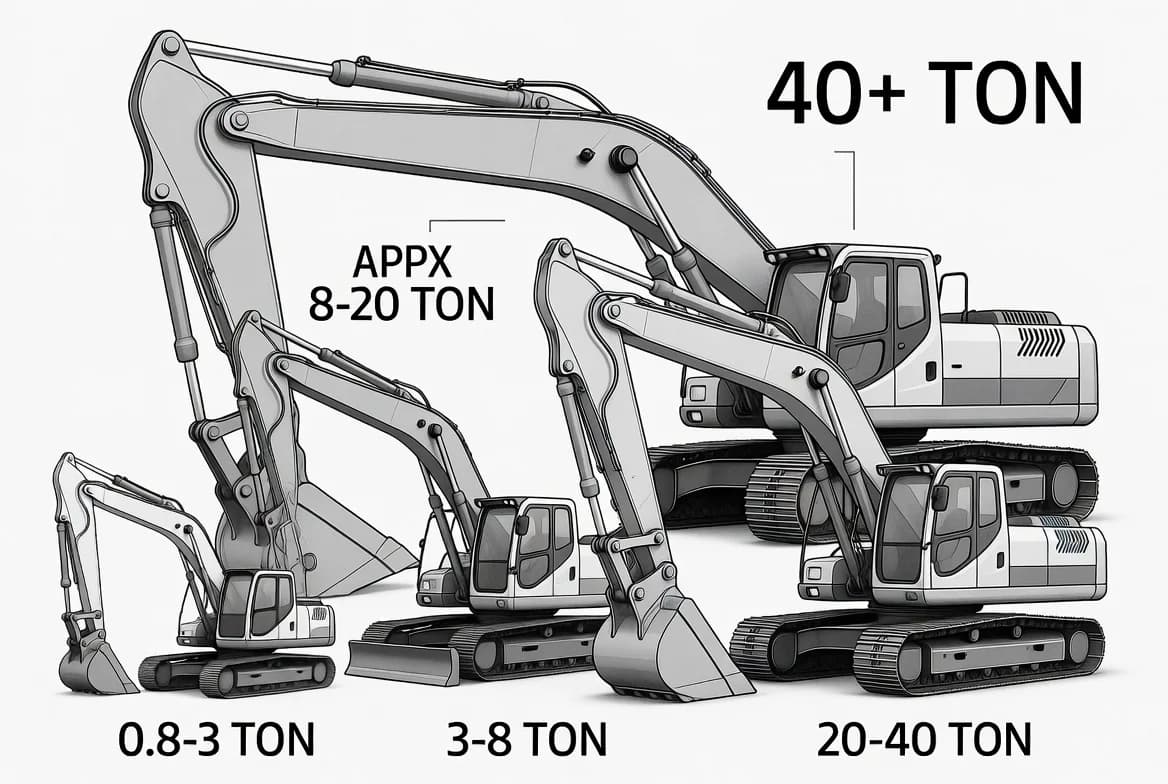
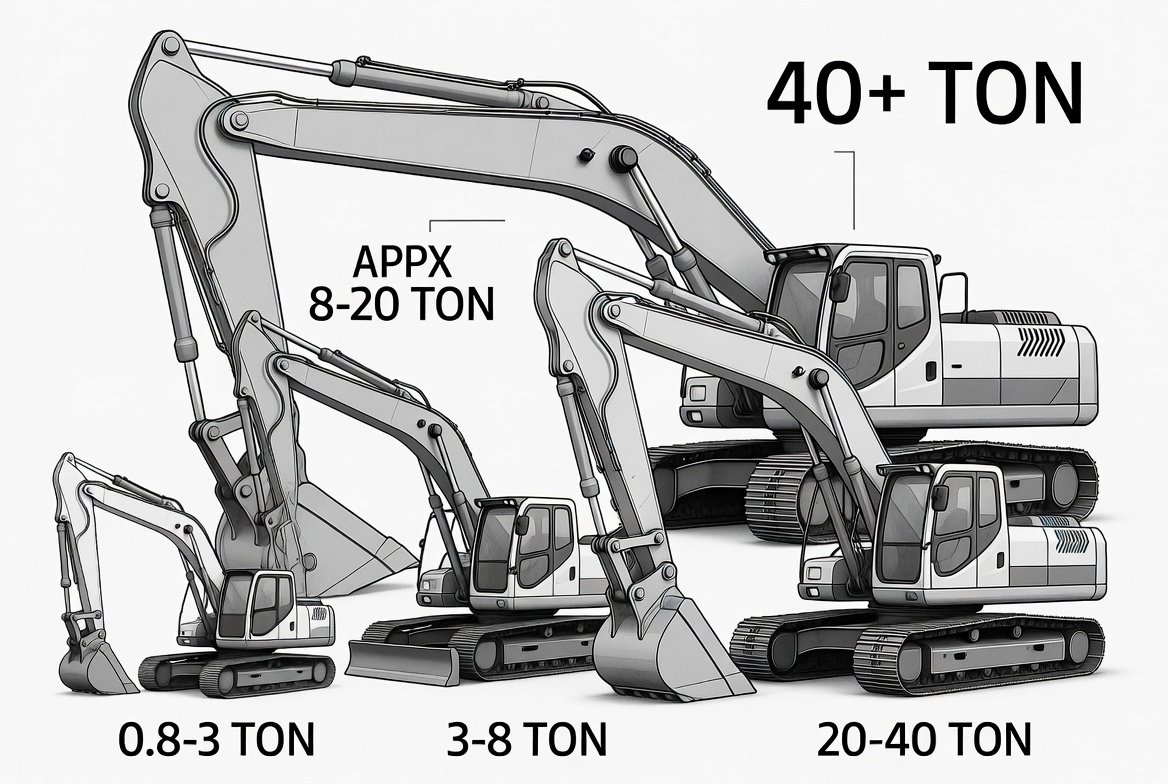
Excavators are typically classified by their operating weight, measured in metric tonnes (or short tons in some markets). The industry generally groups machines into the following broad categories: mini excavators (under 6–8 tonnes), midi excavators (8–15 tonnes), medium excavators (15–30 tonnes), and large excavators (30 tonnes and above, including mining-class machines that can exceed 100 or even 800 tonnes). Within each category there are further refinements based on undercarriage type (standard, long, or wide), boom and stick configurations, and whether the machine is a conventional or zero-tail-swing design.
Key Factors That Determine the Right Size
1. Job Scope and Dig Depth Requirements: The primary working requirement is almost always dig depth and reach. A residential swimming-pool excavation may only need 2.5–3.5 metres of dig depth, while a deep utility trench or foundation for a multi-story building can require 5–7 metres or more. Manufacturers publish maximum dig depth figures for each model with standard stick configurations. Always verify that the published dig depth includes the bucket teeth and accounts for the specific stick length you intend to use. A longer stick increases dig depth and reach but reduces breakout force and bucket capacity.
2. Site Access and Space Constraints: Urban and residential sites frequently restrict the physical size of the machine that can enter the property. Gate widths, overhead power lines, narrow streets, and existing landscaping all limit machine dimensions. Mini excavators with widths under 1.5 metres can often pass through a standard garden gate, while larger machines may require partial demolition of fences or temporary road access. Zero-tail-swing models are particularly valuable when working close to walls, buildings, or live traffic lanes because the counterweight does not extend beyond the tracks during rotation.
3. Material Type and Digging Conditions: Soft topsoil and sand require far less breakout force than compacted clay, frozen ground, or fractured rock. A machine that can dig efficiently in one material may struggle or suffer excessive wear in another. Bucket breakout force (measured in kN or lbf) and arm crowd force become critical specifications when the ground is hard. For rock or heavily compacted material, operators often select a heavier machine class or equip the excavator with a hydraulic hammer or specialized rock bucket.
4. Production Rate and Cycle Time Expectations: High-production work such as bulk earthmoving or large-scale trenching benefits from larger buckets and higher hydraulic flow rates. A 20-tonne excavator can move substantially more cubic metres per hour than a 5-tonne machine. However, if the work involves frequent repositioning, fine grading, or precise placement of material, a smaller, more maneuverable machine may actually achieve higher overall productivity because of reduced travel time and greater operator visibility.
5. Transport and Logistics: Every machine must be moved to and from the job site. Mini excavators under approximately 3.5–4 tonnes can often be transported on a standard tandem-axle trailer behind a heavy-duty pickup or small truck. Machines above 6–8 tonnes usually require a low-bed trailer and a commercial driver’s licence (or equivalent) in many jurisdictions. Larger machines may need specialized heavy-haul permits, pilot vehicles, and route surveys. Transport cost can easily exceed the daily rental rate of a smaller machine if the distance is significant.
6. Ground Conditions and Flotation: Soft, wet, or sensitive ground requires low ground pressure. Longer tracks, wider pads, or rubber tracks distribute the machine weight over a larger area. Some manufacturers offer optional “low-ground-pressure” undercarriages. On finished surfaces such as asphalt or decorative concrete, rubber tracks or street pads are essential to prevent damage.
7. Attachment Compatibility and Versatility: Modern excavators are platforms for a wide range of attachments: hydraulic breakers, tiltrotators, grapples, mulchers, augers, and compaction plates. The hydraulic auxiliary flow rate (litres per minute) and pressure (bar or psi) must match the requirements of the intended attachments. A machine that is otherwise perfect for the digging work may be unsuitable if it cannot supply enough oil flow for a high-demand tool.
Practical Size Selection Guidelines by Application
Residential landscaping and small utility work is almost always best served by machines in the 1.5–3.5 tonne class. These excavators can dig swimming-pool excavations, install drainage, plant large trees, and perform foundation repairs while remaining light enough to work on lawns without severe damage. Operators appreciate the excellent visibility and ease of transport.
Commercial building foundations, larger utility trenches, and road-work applications typically move into the 5–12 tonne range. These machines offer greater dig depth, higher breakout force, and the ability to handle larger buckets or hydraulic hammers. Zero-tail-swing versions are especially popular in urban environments where working alongside existing structures is common.
Highway construction, large commercial sites, and bulk earthmoving jobs generally require 15–30 tonne excavators. At this size the machines deliver high production rates and can work productively with large trucks. Counterweight and boom configurations become more sophisticated, and operators often use GPS or laser-guided systems for grade control.
Mining, major infrastructure, and quarry applications demand the largest machines—40 tonnes and upward. These excavators are designed for continuous high-production digging, often paired with rigid-frame dump trucks. The capital cost, transport logistics, and maintenance requirements are correspondingly higher.
Matching Machine Weight to Trailer and Tow Vehicle
A frequently overlooked aspect of size selection is the legal and practical ability to transport the machine. In many regions the combined weight of trailer plus excavator must remain within the towing capacity of the truck and within legal axle-load limits. A common rule of thumb is that the excavator operating weight should not exceed approximately 80 % of the trailer’s rated capacity after accounting for the weight of the trailer itself and any additional equipment or fuel. Always verify local regulations regarding commercial vehicle licences, oversize permits, and lighting or flagging requirements.
Total Cost of Ownership Considerations
Beyond the purchase or rental price, the true cost of an excavator includes fuel consumption, maintenance intervals, tyre or track wear, insurance, and residual value. Larger machines consume more fuel per hour but may complete the job in fewer hours. Smaller machines cost less to own and transport but may require more operator time. A careful analysis of expected annual utilization hours, fuel prices, and labour rates often reveals that the “cheapest” machine on paper is not the most economical over a multi-year period.
In summary, choosing the right excavator size is a multi-variable optimization problem. Start with the physical constraints of the job site and the required dig depth and production rate. Then factor in material difficulty, attachment needs, transport logistics, and total cost of ownership. When in doubt, consult the manufacturer’s application specialists or an experienced equipment dealer who can demonstrate machines under realistic conditions. A well-matched excavator will pay for itself many times over through higher productivity, lower operating costs, and reduced operator fatigue.
Get More Expert Guides & Updates
Subscribe for Machinery.org guide updates and product learning content.