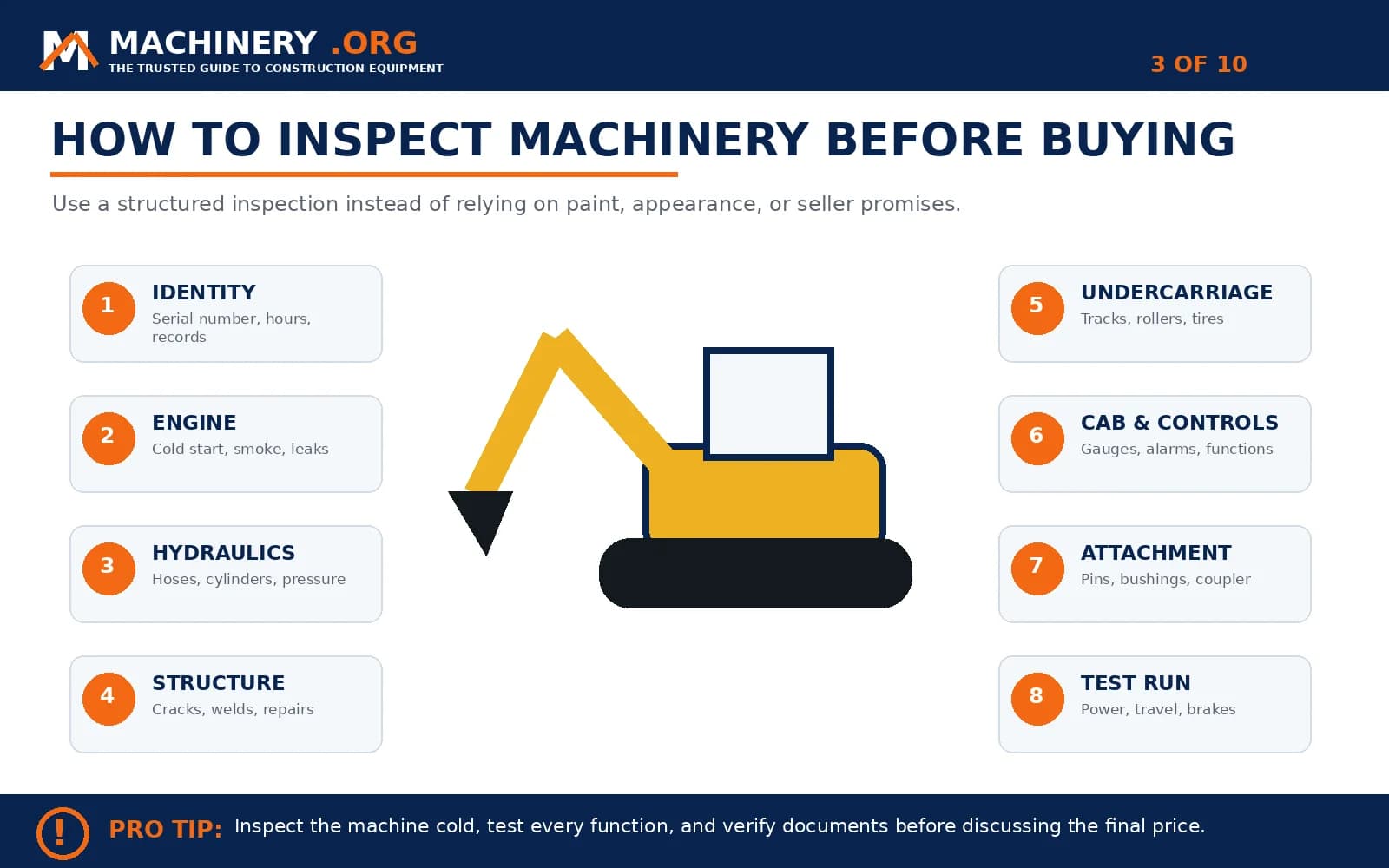
A machinery inspection should answer two questions: what condition is the machine in today, and what costs are likely to appear after purchase? Buyers who focus only on paint, engine sound, or the seller’s description often miss the components that determine real value. A disciplined inspection moves in a consistent order and records evidence. It begins with identity and documents, continues through the physical systems, and ends with a full operating test.
Whenever possible, inspect the machine cold. A warm engine can hide hard starting, smoke, weak batteries, low compression, or fuel-system problems. Ask the seller not to start the machine before arrival. Bring a flashlight, clean cloths, inspection mirror, tire or track measuring tools, camera, and the specification sheet for the exact model. For a high-value purchase, bring a qualified technician or arrange fluid analysis.
Inspection is not intended to find a perfect used machine. It is intended to reveal the machine accurately. Normal wear can be priced and planned. Hidden damage, inaccurate hours, poor repairs, and serious structural problems are different because they can change the purchase decision completely.
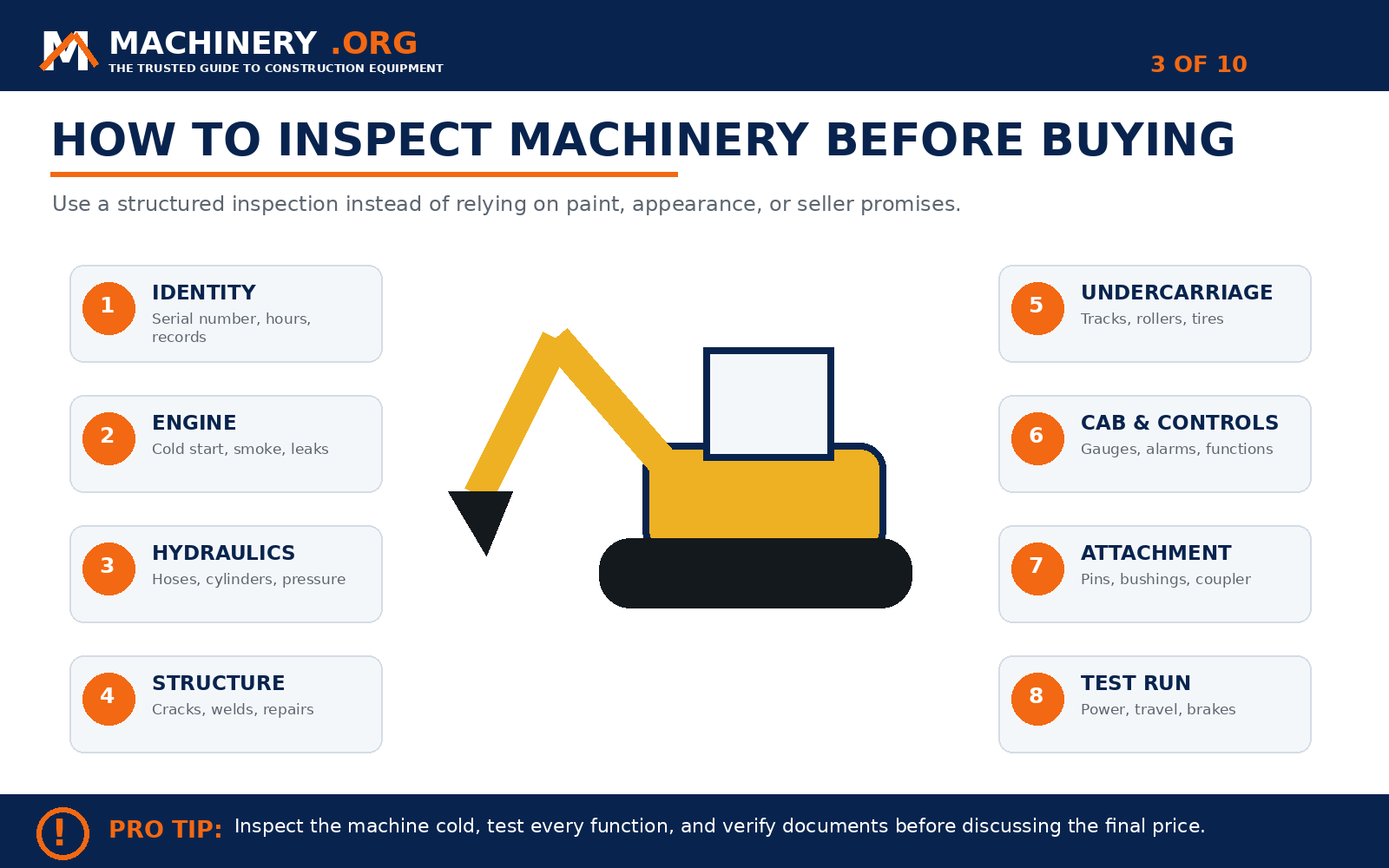
Figure 12.1. Custom Machinery.org infographic for How to Inspect Machinery Before Buying.
Confirm identity and ownership
Locate the serial plate and verify that the number matches the invoice, registration, finance release, or ownership documents. Check the model year, configuration, and attachments. Missing or altered identification should stop the process until the seller provides a clear explanation.
Review hours and service records
Compare the hour meter with wear on controls, pedals, seat, pins, and undercarriage. A low reading with extreme wear deserves investigation. Service records should show oil changes, filters, major repairs, and component replacements. Gaps do not automatically reject the machine, but they increase uncertainty.
Inspect the engine cold
Check fluid condition before starting. Look for contamination, low coolant, fuel leaks, oil seepage, damaged belts, and loose hoses. During startup, note cranking time, smoke color, unusual noise, warning lights, and idle quality. After warming, check for blow-by, overheating, leaks, and loss of power.
Inspect hydraulics
Study hoses, fittings, cylinders, valves, and the pump area. Look for wetness, cracked hose covers, bent rods, damaged chrome, and temporary repairs. Operate every function through full range. Functions should be smooth and responsive without excessive noise, drift, or hesitation.
Check structure and repairs
Inspect frames, booms, arms, loader towers, lift arms, counterweights, and attachment mounts. Fresh paint around welds may hide repairs. A professional repair can be acceptable when documented and correctly performed, but poor welds, repeated cracks, or bent structural areas are major concerns.
Measure tires or undercarriage
Tires should have usable tread, even wear, and sound sidewalls. Tracks, rollers, sprockets, idlers, and chains can represent a major replacement cost. Measure rather than guessing. Uneven wear may reveal alignment, tension, or operating problems.
Test cab, controls, and safety systems
Check the seat belt, horn, lights, alarms, mirrors, cameras, gauges, heater, air conditioning, and safety interlocks. Drive the machine in all directions. Test brakes, steering, travel speed, and load response. Listen for clunks, grinding, and abnormal vibration.
Final documentation
Photograph defects and serial numbers.
Write estimated repairs beside each finding.
Confirm included attachments and accessories.
Check liens, ownership, and transport requirements.
Use findings to negotiate price or walk away.
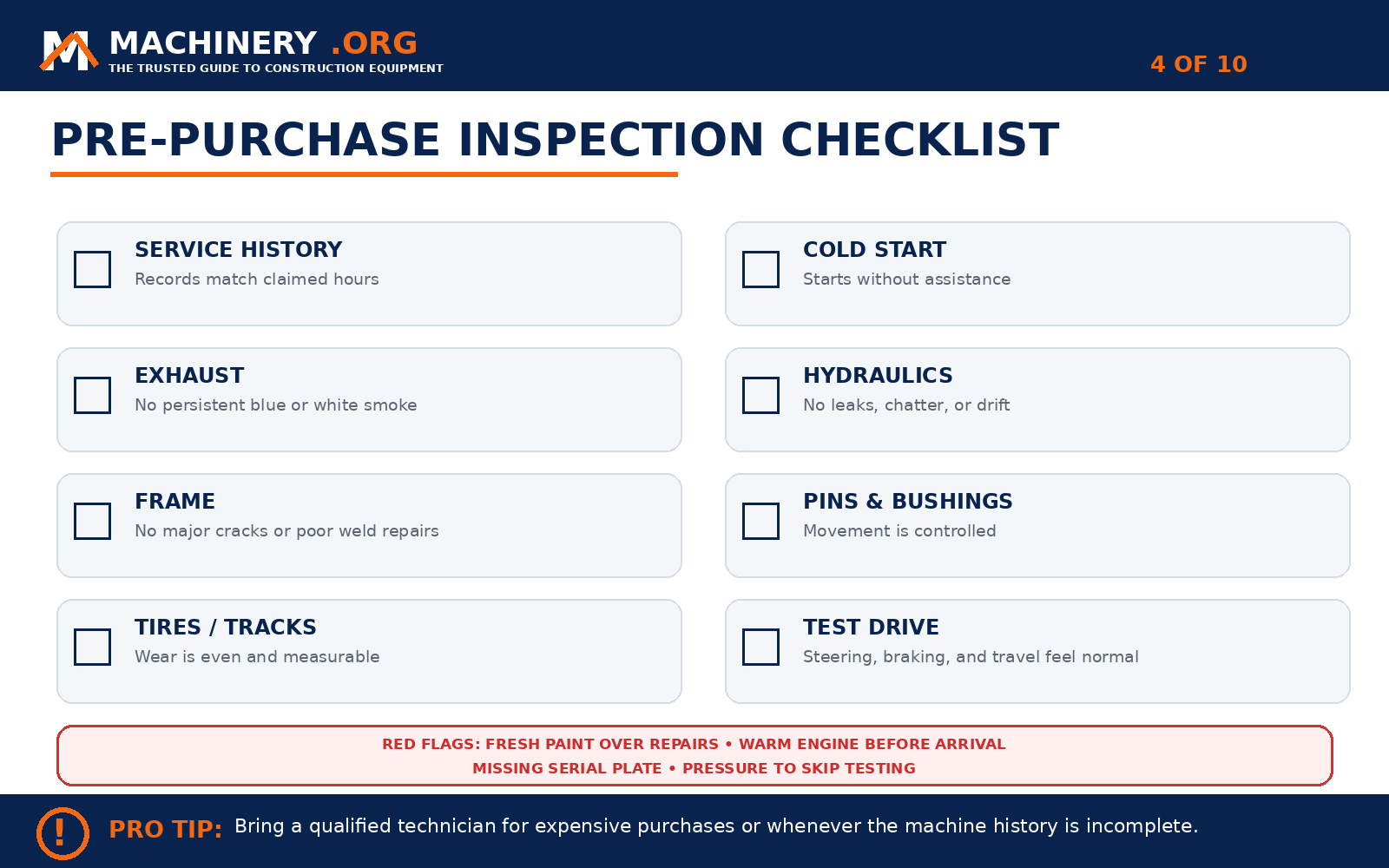
Figure 12.2. Custom Machinery.org decision or checklist graphic for How to Inspect Machinery Before Buying.
Turn inspection findings into a financial decision
After the physical inspection, convert every significant finding into one of three categories: normal wear, near-term repair, or unacceptable risk. Normal wear includes items that are expected for the age and hours and that are already reflected in market value. Near-term repairs are measurable costs such as tires, tracks, hoses, pins, brakes, batteries, or overdue service. Unacceptable risks include structural damage, uncertain ownership, severe contamination, major hydraulic weakness, or a seller who will not allow verification.
Use realistic repair prices rather than optimistic guesses. Include parts, labor, transport, downtime, and any rental replacement that may be needed. A machine priced ten thousand dollars below market may not be a bargain if it immediately needs fifteen thousand dollars of work. Conversely, visible wear can create a fair negotiation opportunity when the underlying engine, hydraulics, and structure are sound.
Know when to walk away
Walking away is a professional purchasing decision, not a failure to close a deal. Stop when the serial identity cannot be confirmed, the seller blocks an independent inspection, major faults are hidden, the engine was deliberately warmed before arrival, or repair evidence suggests repeated structural failure. A scarce machine can create emotional pressure, but there will usually be another opportunity. Protecting capital is more important than winning one transaction.
A final valuation step should compare the inspected machine with at least two similar listings or recent sales. Adjust for model year, configuration, included attachments, location, and documented repairs. Market asking prices are not always transaction prices, but they establish a useful range. The inspection then explains whether the machine belongs near the top, middle, or bottom of that range. This prevents the buyer from negotiating only by emotion and helps justify the offer with measurable evidence.
Always confirm transport loading, included keys, manuals, and spare parts before releasing final payment and accepting delivery.
Frequently Asked Questions
Should I inspect machinery myself?
You can perform an initial review, but expensive or complex machines deserve inspection by a qualified technician.
What is the biggest used-equipment red flag?
A combination of missing records, a warm engine before arrival, altered identification, and pressure to skip testing is especially concerning.
Can fluid analysis help?
Yes. Oil and coolant analysis can reveal contamination, wear metals, and possible internal problems that are not visible during a short inspection.
Key Takeaway
A proper inspection converts uncertainty into a repair plan and a fair price. Inspect cold, test every system, document findings, and never allow schedule pressure to replace evidence.
Get More Expert Guides & Updates
Subscribe for Machinery.org guide updates and product learning content.