

Introduction
Auxiliary hydraulics give a skid steer much of its versatility, but that versatility depends on clean, well-maintained couplers and hoses. These components carry pressurized hydraulic oil to attachments, and any neglect can lead to leaks, contamination, performance loss, or safety hazards. Hose failure or dirty coupler connections can create costly downtime very quickly. For this reason, hydraulic coupler and hose care should be part of every owner’s normal inspection routine.
Many hydraulic issues begin with simple habits. Couplers are connected while dirty, hoses are allowed to rub against sharp surfaces, damaged protective sleeves are ignored, or leaks are left in place too long. Fortunately, these are preventable problems. A disciplined inspection and connection routine helps protect the machine, the attachment, and the operator.
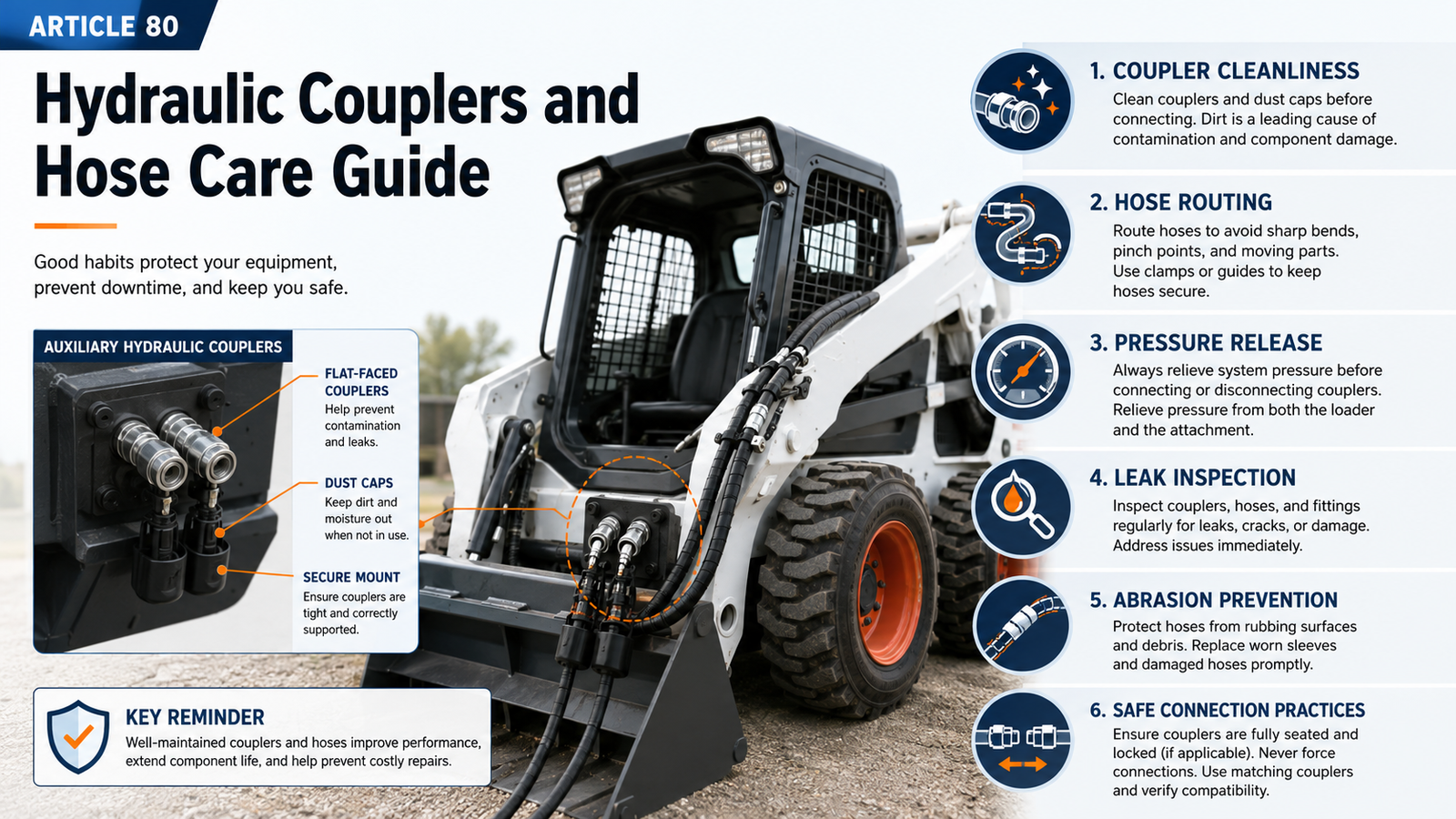
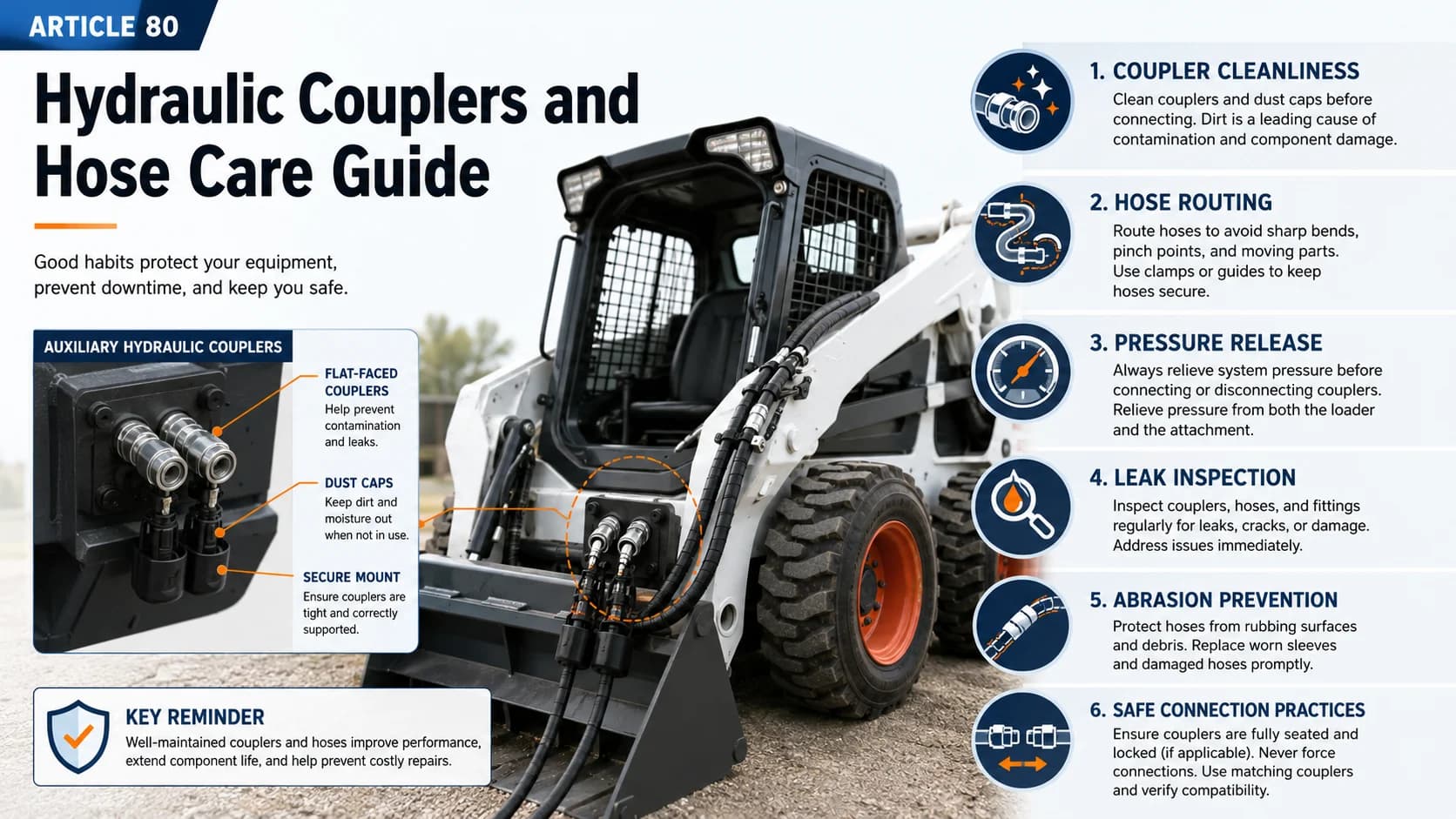
Figure 80.1 – Hydraulic couplers and hose care guide.
Image Description: A 16:9 infographic showing auxiliary hydraulic couplers, hose routing, cleanliness reminders, and leak inspection points.
Coupler Cleanliness and Connection Discipline
Hydraulic couplers should be cleaned before connection, and dust caps should be used when they are disconnected. Dirt is one of the most common causes of contamination in auxiliary hydraulic systems. Flat-face couplers help reduce contamination risk, but they still require care. Operators should confirm that couplers are fully seated and matched correctly, and they should never force a connection that does not fit or that is still under pressure.
Clean couplers before every connection or disconnection.
Use dust caps and protect exposed connection points.
Relieve hydraulic pressure before working with couplers.
Verify compatibility and full seating before operation.
Inspect for leaks, damage, and looseness regularly.
Hose Inspection and Routing
Hydraulic hoses must be inspected along their full length. Look for cuts, abrasions, bulges, exposed reinforcement, cracked outer surfaces, or leaks around fittings. Hose routing matters just as much as hose condition. Even a good hose will fail prematurely if it is routed where it pinches, bends sharply, or rubs continuously against the machine or attachment. Clamps, guards, and sleeves are simple protections, but they only help when they are present and in good shape.
Pressure safety should never be ignored. Hydraulic systems operate under high pressure, and that means operators must never search for leaks with bare hands. A suspected leak should be handled carefully and according to proper safety practices. Any damaged line or fitting should be replaced rather than temporarily ignored.
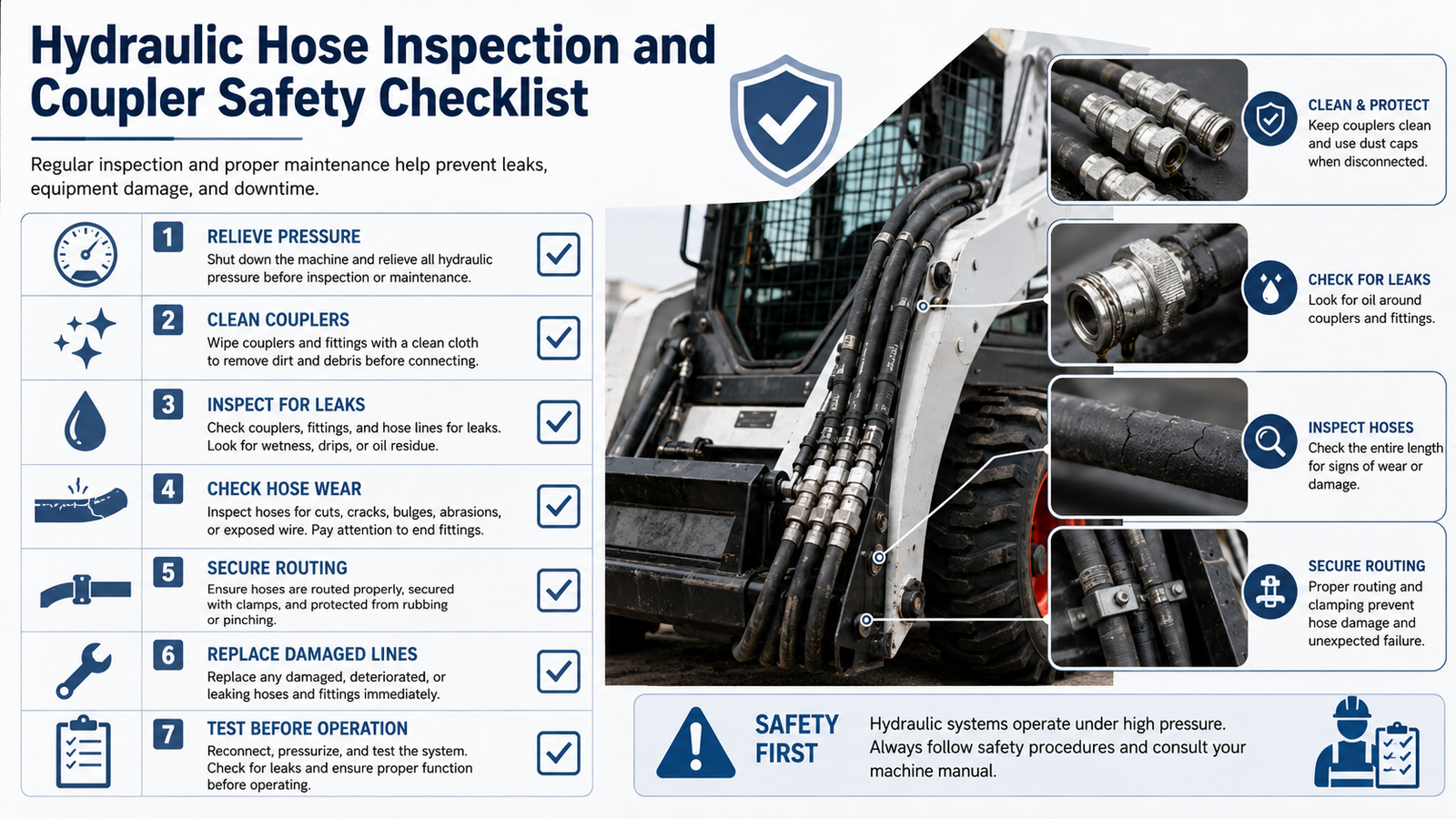
Figure 80.2 – Hydraulic hose inspection and coupler safety checklist.
Image Description: A checklist-style graphic showing hose wear inspection, leak checks, pressure release, and secure routing practices.
Inspection Routine and Service Mindset
The best hydraulic-care routine combines daily visual inspection with careful habits during attachment changes. Before work, check couplers, fittings, and visible hose routes. During operation, pay attention to unusual attachment response, oil residue, or abnormal hose movement. After work, look again for wear or damage, especially if the machine has been operating in brush, debris, or abrasive material. The more demanding the environment, the more important inspection becomes.
Owners who treat hydraulic hoses and couplers as consumable service items rather than permanent fixtures will make better decisions about replacement timing. Replacing a questionable hose early is far less expensive than suffering a major leak, attachment downtime, or contamination event later.
Hydraulic Care Essentials
Keep couplers clean and capped when not in use.
Inspect hoses fully and look closely at fittings.
Protect hose routing from abrasion, kinking, and pinch points.
Relieve system pressure and use safe connection practices.
Replace damaged components promptly rather than delaying service.
Frequently Asked Questions
Why are clean hydraulic couplers so important?
Clean couplers reduce contamination risk and help protect the hydraulic system from dirt-related wear and performance problems.
What hose damage signs should I watch for?
Look for cuts, cracks, bulges, abrasion, exposed wire, oil residue, and damage near fittings or clamps.
Should I replace a questionable hose immediately?
If a hose shows significant wear, leakage, or structural damage, prompt replacement is the safest and most economical choice.
Key Takeaway
Hydraulic reliability starts with simple habits: clean couplers, protected hose routing, and consistent inspection. These practices reduce contamination, improve safety, and help prevent costly downtime.
Get More Expert Guides & Updates
Subscribe for Machinery.org guide updates and product learning content.