
Mini excavators are compact, but they are not small in risk. They swing, dig, lift, travel, and work close to people, structures, utilities, trenches, and edges. Because they are easier to move into tight spaces than larger excavators, operators sometimes underestimate them. That is why a safety checklist is so valuable. It turns good intentions into repeatable habits. Instead of relying on memory or routine alone, the checklist creates a deliberate process before work starts, while work is underway, and after the machine is shut down.
A proper mini excavator safety checklist should cover the operator, the machine, and the worksite. Personal protective equipment matters, but so do track condition, underground utility awareness, communication with other workers, bystander control, slope judgment, and attachment security. A machine that is mechanically sound can still be dangerous in a poorly organized work area. Likewise, a well-planned site can still become dangerous if the operator skips inspection or becomes careless about swing radius and blind spots.
The goal of this article is not only to list safety steps, but to explain why they matter. When people understand the reason behind the checklist, they are much more likely to follow it consistently.
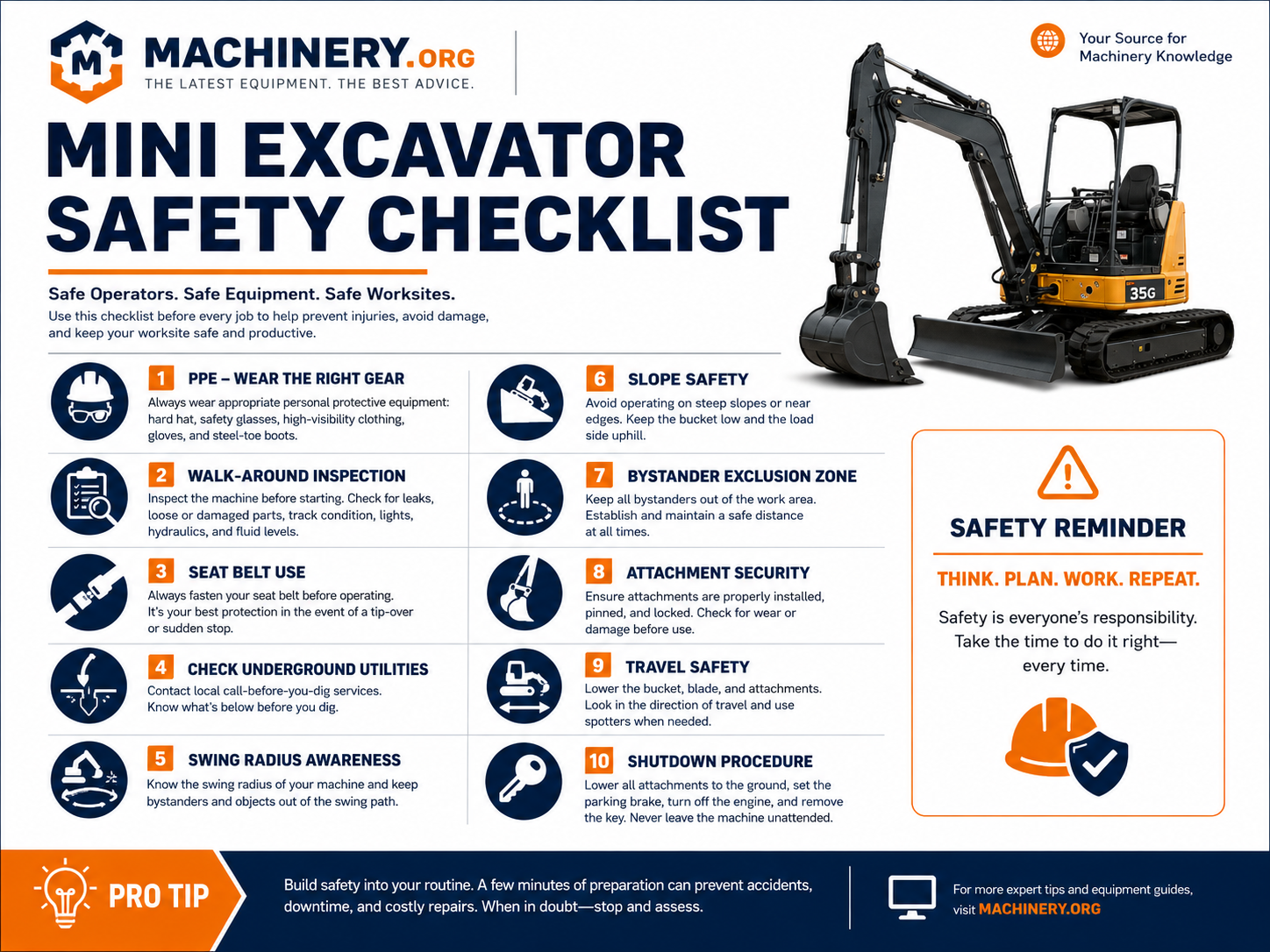
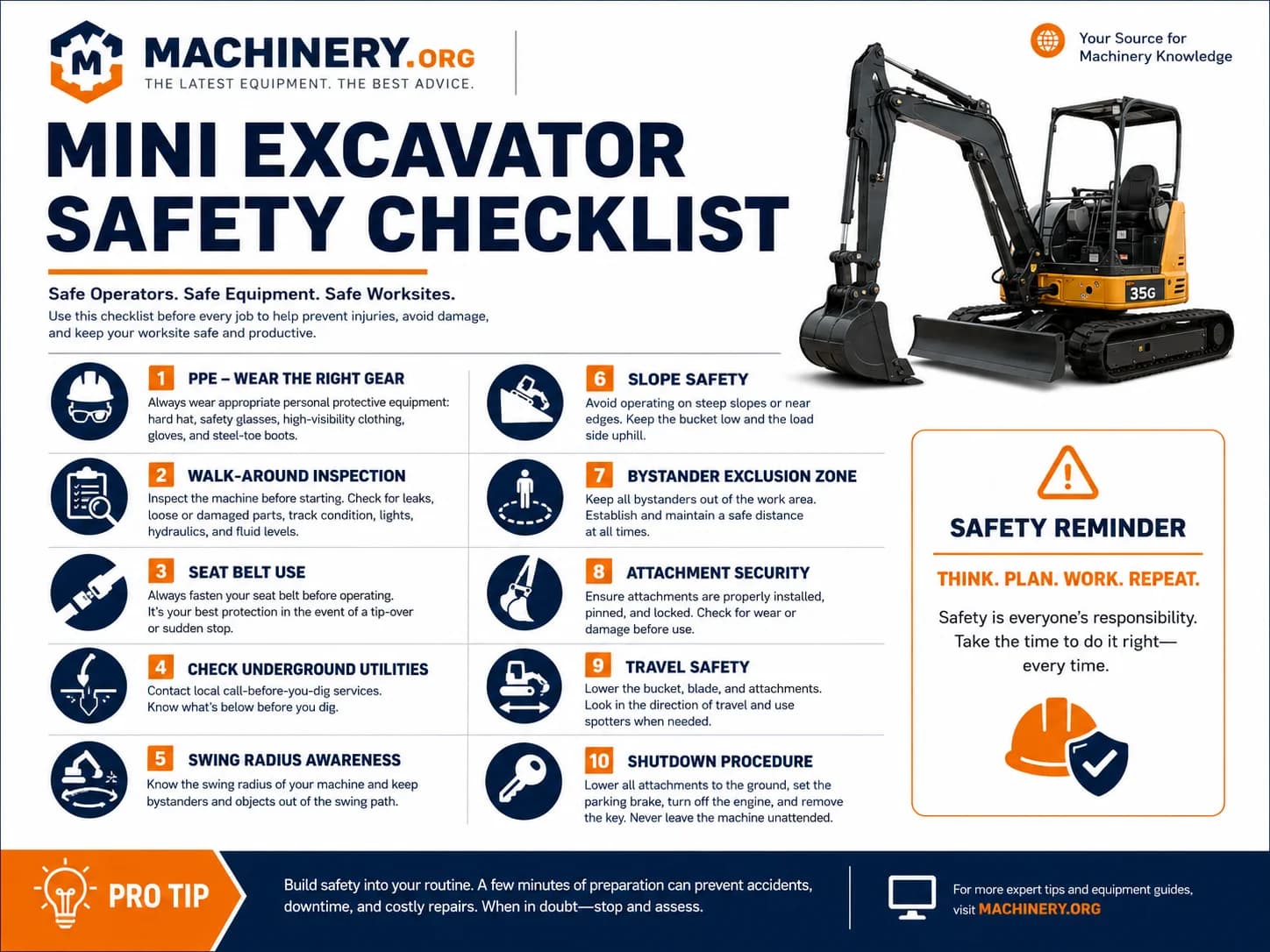
Figure 28.1. Machinery.org mini excavator safety checklist covering PPE, pre-start inspection, utility awareness, and safe shutdown.
Before-start safety routine
Every safe shift begins before the engine starts. The operator should inspect the machine for leaks, loose parts, damaged tracks, missing pins, and attachment condition. The cab or operator station should be checked for seat belt function, controls, display warnings, mirrors if equipped, and general cleanliness. PPE should include at minimum appropriate footwear, eye protection, and any site-required high-visibility gear or head protection. The work area should then be walked. This is the point where overhead lines, unstable ground, trench edges, obstacles, and nearby personnel are identified before they become surprises.
Utility awareness and hidden hazards
One of the most serious excavator hazards is striking something that is not visible. Underground utilities can carry gas, power, water, or communications. Operators should never guess. Local utility-location procedures must be followed, and marked lines should be respected. If the work is near services, potholing or other careful verification methods may be necessary. The same principle applies overhead. Tree limbs, roof edges, scaffolding, and utility lines can all become hazards once the boom is raised.
Operating zones and bystander control
A mini excavator creates several different zones around the machine. There is the working zone where digging or lifting occurs, the blind-spot zone where the operator may not see a person, and the exclusion zone where bystanders should not stand. Swing radius is particularly important. Even a compact excavator can strike a person or a structure quickly when the house rotates. For that reason, only essential personnel should be near the machine, and communication should be clear whenever anyone needs to approach the operator during work.
Travel, slope, and edge safety
Mini excavators are often used on uneven ground. That means travel safety matters as much as digging safety. The bucket and blade should be positioned appropriately during travel, and the machine should move slowly over uncertain ground. Working near trench edges, slopes, or embankments increases tip-over risk. On slopes, the operator should keep the load low and avoid sudden motion. If stability feels uncertain, stop and reposition rather than trusting the machine to probably hold. Tip-overs happen quickly and leave little room for correction.
Attachment security and lifting caution
Buckets, thumbs, grapples, breakers, and other tools must be pinned, locked, and suitable for the machine. A loose attachment is a direct safety hazard. If the machine will be used for lifting, the operator should know whether the lift is within capacity and whether the correct lifting points and slings are being used. Never lift over people. Never rely on makeshift rigging. The compact size of a mini excavator can create a false sense that lifting is casual, but load shifts and instability are very real risks.
End-of-day shutdown and reporting
Safety continues when the job is over. Park the excavator on stable ground, lower the attachment to the surface, set the parking brake as required, shut down properly, and secure the machine. A post-operation walk-around should check for new leaks, damaged hoses, loose pins, or track issues. If a safety concern appeared during the shift, it must be reported rather than left for the next operator to discover. A strong safety culture depends on honest reporting and disciplined shutdown habits.
Checklist items every operator should remember
Inspect the machine and the attachment before starting work.
Verify utilities, overhead obstructions, and ground conditions.
Keep bystanders outside the operating and swing zones.
Travel slowly with the attachment positioned safely.
Stop immediately if visibility, stability, or machine condition becomes unsafe.
Building safer habits over time
The most effective checklist is the one that becomes part of the operator’s thinking. Over time, experienced operators naturally begin to scan slopes, notice people drifting too close, and listen for changes in machine sound. A written checklist helps create that awareness faster and makes sure new operators build the same habit. Safety is not a single rule or a single reminder. It is a pattern of small correct decisions made repeatedly throughout the day.
Supervisors and business owners can strengthen checklist use by making it visible and practical. Posting a simple version near equipment storage, reviewing key points in toolbox talks, and asking operators to report near misses all reinforce the habit. Safety culture improves when the checklist becomes part of team language rather than a forgotten handout. The result is fewer incidents, better machine care, and more professional work behavior overall.
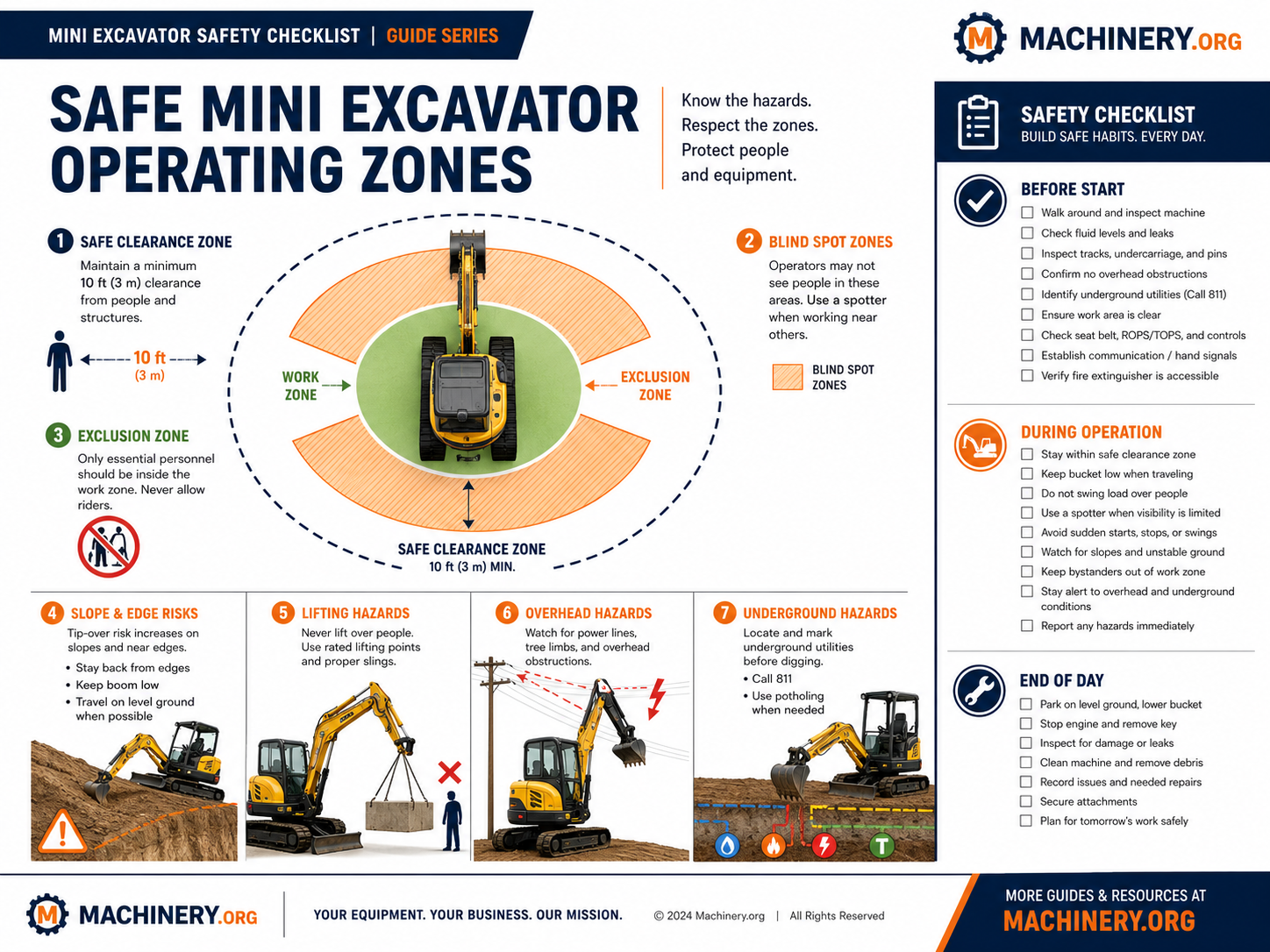
Figure 28.2. Machinery.org operating-zone guide showing exclusion areas, blind spots, and checklist points for safe work around a mini excavator.
Frequently Asked Questions
Why does a mini excavator need a special safety checklist?
Because the hazards are specific to this type of machine: swing radius, blind spots, trench work, utility strikes, slopes, and attachment security.
Are bystanders really a major concern with compact excavators?
Yes. Compact machines often work close to other people and in confined spaces, making bystander control especially important.
What is the biggest safety mistake operators make?
Often it is rushing. Skipping the walk-around, ignoring zone control, or taking chances near slopes and utilities creates preventable risk.
Key Takeaway
A mini excavator safety checklist is not paperwork for its own sake. It is a practical tool for preventing injuries, protecting the machine, and building good habits before, during, and after every shift.
Get More Expert Guides & Updates
Subscribe for Machinery.org guide updates and product learning content.