
Mini excavators have transformed the construction and landscaping industries by bringing hydraulic digging capability into spaces that were previously accessible only by hand labour or small skid-steer loaders. The term “mini excavator” generally refers to machines with an operating weight of approximately 0.8 tonnes up to about 6–8 tonnes, although definitions vary slightly by manufacturer and region. Within this broad category there is a surprising amount of variation in dimensions, performance, and intended use cases. Understanding the size classes inside the mini range is essential for matching the machine to the job.
Ultra-Compact Class (0.8 – 1.5 tonnes)
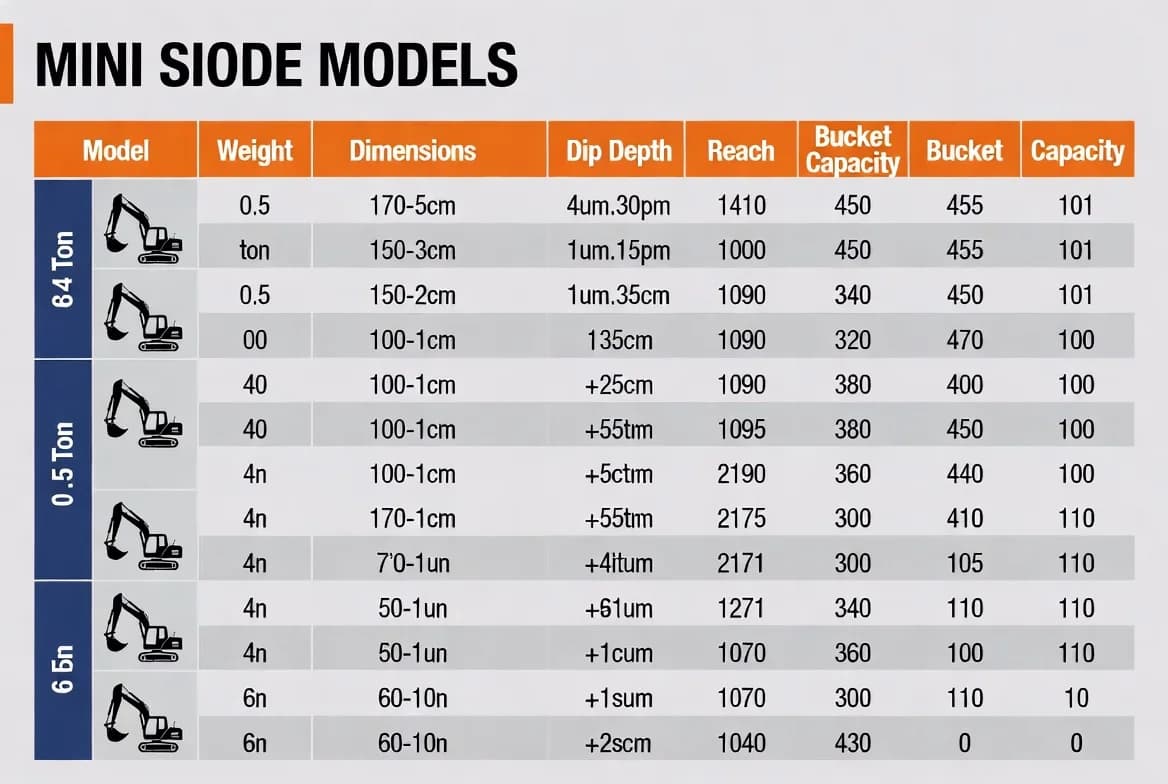
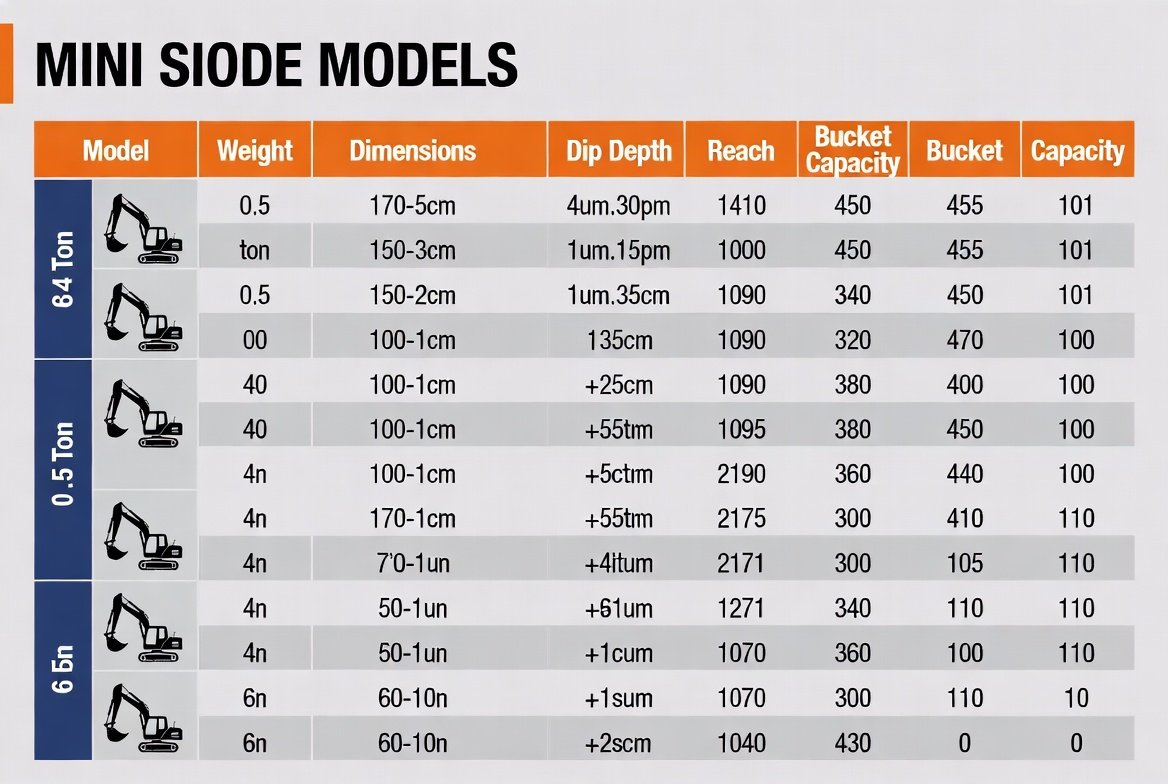
These are the smallest production excavators available. Typical overall widths range from 700 mm to about 1,000 mm, allowing them to pass through standard doorways or garden gates. Dig depths are modest—usually 1.5 to 2.2 metres—and bucket capacities are measured in tens of litres rather than cubic metres. Despite their size, modern ultra-compacts feature full hydraulic systems, 360-degree rotation, and the ability to accept a limited range of attachments such as augers and small breakers. They are ideal for interior demolition, tight courtyard work, cemetery maintenance, and any application where the machine must be carried up stairs or into a basement. Ground pressure is extremely low, making them suitable for delicate surfaces.
Compact Class (1.5 – 3.5 tonnes)
This is the most popular segment of the mini-excavator market and the workhorse of residential and light commercial contractors. Machines in this range typically offer dig depths of 2.5 to 3.5 metres, operating widths of 1.0 to 1.5 metres, and the ability to be transported on a standard dual-axle trailer behind a one-tonne pickup truck. Many models feature variable-width undercarriages that can expand for greater stability when digging and retract for transport or gate access. Zero-tail-swing designs are common, allowing the machine to rotate fully within its own track footprint—an invaluable feature when working against a house foundation or in a narrow alley. Auxiliary hydraulic circuits are standard, supporting a wide range of attachments including hydraulic thumbs, grapples, and tilt buckets.
Mid-Size Mini / Midi Transition (3.5 – 6 tonnes)
As weight increases past approximately 3.5 tonnes, dig depth, breakout force, and hydraulic performance rise significantly. Dig depths of 3.5 to 4.5 metres become common, and bucket capacities can approach 0.2–0.3 cubic metres. These machines begin to blur the line between true minis and the smaller end of the midi-excavator class. They remain transportable on larger trailers but may require a heavier tow vehicle and, in some jurisdictions, a commercial driver’s licence. The additional weight provides better stability when using heavier attachments such as hydraulic hammers or larger tiltrotators. Many contractors who regularly perform both residential and light commercial work keep a machine in this size range as their primary unit.
Key Dimensional Specifications to Compare
When evaluating mini excavators, several dimensional and performance figures should be examined side by side. Overall width (with tracks expanded and retracted if variable) determines site access. Tail-swing radius or the presence of a zero-tail-swing design affects working clearance. Maximum dig depth and maximum reach at ground level define the working envelope. Dump height is important when loading trucks or placing material into a hopper. Ground clearance affects the ability to travel over rough terrain or debris. Finally, the transport weight (including standard bucket and full fluids) dictates trailer and tow-vehicle requirements.
Rubber tracks versus steel tracks is another important choice. Rubber tracks are quieter, cause less surface damage, and are preferred for residential and finished-site work. Steel tracks offer superior traction and longevity in rocky or abrasive conditions but can damage pavement and are heavier. Some manufacturers offer hybrid solutions with rubber pads bolted to steel links.
Performance Metrics Beyond Weight
Operating weight alone does not tell the whole story. Engine power (typically 10–50 kW in the mini range), hydraulic pump flow (litres per minute), and system pressure determine how quickly the machine can dig and how effectively it can power attachments. Boom and stick geometry also matter: some machines are optimised for dig depth, others for reach or for working close to the tracks. Long-reach configurations are available on certain models for specialised applications such as dredging or working over embankments.
Cab versus canopy is a comfort and safety consideration. Open canopies keep the operator cooler in hot climates and provide excellent visibility, but enclosed cabs with heating, air-conditioning, and ROPS/FOPS protection are preferred for year-round professional use and for sites with falling-object hazards.
Selecting Within the Mini Range – Decision Framework
Begin by measuring the narrowest access point the machine must pass through and the tightest working radius required. Then determine the deepest excavation and the farthest reach needed. Cross-reference these requirements with manufacturer specification sheets. Next, consider the primary material and whether a hydraulic hammer or other high-flow attachment will be used regularly. Finally, evaluate transport logistics: can the machine be moved with existing vehicles and trailers, or will additional equipment be required?
Many dealers offer demonstration programs or short-term rentals that allow contractors to test a machine on an actual job before committing to purchase. Taking advantage of these opportunities is highly recommended, especially when moving between size classes for the first time. Operator feedback on visibility, control feel, and daily serviceability should also be given significant weight—an excellent machine on paper that is uncomfortable or difficult to maintain will not deliver its theoretical productivity.
In conclusion, the mini-excavator category offers a finely graduated range of machines capable of handling almost any light-to-medium digging task. By carefully matching width, dig depth, breakout force, hydraulic capacity, and transportability to the specific requirements of the work, contractors can achieve high productivity with minimal site disruption and reasonable ownership costs. The continued evolution of compact hydraulic technology means that today’s mini excavators deliver performance that would have required much larger machines only a decade or two ago.
Get More Expert Guides & Updates
Subscribe for Machinery.org guide updates and product learning content.