
Owning a mini excavator often means moving it from one site to another. Transportation is where many accidents and expensive mistakes occur, not because the machine itself is hard to move, but because people underestimate the details. A machine that digs beautifully can become a highway hazard if it is loaded on the wrong trailer, positioned poorly, or tied down incorrectly. Safe transport protects the excavator, the trailer, other road users, and the business that owns the equipment.
A transport guide begins with one basic principle: the tow vehicle, trailer, and tie-down equipment must all be matched to the machine. It is not enough that the excavator fits. The combined setup must also satisfy weight capacity, axle ratings, braking requirements, deck width, ramp strength, and local road rules. Loading and unloading technique then becomes the next major safety issue. A stable trailer on level ground, properly aligned ramps, and a low, controlled loading angle are far safer than rushed loading on uneven surfaces.
The third pillar of transport safety is securement. Tie-downs should hold the machine in place during braking, turning, vibration, and emergency maneuvers. That means using rated chains or heavy-duty straps at appropriate points on both the machine and trailer. The bucket, blade, and boom position also matter because they affect weight distribution and movement. This article explains the complete transport process from planning to final road check.
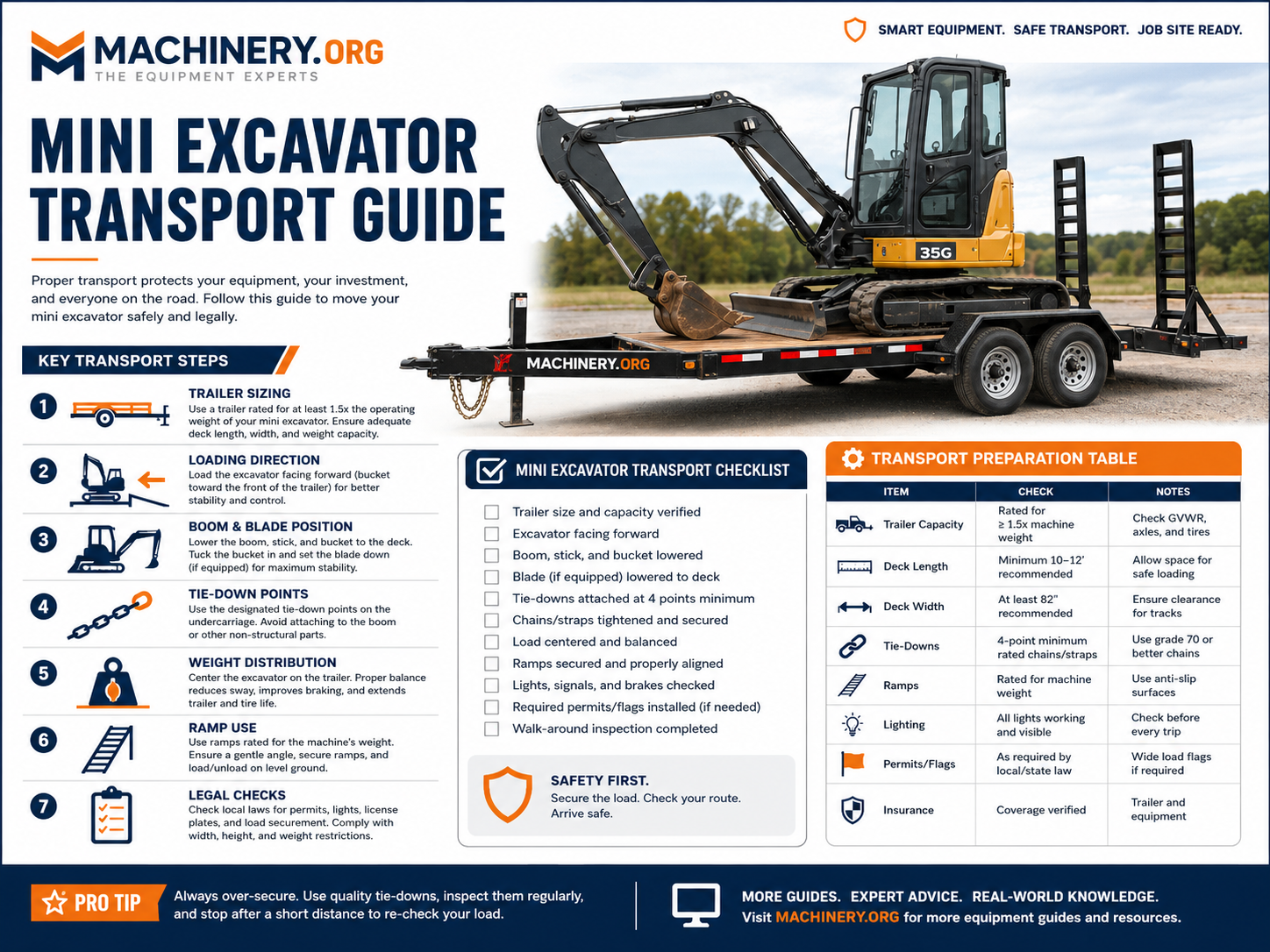
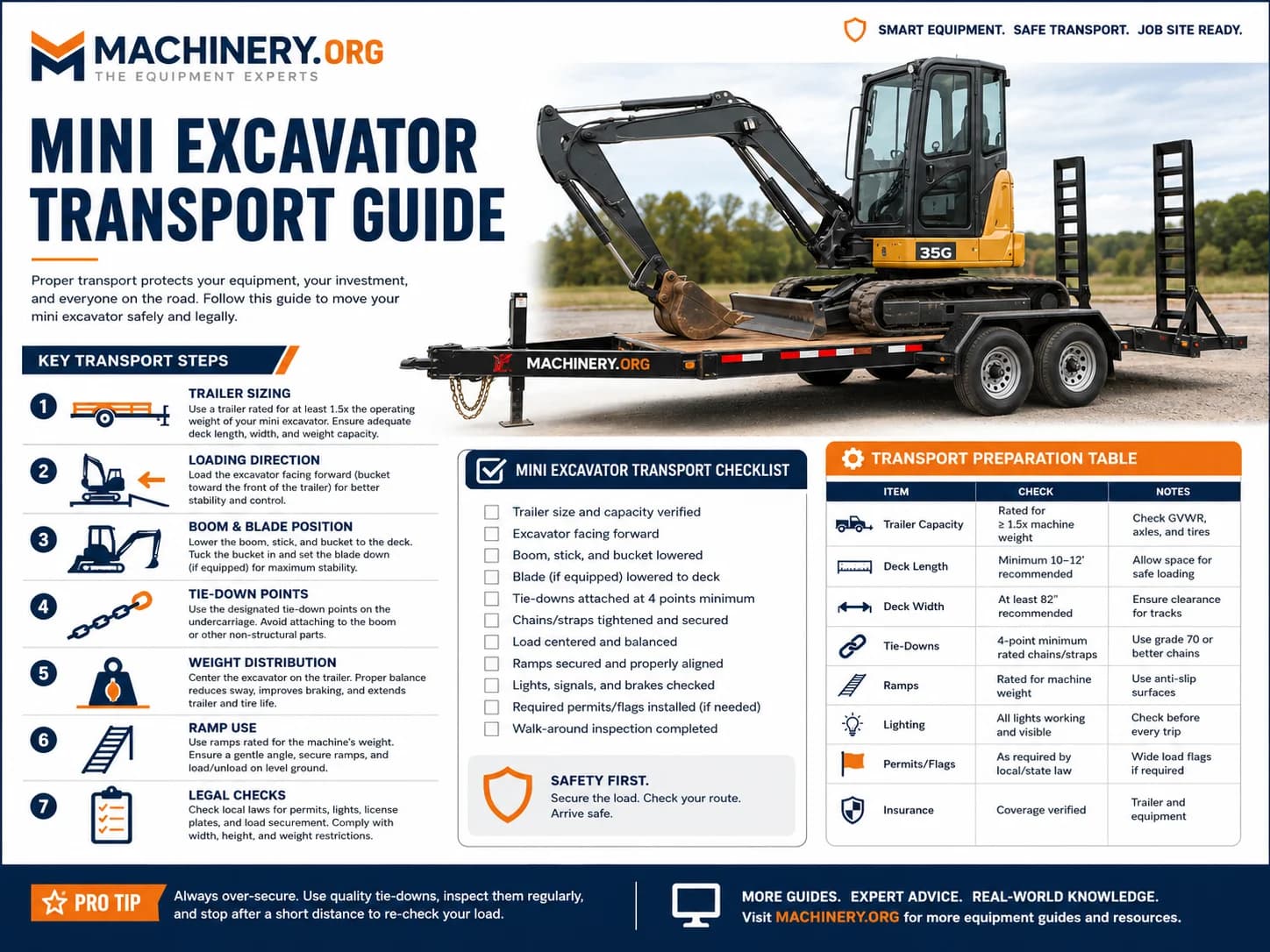
Figure 29.1. Machinery.org transport guide covering trailer sizing, loading direction, tie-down points, and legal checks.
Choosing the right trailer
The trailer must be rated for the machine and for how it will be carried in the real world. That means accounting not only for the excavator operating weight, but also for attachments, fuel, tie-down gear, and the trailer’s own rated structure. A practical rule is to leave a comfortable safety margin rather than choosing a trailer that only barely covers the stated machine weight. Deck length and width matter as well. The machine should load comfortably and sit with enough room for safe attachment positioning and securement.
Loading direction and machine position
Once the trailer is selected, loading technique becomes the focus. The trailer should be parked on firm, level ground and connected securely to the tow vehicle if required for stability. Ramps must be rated for the load and aligned correctly. In many cases, loading the mini excavator forward so the bucket faces the front of the trailer provides a stable layout, but owners should always follow manufacturer and trailer guidance. Once on deck, the machine should be centered side-to-side and positioned to maintain proper tongue weight and balanced axle loading.
Boom, bucket, and blade placement
The working equipment should be lowered and tucked for stability. The boom, arm, and bucket should generally be lowered to the deck, and the bucket curled in a controlled position so it is not free to swing or bounce. If the machine has a blade, it should also be set down as recommended. Operators should avoid leaving the attachment in a raised position because that raises the center of gravity and can allow unnecessary movement during transport.
Tie-down methods and securement
Proper securement is the difference between simply loaded and truly road ready. Most mini excavator transport setups rely on four-point securement using rated chains or heavy-duty straps attached to approved tie-down points. Cross tie-downs may help prevent front-to-back or side-to-side movement depending on the arrangement. Chains, hooks, binders, and straps should be inspected before use. Worn, bent, or damaged gear has no place in equipment transport. After securement, the operator should verify that the machine cannot roll, rock, or shift and that no line rubs sharply against components likely to cut or abrade it.
Legal and road-ready checks
Before hitting the road, inspect lights, trailer tires, coupler security, breakaway system if equipped, and any local legal requirements concerning width, permits, flags, or plate visibility. Transport law varies by location, so operators should know whether special marking or registration rules apply. It is also good practice to stop after the first portion of the trip and re-check tie-down tension. Vibration can settle the load and slightly loosen securement gear even when the original setup was correct.
Loading and unloading hazards
Many incidents happen while the machine is entering or leaving the trailer. Wet ramps, excessive loading angles, poor alignment, and unstable ground all increase risk. Operators should move slowly, keep the machine centered, and avoid distraction during the process. If the trailer feels unstable or the angle looks unsafe, stop and correct the setup. This is not the stage to save time by cutting corners.
Transport checklist essentials
Verify trailer and tow vehicle capacity before loading.
Load on level ground with ramps aligned and secure.
Center the excavator and maintain correct weight distribution.
Use rated four-point tie-down securement at approved points.
Check lights, tires, brakes, and re-check securement after initial travel.
Why transport discipline matters
Transport mistakes can damage more than the excavator. They can damage the trailer, create liability exposure, and put other road users at risk. A business that treats transport as a professional procedure rather than a casual task will usually see fewer incidents, longer equipment life, and better compliance with legal requirements. In that sense, transport skill is part of good equipment ownership, not a separate concern.
There is also a brand and customer-service side to transport discipline. When a contractor arrives with equipment that is loaded professionally and safely, it signals competence before the work even begins. On the other hand, poorly secured machines, bent ramps, or worn tie-down gear suggest weak procedures across the business. Transport is therefore both a safety practice and a reflection of professionalism.
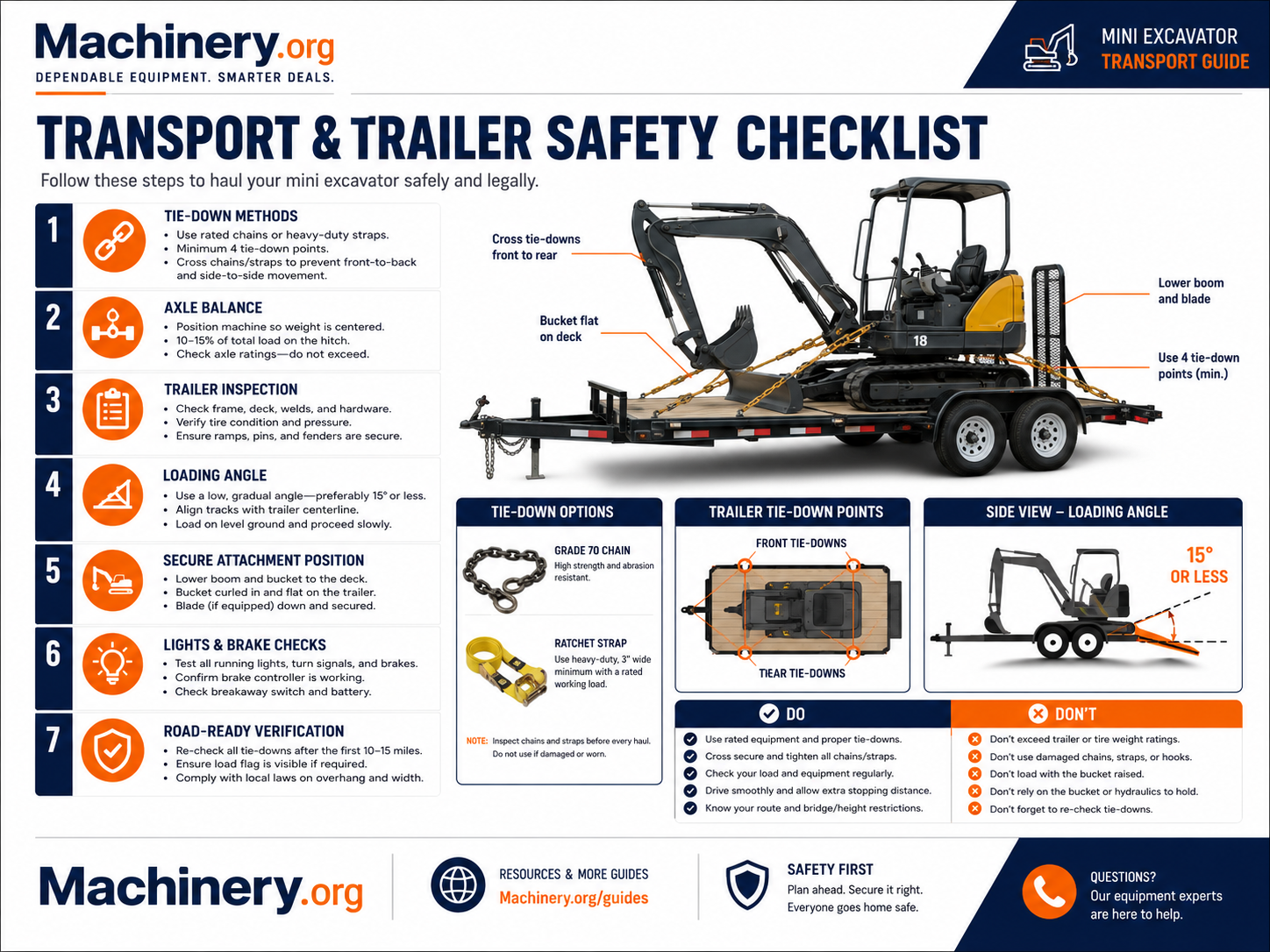
Figure 29.2. Machinery.org transport and trailer safety checklist showing secure loading angles, tie-down methods, and road-ready verification.
Frequently Asked Questions
Can I use any trailer if the excavator physically fits on it?
No. Physical fit alone is not enough. Capacity, axle ratings, brake requirements, ramp strength, and securement points all matter.
How many tie-down points should I use?
A four-point securement method is a common minimum approach, but the exact requirement should follow regulations and manufacturer guidance.
Should I check the load again during the trip?
Yes. Re-checking tie-downs after the first stretch of travel is a best practice because the machine can settle and loosen the setup slightly.
Key Takeaway
Safe mini excavator transport depends on three things: the right trailer, the right loading process, and the right securement. Treat all three with discipline every time the machine moves.
Get More Expert Guides & Updates
Subscribe for Machinery.org guide updates and product learning content.