
Mini excavators have become one of the most versatile machines in modern equipment ownership. Their compact size allows access where larger equipment cannot go, but they still deliver real digging force, hydraulic power, and attachment flexibility. That combination makes them valuable across multiple industries. Landscaping contractors use them for shaping outdoor spaces and installing drainage. Farmers use them for fencing, ditch cleanup, and property maintenance. Construction crews depend on them for trenching, utility prep, backfilling, and work in tight access areas.
What makes this versatility possible is not just the machine itself, but the way it can be matched to different tools and tasks. A bucket, thumb, auger, grapple, or breaker can transform the same excavator from a trenching machine into a planting tool, a post-hole tool, a material-handling helper, or a demolition support unit. For small businesses and owner-operators, that versatility is especially valuable because one machine can serve multiple revenue streams or seasonal work patterns.
This article looks at the real-world uses of mini excavators in landscaping, farming, and construction. It also explains how to think about the right attachments and machine features for each type of work.
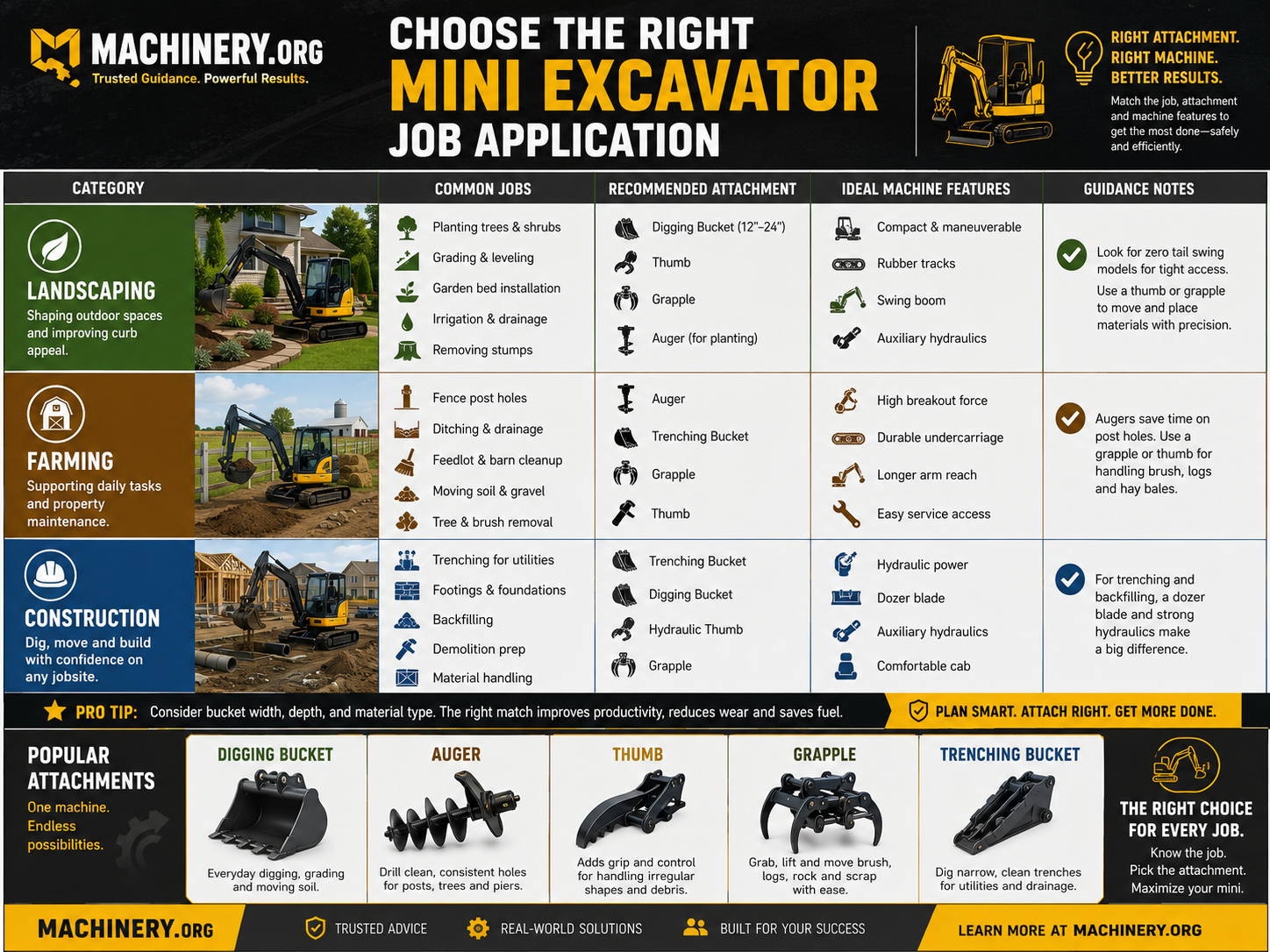
Figure 30.1. Machinery.org guide showing common job applications and recommended attachments for landscaping, farming, and construction.
Landscaping applications
In landscaping, the mini excavator is often the machine that turns ideas into precise site changes. It can dig planting holes for shrubs and trees, shape garden beds, cut drainage trenches, and help create retaining wall foundations or pond features. Because many landscape jobs are performed near homes, fences, patios, and finished surfaces, compact size and maneuverability matter a great deal. Rubber tracks, zero-tail-swing designs, and smooth control feel are especially helpful in this environment. Operators also benefit from attachments such as digging buckets, grading buckets, thumbs, and augers depending on the work mix.
Farming and property maintenance uses
On farms and rural properties, the mini excavator often becomes a practical utility machine. It can dig post holes and fence-line trenches, clean drainage ditches, remove small stumps, prepare pads for sheds or feed areas, and move materials with the right attachment. Farmers often value not just the digging ability, but the machine’s ability to work in muddy or uneven areas where precision still matters. A thumb or grapple can help with brush and debris, while an auger can speed up fencing tasks significantly. For many small farms, a compact excavator becomes one of the most flexible support machines on the property.
Construction and utility work
Construction is where many people first picture a mini excavator, and for good reason. They are excellent for trenching in tight spaces, preparing footings, digging around structures, assisting with utility line installation, and handling backfill in areas where larger excavators would be awkward. They are also commonly used for small demolition, site cleanup, and support tasks on residential and light commercial projects. A dozer blade adds extra usefulness for light grading and spoil control. Construction users often prioritize hydraulic power, operator comfort, and attachment compatibility because their work can vary from day to day.
Attachments that expand versatility
The bucket is still the foundation attachment, but it is only the beginning. Narrow trenching buckets improve precision for utility work. Augers drill consistent holes for fencing and planting. Hydraulic thumbs improve handling of irregular material such as rocks, branches, or broken concrete. Grapples increase material-handling ability. Breakers add light demolition power. Rakes and grading tools help in landscape cleanup and finishing. The more varied the job mix, the more valuable the attachment ecosystem becomes. This is why attachment compatibility and hydraulic support should be considered early when choosing the machine.
Choosing features based on the job
Not every mini excavator is the same. A landscaper may prioritize compact size, low ground disturbance, and precision around finished spaces. A farmer may care more about durability, simple maintenance, and practical attachment use. A construction contractor may place higher value on breakout force, auxiliary hydraulics, comfortable cab design, and the ability to work productively for longer hours. Matching the machine to the primary work environment improves both performance and satisfaction over time.
Business value of a multi-use machine
One reason mini excavators are so widely purchased is that they support multiple business models. A contractor can use the same machine for trenching early in the week, grading and landscaping later in the week, and small demolition or material handling on another project. That flexibility improves utilization, which is one of the most important drivers of return on investment. For owner-operators especially, a highly adaptable machine can mean more billable work without the cost of owning multiple specialized machines.
Key job examples by sector
Landscaping: grading and leveling, planting holes, drainage trenches, pond shaping, and bed preparation.
Farming: fencing, ditch cleanup, irrigation trenches, pad preparation, and moving brush or materials.
Construction: utility trenching, footings, backfilling, demolition prep, and site cleanup.
Why the mini excavator remains a favorite
Across all three sectors, the mini excavator succeeds because it combines access, control, and adaptability. It can reach into jobsites that would be difficult for a larger machine while still doing serious work. That is why so many buyers see it not just as a single-purpose machine, but as a platform for many tasks. The more thoughtfully the machine and attachments are selected, the more value it creates over time.
A final advantage is ownership flexibility. Mini excavators are often easier to transport, easier to store, and easier to match with support equipment than larger excavators. That lowers the barrier for smaller contractors and landowners who still need real capability. In many cases, the machine becomes the first serious step into mechanized digging and site work, and because it can adapt to so many tasks, it often remains one of the most used pieces of equipment in the fleet for years.
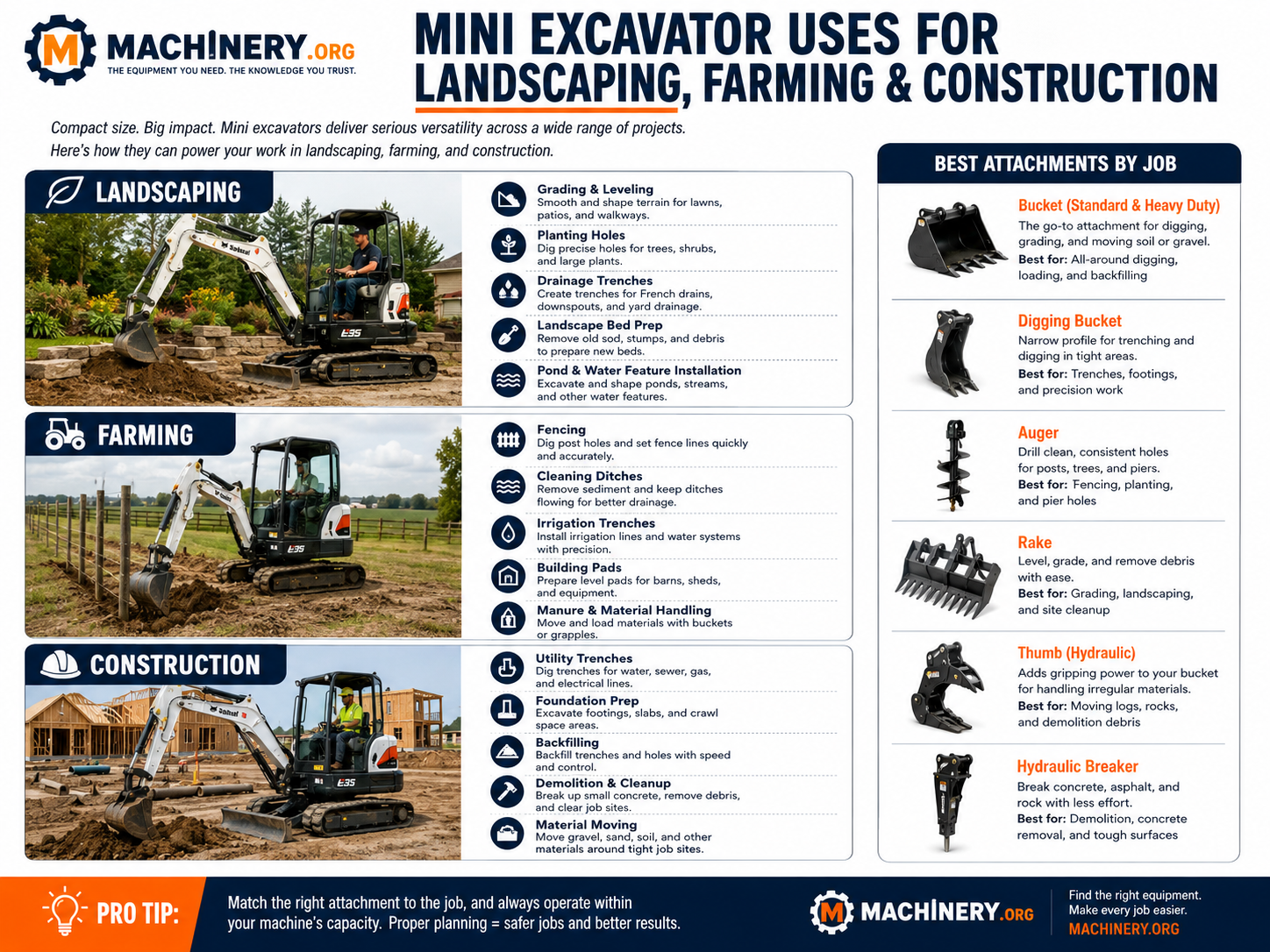
Figure 30.2. Machinery.org infographic explaining typical mini excavator uses and best attachments by job type.
Frequently Asked Questions
What is a mini excavator most commonly used for?
Digging and trenching are the most common uses, but landscaping, farming, material handling, and light demolition are also very common.
Are mini excavators good for farms?
Yes. They are useful for fencing, drainage, ditch maintenance, stump work, pad preparation, and general property improvement.
Which attachment adds the most versatility?
For many owners it is a thumb or grapple, because it greatly improves the machine’s ability to handle irregular material in addition to digging.
Key Takeaway
Mini excavators create value because they can move across industries and tasks. With the right attachments and the right size machine, one excavator can support landscaping, farming, and construction work effectively.
Get More Expert Guides & Updates
Subscribe for Machinery.org guide updates and product learning content.