
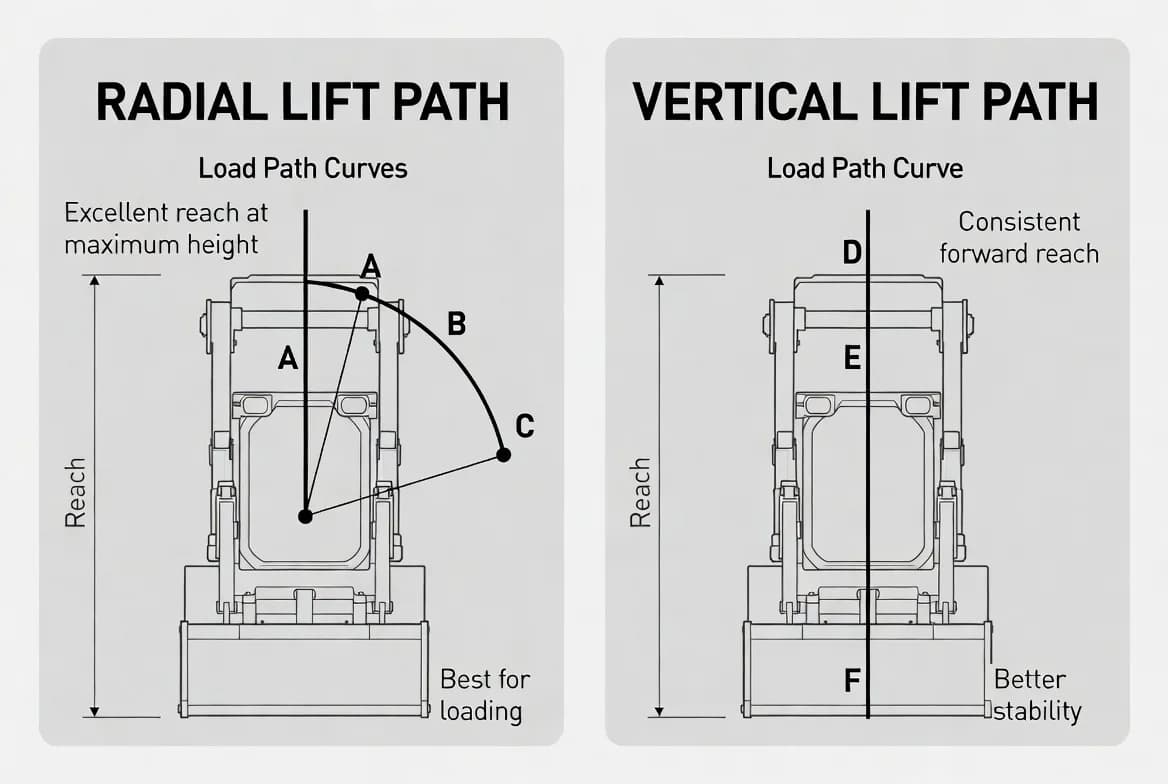
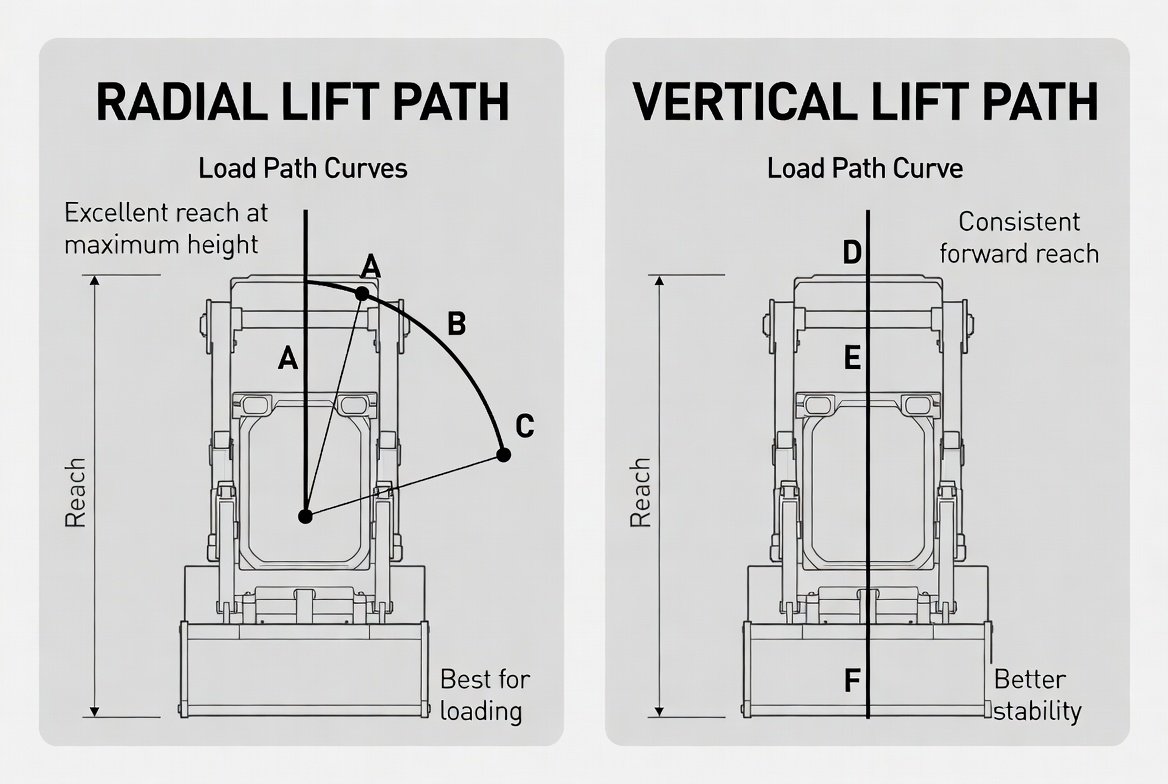
Radial-lift and vertical-lift geometries describe the path the loader arms follow as the attachment is raised. In a radial-lift design the arms pivot so that the bucket or forks move in an arc; maximum reach occurs at mid-height and is useful for digging, grading and reaching over obstacles. In a vertical-lift design the linkage keeps the attachment moving more nearly straight upward, providing greater lift height and better load retention when loading high-sided trucks or stacking. Vertical-lift machines generally offer higher rated operating capacity at full height. The choice depends on whether the primary tasks emphasise mid-height reach and digging force or maximum dump height and truck-loading efficiency.
When comparing specific models, always consult the current manufacturer specification sheets and load charts for the exact configuration under consideration. Published typical ranges above are drawn from industry sources current as of 2025–2026 and are intended for orientation; individual model performance can vary with options, undercarriage, and attachment configuration. A structured decision matrix that weights the factors most important to the intended application—terrain, duty cycle, transport, residual value, and operator preference—produces the most reliable selection.
Total cost of ownership remains the ultimate measure. Capital cost, fuel or energy, maintenance, transport, residual value and downtime must all be quantified over the planned ownership period. Side-by-side demonstration on the actual job site, when possible, remains the most conclusive validation of which machine will deliver the higher productivity and lower risk for a given contractor or fleet.
Get More Expert Guides & Updates
Subscribe for Machinery.org guide updates and product learning content.