
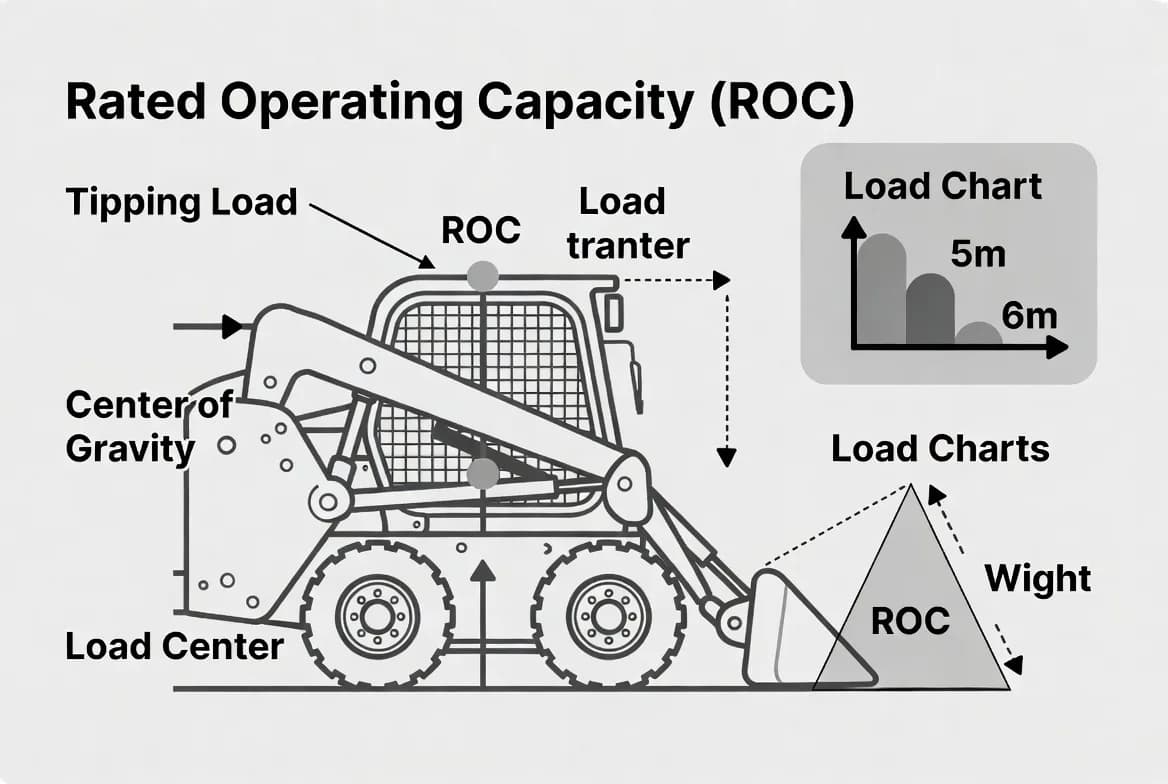
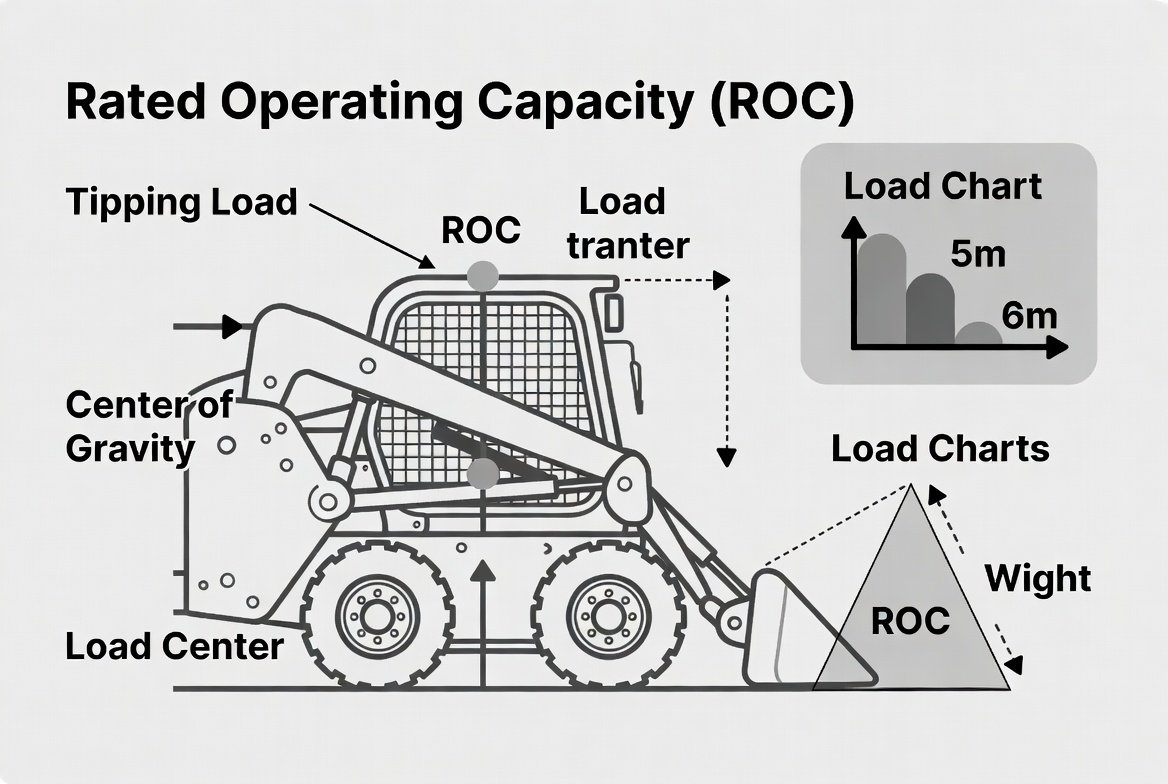
Rated Operating Capacity (ROC) is the single most important performance specification for a skid steer or compact track loader when the machine is used for lifting and placing material. It defines the maximum load the machine can safely carry under specified conditions without tipping. Understanding how ROC is determined, what factors reduce it in the field, and how it relates to tipping load is essential for safe and productive operation.
Industry standards (primarily SAE J818 for skid steers and similar practices for CTLs) define ROC as 50 percent of the tipping load for wheeled skid steers and 35 percent of the tipping load for compact track loaders. The tipping load is the vertical load applied at the center of the attachment that causes the rear of the machine (or the uphill track/wheel) to lift off the ground when the machine is on firm, level ground. The lower percentage used for CTLs reflects the different stability characteristics of tracked undercarriages and provides an additional safety margin.
How Tipping Load Is Measured
Manufacturers place the machine on a level surface, attach a calibrated load cell or known weights at the standard load center (usually 500 mm or 20 inches forward of the vertical face of the attachment plate), and gradually increase the load until the rear of the machine begins to rise. The load at which tipping begins is recorded as the tipping load. From this figure the ROC is calculated using the appropriate percentage. The resulting ROC is published in the machine’s specifications and appears on the load charts in the operator’s manual.
It is critical to note that the published ROC assumes ideal conditions: firm level ground, proper tire or track inflation/tension, a standard load center, and no dynamic forces from travel or swinging the load. Any departure from these conditions reduces the actual safe working load.
Factors That Reduce Effective Capacity
Uneven or soft ground reduces stability and therefore effective ROC. Operating on a side slope further decreases capacity; manufacturers publish derating factors or prohibit operation beyond certain slope angles. Traveling with a raised load introduces dynamic forces that can momentarily exceed the static tipping load. Abrupt starts, stops, or turns while carrying a heavy load are among the most common causes of tip-over incidents.
The position of the load relative to the machine also matters. A load carried farther forward than the standard load center increases the tipping moment. Attachments that shift the load center—such as long pallet forks, extendable booms, or certain grapples—require the operator to reduce the carried weight accordingly. Adding counterweight or ballast can increase tipping load and therefore ROC, but only within the limits specified by the manufacturer; excessive ballast can overload axles, tires, or tracks.
Load Charts and Practical Application
Every machine is supplied with a load chart that shows the allowable load at various lift heights and reach distances. The chart already incorporates the ROC safety factor. Operators must consult the chart for the specific attachment and configuration in use. When the attachment is changed, the effective load center may change, and the chart values may no longer apply directly.
In daily operation the safest practice is to treat the published ROC as an absolute maximum under ideal conditions and to apply a further conservative margin when ground conditions, slope, or travel are involved. Many experienced operators limit loads to 70–80 percent of ROC for routine work, reserving the full rating only for carefully controlled lifts on firm level ground.
ROC versus Horsepower and Hydraulic Performance
ROC is a stability rating, not a measure of digging or pushing force. A machine with high ROC may still lack the hydraulic power or breakout force needed for hard digging. Conversely, a machine with excellent digging performance may have a modest ROC if its weight distribution or geometry is optimized for ground engagement rather than lifting. Both specifications must be evaluated together when selecting a machine for mixed-duty work.
In summary, Rated Operating Capacity is a standardized, conservative measure of lifting ability derived from tipping-load tests. It provides a reliable baseline for safe operation, but real-world conditions almost always require the operator to work below the published figure. Understanding the underlying tipping-load concept, the effect of load center, and the influence of ground and operating conditions is the foundation of safe load handling with skid steers and compact track loaders.
Get More Expert Guides & Updates
Subscribe for Machinery.org guide updates and product learning content.