

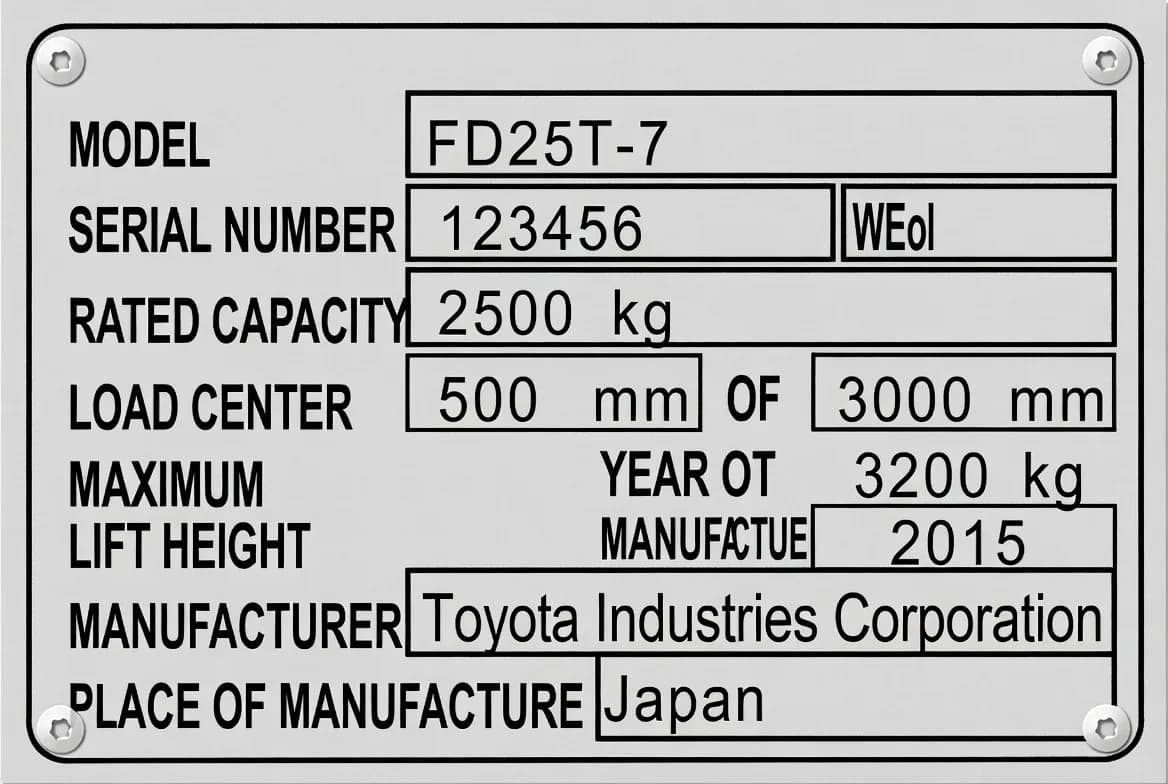

The data plate (also called the nameplate or capacity plate) is the official statement of the truck’s identity and rated capabilities. It is required by safety standards and must remain legible and accurate for the life of the truck. Operators and supervisors must know how to read and interpret every field on the plate.
Typical information includes the manufacturer’s name, model number, serial number, and year of manufacture. These identify the specific truck for parts, service, and regulatory purposes. The rated capacity is stated together with the load center at which that capacity applies (commonly 24 inches or 500 mm) and often with the maximum lift height at which the rating is valid. Additional capacity ratings may appear for different load centers or for use with specific attachments.
The plate also lists the truck’s unladen weight, which is important for determining floor loading, elevator capacity, and transport requirements. Maximum lift height, mast type, and tire size or type may be included. On electric trucks the battery weight or the minimum battery weight required to maintain the rated capacity is frequently shown; using a lighter battery can reduce the truck’s rated capacity.
When attachments are added (side-shifters, clamps, rotators, etc.), the original capacity is no longer valid. A new capacity rating must be calculated—usually by the manufacturer or a qualified engineer—and a supplementary capacity plate installed. Operating with an attachment without an updated rating is a serious safety violation.
The data plate must never be covered, painted over, or removed. If it becomes illegible, a replacement plate with the correct information must be obtained from the manufacturer. Operators should verify the capacity and load-center information at the start of each shift, especially when using different trucks or attachments.
In summary, the data plate is the authoritative source of the truck’s safe operating limits. Reading and respecting it is a fundamental operator responsibility and a cornerstone of forklift safety management.
Get More Expert Guides & Updates
Subscribe for Machinery.org guide updates and product learning content.