

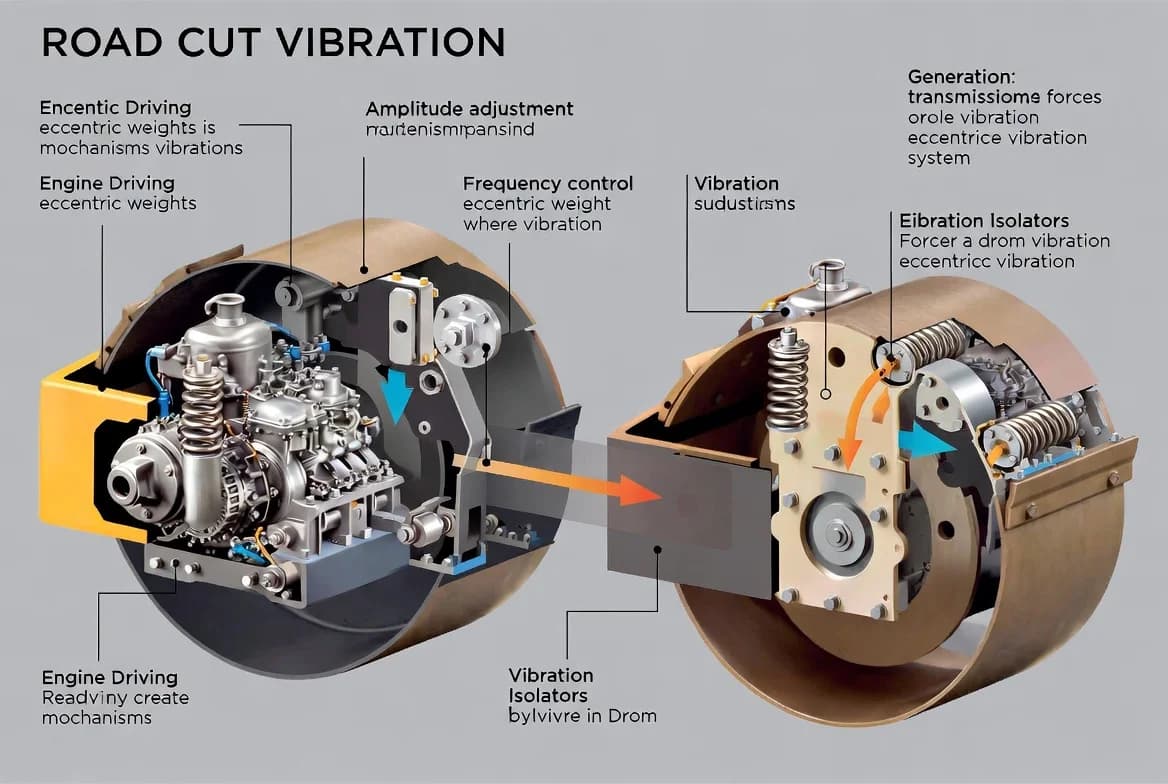

The vibration system is the heart of a modern vibratory roller. It converts engine power into high-frequency dynamic force that, together with the static weight of the machine, densifies the material beneath the drum. Understanding how the system is designed, how amplitude and frequency are controlled, and how to diagnose common problems enables operators and technicians to maintain peak performance.
Most vibratory systems use one or two eccentric shafts mounted inside the drum. An eccentric weight is fixed to each shaft; when the shaft rotates, the offset mass generates a centrifugal force that oscillates the drum. The magnitude of the force is proportional to the eccentric moment and to the square of the rotational speed. Frequency is therefore controlled by the speed of the hydraulic motor or mechanical drive; amplitude is controlled by the size of the eccentric mass or by the ability to shift the mass (variable-amplitude designs). High amplitude (typically 1.5–2.0 mm) is used for thick lifts and coarse materials; low amplitude (0.3–0.8 mm) is used for thin lifts and finishing. Frequency is usually in the range of 25–50 Hz. Automatic systems that sense drum response and adjust settings in real time help prevent over-compaction or drum bounce.
Isolation mounts—rubber or spring elements between the drum and the roller frame—prevent the high-frequency energy from being transmitted into the operator platform and the machine structure. Worn isolators allow excessive vibration into the chassis, leading to accelerated wear and operator discomfort. Isolators should be inspected regularly and replaced when cracking or permanent set is observed. Loss of vibration can result from a failed hydraulic motor, a broken drive coupling, a seized eccentric bearing, or a control-system fault. Unusual noise or vibration in the frame often indicates failed isolators or imbalance. Modern rollers display fault codes that guide diagnosis. In summary, the vibration system delivers the dynamic energy that makes vibratory rollers efficient. Correct selection of amplitude and frequency, disciplined maintenance of isolators and bearings, and prompt diagnosis of faults keep the system performing at design capacity.
Get More Expert Guides & Updates
Subscribe for Machinery.org guide updates and product learning content.