
Loading and unloading a skid steer or compact track loader onto a trailer is a routine but high-risk activity. A significant percentage of equipment-related injuries and machine damage occur during transport operations. A standardized, disciplined procedure reduces these risks to a minimum.
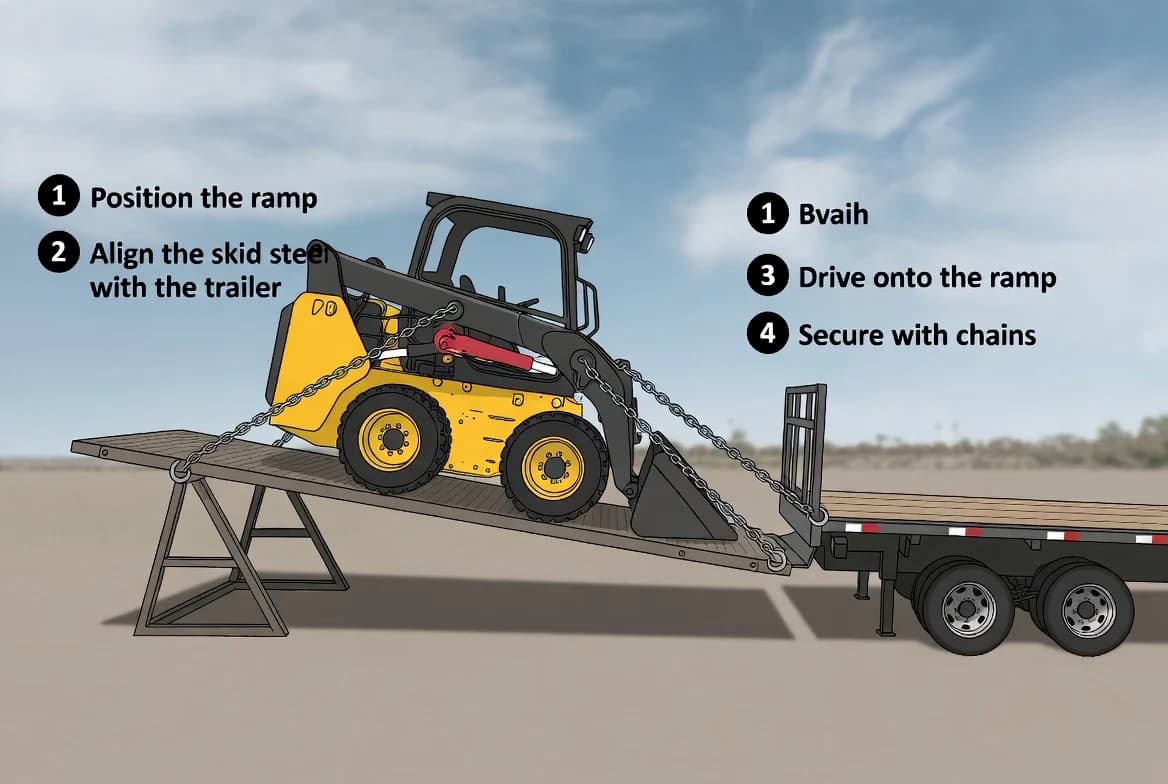
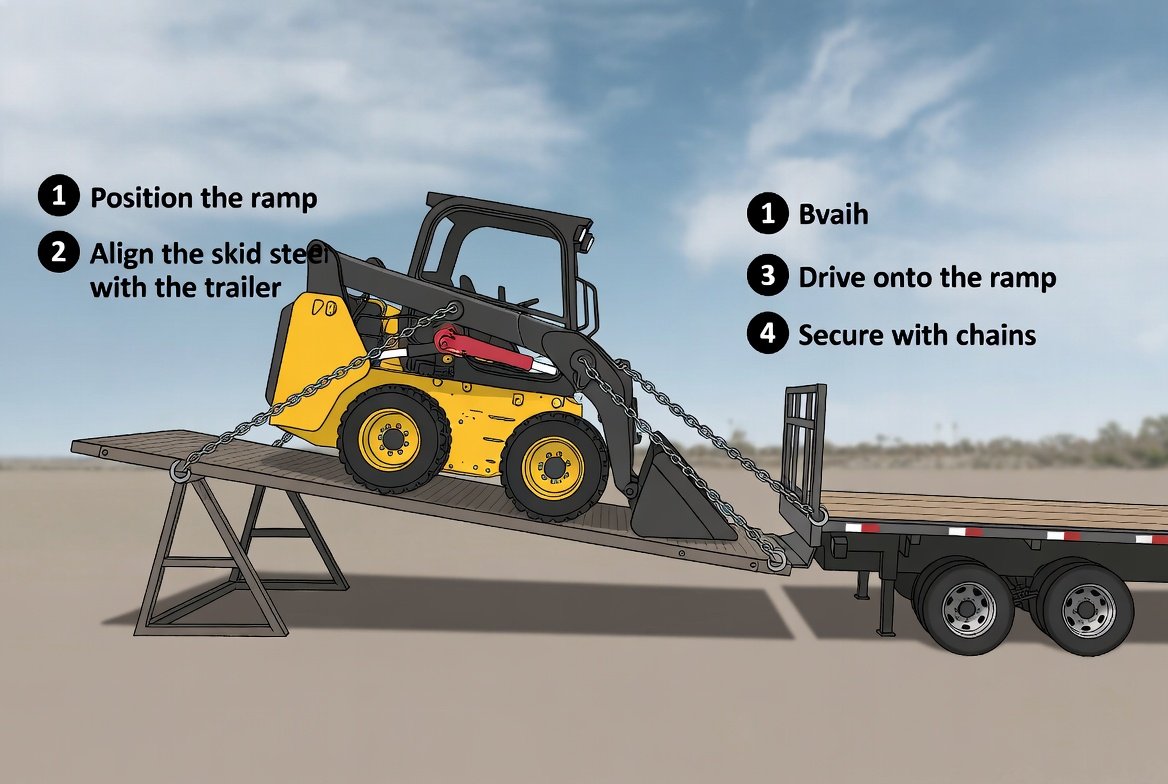
Begin by selecting a trailer whose payload capacity exceeds the machine’s operating weight by a comfortable margin. The trailer should have an appropriate deck length, adequate tie-down points, and ramps or a tilt mechanism that provides a low loading angle—ideally 15 degrees or less. Steeper ramps increase the chance of the machine tipping backward or losing traction.
Position the trailer on firm, level ground and chock the wheels. If the trailer is attached to a tow vehicle, place the vehicle in park with the parking brake applied and, if possible, chock the tow vehicle as well. Inspect the ramps for damage, debris, or ice. Clear any obstacles from the loading path.
Loading Procedure
Align the skid steer squarely with the ramps. Raise the attachment slightly so that it clears the ramp surface, but keep it low enough to maintain a low center of gravity. Drive or track slowly and steadily up the ramps, keeping the machine centered. Avoid sudden steering inputs or speed changes. Once the machine is fully on the deck, lower the attachment to the deck or onto a wooden block to increase stability. Engage the parking brake and, if equipped, the neutral lock or travel lock.
Secure the machine with at least four chains or heavy-duty straps—typically two at the front of the undercarriage or frame and two at the rear. Attach the chains only to structural points designated by the manufacturer; never attach to lift arms, cylinders, or sheet-metal components. Tighten the chains evenly so that the machine cannot shift in any direction. After a short distance of travel, stop and re-check chain tension, because initial settling can loosen the restraints.
Unloading and Additional Precautions
Unloading reverses the process. Remove the chains, ensure the ramps are properly positioned, and drive slowly down the ramps while keeping the machine centered and the attachment low. Be especially cautious if the ground at the destination is soft or sloping.
Never attempt to load or unload on a soft shoulder, a steep side slope, or in high winds that could affect stability. If the machine is equipped with a ride-control or self-leveling system, follow the manufacturer’s recommendations for transport configuration. Finally, ensure that all lighting, flags, and oversize markings required by local regulations are in place before entering public roads.
In summary, safe loading and unloading depends on proper equipment, a controlled environment, slow and deliberate machine movement, robust securement, and strict adherence to a consistent procedure. Treating transport as a critical safety operation rather than a routine chore prevents most incidents.
Get More Expert Guides & Updates
Subscribe for Machinery.org guide updates and product learning content.