
Skid steer attachments turn one loader into a multi-purpose work system. Buckets, pallet forks, augers, grapples, brooms, trenchers, breakers, planers, and cutters allow the same machine to serve construction, agriculture, landscaping, snow removal, and property maintenance. Attachments also represent a major investment. Neglected cutting edges, dry pivot pins, leaking hoses, dirty couplers, bent fork tines, loose chains, or poor storage can shorten tool life and damage the skid steer hydraulic system.
Attachment maintenance is most effective when it is specific to the tool. A bucket needs inspection of its cutting edge and wear surfaces. An auger needs teeth, gearbox, shaft, hoses, and grease points checked. A grapple adds cylinders, pins, hoses, and tine wear. A broom requires bristle and drive-system inspection. A trencher needs chain tension, teeth, sprockets, skid shoes, and hydraulic lines maintained. The quick-attach interface and hydraulic couplers must be checked on every tool because they connect the attachment safely to the carrier.
This guide explains daily inspection, scheduled service, storage, hose protection, coupler cleanliness, and recordkeeping. Always follow the attachment manufacturer’s manual because grease type, torque, chain tension, oil level, and replacement limits vary by model.
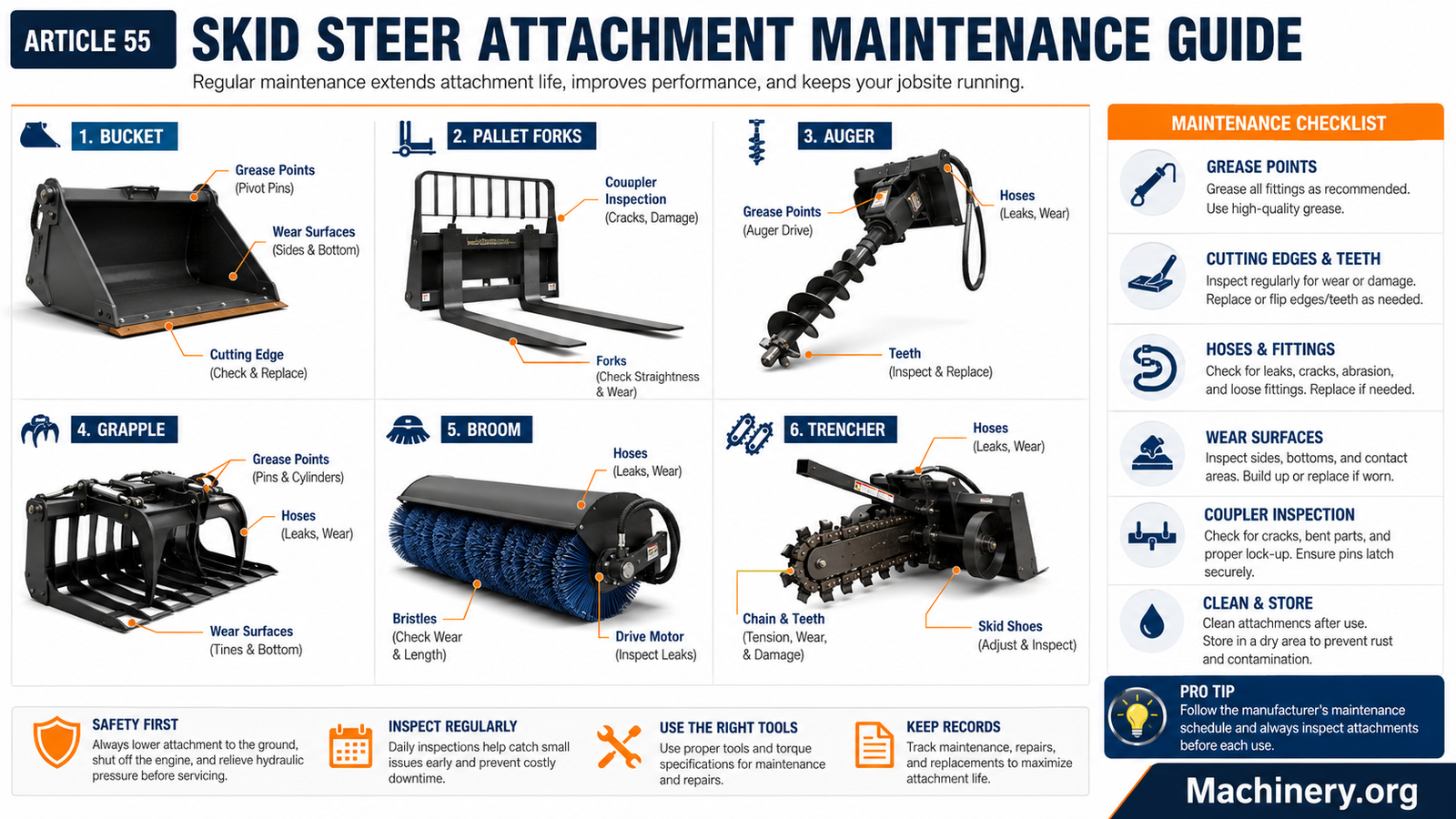
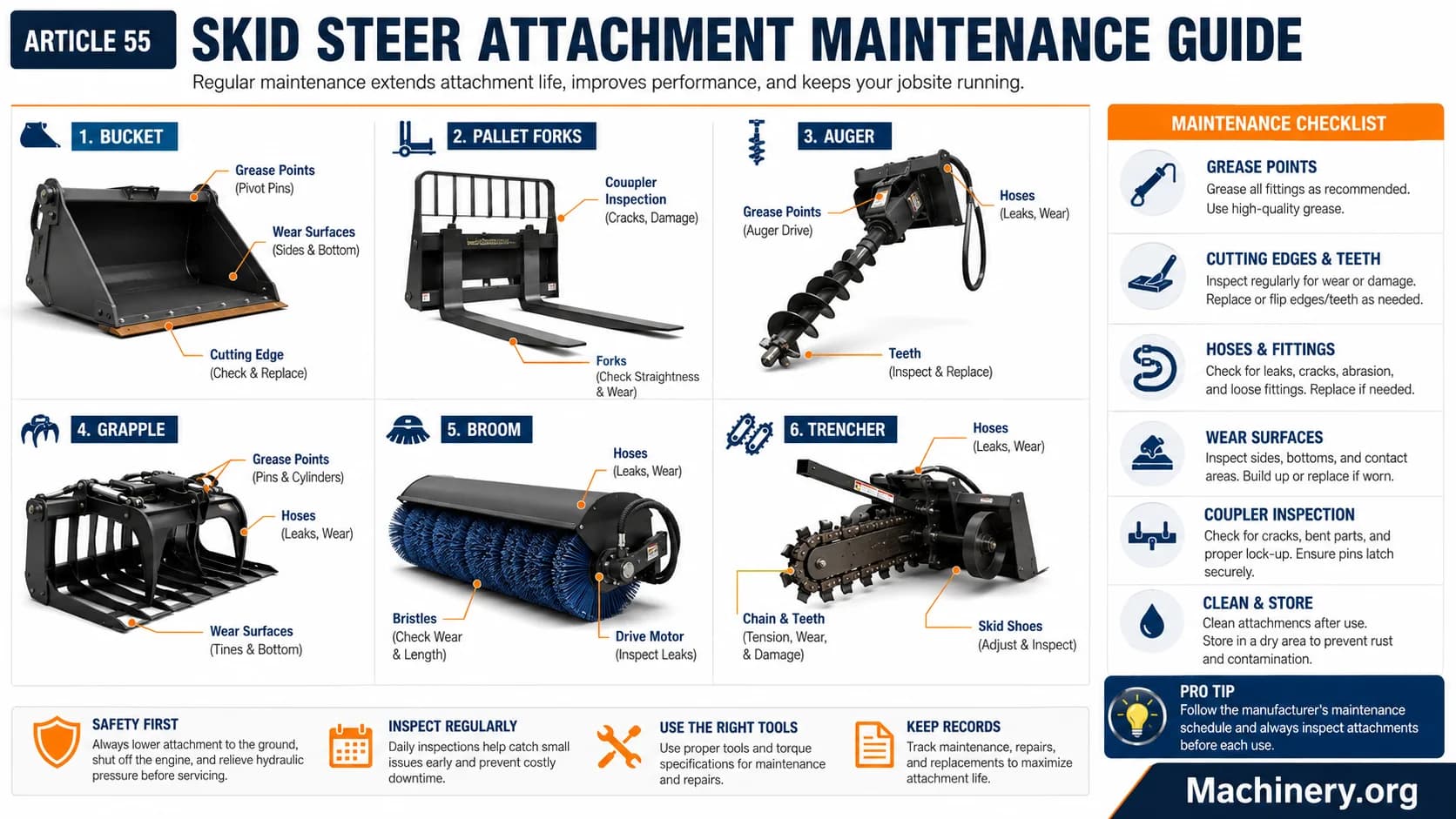
Figure 55.1. Maintenance points for common skid steer attachments including buckets, forks, augers, grapples, brooms, and trenchers.
General attachment inspection
Lower the attachment to stable ground, shut down the skid steer, remove the key, and relieve hydraulic pressure before service. Walk around the tool and look for cracks, bent structure, missing hardware, damaged guards, leaking hoses, worn pins, loose retainers, and contact surfaces that have become thin or rounded. Clean dirt and packed material before inspection because buildup can hide damage.
Check the attachment plate for straightness and cracks. Inspect upper hooks, lower locking areas, and pin engagement surfaces. A damaged interface may prevent full locking. Confirm that hydraulic hoses are the correct length and routing. Hoses should not stretch at full movement, rub sharp edges, or hang where tires, tracks, or material can damage them.
Bucket and fork maintenance
Buckets wear at the cutting edge, side plates, bottom, heel, and mounting points. Replace or reverse bolt-on cutting edges before the bucket structure is exposed. Inspect teeth and adapters for missing retainers and uneven wear. Build-up or wear plates may be appropriate for abrasive applications, but reinforcement should not create excessive attachment weight.
Pallet forks should be kept straight and matched as a pair. Inspect tines for cracks, heel wear, bending, and thickness loss. Check the fork frame, locking pins, backrest, and carriage welds. Never heat, weld, or straighten a damaged fork without approved procedures because improper repair can change the metal strength. Confirm capacity markings remain visible.
Auger, grapple, broom, and trencher maintenance
Augers require inspection of teeth, pilot points, flights, shafts, pins, gearbox oil, hoses, and grease points. Replace worn teeth before drilling performance drops and vibration rises. Grapples need lubrication of pivot pins and inspection of cylinder rods, hoses, tines, stops, and synchronization. Brooms require bristle measurement, bearing checks, debris removal, and inspection of the drive motor and hoses. Trenchers need correct chain tension, sharp teeth, sound sprockets, maintained skid shoes, and clean hydraulic components.
Hydraulic attachments and contamination control
Before connecting any hydraulic tool, clean the male and female couplers. Inspect O-rings, locking sleeves, and dust caps. Relieve trapped pressure on both the machine and attachment according to the manuals. Forcing a coupler can damage seals and introduce contamination. Cap disconnected lines and store hoses off the ground. Tools with case drains must be connected correctly before operation because a blocked or missing case-drain line can damage the hydraulic motor.
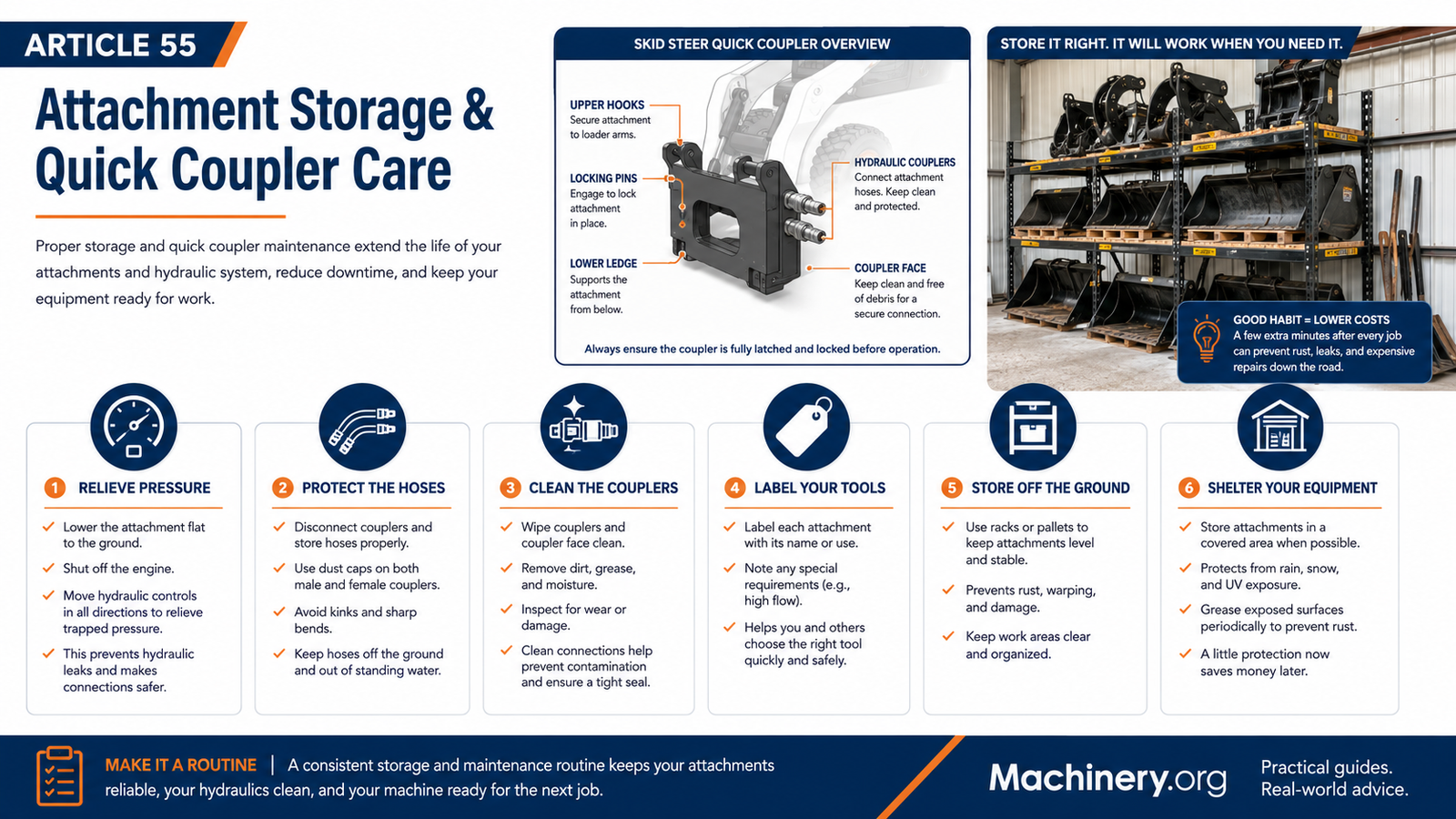
Figure 55.2. Attachment storage and quick-coupler care, including pressure relief, hose protection, clean couplers, labels, racks, and covered storage.
Quick-coupler inspection and safe connection
The attachment must sit fully under the upper hooks before the plate is rotated into position. Lower locking pins or wedges should extend completely through the attachment plate. Hydraulic quick-attach systems should be visually verified rather than trusted only by an indicator. After connection, lower the attachment and apply gentle pressure to confirm engagement before lifting or traveling. Never work beneath a raised attachment or rely on the coupler to support a person.
Storage practices that extend attachment life
Clean soil, salt, fertilizer, concrete, asphalt, and organic material after use.
Lower attachments onto stable pallets, racks, or stands rather than directly into mud or standing water.
Relieve hydraulic pressure and protect couplers with clean caps.
Route hoses without sharp bends and keep them away from the floor and sunlight when possible.
Grease exposed metal and pivot points before long-term storage.
Label attachments with flow requirements, weight, capacity, and any special connection instructions.
Store high-value or precision tools under cover to reduce corrosion and weather damage.
Maintenance records and spare parts
Create a simple record for every attachment. Track operating hours or use cycles, grease service, tooth and edge replacement, hose repairs, gearbox oil, chain adjustment, and structural repair. Records help predict wear and prevent a tool from arriving at the jobsite unprepared. Keep common teeth, cutting edges, pins, retainers, filters, and approved hoses available when downtime is costly.
Operating habits that reduce wear
Attachment life depends on operation as much as maintenance. Use the correct tool for the material. Avoid striking immovable objects at high speed, prying sideways with forks or augers, running a trencher with incorrect chain tension, or forcing a grapple beyond its designed opening. Match hydraulic flow and pressure to the tool. Keep the loader stable and avoid shock loading. A well-operated attachment stays productive longer and places less stress on the skid steer.
When an attachment should be removed from service
Remove the tool from service when structural cracks, bent forks, missing guards, major leaks, damaged locking surfaces, broken chains, loose shafts, exposed hose reinforcement, or uncontrolled movement are found. Tag the attachment clearly and prevent use until repair is completed and inspected. Temporary field fixes should never replace proper structural or hydraulic repair.
Frequently Asked Questions
How often should skid steer attachments be greased?
Follow each attachment manual. High-use pivot points may require daily greasing, while other components use longer intervals.
Why should hydraulic couplers be cleaned before every connection?
Dirt entering the system can damage pumps, motors, valves, and seals. Clean couplers are one of the easiest ways to prevent contamination.
Can attachments be stored directly on the ground?
It is better to use pallets, racks, or stands. Off-ground storage reduces rust, hose damage, instability, and difficulty during reconnection.
What information should be placed on an attachment label?
Useful information includes the tool name, machine compatibility, hydraulic flow, pressure, weight, capacity, case-drain requirement, and maintenance contact.
Key Takeaway
Attachments last longer when wear points are inspected, grease and fluids are maintained, hydraulic connections stay clean, and tools are stored off the ground under protection. Treat the quick coupler and every attachment as safety-critical equipment, not as simple accessories.
Get More Expert Guides & Updates
Subscribe for Machinery.org guide updates and product learning content.