
Introduction
Battery care is often underestimated because the battery sits quietly in the machine until the day the skid steer refuses to start. Yet a weak, dirty, or neglected battery can cause major productivity problems. Starting reliability, charging performance, cold-weather readiness, and even electrical system stability all depend on the condition of the battery and its cables. A machine with a healthy battery system is more dependable, easier to manage, and less likely to produce surprise downtime.
For owners and operators, battery maintenance is not only about charging. It includes inspection of terminals, cable condition, hold-down security, case integrity, and the habits used during storage or seasonal operation. A few visual checks and simple tests can reveal problems early, which is far less expensive than dealing with no-start conditions on an active workday.
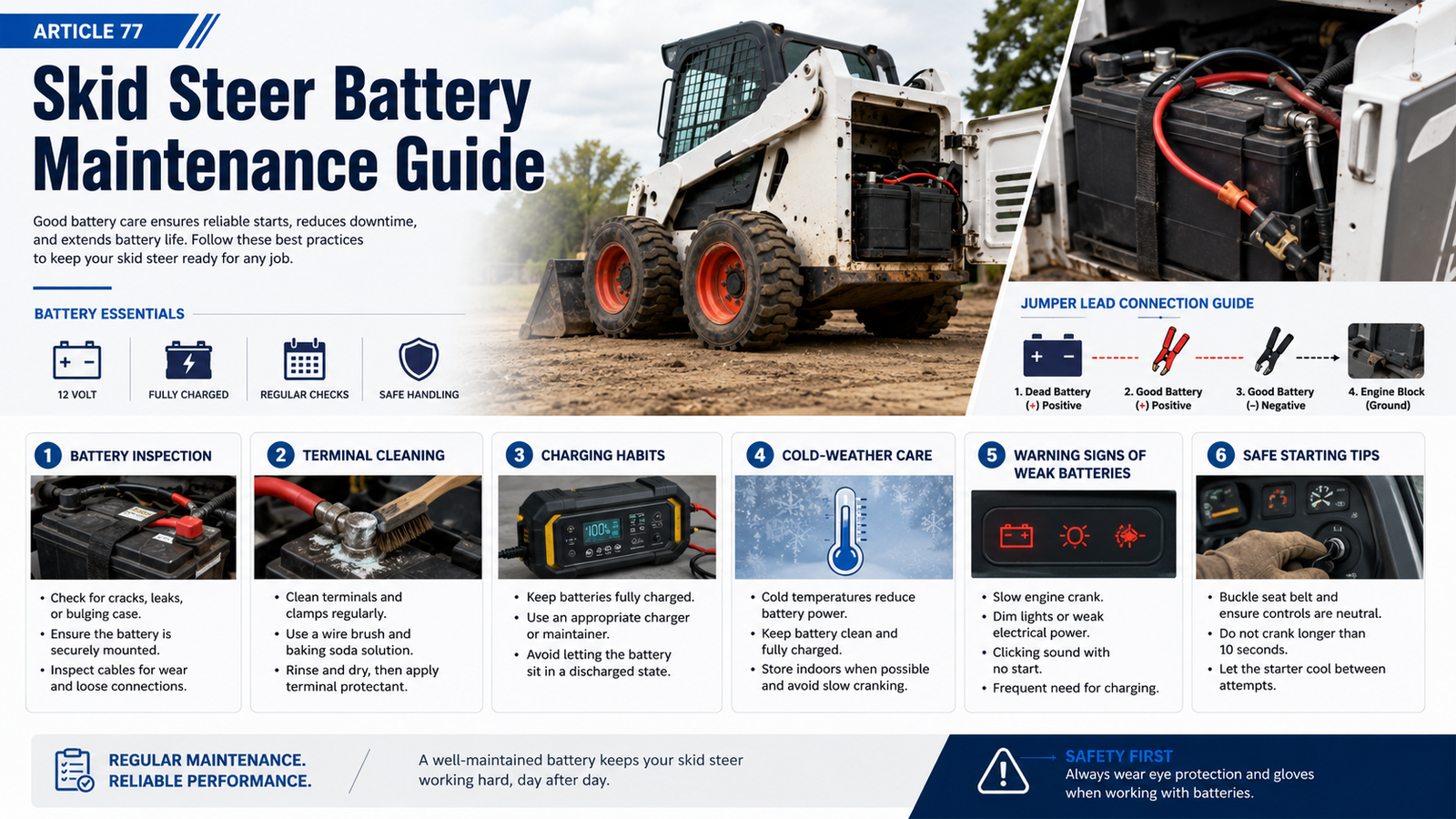
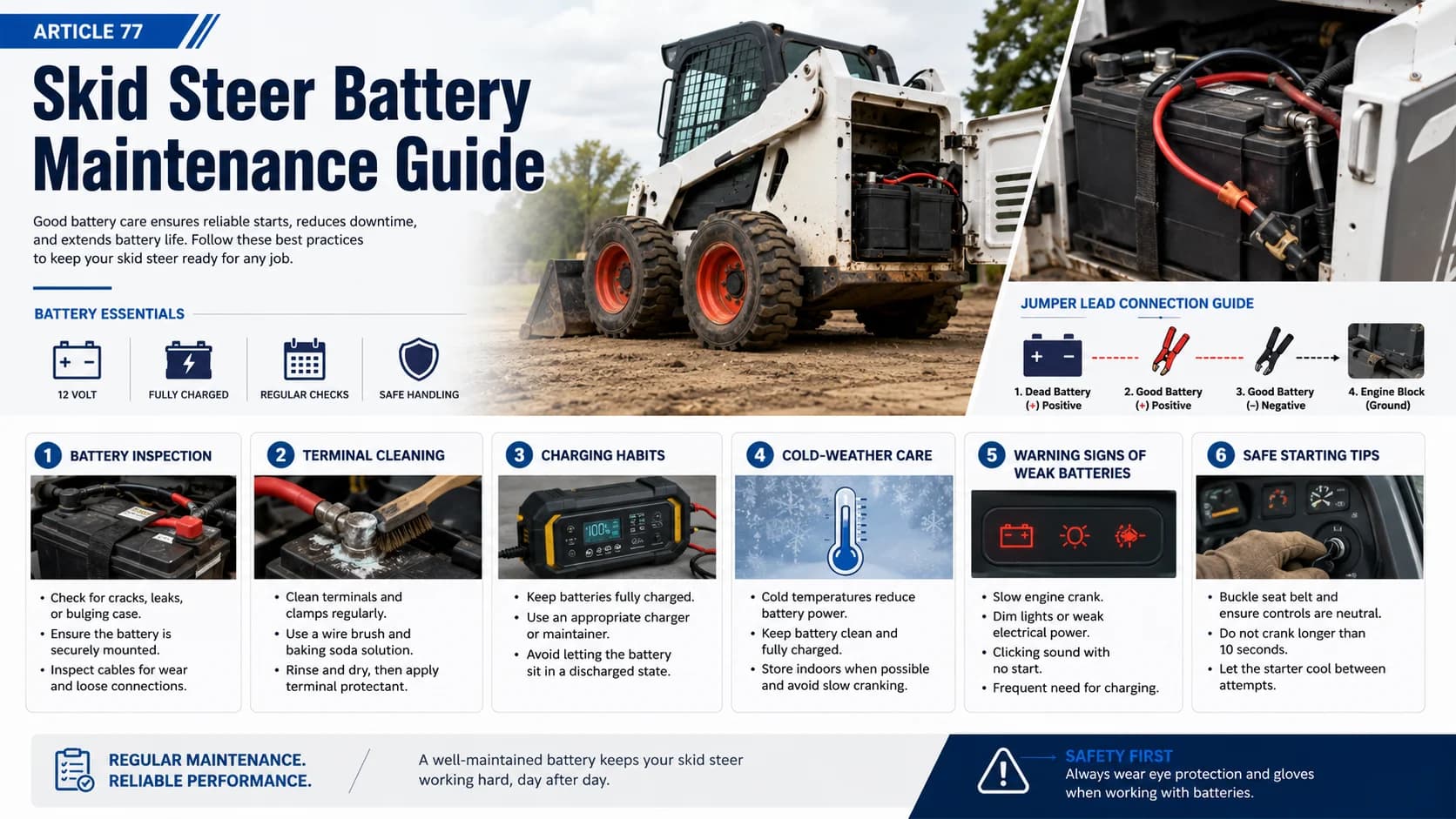
Figure 77.1 – Skid steer battery maintenance guide.
Image Description: A 16:9 battery-care infographic showing a skid steer with battery access, key battery habits, and starting reminders.
What Good Battery Care Includes
A strong battery program includes both preventive maintenance and operational awareness. Preventive maintenance means looking for corrosion, cleaning terminals, checking cable routing, ensuring the battery is securely mounted, and charging correctly. Operational awareness means noticing slow cranking, dim indicators, repeated discharge events, or cold-weather struggles. These signs often appear before the battery fails completely.
Inspect the battery case and mounting condition regularly.
Clean corrosion from terminals and ensure tight connections.
Use appropriate charging equipment and safe charging habits.
Watch for weak cranking, repeated low voltage, or frequent jump-starts.
Protect the battery during cold weather and long storage periods.
Testing, Charging, and Safe Use
Testing is the best way to move beyond guesswork. Voltage checks, load tests, and charging-system awareness help owners understand whether the battery is healthy or simply being recharged repeatedly without holding capacity. If a machine has repeated starting issues, the problem may be the battery itself, the cables, the charging system, or a parasitic drain. A basic testing routine helps narrow the cause before unnecessary parts are replaced.
Charging should always be done with the correct equipment and in a safe area. Overcharging, poor-quality chargers, or damaged cables create avoidable risk. During cold weather, a fully charged battery has a better chance of delivering strong cranking power, which is why winter battery care is especially important.
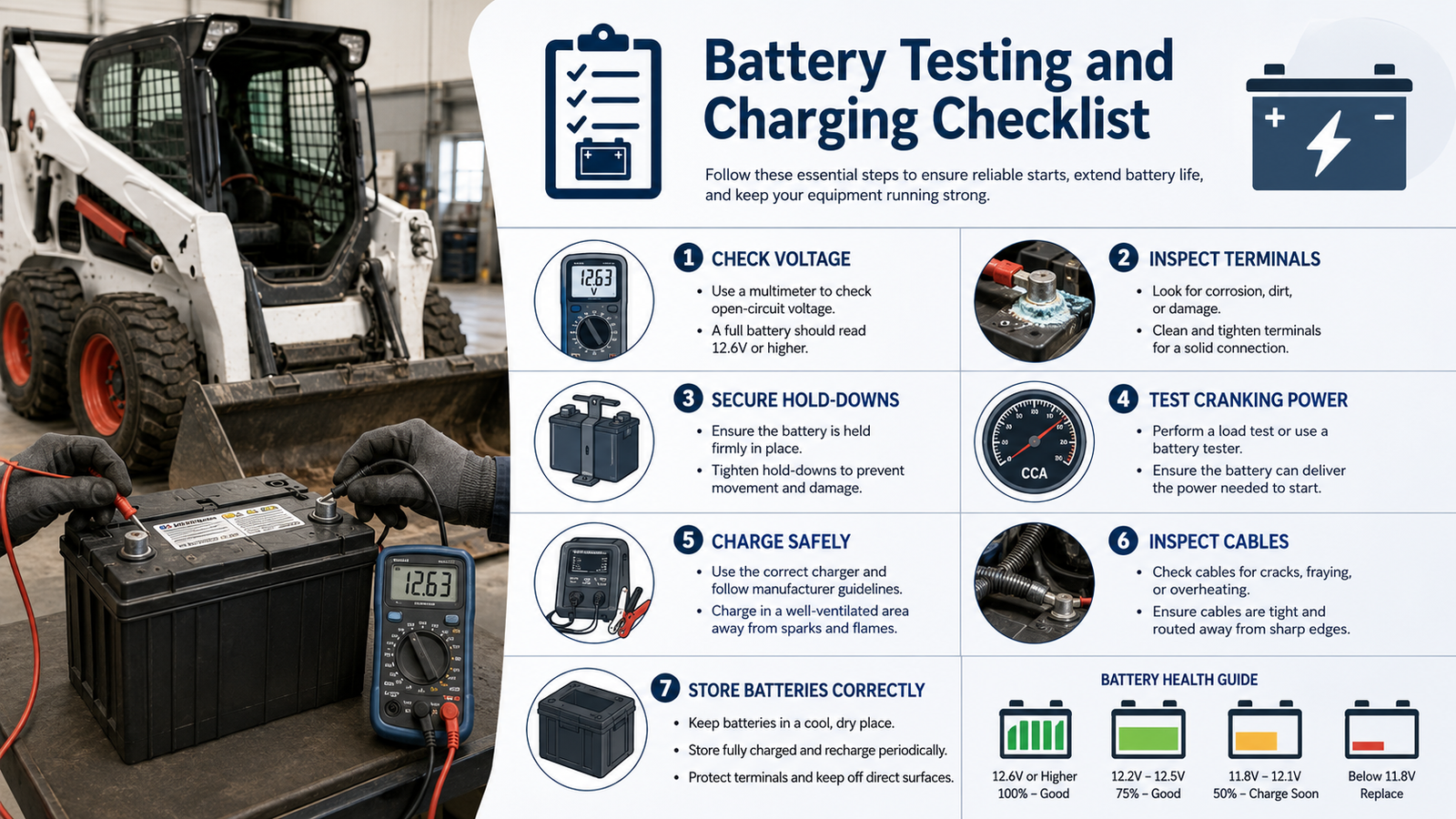
Figure 77.2 – Battery testing and charging checklist.
Image Description: A detailed checklist image showing voltage testing, terminal inspection, charging safety, and battery-health guidance.
Storage and Seasonal Considerations
Seasonal equipment often suffers because the battery is ignored during long parking periods. A battery left discharged can degrade quickly and may not recover. Owners should either use a maintenance charger where appropriate, disconnect the battery when recommended, or schedule periodic inspections during storage. Cleanliness matters too. Dirt and moisture around the battery area can support corrosion or create unwanted discharge paths over time.
When the machine returns to service, battery inspection should be part of the reactivation checklist. Checking voltage, cable condition, and hold-down security before the first serious workday reduces the chance of early-season trouble.
Battery Maintenance Essentials
Inspect terminals and cables often.
Test battery condition rather than relying on guesswork.
Use proper charging practices and safe equipment.
Protect the battery during cold weather and storage.
Respond early to weak cranking or repeated discharge problems.
Frequently Asked Questions
What are the signs of a weak skid steer battery?
Common signs include slow cranking, dim lights, clicking during startup, and frequent need for charging or jump-starting.
Should battery terminals be cleaned regularly?
Yes. Clean terminals improve electrical connection and help prevent resistance, poor charging, and unreliable starting.
Can storage damage a battery?
Yes. Long storage without proper care can leave a battery discharged and shortened in life, especially in extreme temperatures.
Key Takeaway
A dependable skid steer begins with a dependable battery. Clean terminals, good testing habits, and correct charging practices prevent no-start problems and help extend battery life.
Get More Expert Guides & Updates
Subscribe for Machinery.org guide updates and product learning content.