
Introduction
A brush cutter attachment is one of the most effective ways to expand the vegetation-management ability of a skid steer. It allows operators to clear tall grass, weeds, brush, saplings, and overgrowth faster than many manual or tow-behind methods. This makes brush cutters popular in site preparation, right-of-way work, farm maintenance, roadside management, lot cleanup, and trail creation. For many owners who need more cutting ability than a mower can provide but do not always require a full forestry mulcher, the brush cutter occupies a valuable middle ground.
That said, brush cutters demand respect. They can throw debris, encounter hidden stumps or rocks, and operate in unpredictable vegetation. Buyers and operators must understand not only what the cutter can do, but also where its limits are. Machinery.org readers should think of a brush cutter as a specialized clearing tool that rewards good machine matching, work-zone planning, and routine inspection. With the right expectations, it becomes one of the most versatile attachments in the compact equipment lineup.
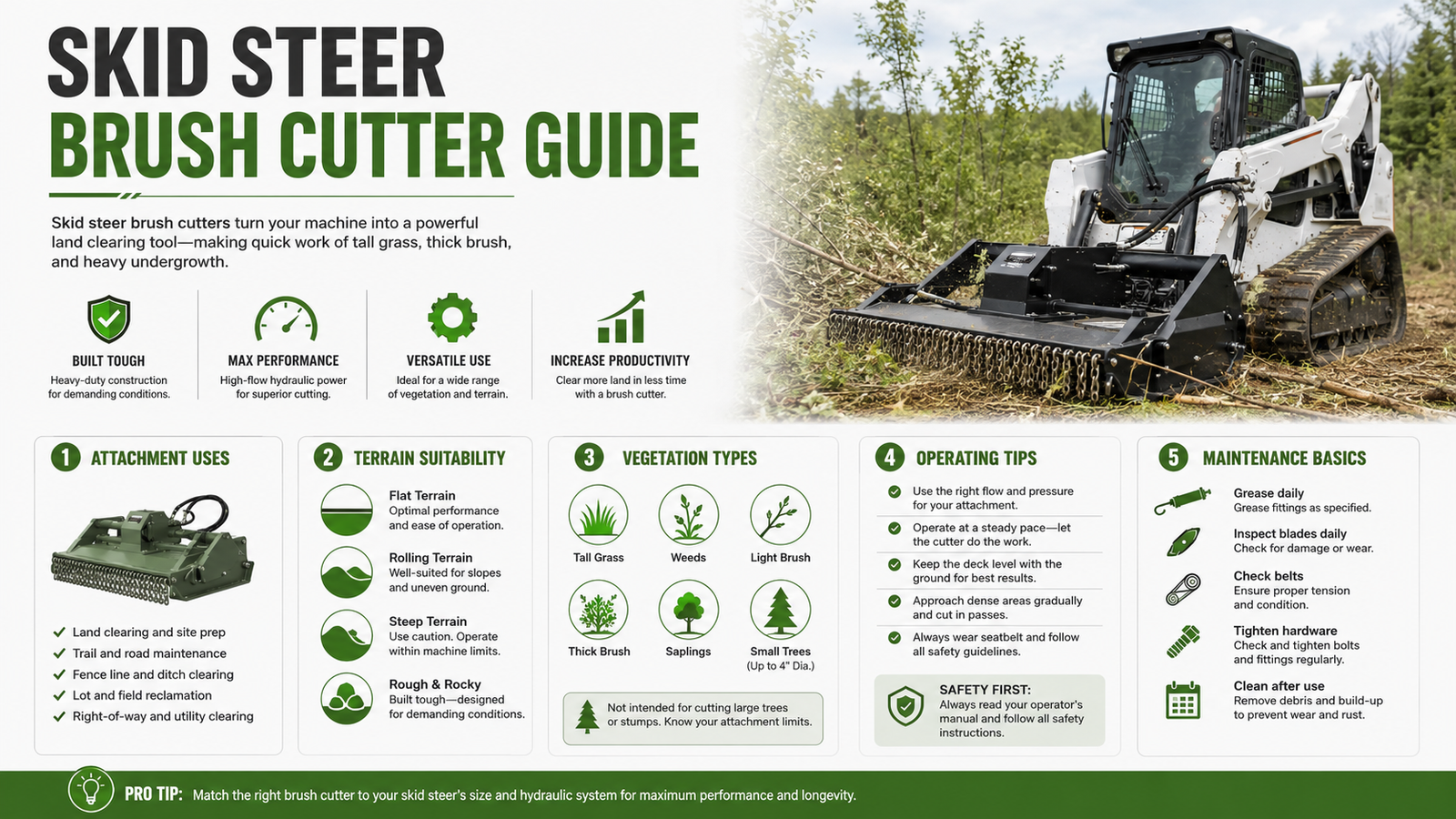
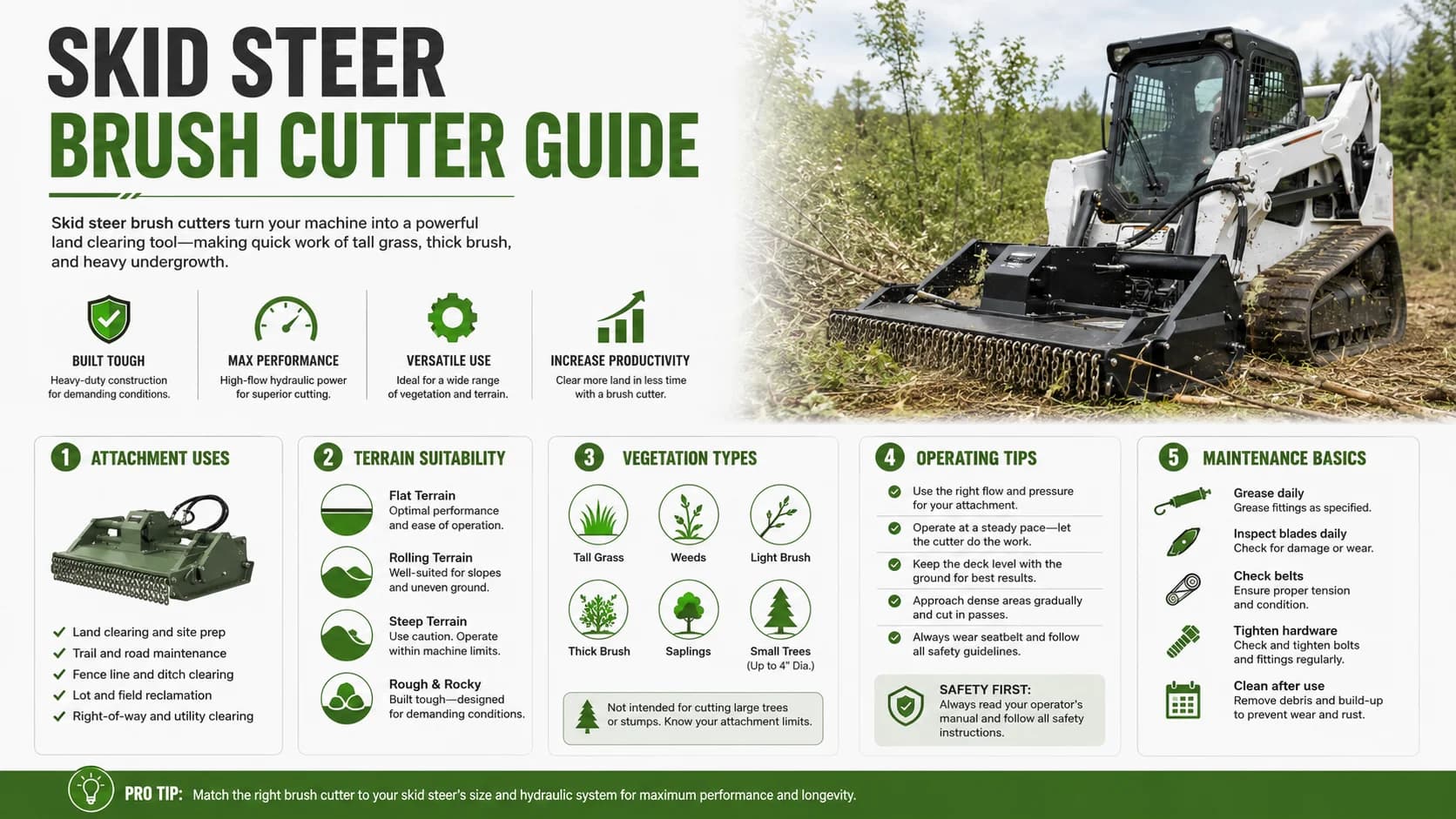
Figure 65.1 – Skid steer brush cutter guide.
Image Description: An infographic explaining brush cutter uses, terrain suitability, vegetation types, operating tips, and maintenance basics.
Best Uses for a Brush Cutter
Brush cutters excel in tall grass, dense weeds, light to moderate brush, and small saplings, depending on the cutter type and machine capacity. They are well suited for reclaiming neglected areas, cleaning around fence lines, maintaining access paths, and preparing lots before additional work begins. Some are also effective on rolling terrain and rougher ground where a finish mower would be impractical. Their ability to work in harsher vegetation is exactly what makes them so valuable to contractors and landowners.
Ideal for tall grass, weeds, light brush, and many overgrown property areas.
Useful for trail maintenance, roadside or right-of-way clearing, and lot cleanup.
Provides stronger cutting ability than a finish mower, especially in rough vegetation.
Works best when matched correctly to machine size, hydraulic output, and expected vegetation type.
Operating Technique and Performance
A brush cutter usually works best when the operator maintains a steady pace and lets the attachment do the cutting rather than forcing it too aggressively into dense material. Keeping the deck level with the ground, making controlled passes, and adjusting speed based on vegetation density all help produce cleaner results and reduce machine strain. Operators should be especially cautious when transitioning from grass to brush or from smooth areas into uneven ground. Good clearing performance comes from rhythm and awareness more than raw speed.
Terrain suitability also matters. Flat ground is usually the most straightforward environment, but many cutters can work effectively on rolling or uneven terrain if the operator stays within machine limits and keeps stability in mind. Extremely rough, rocky, or heavily wooded areas may call for a different attachment or a more cautious approach.
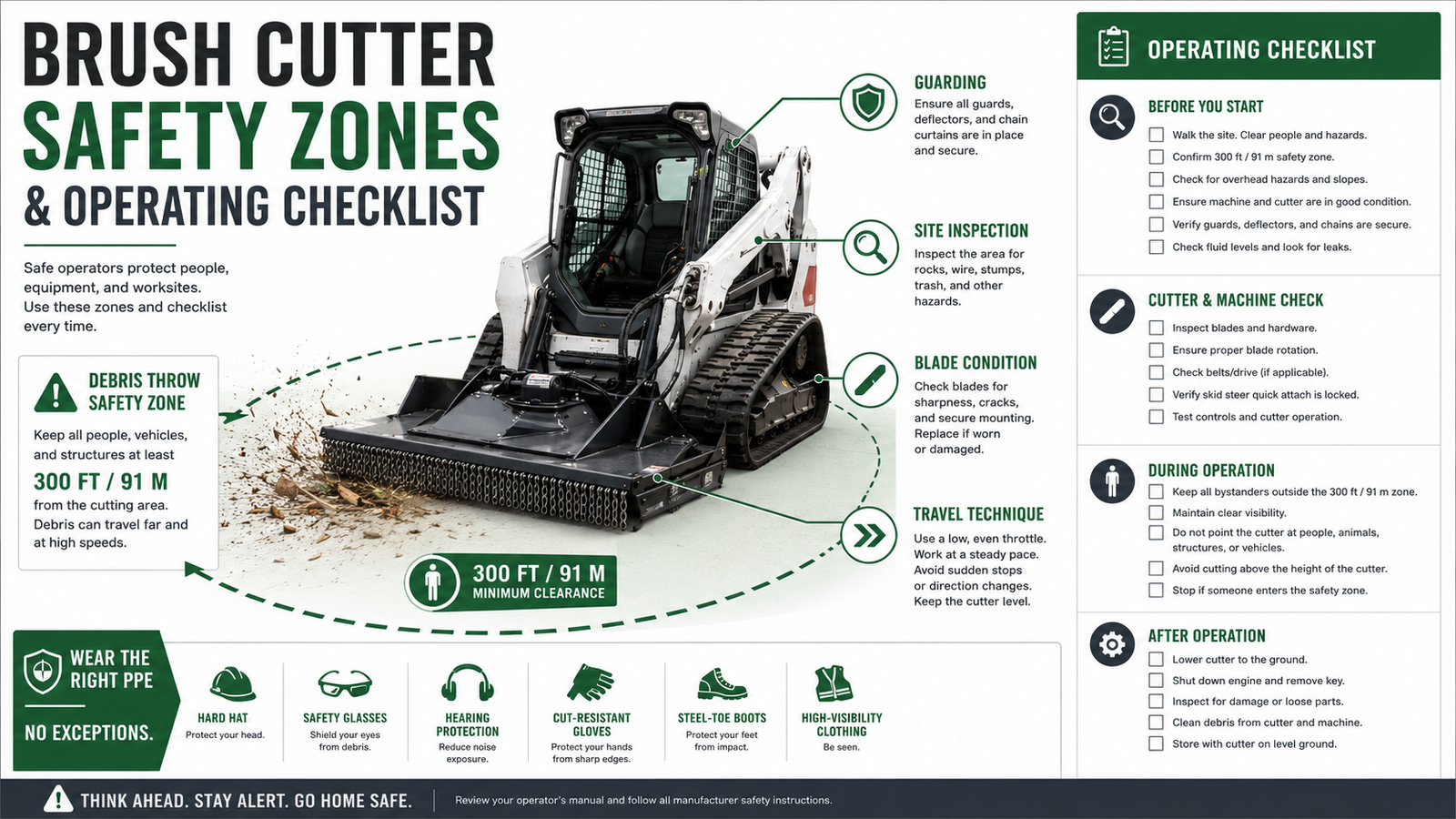
Figure 65.2 – Brush cutter safety zones and operating checklist.
Image Description: A safety graphic showing debris throw safety zone, PPE reminders, machine inspection points, and operating checklist items for a brush cutter.
Safety Zones and Daily Inspection
Because a brush cutter can throw debris at high speed, establishing a safety zone is one of the most important operating steps. Bystanders, vehicles, and structures must be kept far away from the cutting area. The operator should inspect the site for rocks, wire, stumps, trash, and hidden obstacles before cutting begins. Guards, chain curtains, deflectors, and all attachment shields must be secure. Proper personal protective equipment should also be used according to the manufacturer’s instructions and jobsite requirements.
A daily inspection should include the cutter deck, blades, hardware, hoses, and any belts or drive components if the attachment design uses them. Worn blades, loose fasteners, and buildup under the deck can reduce cut quality and increase risk. Cleaning and greasing after use help extend service life and prepare the cutter for the next job.
Buyer Advice and Attachment Positioning
When choosing a brush cutter, buyers should think carefully about the vegetation they encounter most often. If work centers on grass, weeds, and lighter brush, a general-duty brush cutter may be appropriate. If the machine frequently encounters heavier overgrowth or more demanding property reclamation conditions, the buyer may need a more robust model or may even need to compare the brush cutter option against a forestry mulcher. The right choice depends on the severity of the work, the machine’s hydraulic capability, and the level of production expected.
Brush Cutter Checklist
Walk the site first and remove or identify major hazards.
Maintain a wide debris safety zone and keep all bystanders away.
Inspect blades, guards, deflectors, hoses, and hardware before use.
Operate at a steady pace and avoid forcing the cutter into material too aggressively.
Clean and service the attachment after use to improve longevity and readiness.
Frequently Asked Questions
What is the difference between a brush cutter and a forestry mulcher?
A brush cutter is usually intended for grass, weeds, brush, and lighter woody growth, while a forestry mulcher is generally more specialized for dense woody vegetation and more demanding land-clearing conditions.
How large should the safety zone be around a brush cutter?
Operators should always follow the manufacturer’s guidance, but the core principle is the same: keep people, vehicles, and structures well away from the cutting area because debris can travel a long distance.
Is a brush cutter good for general property maintenance?
Yes. It is one of the best attachments for reclaiming overgrown property, maintaining trails and fence lines, and handling vegetation that is too heavy for a standard mower.
Key Takeaway
A brush cutter is an excellent attachment for vegetation management when users match it to the job, establish a proper safety zone, and maintain the attachment carefully. The best results come from steady operation and strong jobsite awareness.
Get More Expert Guides & Updates
Subscribe for Machinery.org guide updates and product learning content.