Choosing between a new and a used skid steer is one of the biggest buying decisions a contractor, landscaper, farmer, or property owner will make. The machine itself may look similar on paper, but the ownership experience can be very different depending on whether you buy a fresh model with a warranty or a previously owned machine with service history and wear already built in. Because skid steers are such versatile machines, many buyers rush toward horsepower, lift capacity, or a favorite brand name without first deciding what type of purchase fits the business best. That often leads to paying for the wrong advantages or underestimating the risks that come with a bargain price.
A good buying guide starts by stepping back and looking at the full picture. How often will the skid steer be used? Will it work every day on income-producing jobs or only occasionally around a farm or property? Do you need reliability above all else, or do you have the ability to handle maintenance and repairs in exchange for lower purchase cost? Buyers who answer those questions clearly are much more likely to make a smart purchase than those who only chase the lowest price or the newest appearance.
This article explains how to compare new and used skid steers, what to inspect before purchasing, how total cost of ownership changes over time, and how to decide which route best supports your workload. The goal is not to say that one choice is always better than the other. Instead, the goal is to help you buy with confidence and avoid the most common regrets.
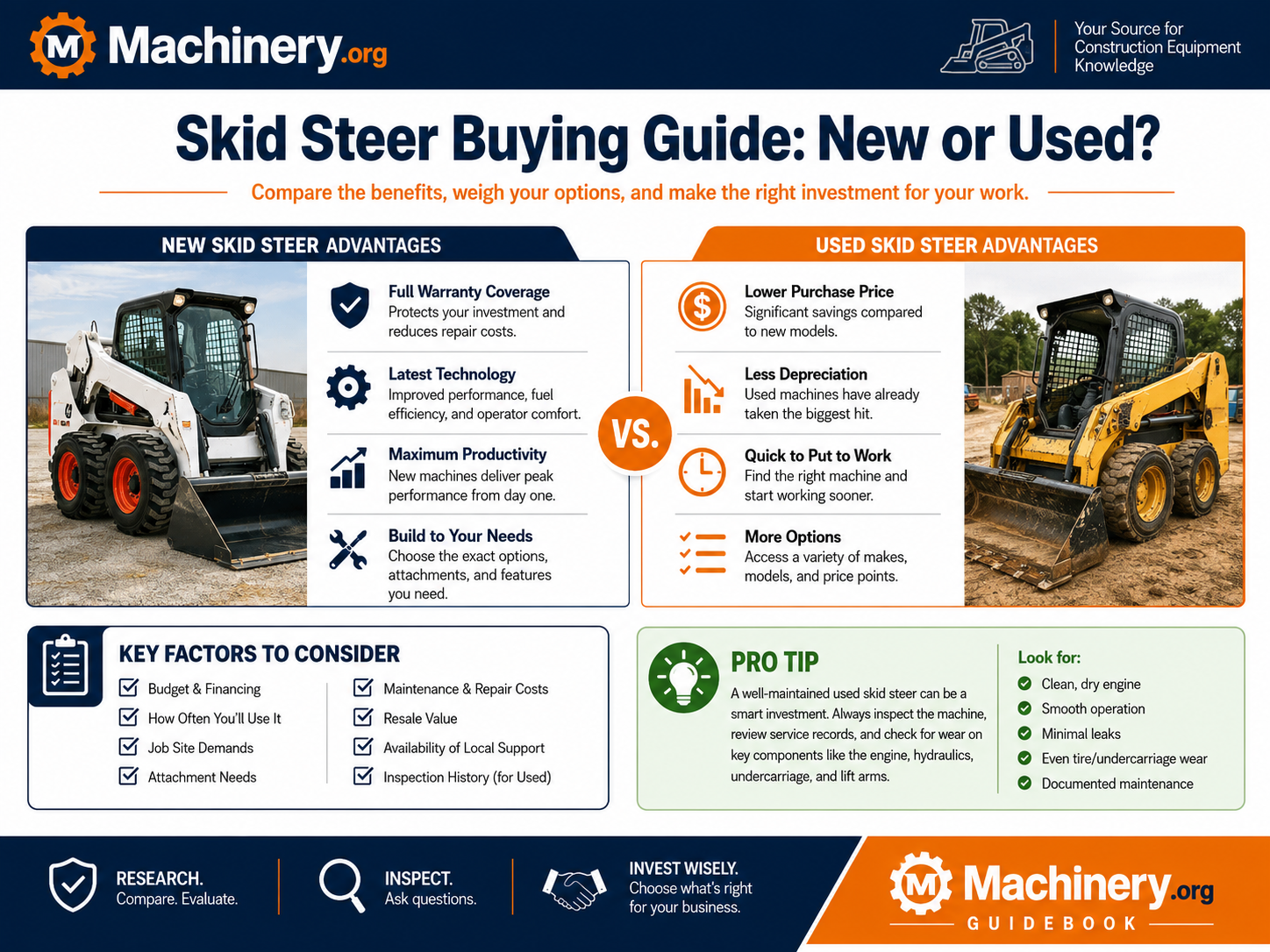
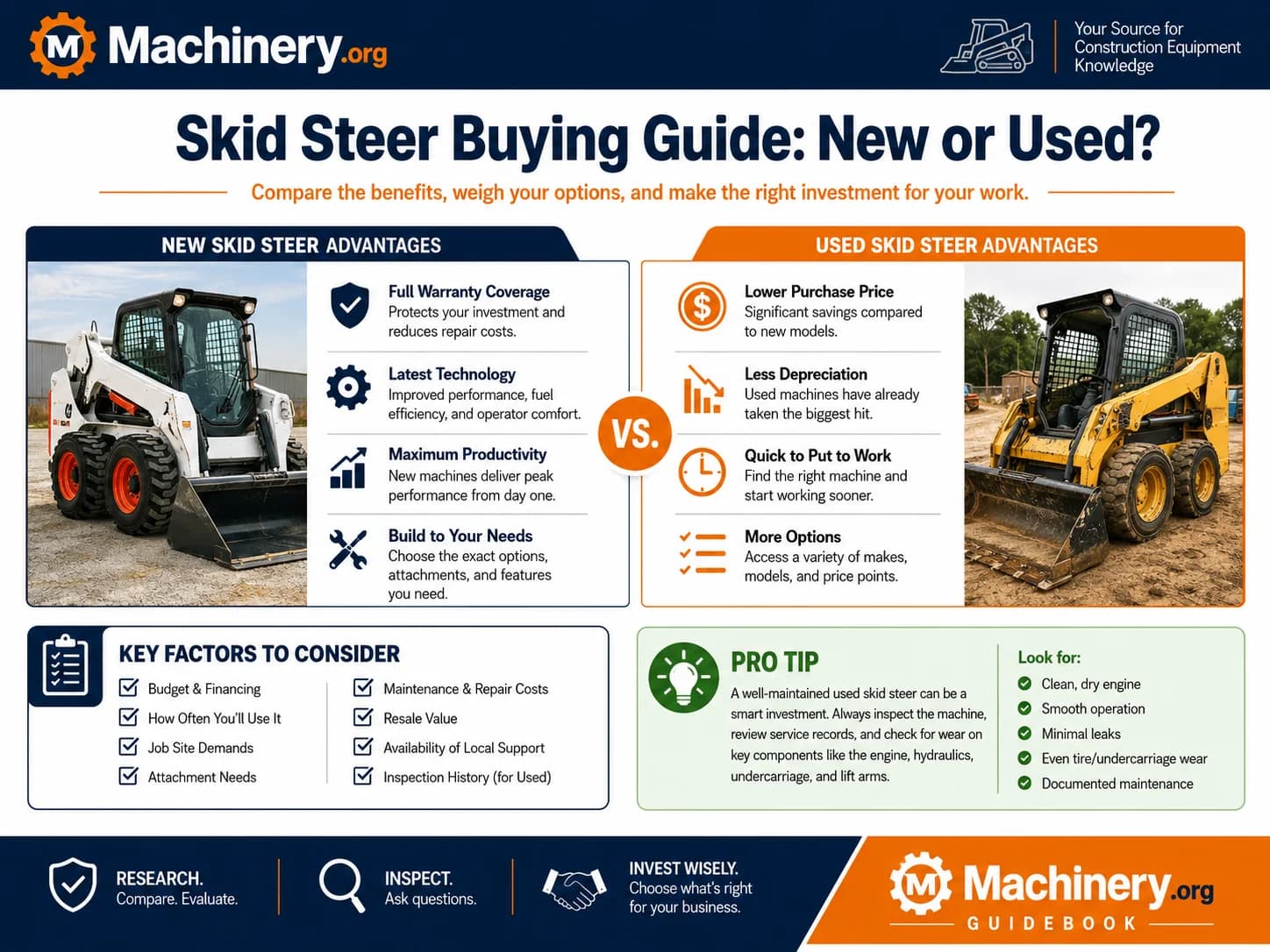
Figure 41.1. Machinery.org comparison of new versus used skid steer advantages and the most important buying factors to review.
Why new skid steers appeal to many buyers
New skid steers offer predictability. You know the machine’s history from day one, you get the latest controls and emissions systems, and in most cases you receive full warranty coverage. That means fewer surprises during the early ownership period and a better chance of scheduling work without worrying about inherited problems. Buyers who depend on their skid steer for daily business activity often value this peace of mind more than the lower purchase price of a used machine. A new model also allows you to specify cab options, hydraulic packages, tires or tracks, and attachment-ready configurations so the machine suits your work from the start.
Another advantage of a new purchase is financing flexibility. Manufacturers and dealers often provide promotional financing, service packages, and support programs that make the monthly ownership experience easier to plan. While the purchase price is higher, the predictability of expenses can be much stronger. For businesses that need a machine to start generating revenue immediately, that stability can justify the added cost.
Why used skid steers remain attractive
Used skid steers remain popular because they can provide a much lower entry price while still delivering real productivity. A carefully chosen used machine may allow a contractor or landowner to move into equipment ownership sooner, avoid rental costs, and free up capital for trailers, attachments, or other business needs. Depreciation is also different. Much of the biggest value drop happens early in a machine’s life, so buyers of used units may avoid the steepest depreciation curve.
However, lower purchase price does not automatically mean lower cost. A used machine may need tires, hoses, pins, filters, or undercarriage work sooner than expected. The key is to understand whether the machine was maintained well and whether any upcoming repairs are minor routine work or signs of deeper wear. That is why buying used requires more discipline. You are not just buying a machine. You are buying its history.
Budget, workload, and business fit
The best decision usually comes from matching the purchase type to the workload. If the skid steer will work on demanding jobs every day, downtime becomes expensive quickly. In that case, new equipment or a newer used unit with excellent records often makes more sense. If the machine will be used more occasionally for maintenance, property improvement, or seasonal jobs, an older used machine may provide excellent value. Think about cash flow, expected utilization, and how costly a breakdown would be during your busiest period.
Support also matters. Buyers with access to good technicians, parts supply, and mechanical knowledge may be more comfortable with used ownership. Buyers who need dealer-backed reliability and simplified support may prefer new. This is where local parts availability, brand presence, and service relationships influence the purchase almost as much as the machine itself.
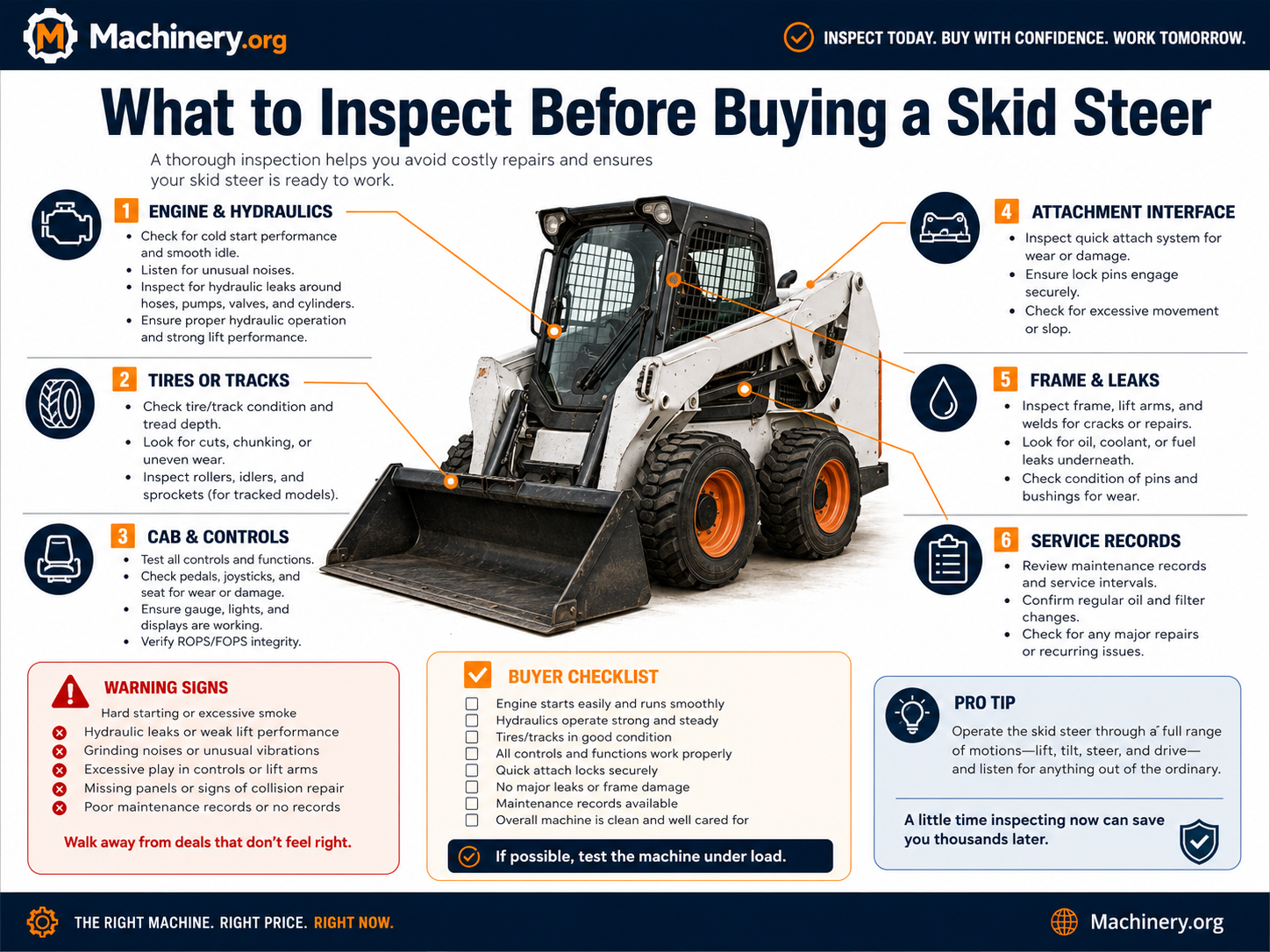
Figure 41.2. Machinery.org pre-purchase inspection guide for checking a used skid steer before making a final buying decision.
How to inspect a used skid steer properly
A proper used skid steer inspection should include the engine, hydraulics, cab controls, attachment interface, tires or tracks, frame, and service history. Start the machine cold if possible. Listen for hard starting, smoke, or unusual noises. Operate all functions through a full range of motion. Test lift, tilt, travel, steering response, and any auxiliary hydraulic functions. Inspect for weld repairs, leaks, excessive play in the lift arms, worn coupler components, and any signs of collision damage or neglect. A machine can look clean and still hide expensive problems, so visual appearance should never be the only criterion.
Maintenance records add major value because they show whether the owner changed fluids, filters, and wear parts at reasonable intervals. A missing record does not automatically mean the machine is bad, but a documented history is a strong sign of responsible ownership. Also examine whether tire wear, pins, hoses, and other components age consistently. Uneven wear can reveal hard use, poor maintenance, or repairs that were delayed too long.
Common mistakes buyers make
Choosing based on price alone without matching the machine to the actual job requirements.
Ignoring total ownership cost such as repairs, depreciation, financing, and attachment compatibility.
Buying a used machine without operating it under load or checking for cold-start behavior.
Failing to inspect service records, frame repairs, and hydraulic condition in detail.
Assuming a new machine is automatically the best investment even when usage is limited.
Resale, risk, and long-term value
Resale value should be part of the decision from the beginning. New machines often retain value best when purchased in a popular size range and maintained well. Used machines can also hold value effectively if bought at the right price and kept in good condition. Think about how long you plan to keep the machine and what kind of buyer might want it later. A heavily customized machine may help your specific work but limit resale appeal. A machine with mainstream attachments, good records, and clean condition usually has broader resale strength.
The real answer to “new or used?” is therefore personal and strategic. If you need maximum reliability, modern features, and warranty support, new may be the better fit. If you need a lower-cost entry point and you can inspect carefully or manage maintenance well, used can be the smarter buy. Either way, discipline during the evaluation process is what protects your money.
Frequently Asked Questions
Is a used skid steer always cheaper to own?
Not always. It may cost less to buy, but repairs, downtime, and wear-part replacement can make it more expensive overall if the machine was poorly maintained.
Should I always buy new for business use?
No. Many businesses succeed with used equipment, especially if the machine is inspected carefully and matched to the workload.
What matters most when inspecting a used skid steer?
Engine behavior, hydraulic performance, leaks, structural condition, tire or track wear, and service history are among the most important inspection priorities.
Key Takeaway
A good skid steer purchase starts with fit, not emotion. Decide how hard the machine will work, compare total ownership cost, inspect carefully, and choose the option—new or used—that best supports your real workload and budget.
Get More Expert Guides & Updates
Subscribe for Machinery.org guide updates and product learning content.