
Introduction
A grapple attachment is one of the most useful upgrades for skid steer owners who handle irregular, bulky, or hard-to-contain material. Instead of relying on a standard bucket to push or carry loose debris, the grapple lets the machine clamp and secure the load. This makes it extremely valuable for brush handling, log moving, storm cleanup, construction debris removal, recycling, and farm work. Once an operator begins using a grapple in the right environment, it often becomes one of the most productive tools in the attachment fleet.
The real strength of the grapple is not just lifting power but control. Brush piles, timber, roots, scrap, and demolition debris are difficult to manage cleanly with general-purpose attachments. A grapple improves holding power and reduces wasted motion, which helps crews work faster and more safely. However, like many high-value attachments, a grapple performs best when the user understands both its applications and its safety limits.
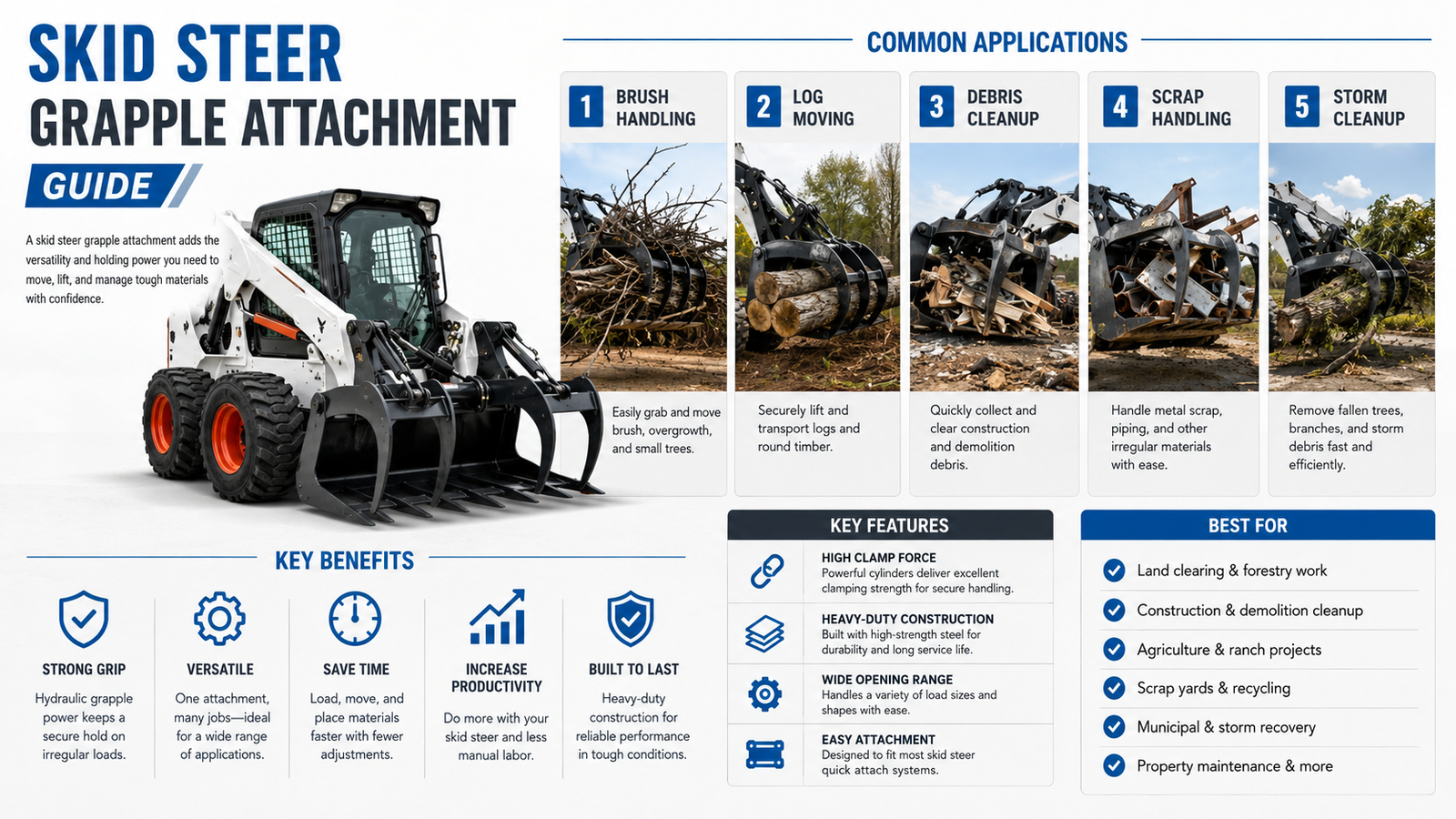
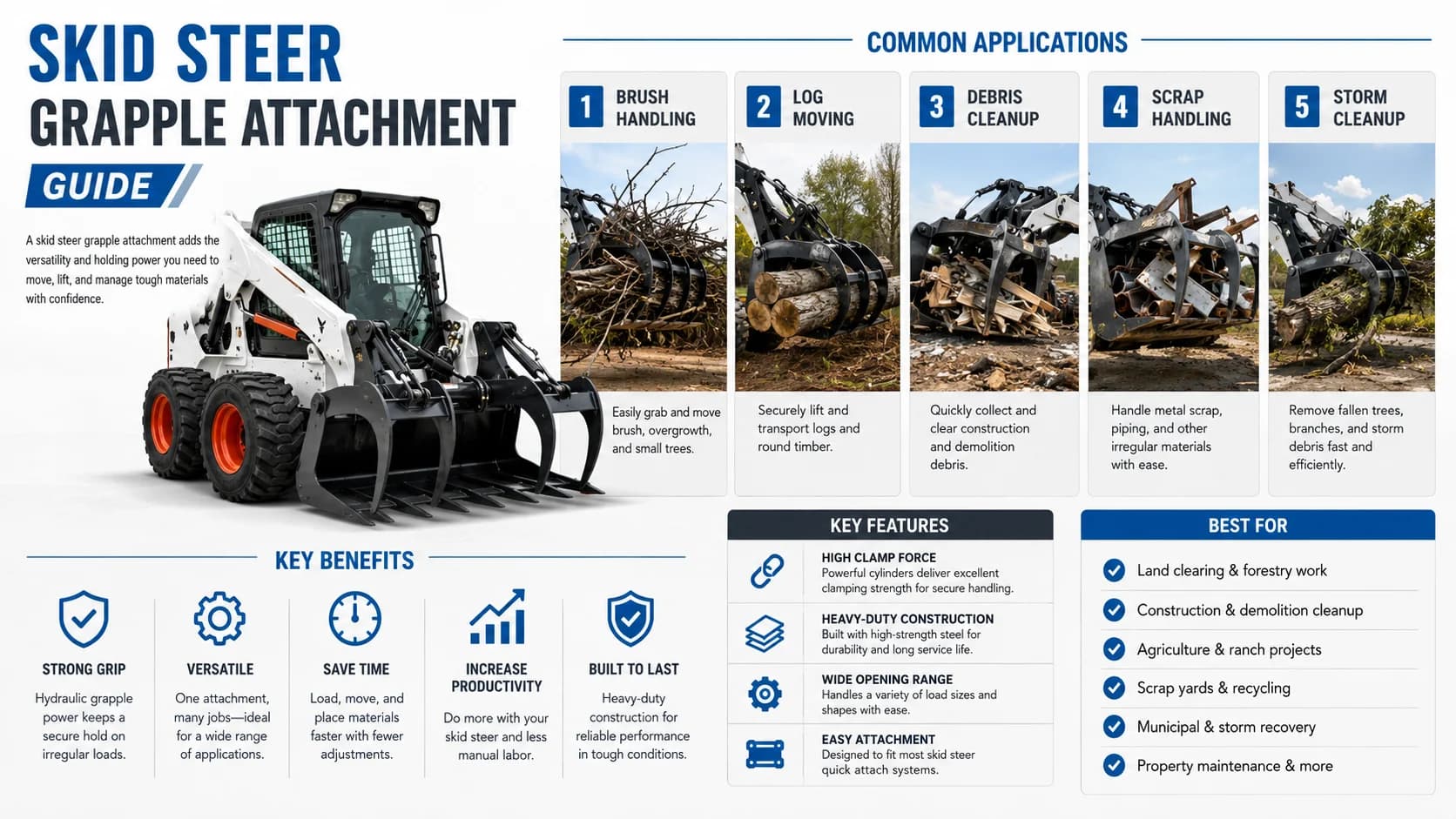
Figure 67.1 – Skid steer grapple attachment guide.
Image Description: An infographic showing a skid steer grapple, common applications, key benefits, and the types of work it handles best.
Common Grapple Applications
On rural and farm properties, grapples are widely used for brush cleanup, tree limbs, fencing materials, and storm debris. In land-clearing operations, they help move roots, logs, and heavy piles of cut material. Construction crews may use them for demolition waste and site cleanup. Scrap yards, municipalities, and recycling facilities also value grapples because they can secure awkward material more effectively than an open bucket. Their versatility comes from being able to both gather and clamp.
Excellent for brush piles, tree limbs, and overgrowth cleanup.
Useful for loading and moving logs, roots, and forestry debris.
Strong fit for demolition cleanup and awkward material handling.
Practical for storm recovery, ranch work, and municipal property maintenance.
Load Handling and Machine Control
Safe grapple performance starts with centered, stable loads. Operators should clamp the material securely without overfilling the attachment or trying to carry unstable, unbalanced loads. Once the load is gripped, it should be carried low during travel to preserve visibility and machine stability. The machine’s rated operating capacity still applies, and operators must remember that the attachment itself adds weight. Turning too sharply or traveling too quickly with a raised load creates unnecessary risk.
Hydraulic condition matters as well. A grapple relies on cylinders, hoses, and fittings to clamp safely, so any hydraulic leak or hose damage should be corrected immediately. Clean couplers, secure hose routing, and responsive control operation all contribute to safer and smoother performance.
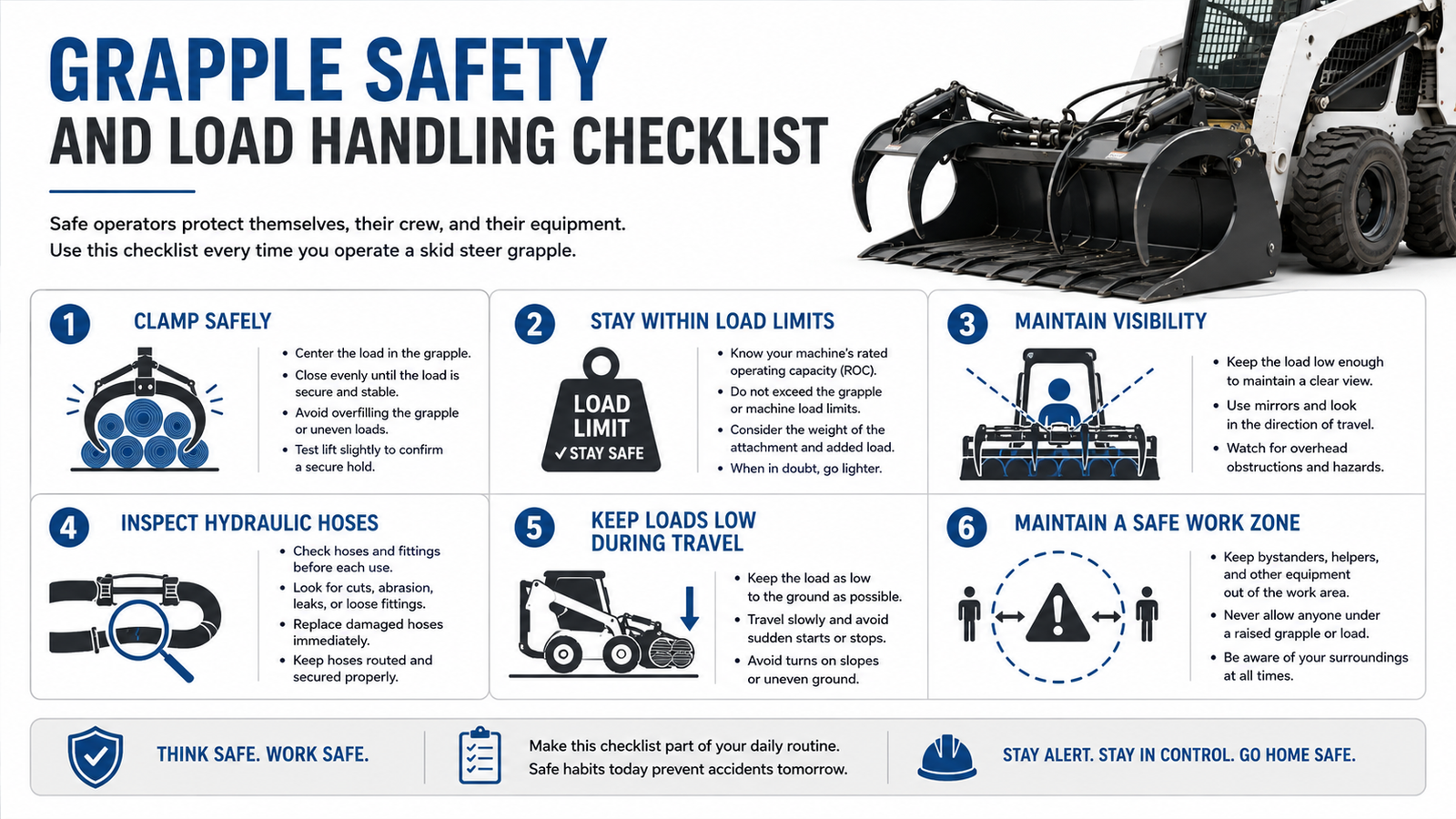
Figure 67.2 – Grapple safety and load handling checklist.
Image Description: A step-by-step safety checklist graphic covering load centering, load limits, visibility, hose inspection, low travel position, and safe work-zone setup.
Safety and Daily Inspection
Before operating, the user should inspect the grapple tines, pivots, pins, cylinders, and hydraulic hoses. The work area should be kept clear of bystanders, especially because uneven loads can shift if handled carelessly. Loads should stay low during travel, the operator should keep clear sightlines, and the machine should never move faster than conditions allow. Just because a grapple can hold a heavy pile does not mean every pile is safe to lift.
The best daily habit is to make the grapple safety checklist part of the routine. Clamp carefully, stay within load limits, keep loads low, inspect hoses, and establish a safe work zone every time. These simple habits protect equipment and reduce the chance of dropped loads or unnecessary machine stress.
Buying Advice
When selecting a grapple, buyers should compare width, tine design, clamp opening range, cylinder protection, and intended use. A grapple for brush and storm cleanup may differ from one used in heavy land-clearing or recycling work. Buyers should also verify compatibility with the machine and think about how often the attachment will be used. The best value comes from matching the grapple design to the material being handled most often.
Frequently Asked Questions
Why is a grapple better than a bucket for brush cleanup?
Because the grapple can clamp irregular material securely instead of just pushing it. This improves control, efficiency, and load retention.
Should loads be carried high or low with a grapple?
They should be carried low during travel whenever possible to maintain visibility and stability.
What should I inspect first on a grapple?
Start with the tines, pins, clamp movement, hoses, fittings, and any visible damage or leaks in the hydraulic system.
Key Takeaway
A grapple is one of the most productive skid steer attachments for irregular material. Its value comes from secure control, but that value only stays high when operators manage loads correctly and follow a strong daily safety routine.
Get More Expert Guides & Updates
Subscribe for Machinery.org guide updates and product learning content.