
Hydraulic flow is what turns a skid steer from a loader into an attachment carrier. Buckets and pallet forks may not require powered hydraulics, but augers, trenchers, brush cutters, cold planers, snow blowers, and mulchers depend on the auxiliary hydraulic system. Understanding flow helps buyers choose the correct machine, prevents underperforming attachments, and protects components from heat or overspeed.
Flow is usually measured in gallons per minute or liters per minute. It describes how much oil the system moves. Pressure is measured in PSI or bar and describes the force available in the circuit. Flow and pressure work together to create hydraulic power, but they are not interchangeable. More flow generally increases motor speed. More pressure supports torque or force, subject to the attachment design. An attachment must operate within both ranges.
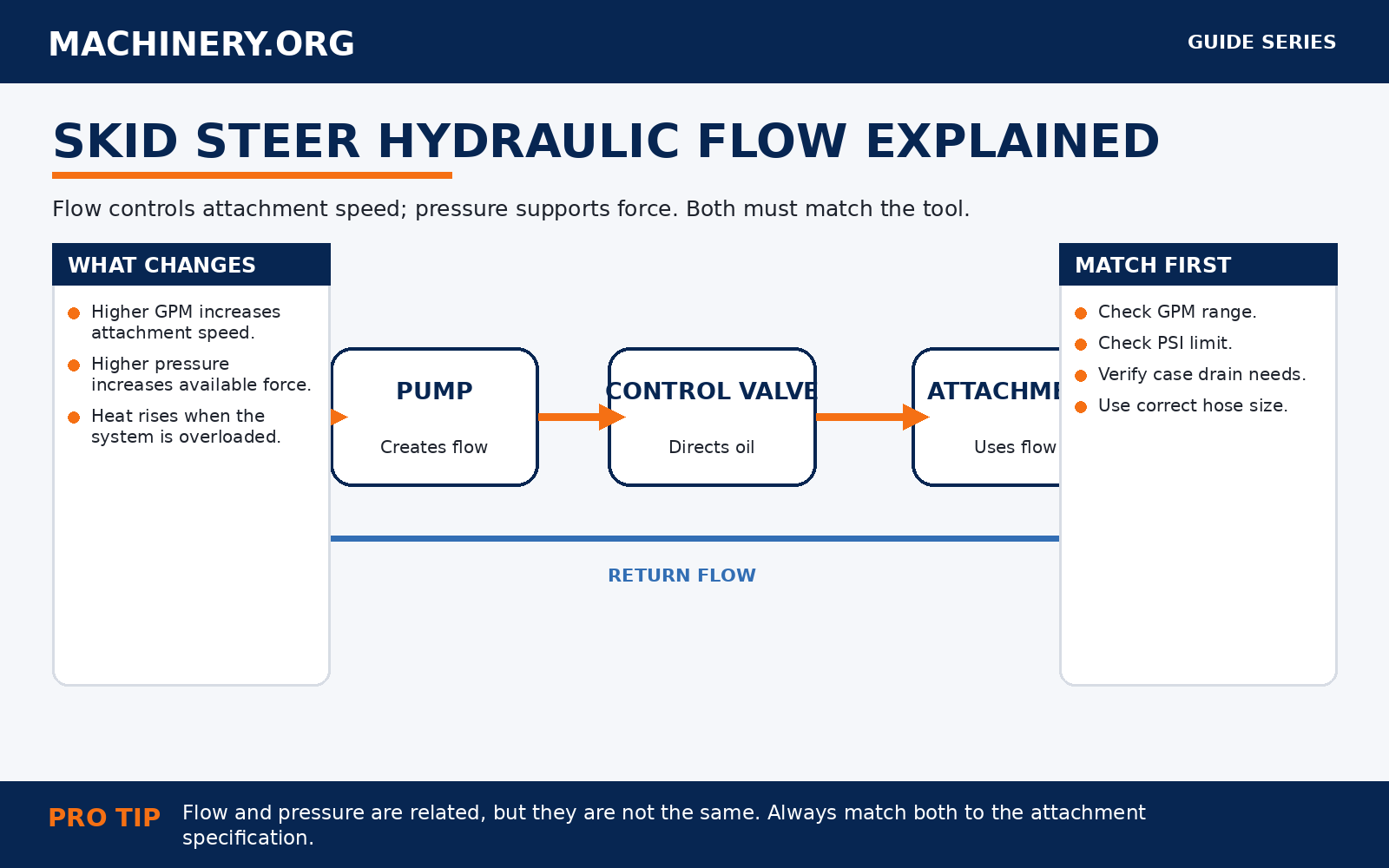
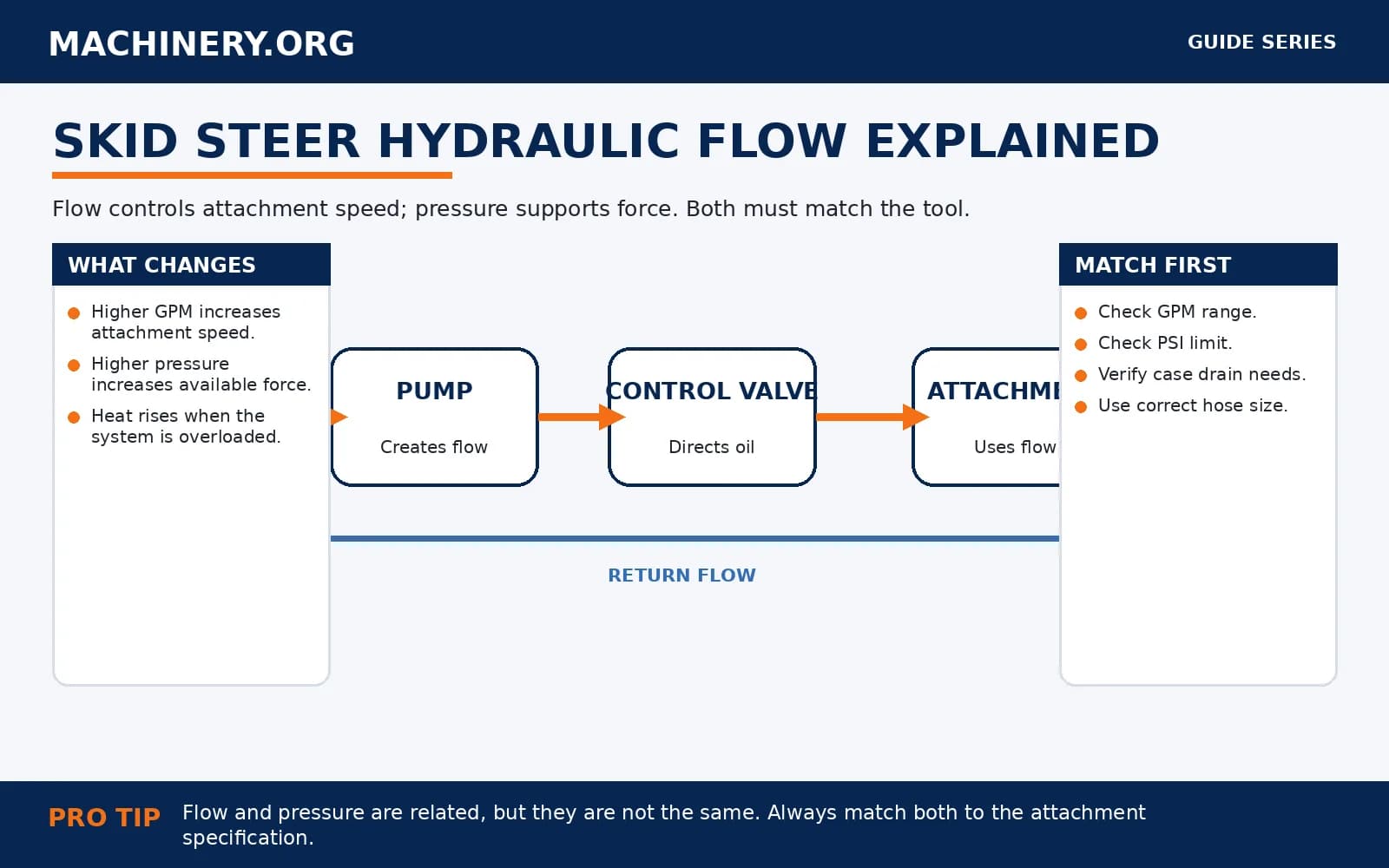
Figure 34.1. Simplified skid steer auxiliary hydraulic flow path from reservoir to attachment and return.
Skid steers are commonly described as standard-flow or high-flow machines. Those labels are useful, but the actual published values matter more because ranges vary by manufacturer and model. Cooling capacity, hose size, case drains, electrical controls, and relief settings are also part of the compatibility picture.
How auxiliary hydraulic flow works
The hydraulic reservoir stores oil. The pump creates flow. Control valves route oil to the front auxiliary couplers. Hoses carry oil into the attachment motor or cylinders. Return oil flows back through the system, where heat must be controlled and contamination removed. Restrictions anywhere in the circuit reduce performance and create heat.
Standard flow
Standard flow is designed for common attachments such as augers, grapples, trenchers, light brush cutters, brooms, and some snow tools. It offers broad versatility and generally lower purchase cost. For many contractors, standard flow covers most daily work. The attachment must still fall within the machine’s specific flow and pressure range.
High flow
High-flow systems deliver more oil for demanding attachments such as cold planers, forestry mulchers, high-production cutters, and large snow blowers. High flow increases available hydraulic horsepower when pressure is also sufficient. These systems usually require stronger cooling, larger plumbing, and specific controls. A high-flow machine can often run standard-flow tools at an appropriate setting, but the tool requirements must be verified.
Pressure and hydraulic horsepower
Pressure contributes to the force available at the attachment. Hydraulic horsepower is influenced by both flow and pressure. Two machines with similar GPM can perform differently if pressure, efficiency, and cooling differ. Buyers should avoid comparing flow alone. The complete hydraulic specification and attachment recommendation provide the real answer.
Case drain and return requirements
Some hydraulic motors require a case drain line to return internal leakage oil at low pressure. Operating such an attachment without the required case drain can damage seals or motors. Free-flow return circuits may also be necessary for certain tools. These details are easy to overlook when purchasing used attachments, so coupler count and hose routing should be checked carefully.
Heat management
Hydraulic attachments convert energy into work and heat. Continuous high-demand operation can raise oil temperature. Dirty coolers, low fluid, wrong hose size, or excessive restriction make the problem worse. A machine that performs well for ten minutes but loses power when hot may have a cooling or hydraulic condition issue. Operators should keep coolers clean and follow duty-cycle guidance.
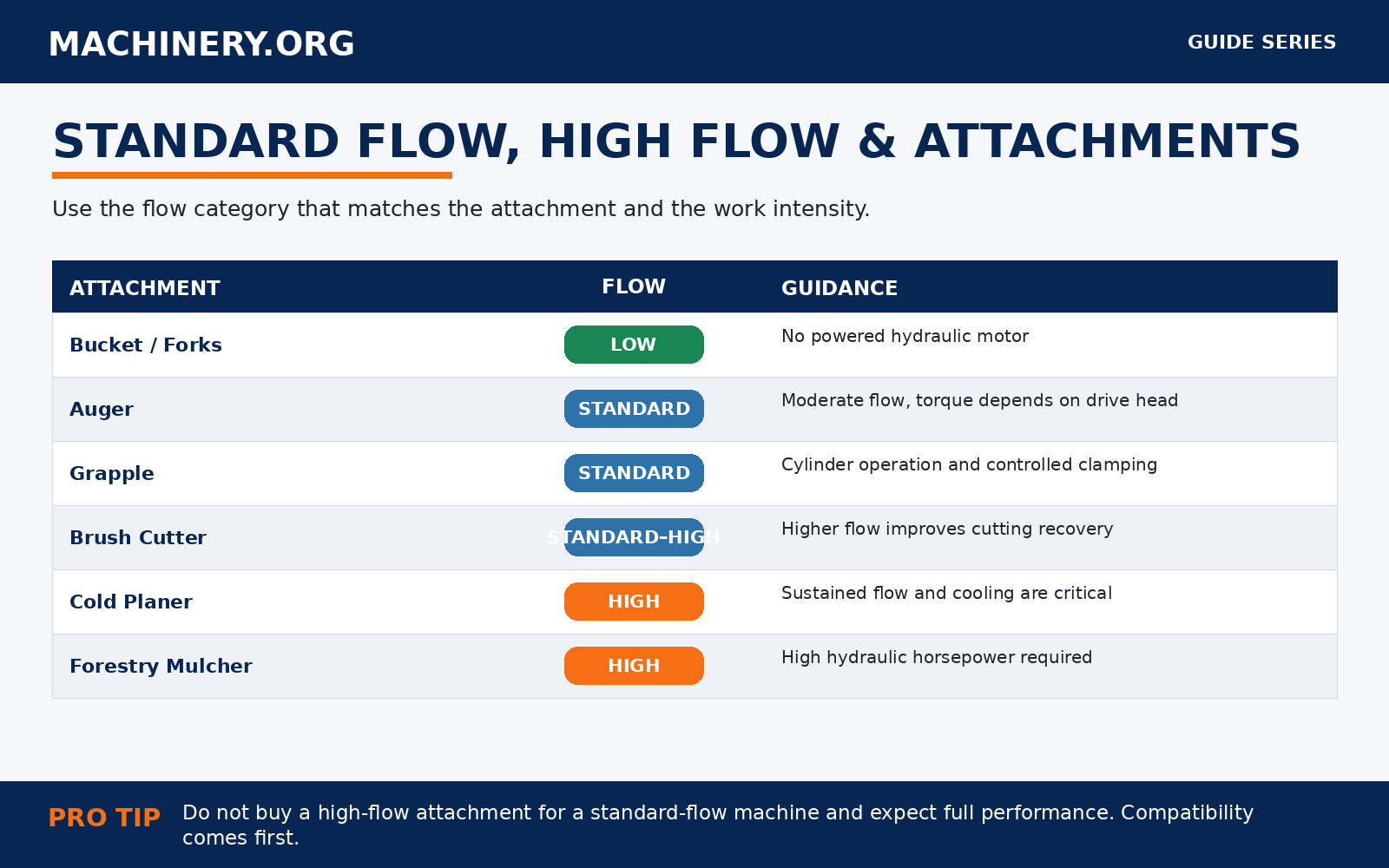
Figure 34.2. Typical attachment flow categories and practical matching guidance.
Attachment matching examples
General bucket and pallet forks: no powered auxiliary flow.
Auger and grapple: usually standard flow, depending on size.
Brush cutter: standard or high flow depending on cutter design.
Cold planer and forestry mulcher: commonly high-flow applications.
Snow blower: flow and electrical control must both match.
Common mistakes
Frequent mistakes include buying a high-flow attachment for a standard-flow machine, assuming more pressure can replace missing flow, using incorrect couplers, and ignoring case-drain requirements. Another mistake is operating at full throttle when the attachment is designed for a lower flow range. Correct setup protects both carrier and tool.
How to compare machines
When comparing skid steers, record standard flow, optional high flow, maximum pressure, auxiliary control type, case drain availability, and cooling features. Then compare those values with the attachment fleet. The best machine is the one that powers the tools you actually use, not simply the one with the largest number on the brochure.
Maintaining hydraulic performance
Hydraulic performance depends on maintenance as much as specification. Dirty oil, restricted filters, damaged couplers, and clogged coolers reduce the output available to the attachment. Quick couplers should be cleaned before connection because dirt introduced at the front of the machine circulates through expensive components. Hoses should be routed without sharp bends or rubbing points, and unused couplers should remain capped. Oil level and temperature should be monitored during demanding attachment work.
Operators should also understand duty cycle. Some attachments are intended for intermittent use, while others are designed for continuous production. Running a demanding tool continuously on a marginal hydraulic system may produce acceptable performance at first and then lose speed as temperature rises. A machine with the correct flow but inadequate cooling can still be the wrong carrier. Buyers should ask how long the attachment can operate under realistic ambient temperature and load conditions.
When an attachment seems weak, the diagnosis should begin with the simplest checks: confirm the attachment flow range, inspect couplers, verify oil level, clean the cooler, and compare performance when the oil is cold and hot. Pressure testing and pump diagnosis should be performed by qualified technicians. Replacing attachment motors or hydraulic pumps without verifying the complete circuit can waste substantial money.
A hydraulic flow meter test can be useful when performance remains uncertain. It shows whether the machine delivers the expected flow at operating pressure and temperature. Test results provide a stronger basis for repair decisions than sound, feel, or attachment speed alone.
Frequently Asked Questions
Does high flow always make an attachment work better?
No. The attachment must be designed for the flow. Excessive flow can overspeed and damage a tool.
Can a standard-flow machine run a brush cutter?
Yes, if the cutter is designed for that flow and pressure range.
Why does hydraulic oil overheat?
Common reasons include high demand, dirty coolers, restrictions, low fluid, and internal wear.
Key Takeaway
Match flow, pressure, cooling, controls, and return requirements as one system. Hydraulic compatibility is what turns an attachment purchase into productive work..
Get More Expert Guides & Updates
Subscribe for Machinery.org guide updates and product learning content.