
The hydraulic system is the working heart of a skid steer. The engine creates mechanical power, but the hydraulic system turns that power into lift-arm movement, bucket tilt, machine travel, steering, and attachment operation. A skid steer can have a strong engine and a durable frame, yet still feel weak, slow, or unreliable when hydraulic flow is restricted, oil is contaminated, or components are worn. Understanding how this system works helps owners choose the right machine, operate attachments correctly, and recognize early signs of trouble before a small issue becomes an expensive repair.
A typical skid steer uses several hydraulic circuits at the same time. One circuit powers the loader arms and bucket cylinders. Another powers the hydrostatic drive system that moves the machine. Auxiliary lines send oil to attachments such as augers, trenchers, grapples, breakers, brooms, and brush cutters. These circuits must share available engine power and hydraulic capacity. When the machine is correctly sized and maintained, the controls feel smooth and responsive. When the system is overloaded or neglected, the operator may notice weak lift performance, slow attachment speed, excessive heat, unusual noise, or leaking connections.
This guide explains the main components, the difference between flow and pressure, the importance of oil cleanliness, the effect of attachments on hydraulic demand, and the maintenance habits that protect system life. It also provides a practical troubleshooting approach for common symptoms. Hydraulic work can involve high pressure and serious hazards, so major repairs and pressure testing should be completed by trained technicians using the correct service information.
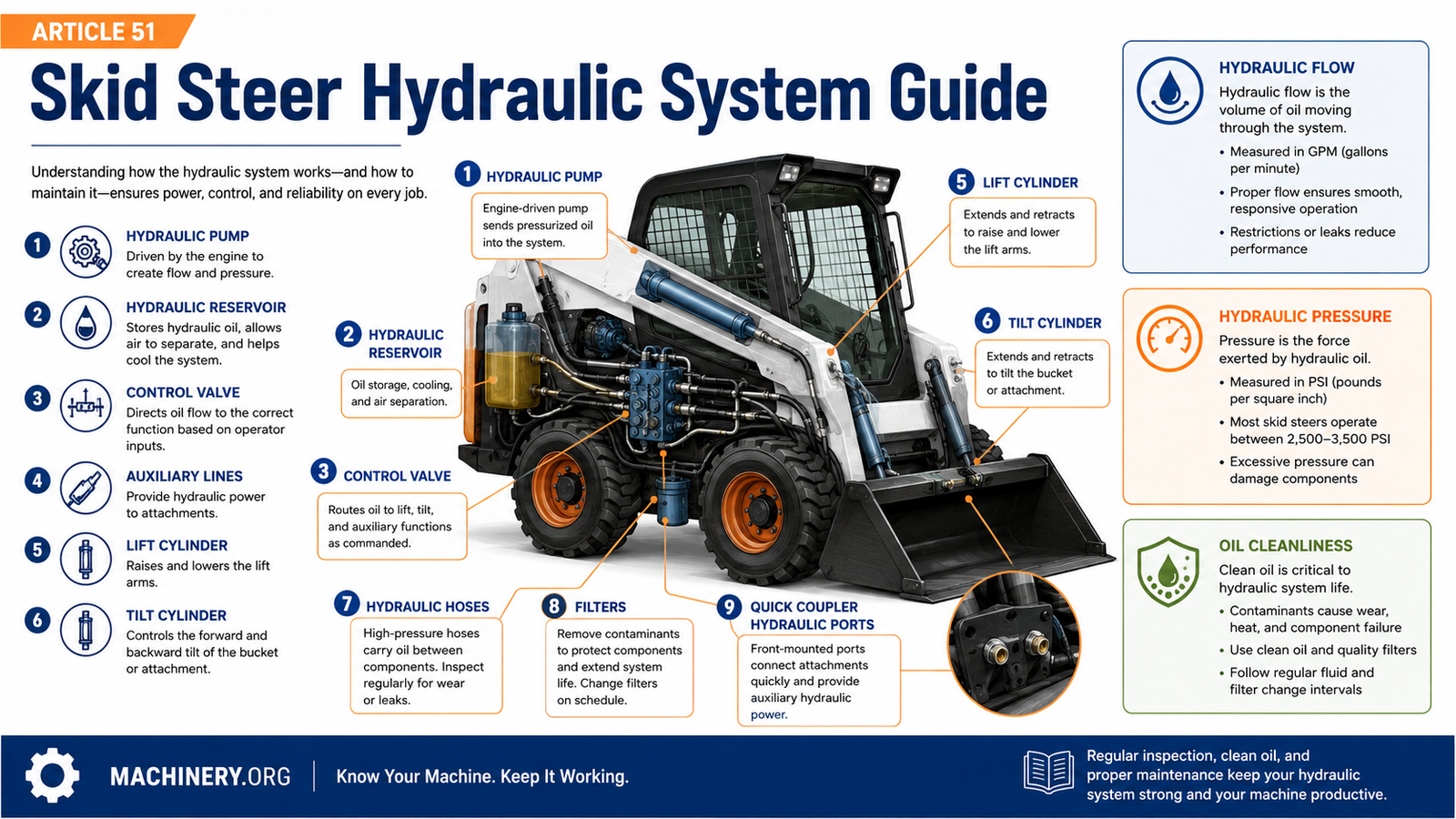
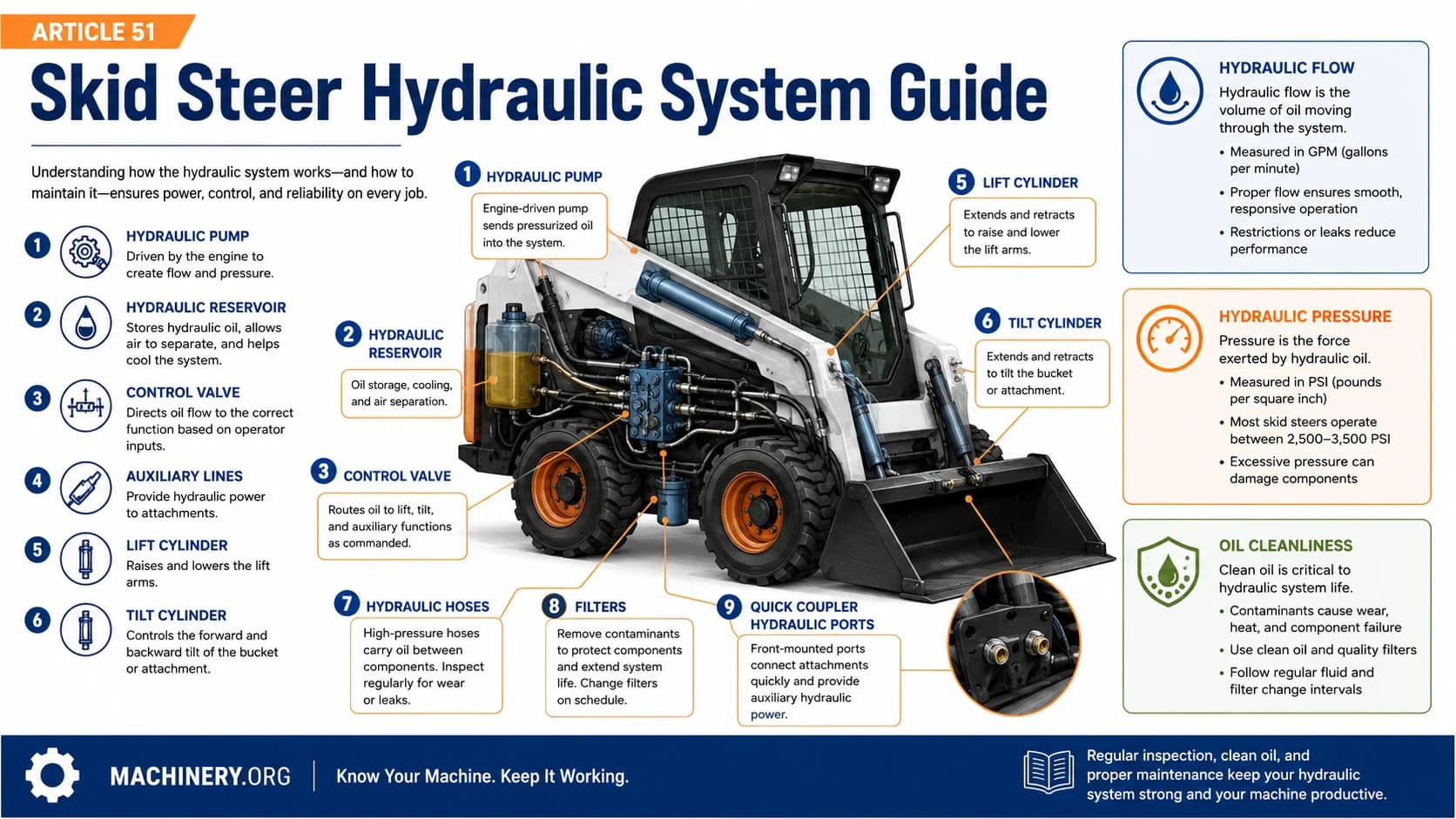
Figure 51.1. Major skid steer hydraulic components, including the pump, reservoir, valves, cylinders, hoses, filters, and auxiliary couplers.
How the hydraulic system creates movement
The hydraulic pump is driven by the engine and draws oil from the reservoir. The pump does not simply “make pressure” all the time. It creates flow, and pressure rises when that flow meets resistance. Control valves direct the oil toward the function selected by the operator. When the lift control is activated, oil moves into the lift cylinders and raises the loader arms. When the tilt control is moved, oil enters the tilt cylinder and changes the bucket angle. Return oil travels back through the system, passes through filtration and cooling areas, and returns to the reservoir.
The hydrostatic drive circuit follows a similar principle but uses hydraulic motors to turn the wheels or tracks. This allows the skid steer to change speed and direction smoothly without a conventional transmission. Because travel and work functions can be used together, the hydraulic system must manage demand carefully. Aggressive driving while operating a high-demand attachment can produce heat and reduce available performance. Skilled operators use smooth control input so the machine divides power efficiently.
The main hydraulic components
Hydraulic pump
The pump provides oil flow for the system. Pump capacity influences cycle speed and attachment performance. Wear, contamination, cavitation, or incorrect oil can reduce pump efficiency. A damaged pump may produce whining sounds, weak operation, slow response, or metal contamination in the oil. Because pump replacement is expensive, cleanliness and correct fluid are critical.
Reservoir and hydraulic oil
The reservoir stores the working fluid, allows air to separate from the oil, and helps manage heat. Hydraulic oil transfers power while also lubricating internal components. The correct oil must maintain suitable viscosity across the machine’s operating temperature range. Oil that is too thick during cold starts can respond slowly, while oil that is too thin when hot may reduce lubrication and sealing efficiency.
Control valves and relief valves
Control valves route oil to cylinders, motors, and attachment lines. Relief valves protect the system by limiting maximum pressure. An incorrectly adjusted or failing relief valve may cause weak performance or excessive pressure. Pressure settings should not be changed without the manufacturer’s procedure and proper test equipment.
Cylinders, hoses, and couplers
Cylinders convert hydraulic pressure into linear force. Hoses and steel lines carry oil between components. Auxiliary couplers connect attachments quickly, but their exposed location makes them vulnerable to dirt, impact damage, and contamination. Even a small amount of debris introduced through a dirty coupler can damage pumps, motors, valves, and seals.
Flow, pressure, and attachment performance
Hydraulic flow is normally measured in gallons per minute, while pressure is measured in pounds per square inch. Flow strongly influences how fast a hydraulic motor or cylinder moves. Pressure influences how much force the system can develop against resistance. A high-flow attachment needs enough oil volume to operate at its designed speed. A heavy-duty attachment also needs pressure within its approved range. Too little flow can make the tool slow. Too much flow can overspeed a motor, overheat oil, and damage seals. Excessive pressure can cause component failure.
Standard-flow and high-flow skid steers support different tools. Buckets, forks, many grapples, and basic augers often work with standard flow. Forestry cutters, cold planers, large trenchers, and demanding snow or land-clearing tools may require high flow. Attachment specifications should always be compared with the machine’s auxiliary flow, pressure, coupler size, electrical controls, and case-drain requirements.
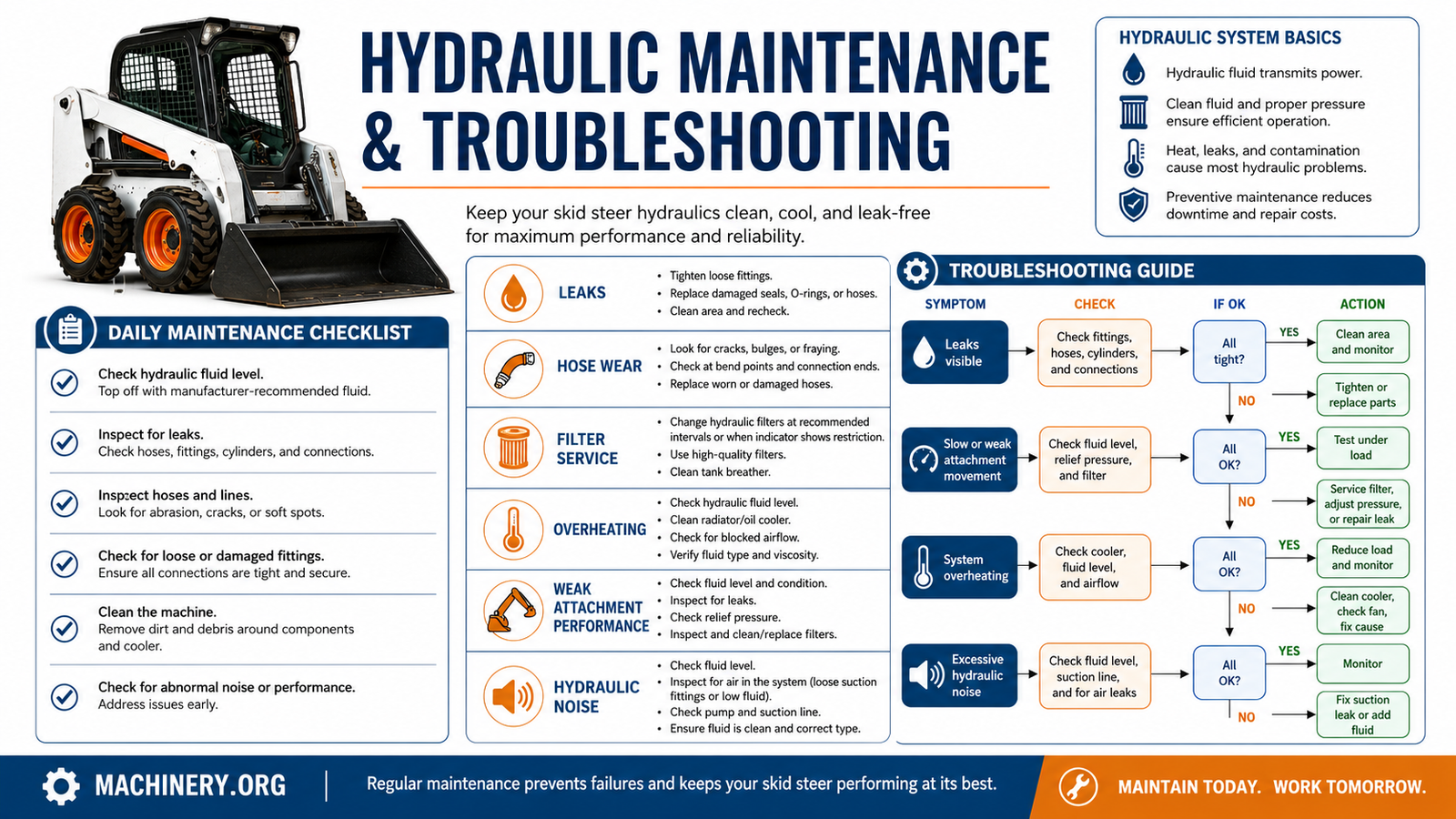
Figure 51.2. Daily hydraulic maintenance checklist and troubleshooting paths for leaks, weak movement, overheating, and abnormal noise.
Daily and scheduled hydraulic maintenance
A daily hydraulic check begins with the machine parked safely, the attachment lowered, and pressure relieved according to the operator manual. Inspect the reservoir level, visible hoses, fittings, cylinders, and couplers. Look for wet areas, dust stuck to oily surfaces, rubbing marks, cracked hose covers, bulges, loose routing clamps, and damaged coupler faces. Clean debris from coolers and screens because restricted airflow increases oil temperature.
Filters should be replaced at the correct interval or when a restriction indicator shows a problem. The hydraulic tank should remain sealed and clean. When connecting attachments, wipe both sides of every coupler before connection. Use protective caps during storage. When replacing a hose, keep the open ports covered and clean. The goal is to prevent contamination from entering the system at every service point.
Common hydraulic symptoms and first checks
Visible leaks: stop the machine, relieve pressure safely, identify the source, and replace damaged hoses, seals, or fittings before operation.
Slow or weak attachment movement: verify oil level, attachment compatibility, filter condition, coupler connection, engine speed, and relief pressure.
Overheating: clean the cooler, check fluid level and type, inspect fan operation, reduce excessive load, and look for internal leakage or restriction.
Excessive whining or rattling: check for low oil, air entering the suction side, blocked filters, damaged couplers, or pump cavitation.
Jerky cylinder movement: inspect oil level, air contamination, sticky valves, worn pins, and cylinder or valve leakage.
Attachment runs in one direction only: verify electrical controls, couplers, valve operation, and attachment-specific requirements.
Hydraulic safety practices
High-pressure hydraulic oil can penetrate skin and cause a medical emergency. Never use a hand to search for a pinhole leak. Use cardboard or another safe method recommended by the manufacturer, wear eye and hand protection, and seek immediate medical treatment for any injection injury. Do not loosen a fitting while the system is pressurized. Lower the attachment, shut down the engine, move controls to relieve trapped pressure, and follow the machine-specific procedure before disconnecting lines.
How good operating habits protect the system
Operators influence hydraulic life every day. Allow the machine to warm gradually in cold weather. Avoid holding controls against relief longer than necessary. Use smooth movements instead of repeated shock loads. Match attachments to the machine, keep the cooling system clean, and stop when unusual heat, smell, sound, or performance changes appear. These habits reduce wasted fuel, protect seals, and help the hydraulic system deliver consistent performance for thousands of hours.
Frequently Asked Questions
What is the difference between hydraulic flow and hydraulic pressure?
Flow controls how quickly oil moves through the system and strongly affects attachment speed. Pressure is the force developed when the flow meets resistance and affects working force.
Can I use a high-flow attachment on a standard-flow skid steer?
Only when the attachment manufacturer specifically approves operation at the lower flow. Many high-flow tools will be slow, ineffective, or at risk of damage on an incompatible machine.
Why does hydraulic oil overheat?
Common causes include dirty coolers, low fluid, incorrect oil, continuous relief operation, excessive attachment demand, restricted filters, or internal component leakage.
How often should hydraulic filters be replaced?
Follow the machine manufacturer’s hour-based and calendar-based intervals and replace sooner when a restriction indicator or contamination event requires it.
Key Takeaway
A skid steer hydraulic system stays strong when oil remains clean, attachments are correctly matched, heat is controlled, and small leaks or performance changes are corrected early. Learn the difference between flow and pressure, inspect the system daily, and use trained service support for pressure testing and major repairs.
Get More Expert Guides & Updates
Subscribe for Machinery.org guide updates and product learning content.